Echinocorys Flint Fossil Echinoid Chalk Cretaceous Seaford UK Authentic Collector Specimen with Certificate of Authenticity
£ 24.00
This listing offers a genuine Echinocorys flint fossil echinoid, collected from
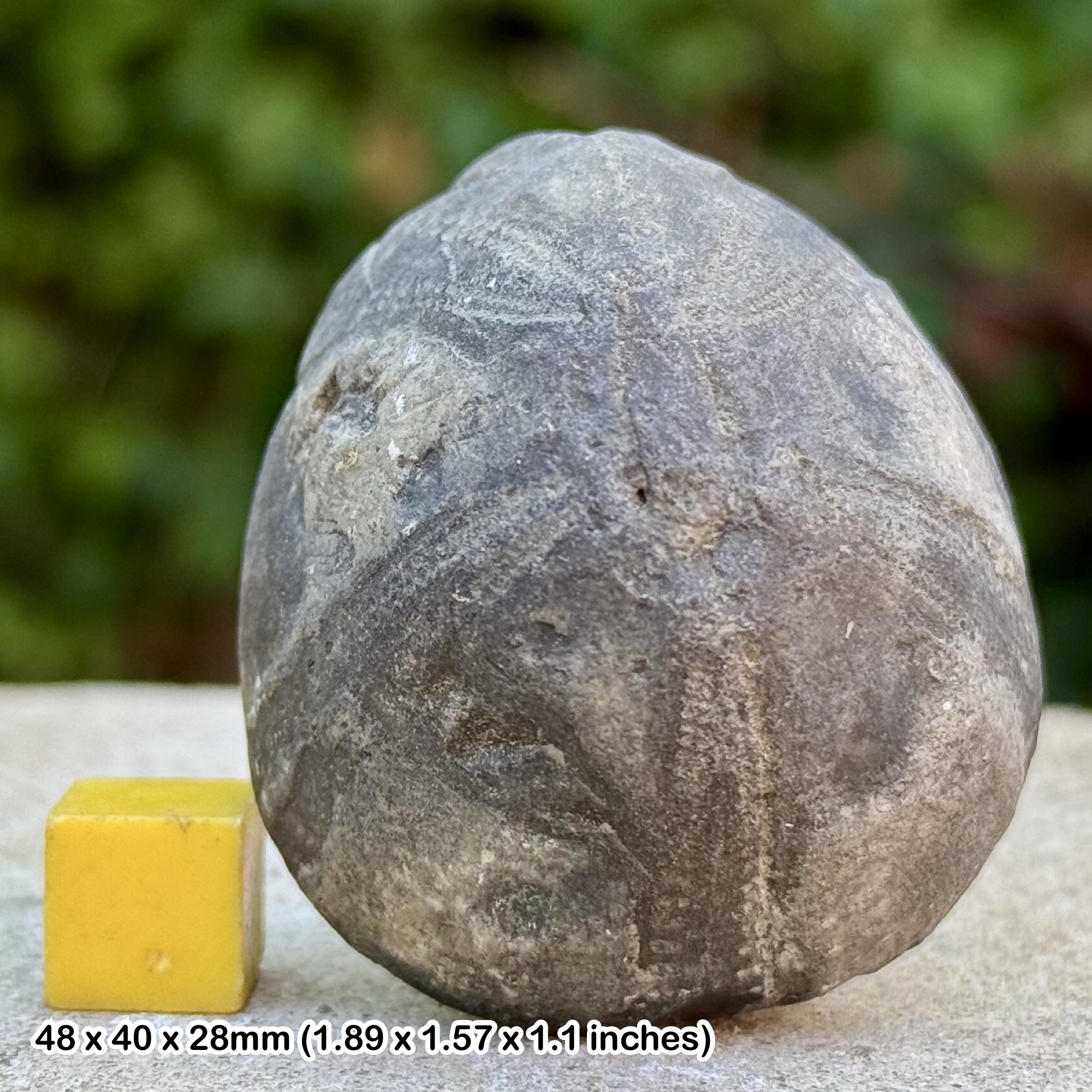
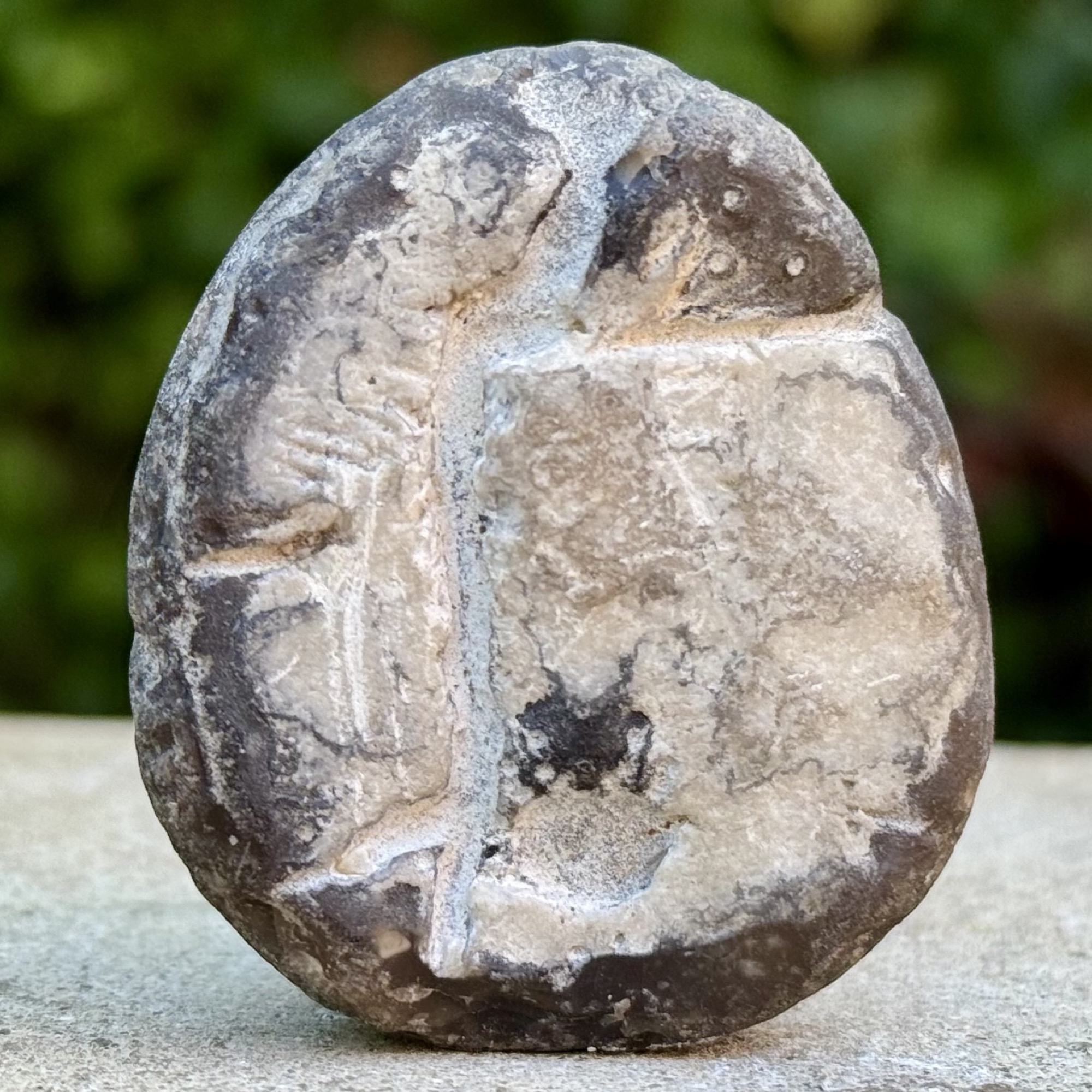
the Upper Cretaceous Chalk at Seaford, East Sussex, UK. Dating to around 80–70 million years ago, during the Late Cretaceous period, this fossil represents an extinct heart urchin that thrived in the shallow seas covering much of southern England.The specimen shown in the photographs is the exact fossil you will receive. A scale cube = 1 cm is included in the images for accurate sizing. As with all of our natural history pieces, this is a 100% genuine fossil specimen, supplied with a Certificate of Authenticity, making it a reliable choice for collectors, educators, or display. GEOLOGICAL CONTEXT: UPPER CRETACEOUS CHALK OF SEAFORDThe chalk deposits of Seaford, part of the famous coastal cliffs of East Sussex, are world-renowned for their fossil content and exceptional preservation. These sediments were laid down in warm, shallow seas during the Late Cretaceous, composed primarily of the microscopic remains of coccolithophores—tiny planktonic algae whose calcareous skeletons accumulated over millions of years to form thick chalk sequences.The Seaford Chalk Formation is a significant stratigraphic unit within the Chalk Group, characterised by its clean white limestone and occasional flint nodules. This depositional environment supported an abundance of marine organisms, including ammonites, molluscs, brachiopods, and echinoids such as Echinocorys. Fossils from Seaford provide vital evidence for biostratigraphy and paleoenvironmental reconstruction, often serving as index fossils for the Upper Cretaceous. THE SPECIES: ECHINOCORYSEchinocorys is one of the most recognisable genera of fossil echinoids, often nicknamed the “chalk heart urchin” due to its characteristic shape. Belonging to the order Holasteroida and family Echinocorythidae, Echinocorys is a classic fossil of the British Chalk and highly valued for its distinctive preservation.Key morphological features of Echinocorys include:
• A globular to sub-oval test (rigid shell) with a heart-shaped outline.
• Prominent petaloid ambulacra radiating across the test surface.
• A flattened underside, adapted for burrowing into soft marine sediments.
• Paired pore structures associated with tube feet, visible on well-preserved specimens.Unlike many calcareous fossils, Echinocorys is frequently preserved in flint, a silicified form that captures fine morphological details and enhances durability. MORPHOLOGICAL AND SCIENTIFIC FEATURES
• Phylum: Echinodermata
• Class: Echinoidea
• Order: Holasteroida
• Family: Echinocorythidae
• Genus: Echinocorys
• Geological Age: Upper Cretaceous (c. 80–70 Ma)
• Locality: Seaford, East Sussex, UK
• Formation: Seaford Chalk Formation, Chalk Group
• Preservation: Flint replacement of calcareous test
• Lifestyle: Infaunal burrower feeding on organic material in sediments
• Scientific Value: Key stratigraphic marker and widely used in Late Cretaceous biostratigraphy COLLECTOR AND DISPLAY VALUEFossils of Echinocorys are highly sought after due to their striking form, geological significance, and association with Britain’s most famous chalk cliffs. The provenance from Seaford adds extra value, as this location is internationally recognised for its fossil record and geological importance.This specimen is not only a scientifically significant fossil but also an attractive natural display piece. Supplied with a Certificate of Authenticity, it represents a genuine connection to the ancient seas of the Late Cretaceous and a timeless addition to any fossil collection.
the Upper Cretaceous Chalk at Seaford, East Sussex, UK. Dating to around 80–70 million years ago, during the Late Cretaceous period, this fossil represents an extinct heart urchin that thrived in the shallow seas covering much of southern England.The specimen shown in the photographs is the exact fossil you will receive. A scale cube = 1 cm is included in the images for accurate sizing. As with all of our natural history pieces, this is a 100% genuine fossil specimen, supplied with a Certificate of Authenticity, making it a reliable choice for collectors, educators, or display. GEOLOGICAL CONTEXT: UPPER CRETACEOUS CHALK OF SEAFORDThe chalk deposits of Seaford, part of the famous coastal cliffs of East Sussex, are world-renowned for their fossil content and exceptional preservation. These sediments were laid down in warm, shallow seas during the Late Cretaceous, composed primarily of the microscopic remains of coccolithophores—tiny planktonic algae whose calcareous skeletons accumulated over millions of years to form thick chalk sequences.The Seaford Chalk Formation is a significant stratigraphic unit within the Chalk Group, characterised by its clean white limestone and occasional flint nodules. This depositional environment supported an abundance of marine organisms, including ammonites, molluscs, brachiopods, and echinoids such as Echinocorys. Fossils from Seaford provide vital evidence for biostratigraphy and paleoenvironmental reconstruction, often serving as index fossils for the Upper Cretaceous. THE SPECIES: ECHINOCORYSEchinocorys is one of the most recognisable genera of fossil echinoids, often nicknamed the “chalk heart urchin” due to its characteristic shape. Belonging to the order Holasteroida and family Echinocorythidae, Echinocorys is a classic fossil of the British Chalk and highly valued for its distinctive preservation.Key morphological features of Echinocorys include:
• A globular to sub-oval test (rigid shell) with a heart-shaped outline.
• Prominent petaloid ambulacra radiating across the test surface.
• A flattened underside, adapted for burrowing into soft marine sediments.
• Paired pore structures associated with tube feet, visible on well-preserved specimens.Unlike many calcareous fossils, Echinocorys is frequently preserved in flint, a silicified form that captures fine morphological details and enhances durability. MORPHOLOGICAL AND SCIENTIFIC FEATURES
• Phylum: Echinodermata
• Class: Echinoidea
• Order: Holasteroida
• Family: Echinocorythidae
• Genus: Echinocorys
• Geological Age: Upper Cretaceous (c. 80–70 Ma)
• Locality: Seaford, East Sussex, UK
• Formation: Seaford Chalk Formation, Chalk Group
• Preservation: Flint replacement of calcareous test
• Lifestyle: Infaunal burrower feeding on organic material in sediments
• Scientific Value: Key stratigraphic marker and widely used in Late Cretaceous biostratigraphy COLLECTOR AND DISPLAY VALUEFossils of Echinocorys are highly sought after due to their striking form, geological significance, and association with Britain’s most famous chalk cliffs. The provenance from Seaford adds extra value, as this location is internationally recognised for its fossil record and geological importance.This specimen is not only a scientifically significant fossil but also an attractive natural display piece. Supplied with a Certificate of Authenticity, it represents a genuine connection to the ancient seas of the Late Cretaceous and a timeless addition to any fossil collection.
Other Products