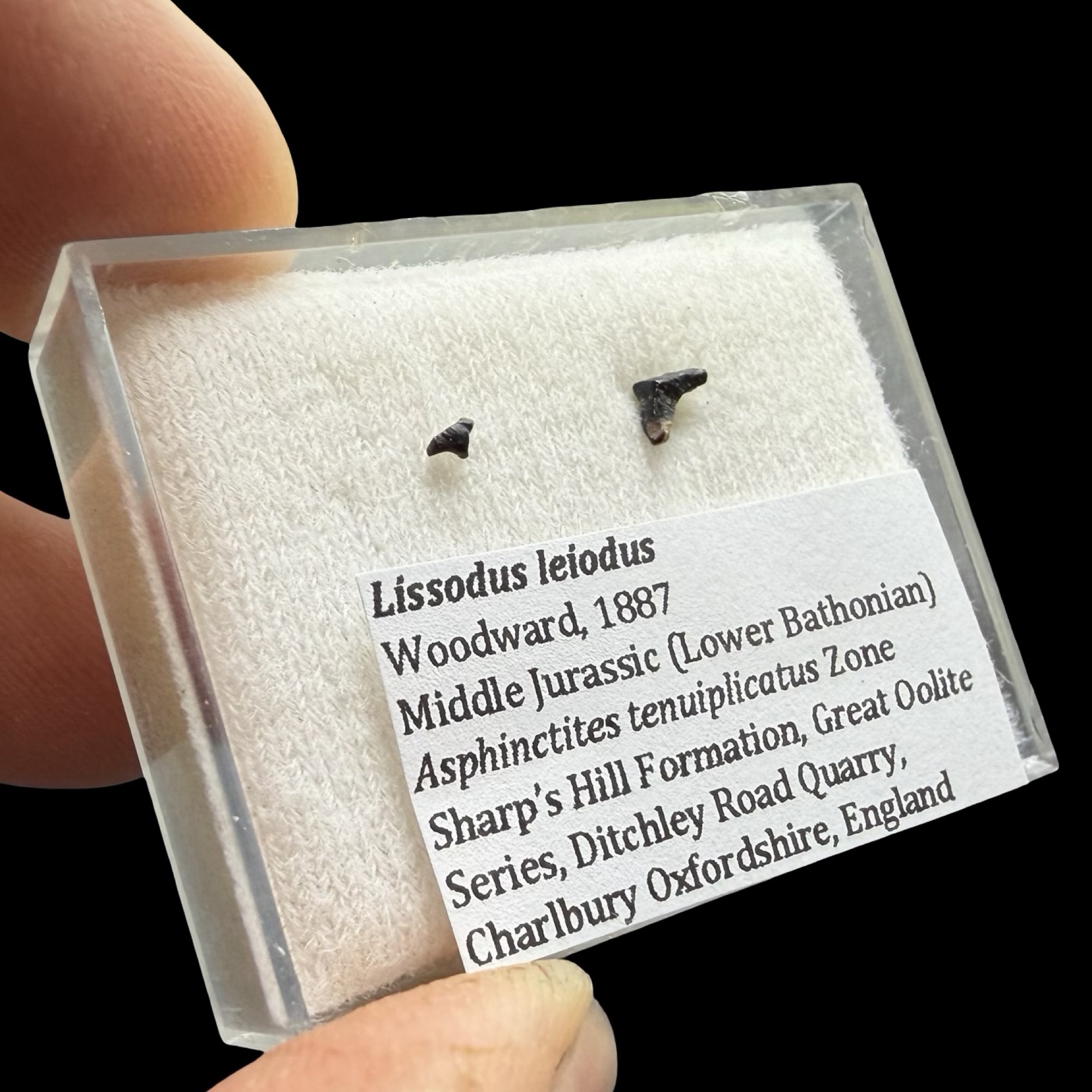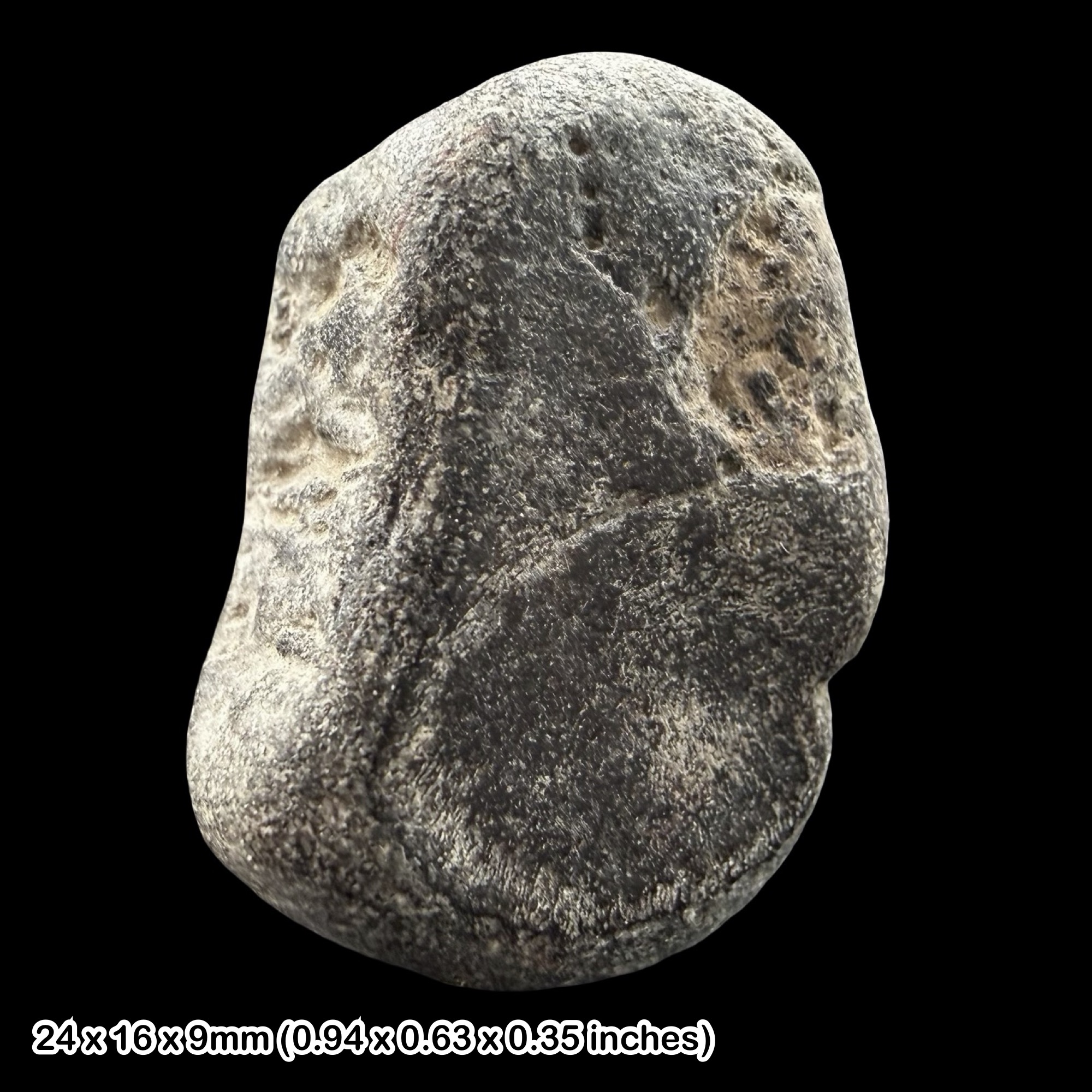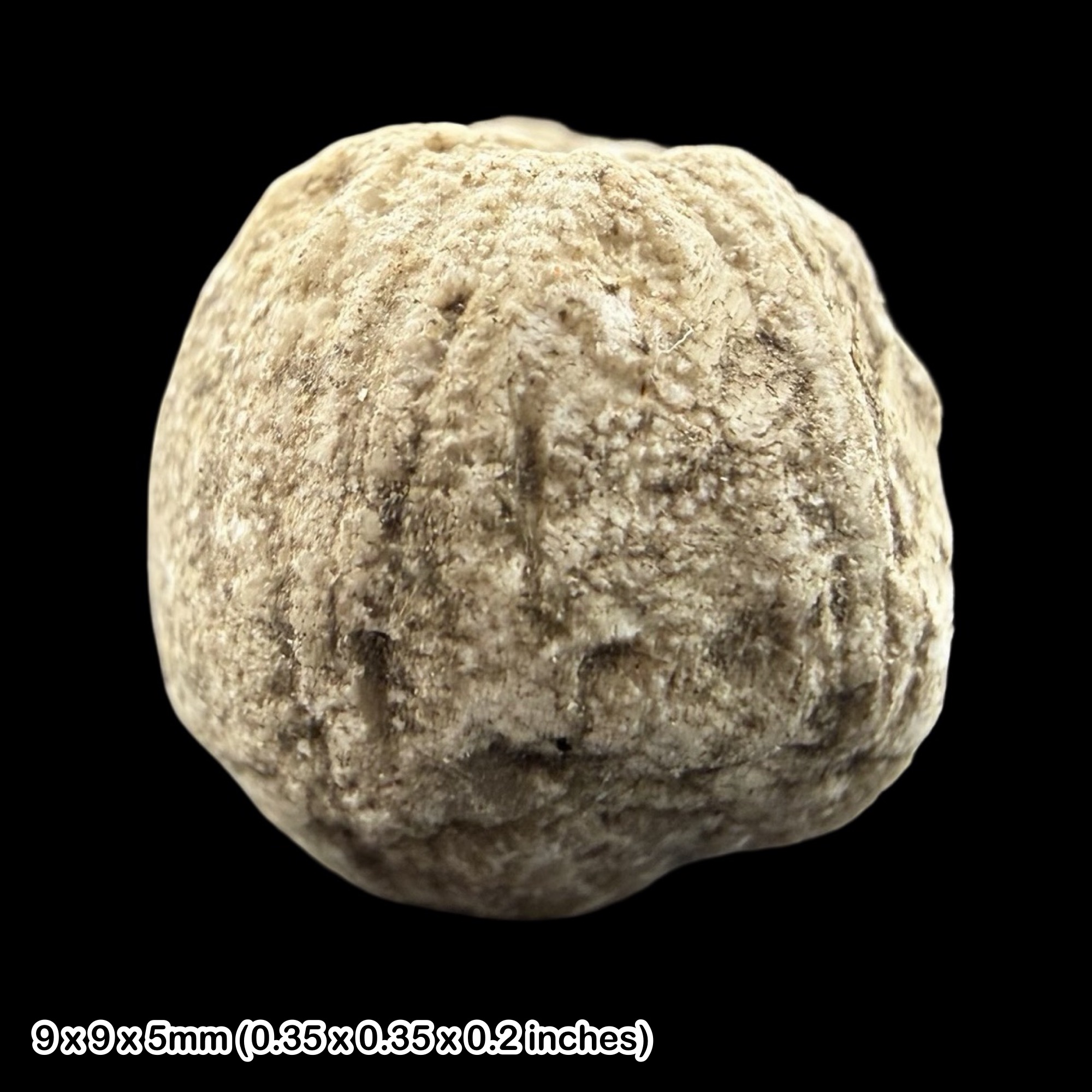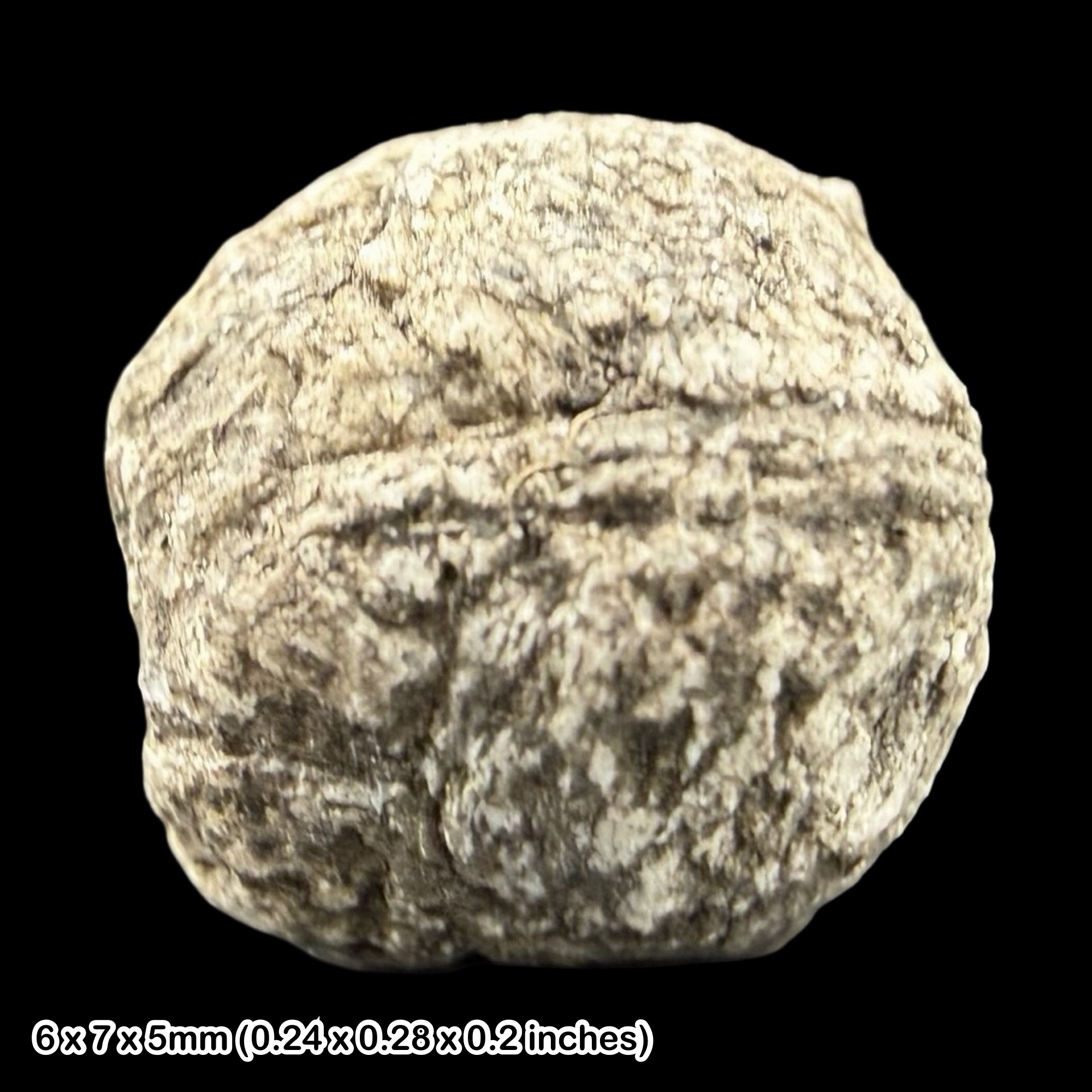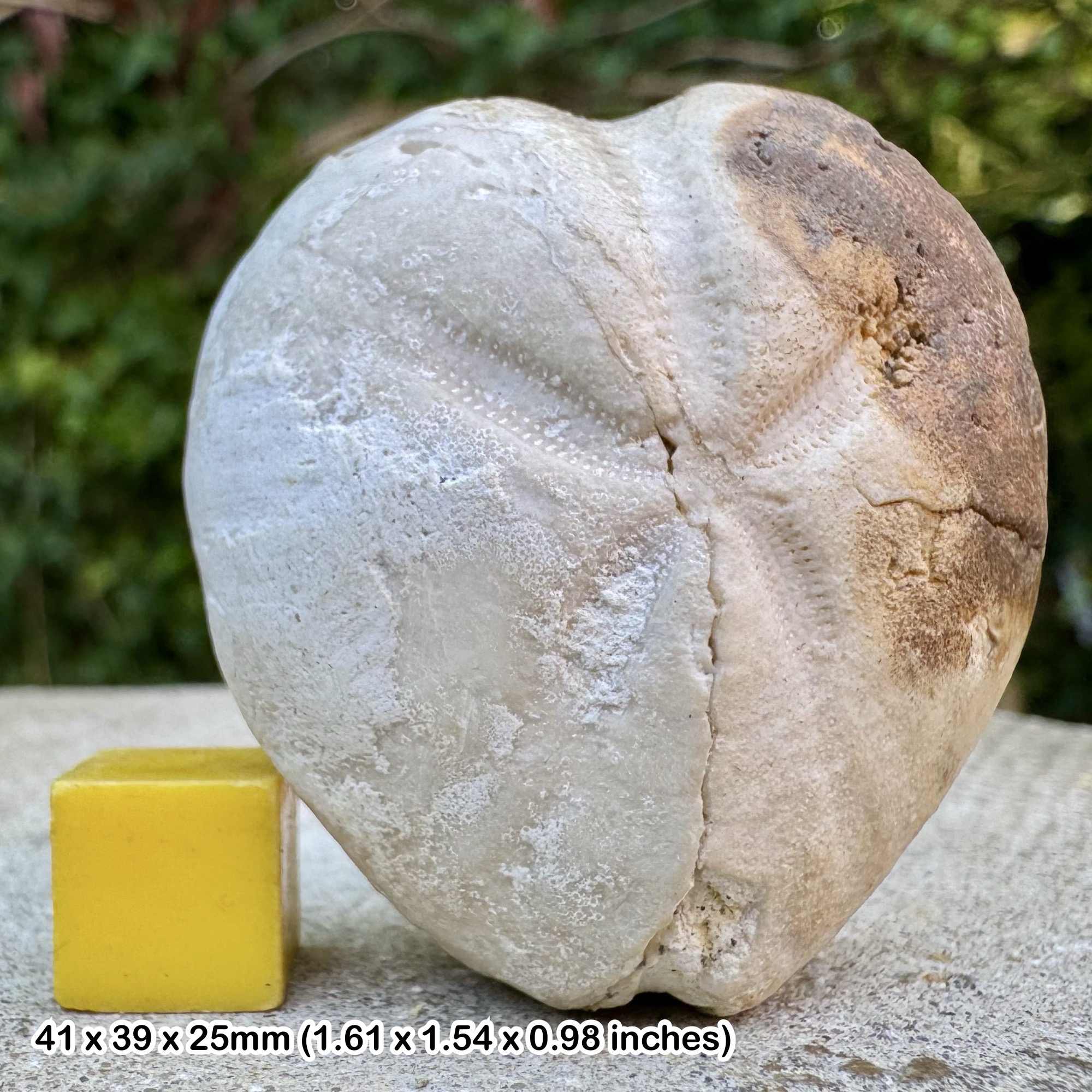
Micraster Fossil Echinoid Chalk Cretaceous White Nothe Dorset UK Genuine Sea Urchin
£ 18.00
AUTHENTIC MICRASTER FOSSIL ECHINOID FROM WHITE NOTHE, DORSETThis listing features a genuine Micraster fossil echinoid from the Cretaceous
Chalk deposits of White Nothe, Dorset, United Kingdom. Fossils of the genus Micraster are highly sought after by collectors due to their distinctive heart-shaped form and scientific importance. Each specimen provides a glimpse into marine ecosystems that thrived in the chalk seas over 80 million years ago. The fossil comes with a Certificate of Authenticity, and the specimen photographed is the exact one you will receive. A 1 cm scale cube is shown for accurate sizing reference. GEOLOGICAL CONTEXTThe cliffs of White Nothe are part of the world-renowned Jurassic Coast, a UNESCO World Heritage Site celebrated for its rich fossil record spanning over 185 million years of Earth’s history. During the Cretaceous Period (approx. 145–66 million years ago), this region was covered by warm, shallow seas. The chalk formations in which Micraster fossils are found were formed primarily from the accumulation of microscopic calcareous plankton called coccolithophores. Over time, these sediments compacted into chalk, perfectly preserving marine life such as echinoids. SCIENTIFIC CLASSIFICATION
• Kingdom: Animalia
• Phylum: Echinodermata
• Class: Echinoidea
• Order: Spatangoida
• Family: Micrasteridae
• Genus: Micraster MORPHOLOGICAL FEATURESMicraster echinoids are easily recognised by their heart-shaped outline and bilateral symmetry. They possess a convex upper surface with petaloid ambulacra forming a star-like pattern, used for respiration. The lower surface is flattened, an adaptation for living partially buried within the seafloor sediment. The anterior groove at the front of the fossil is an identifying feature, designed to help channel sediment toward the animal’s feeding structures. These physical traits highlight its adaptation as a deposit feeder in chalk marine environments. PALEOECOLOGY AND SIGNIFICANCEAs a burrowing echinoid, Micraster played a vital role in the benthic ecosystem of the Cretaceous seas. Feeding on organic matter within the sediment, it contributed to nutrient recycling on the seafloor. Micraster species are also of great scientific importance because they evolved rapidly and exhibit morphological changes through time. This makes them excellent index fossils, used by geologists to divide chalk successions into precise biozones and correlate strata across Europe. WHITE NOTHE AND THE JURASSIC COASTWhite Nothe is one of Dorset’s most iconic coastal landmarks, and its chalk cliffs are rich in fossil material. Fossils from this site are not only scientifically valuable but also hold cultural and historical significance, linking directly to the study of geology in Britain. Micraster from White Nothe is especially prized for its fine preservation, providing collectors and researchers with specimens that capture the detail and beauty of Cretaceous marine life. COLLECTABILITY AND DISPLAY VALUEThis Micraster echinoid is an ideal specimen for collectors, educators, and enthusiasts of natural history. Its elegant form and excellent preservation make it suitable for display in both private collections and academic settings. Beyond its scientific value, the fossil offers aesthetic appeal, embodying the natural artistry of Earth’s deep past. GUARANTEED AUTHENTICITYAll of our fossils are 100% genuine specimens and are supplied with a Certificate of Authenticity. The fossil shown in the photographs is the exact piece you will receive. This Micraster fossil echinoid from White Nothe, Dorset, is an outstanding addition to any collection of Cretaceous fossils, offering both scientific interest and natural beauty.
Chalk deposits of White Nothe, Dorset, United Kingdom. Fossils of the genus Micraster are highly sought after by collectors due to their distinctive heart-shaped form and scientific importance. Each specimen provides a glimpse into marine ecosystems that thrived in the chalk seas over 80 million years ago. The fossil comes with a Certificate of Authenticity, and the specimen photographed is the exact one you will receive. A 1 cm scale cube is shown for accurate sizing reference. GEOLOGICAL CONTEXTThe cliffs of White Nothe are part of the world-renowned Jurassic Coast, a UNESCO World Heritage Site celebrated for its rich fossil record spanning over 185 million years of Earth’s history. During the Cretaceous Period (approx. 145–66 million years ago), this region was covered by warm, shallow seas. The chalk formations in which Micraster fossils are found were formed primarily from the accumulation of microscopic calcareous plankton called coccolithophores. Over time, these sediments compacted into chalk, perfectly preserving marine life such as echinoids. SCIENTIFIC CLASSIFICATION
• Kingdom: Animalia
• Phylum: Echinodermata
• Class: Echinoidea
• Order: Spatangoida
• Family: Micrasteridae
• Genus: Micraster MORPHOLOGICAL FEATURESMicraster echinoids are easily recognised by their heart-shaped outline and bilateral symmetry. They possess a convex upper surface with petaloid ambulacra forming a star-like pattern, used for respiration. The lower surface is flattened, an adaptation for living partially buried within the seafloor sediment. The anterior groove at the front of the fossil is an identifying feature, designed to help channel sediment toward the animal’s feeding structures. These physical traits highlight its adaptation as a deposit feeder in chalk marine environments. PALEOECOLOGY AND SIGNIFICANCEAs a burrowing echinoid, Micraster played a vital role in the benthic ecosystem of the Cretaceous seas. Feeding on organic matter within the sediment, it contributed to nutrient recycling on the seafloor. Micraster species are also of great scientific importance because they evolved rapidly and exhibit morphological changes through time. This makes them excellent index fossils, used by geologists to divide chalk successions into precise biozones and correlate strata across Europe. WHITE NOTHE AND THE JURASSIC COASTWhite Nothe is one of Dorset’s most iconic coastal landmarks, and its chalk cliffs are rich in fossil material. Fossils from this site are not only scientifically valuable but also hold cultural and historical significance, linking directly to the study of geology in Britain. Micraster from White Nothe is especially prized for its fine preservation, providing collectors and researchers with specimens that capture the detail and beauty of Cretaceous marine life. COLLECTABILITY AND DISPLAY VALUEThis Micraster echinoid is an ideal specimen for collectors, educators, and enthusiasts of natural history. Its elegant form and excellent preservation make it suitable for display in both private collections and academic settings. Beyond its scientific value, the fossil offers aesthetic appeal, embodying the natural artistry of Earth’s deep past. GUARANTEED AUTHENTICITYAll of our fossils are 100% genuine specimens and are supplied with a Certificate of Authenticity. The fossil shown in the photographs is the exact piece you will receive. This Micraster fossil echinoid from White Nothe, Dorset, is an outstanding addition to any collection of Cretaceous fossils, offering both scientific interest and natural beauty.