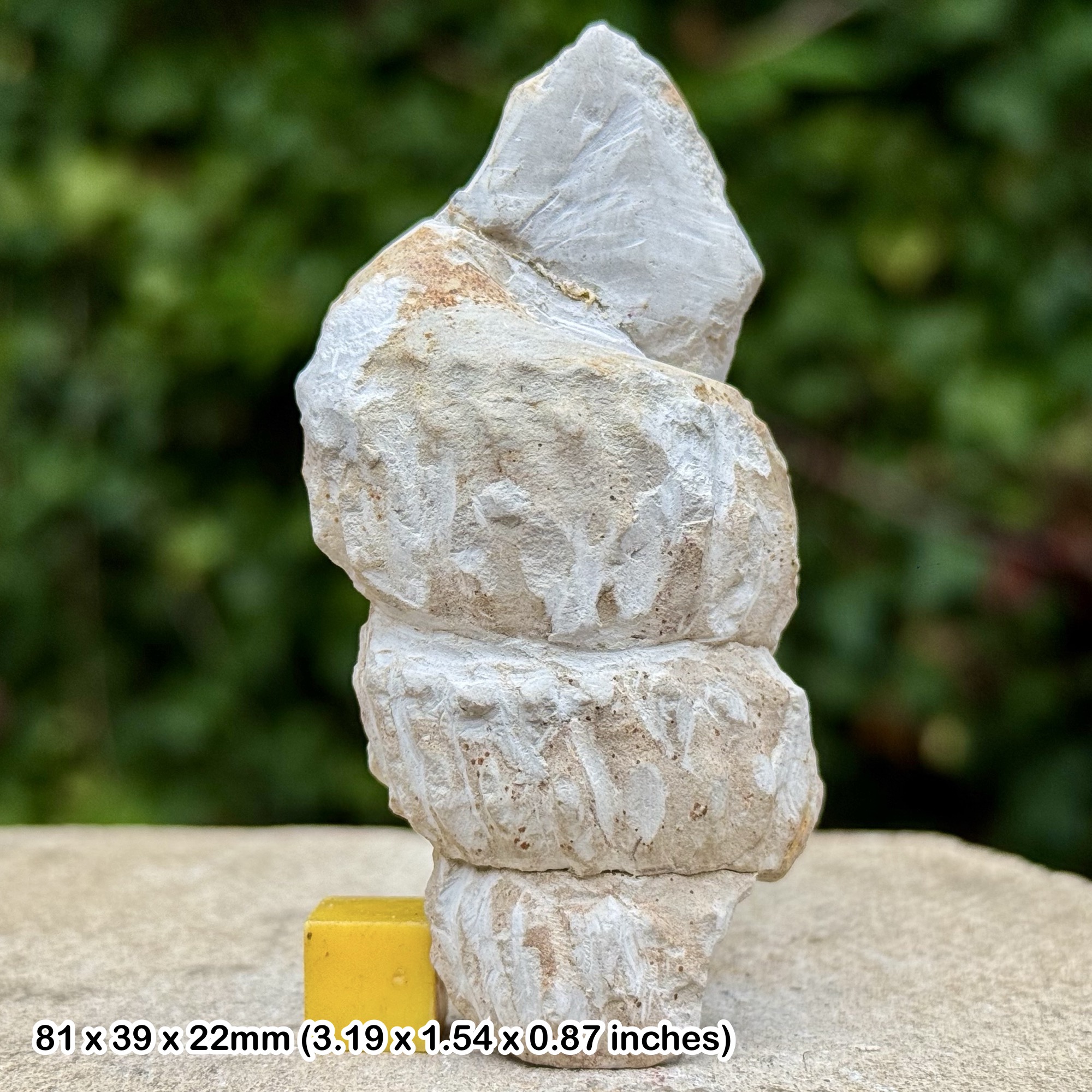
Rare Turrilites costatus Heteromorph Fossil Ammonite Cenomanian Cretaceous Sussex United Kingdom with COA
£ 18.00
RARE TURRILITES COSTATUS HETEROMORPH AMMONITE FROM SUSSEXPresented here is a rare Turrilites costatus heteromorph fossil ammonite,
collected from the Cenomanian chalk deposits of Sussex, United Kingdom. This exceptional fossil dates to the Late Cretaceous Period, approximately 100–94 million years ago, and represents one of the most striking examples of heteromorph ammonites, known for their unusual tower-like coiling and bold ribbing.Every fossil we sell is a 100% genuine specimen and is supplied with a Certificate of Authenticity. The specimen photographed is the actual one you will receive, with a 1cm scale cube and rule squares included for precise size reference. GEOLOGICAL AGE AND LOCALITYThe Cenomanian Stage is the first stage of the Late Cretaceous, a time of exceptionally high global sea levels when vast epicontinental seas covered much of Europe. These warm shallow waters created an environment ideal for ammonites, which flourished in great numbers and diversity.The chalk formations of Sussex, part of the world-famous White Chalk deposits of southern England, are renowned for their palaeontological significance. Fossils from this region have long been studied and continue to serve as key reference points in Cretaceous stratigraphy. Specimens of Turrilites costatus from Sussex are particularly valuable due to their rarity and historical provenance. FOSSIL TYPE AND SCIENTIFIC CLASSIFICATION
• Genus: Turrilites
• Species: Turrilites costatus
• Order: Ammonitida
• Superfamily: Turrilitoidea
• Family: TurrilitidaeTurrilites costatus is an important index fossil of the Cenomanian Stage. Its restricted stratigraphic range and distinctive shell morphology make it a crucial species for dating and correlating Cenomanian rock sequences across Europe and beyond. MORPHOLOGICAL FEATURESTurrilites costatus is easily identified by its unique features, which distinguish it from other heteromorph ammonites:
• Helicoidal Shell Coiling: The shell grows in a turret-like vertical spiral instead of a flat coil.
• Prominent Ribbing: Strong ribs encircle the whorls, giving the species its name “costatus” (ribbed).
• Tubercles: Nodes or tubercles are often developed along the ribs, adding further ornamentation.
• Keel Development: A keel is frequently present on the venter, aiding in both structural strength and identification.These morphological traits make Turrilites costatus both a visually striking fossil and a scientifically valuable specimen. SCIENTIFIC AND COLLECTOR IMPORTANCEAs a defining species of Cenomanian ammonite zones, Turrilites costatus plays a vital role in biostratigraphy. Its diagnostic features and restricted distribution allow geologists to pinpoint specific horizons in the chalk formations of Europe.For collectors, this species is especially desirable due to its unusual heteromorph shape and its rarity compared to more common planispiral ammonites. Well-preserved specimens from Sussex are increasingly scarce, enhancing the desirability and long-term value of this fossil. DISPLAY AND EDUCATIONAL VALUEThis fossil has been carefully selected for its preservation quality and strong rib detail, making it an outstanding display specimen. Its vertical, turret-like form sets it apart from typical ammonites and makes it a conversation piece in any collection.Ideal for display in a private collection, an educational setting, or a museum exhibit, this rare Turrilites costatus ammonite from Sussex represents a remarkable evolutionary path in ammonite history. It provides both aesthetic beauty and scientific importance, embodying the diversity and complexity of life in the Cenomanian seas of the Late Cretaceous.
collected from the Cenomanian chalk deposits of Sussex, United Kingdom. This exceptional fossil dates to the Late Cretaceous Period, approximately 100–94 million years ago, and represents one of the most striking examples of heteromorph ammonites, known for their unusual tower-like coiling and bold ribbing.Every fossil we sell is a 100% genuine specimen and is supplied with a Certificate of Authenticity. The specimen photographed is the actual one you will receive, with a 1cm scale cube and rule squares included for precise size reference. GEOLOGICAL AGE AND LOCALITYThe Cenomanian Stage is the first stage of the Late Cretaceous, a time of exceptionally high global sea levels when vast epicontinental seas covered much of Europe. These warm shallow waters created an environment ideal for ammonites, which flourished in great numbers and diversity.The chalk formations of Sussex, part of the world-famous White Chalk deposits of southern England, are renowned for their palaeontological significance. Fossils from this region have long been studied and continue to serve as key reference points in Cretaceous stratigraphy. Specimens of Turrilites costatus from Sussex are particularly valuable due to their rarity and historical provenance. FOSSIL TYPE AND SCIENTIFIC CLASSIFICATION
• Genus: Turrilites
• Species: Turrilites costatus
• Order: Ammonitida
• Superfamily: Turrilitoidea
• Family: TurrilitidaeTurrilites costatus is an important index fossil of the Cenomanian Stage. Its restricted stratigraphic range and distinctive shell morphology make it a crucial species for dating and correlating Cenomanian rock sequences across Europe and beyond. MORPHOLOGICAL FEATURESTurrilites costatus is easily identified by its unique features, which distinguish it from other heteromorph ammonites:
• Helicoidal Shell Coiling: The shell grows in a turret-like vertical spiral instead of a flat coil.
• Prominent Ribbing: Strong ribs encircle the whorls, giving the species its name “costatus” (ribbed).
• Tubercles: Nodes or tubercles are often developed along the ribs, adding further ornamentation.
• Keel Development: A keel is frequently present on the venter, aiding in both structural strength and identification.These morphological traits make Turrilites costatus both a visually striking fossil and a scientifically valuable specimen. SCIENTIFIC AND COLLECTOR IMPORTANCEAs a defining species of Cenomanian ammonite zones, Turrilites costatus plays a vital role in biostratigraphy. Its diagnostic features and restricted distribution allow geologists to pinpoint specific horizons in the chalk formations of Europe.For collectors, this species is especially desirable due to its unusual heteromorph shape and its rarity compared to more common planispiral ammonites. Well-preserved specimens from Sussex are increasingly scarce, enhancing the desirability and long-term value of this fossil. DISPLAY AND EDUCATIONAL VALUEThis fossil has been carefully selected for its preservation quality and strong rib detail, making it an outstanding display specimen. Its vertical, turret-like form sets it apart from typical ammonites and makes it a conversation piece in any collection.Ideal for display in a private collection, an educational setting, or a museum exhibit, this rare Turrilites costatus ammonite from Sussex represents a remarkable evolutionary path in ammonite history. It provides both aesthetic beauty and scientific importance, embodying the diversity and complexity of life in the Cenomanian seas of the Late Cretaceous.
Other Products