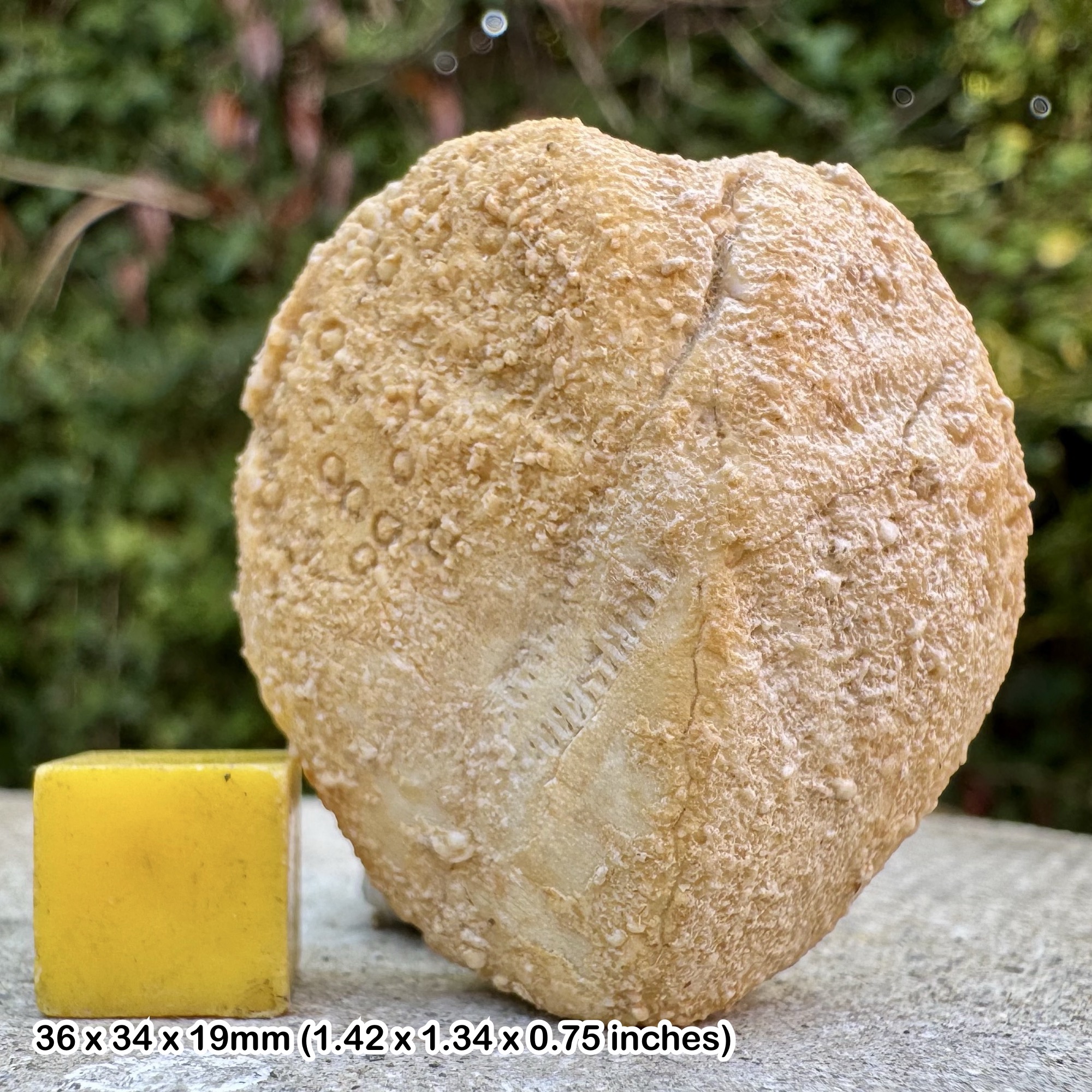
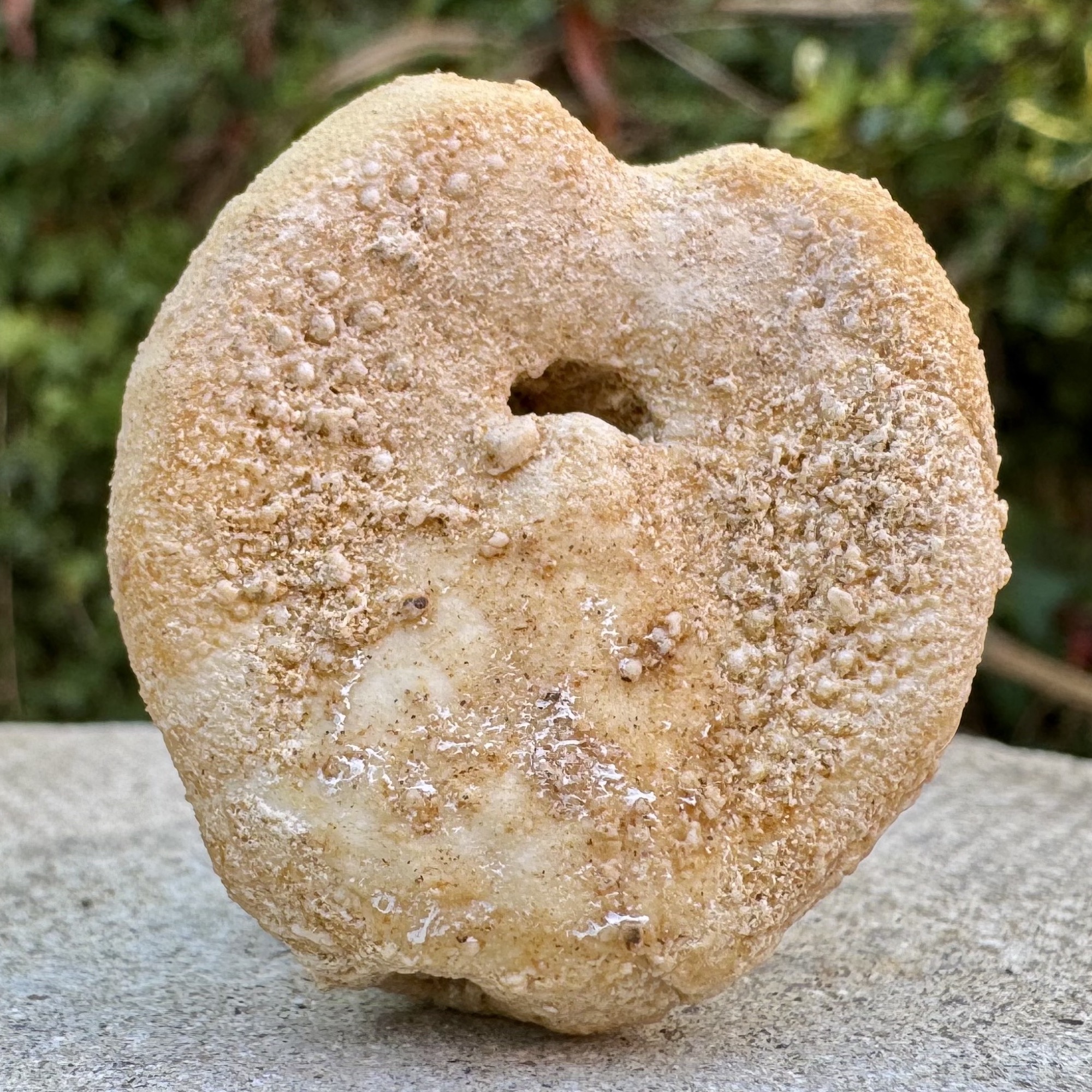
Lovenia woodi Fossil Echinoid Mannum Formation Miocene Mannum South Australia Authentic Collector Specimen with Certificate of Authenticity
£ 24.00
This listing is for a genuine Lovenia woodi fossil echinoid, an extinct species
of sea urchin from the Mannum Formation, Miocene epoch (approximately 23–16 million years ago). The specimen was collected at Mannum, South Australia, a locality well known for its highly fossiliferous limestone deposits. This fossil represents an important chapter in Australia’s paleontological history and offers a glimpse into marine ecosystems of the Miocene.The photographs show the exact specimen you will receive, with scale rule squares / cube = 1 cm provided for accurate size reference. All of our fossils are carefully selected, 100% genuine, and supplied with a Certificate of Authenticity, making them ideal for collectors, educators, and display. GEOLOGICAL CONTEXT: MANNUM FORMATION, MIOCENEThe Mannum Formation consists primarily of fossiliferous limestone deposited in shallow, warm marine conditions during the Miocene epoch. These sediments accumulated along the coastlines of southern Australia when sea levels were significantly higher than today, creating expansive shallow seas ideal for the preservation of marine life.This limestone unit is part of the Murray Basin sequence, which contains some of the richest marine fossil beds in the region. Fossils recovered from the Mannum Formation include molluscs, bryozoans, brachiopods, corals, and echinoids, with Lovenia woodi among the most distinctive echinoid species. These assemblages provide vital evidence for reconstructing Miocene marine environments in the Southern Hemisphere. THE SPECIES: LOVENIA WOODILovenia woodi belongs to the phylum Echinodermata, class Echinoidea, order Spatangoida, and family Loveniidae. Unlike the regular echinoids (such as sea urchins with spherical tests), spatangoids are commonly known as “heart urchins” due to their bilateral symmetry and elongated, heart-shaped bodies.Distinctive features of L. woodi include:
• A slightly elongated test with a heart-shaped outline.
• Well-developed petaloid ambulacra, radiating across the surface.
• Bilateral symmetry adapted for a burrowing lifestyle.
• Fine tuberculation covering the surface, once supporting small spines used for locomotion and interaction with sediment.These adaptations suggest that Lovenia woodi was a burrower, living within sandy or soft sediment on the shallow seafloor. It fed as a deposit feeder, processing organic material from the sediment. MORPHOLOGICAL AND SCIENTIFIC FEATURES
• Phylum: Echinodermata
• Class: Echinoidea
• Order: Spatangoida
• Family: Loveniidae
• Genus and Species: Lovenia woodi
• Geological Age: Miocene (c. 23–16 Ma)
• Formation: Mannum Formation
• Locality: Mannum, South Australia
• Lifestyle: Burrowing deposit feeder in shallow marine sediments
• Scientific Importance: Provides insight into Miocene echinoid evolution and paleoecology in the Southern Hemisphere COLLECTOR AND DISPLAY VALUEFossils of Lovenia woodi are sought after by collectors due to their distinctive heart-shaped form and their significance within Australian paleontology. The Mannum Formation is one of the most iconic fossil localities in South Australia, giving this specimen an added layer of historical and scientific value.This fossil makes an excellent addition to any collection, whether for display, teaching, or research. Its natural symmetry and fine detail make it as attractive as it is scientifically important. Supplied with a Certificate of Authenticity, this specimen offers the rare opportunity to own a genuine Miocene echinoid from Australia’s fossil-rich Mannum Formation.
of sea urchin from the Mannum Formation, Miocene epoch (approximately 23–16 million years ago). The specimen was collected at Mannum, South Australia, a locality well known for its highly fossiliferous limestone deposits. This fossil represents an important chapter in Australia’s paleontological history and offers a glimpse into marine ecosystems of the Miocene.The photographs show the exact specimen you will receive, with scale rule squares / cube = 1 cm provided for accurate size reference. All of our fossils are carefully selected, 100% genuine, and supplied with a Certificate of Authenticity, making them ideal for collectors, educators, and display. GEOLOGICAL CONTEXT: MANNUM FORMATION, MIOCENEThe Mannum Formation consists primarily of fossiliferous limestone deposited in shallow, warm marine conditions during the Miocene epoch. These sediments accumulated along the coastlines of southern Australia when sea levels were significantly higher than today, creating expansive shallow seas ideal for the preservation of marine life.This limestone unit is part of the Murray Basin sequence, which contains some of the richest marine fossil beds in the region. Fossils recovered from the Mannum Formation include molluscs, bryozoans, brachiopods, corals, and echinoids, with Lovenia woodi among the most distinctive echinoid species. These assemblages provide vital evidence for reconstructing Miocene marine environments in the Southern Hemisphere. THE SPECIES: LOVENIA WOODILovenia woodi belongs to the phylum Echinodermata, class Echinoidea, order Spatangoida, and family Loveniidae. Unlike the regular echinoids (such as sea urchins with spherical tests), spatangoids are commonly known as “heart urchins” due to their bilateral symmetry and elongated, heart-shaped bodies.Distinctive features of L. woodi include:
• A slightly elongated test with a heart-shaped outline.
• Well-developed petaloid ambulacra, radiating across the surface.
• Bilateral symmetry adapted for a burrowing lifestyle.
• Fine tuberculation covering the surface, once supporting small spines used for locomotion and interaction with sediment.These adaptations suggest that Lovenia woodi was a burrower, living within sandy or soft sediment on the shallow seafloor. It fed as a deposit feeder, processing organic material from the sediment. MORPHOLOGICAL AND SCIENTIFIC FEATURES
• Phylum: Echinodermata
• Class: Echinoidea
• Order: Spatangoida
• Family: Loveniidae
• Genus and Species: Lovenia woodi
• Geological Age: Miocene (c. 23–16 Ma)
• Formation: Mannum Formation
• Locality: Mannum, South Australia
• Lifestyle: Burrowing deposit feeder in shallow marine sediments
• Scientific Importance: Provides insight into Miocene echinoid evolution and paleoecology in the Southern Hemisphere COLLECTOR AND DISPLAY VALUEFossils of Lovenia woodi are sought after by collectors due to their distinctive heart-shaped form and their significance within Australian paleontology. The Mannum Formation is one of the most iconic fossil localities in South Australia, giving this specimen an added layer of historical and scientific value.This fossil makes an excellent addition to any collection, whether for display, teaching, or research. Its natural symmetry and fine detail make it as attractive as it is scientifically important. Supplied with a Certificate of Authenticity, this specimen offers the rare opportunity to own a genuine Miocene echinoid from Australia’s fossil-rich Mannum Formation.
Other Products