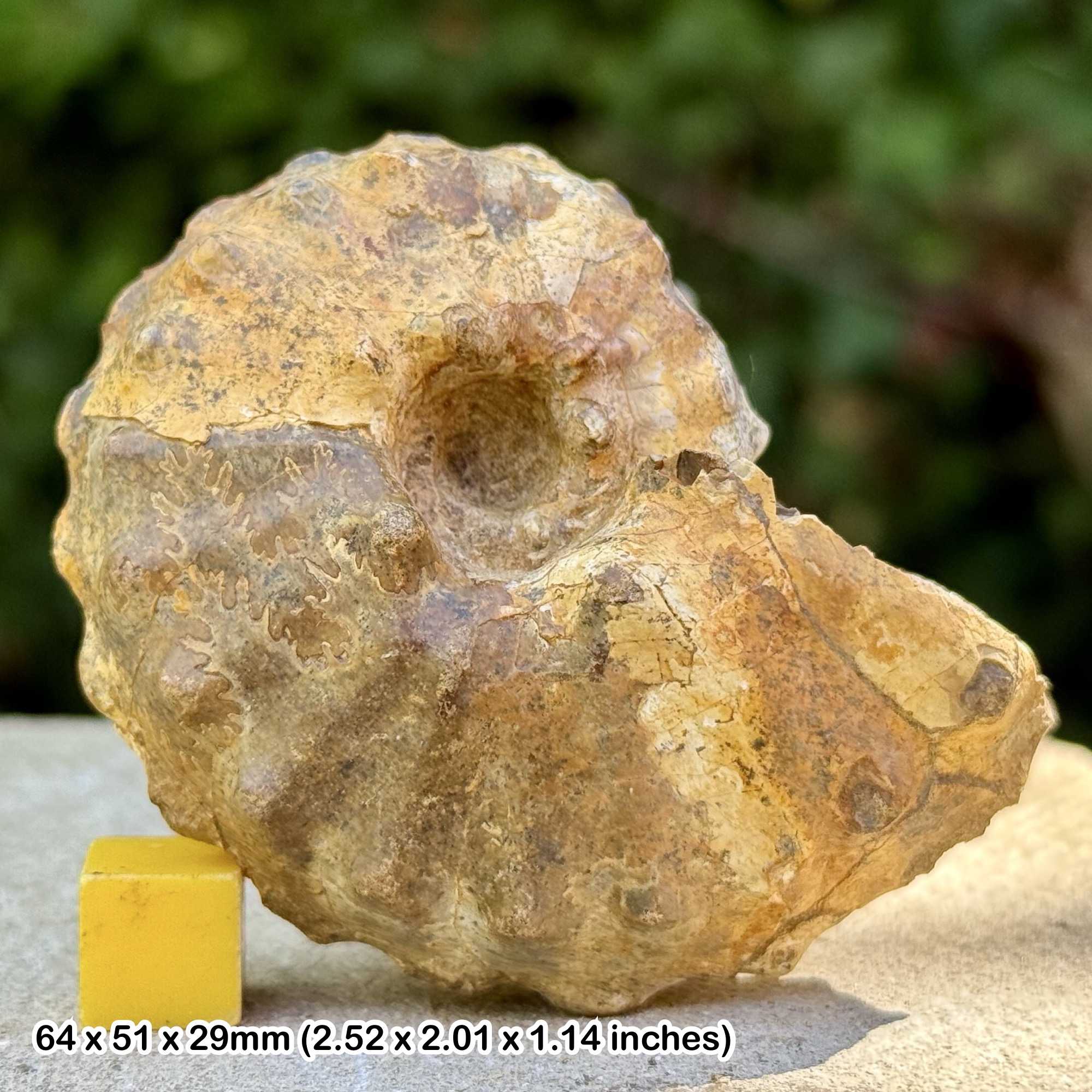
RARE Buchiceras bilobatum Ammonite Fossil Coniacian Cretaceous Peru Genuine Specimen COA
£ 24.00
RARE BUCHICERAS BILOBATUM AMMONITE FOSSIL FROM PERUThis listing presents a rare Buchiceras bilobatum ammonite fossil originating
from the Coniacian stage of the Late Cretaceous Period, found in Peru. Formed around 89–86 million years ago, this specimen offers both collectors and enthusiasts the chance to own a tangible piece of deep geological history. Each ammonite is hand-selected for quality and authenticity, and this particular fossil is accompanied by a Certificate of Authenticity, ensuring its provenance. The photos show the exact specimen you will receive, with a 1 cm scale cube provided for accurate sizing. GEOLOGICAL AGE AND FORMATIONThe Coniacian stage is part of the Late Cretaceous, a period characterised by high sea levels, warm climates, and widespread marine environments. During this time, vast shallow seas covered parts of South America, leading to the deposition of fossil-rich limestone and marl beds. Ammonites such as Buchiceras bilobatum thrived in these warm, nutrient-rich waters, and their remains became preserved in the sedimentary rocks of Peru.Peruvian Cretaceous fossil beds are globally significant, offering key insights into marine biodiversity during the Coniacian stage. The preservation quality of ammonites in this region is often exceptional, with shell morphology and ribbing patterns remaining clear even after millions of years. SPECIES PROFILE – BUCHICERAS BILOBATUMBuchiceras bilobatum is an extinct ammonite species belonging to the order Ammonitida, superfamily Acanthoceratoidea, and family Fagesiidae. This ammonite is easily distinguished by its distinctive ribbing and shell form:
• Shell Structure: Moderately evolute coiling, exposing earlier whorls.
• Ornamentation: Strong, pronounced ribs crossing the flanks and extending toward the venter.
• Morphology: Bilobate features along the suture lines, giving rise to its species name bilobatum.
• Adaptations: The ribbing and shell compression suggest adaptations for hydrodynamic movement and buoyancy control in open marine environments.Such features not only make this ammonite visually striking but also scientifically valuable for paleontological classification. SCIENTIFIC SIGNIFICANCEBuchiceras bilobatum is an important index fossil for the Coniacian stage, helping geologists correlate rock layers across distant geographic regions. Its limited stratigraphic range makes it particularly useful in establishing the relative ages of Coniacian deposits. Fossils like this one contribute to our understanding of ancient ecosystems and the global distribution of ammonites during the Late Cretaceous.Ammonites are also renowned for their rapid evolution and diverse shell forms, making them key markers in the fossil record. Specimens such as this highlight both the evolutionary complexity of the group and the environmental conditions of their time. COLLECTOR AND DISPLAY VALUEThis rare Peruvian ammonite fossil is a superb piece for both collectors and educational displays. Its bold ribbing, aesthetic preservation, and scientific significance make it stand out among Cretaceous ammonites. Peruvian examples are less commonly available on the market compared to Madagascan or European ammonites, making this specimen an excellent opportunity for serious collectors.Whether showcased in a private collection, used for study, or displayed in a natural history setting, this fossil provides a powerful connection to Earth’s ancient past. AUTHENTICITY AND GUARANTEE
• Species: Buchiceras bilobatum
• Age: Coniacian Stage, Late Cretaceous (approx. 89–86 million years old)
• Location: Peru
• Supplied with a Certificate of Authenticity
• The exact fossil in the photographs will be sentThis rare Buchiceras bilobatum ammonite fossil is both a scientifically valuable specimen and a striking natural artefact, perfect for collectors seeking authenticity, rarity, and historical depth.
from the Coniacian stage of the Late Cretaceous Period, found in Peru. Formed around 89–86 million years ago, this specimen offers both collectors and enthusiasts the chance to own a tangible piece of deep geological history. Each ammonite is hand-selected for quality and authenticity, and this particular fossil is accompanied by a Certificate of Authenticity, ensuring its provenance. The photos show the exact specimen you will receive, with a 1 cm scale cube provided for accurate sizing. GEOLOGICAL AGE AND FORMATIONThe Coniacian stage is part of the Late Cretaceous, a period characterised by high sea levels, warm climates, and widespread marine environments. During this time, vast shallow seas covered parts of South America, leading to the deposition of fossil-rich limestone and marl beds. Ammonites such as Buchiceras bilobatum thrived in these warm, nutrient-rich waters, and their remains became preserved in the sedimentary rocks of Peru.Peruvian Cretaceous fossil beds are globally significant, offering key insights into marine biodiversity during the Coniacian stage. The preservation quality of ammonites in this region is often exceptional, with shell morphology and ribbing patterns remaining clear even after millions of years. SPECIES PROFILE – BUCHICERAS BILOBATUMBuchiceras bilobatum is an extinct ammonite species belonging to the order Ammonitida, superfamily Acanthoceratoidea, and family Fagesiidae. This ammonite is easily distinguished by its distinctive ribbing and shell form:
• Shell Structure: Moderately evolute coiling, exposing earlier whorls.
• Ornamentation: Strong, pronounced ribs crossing the flanks and extending toward the venter.
• Morphology: Bilobate features along the suture lines, giving rise to its species name bilobatum.
• Adaptations: The ribbing and shell compression suggest adaptations for hydrodynamic movement and buoyancy control in open marine environments.Such features not only make this ammonite visually striking but also scientifically valuable for paleontological classification. SCIENTIFIC SIGNIFICANCEBuchiceras bilobatum is an important index fossil for the Coniacian stage, helping geologists correlate rock layers across distant geographic regions. Its limited stratigraphic range makes it particularly useful in establishing the relative ages of Coniacian deposits. Fossils like this one contribute to our understanding of ancient ecosystems and the global distribution of ammonites during the Late Cretaceous.Ammonites are also renowned for their rapid evolution and diverse shell forms, making them key markers in the fossil record. Specimens such as this highlight both the evolutionary complexity of the group and the environmental conditions of their time. COLLECTOR AND DISPLAY VALUEThis rare Peruvian ammonite fossil is a superb piece for both collectors and educational displays. Its bold ribbing, aesthetic preservation, and scientific significance make it stand out among Cretaceous ammonites. Peruvian examples are less commonly available on the market compared to Madagascan or European ammonites, making this specimen an excellent opportunity for serious collectors.Whether showcased in a private collection, used for study, or displayed in a natural history setting, this fossil provides a powerful connection to Earth’s ancient past. AUTHENTICITY AND GUARANTEE
• Species: Buchiceras bilobatum
• Age: Coniacian Stage, Late Cretaceous (approx. 89–86 million years old)
• Location: Peru
• Supplied with a Certificate of Authenticity
• The exact fossil in the photographs will be sentThis rare Buchiceras bilobatum ammonite fossil is both a scientifically valuable specimen and a striking natural artefact, perfect for collectors seeking authenticity, rarity, and historical depth.
Other Products