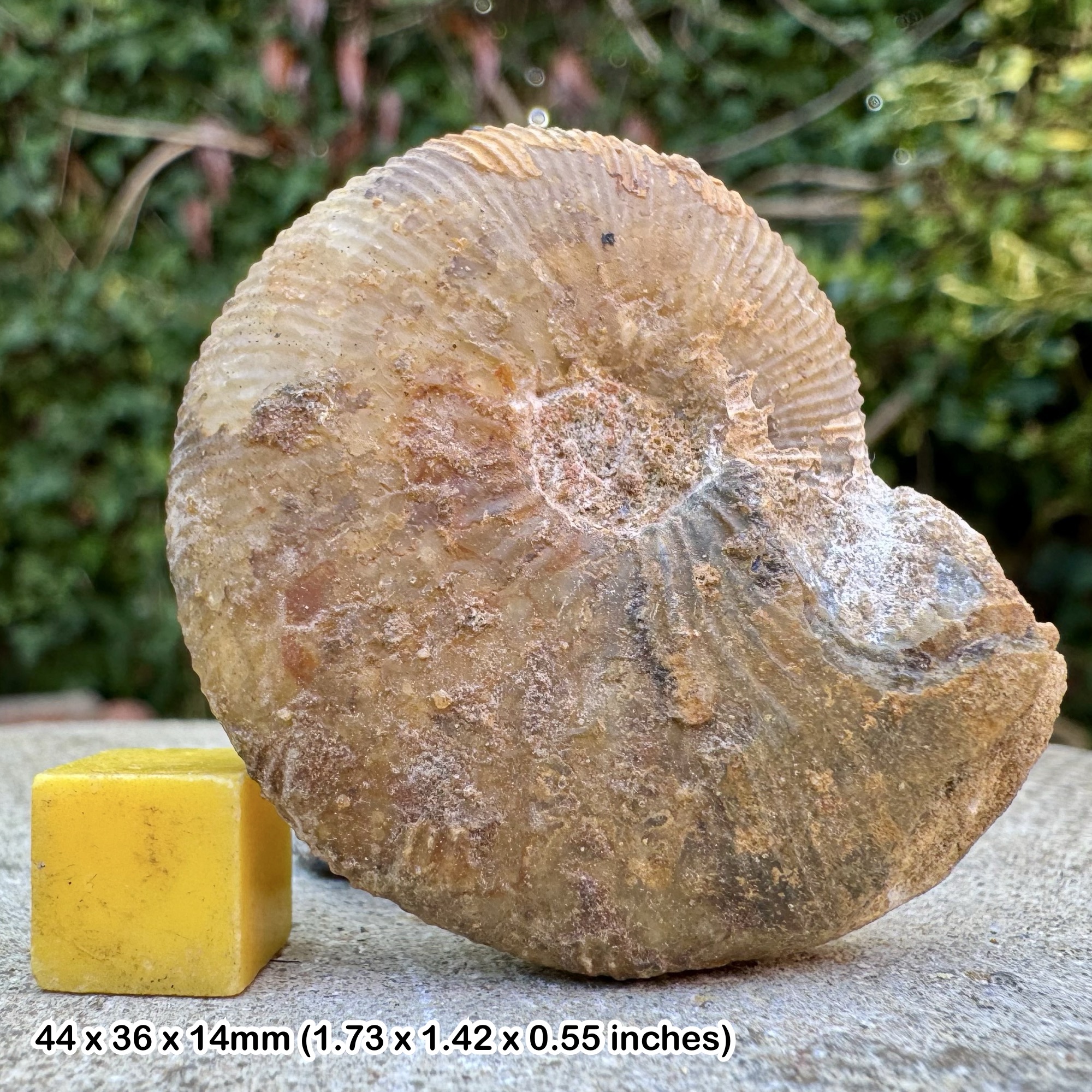
Rare Catasigaloceras Ammonite Fossil Jurassic South Cave Humberside UK Genuine Authentic COA
£ 14.40
AUTHENTIC JURASSIC FOSSIL FROM SOUTH CAVE, HUMBERSIDEThis rare Catasigaloceras ammonite fossil is a genuine specimen from the Lower
Callovian stage of the Middle Jurassic, discovered in South Cave, Humberside, United Kingdom. A carefully chosen piece, it highlights the unique beauty and scientific significance of this extinct marine cephalopod. The photographs show the actual specimen you will receive, with a 1 cm scale cube for full sizing reference. Every fossil is guaranteed authentic and comes with a Certificate of Authenticity for complete assurance. GEOLOGICAL AGE AND PROVENANCEFormed around 166–163 million years ago during the Lower Callovian, this fossil originates from a time when the region of present-day South Cave was covered by shallow epicontinental seas. These waters formed part of the expansive Jurassic marine basins across Europe. The seafloor was made up of soft muds and silts, creating an environment perfectly suited to preserving marine life. As these sediments compacted over millions of years, ammonites like Catasigaloceras were fossilised with remarkable detail, capturing their ribbing, shell structure, and coiled whorls. Fossils from this area provide an invaluable record of Jurassic biodiversity and depositional environments. SPECIES IDENTIFICATION AND CLASSIFICATIONCatasigaloceras belongs to the class Cephalopoda, order Ammonitida, within the superfamily Stephanoceratoidea. Ammonites of this genus are notable for their compressed shells, distinct ribbing, and elegant planispiral coiling. The genus is closely related to Sigaloceras but is distinguished by subtle differences in ornamentation and whorl structure. These morphological traits make Catasigaloceras an important genus for both paleontological study and private collections. Its clear and recognisable features also make it a useful marker within Jurassic biozones. MORPHOLOGY AND DISTINCTIVE TRAITSThe specimen displays the characteristic features of Catasigaloceras, including bold ribbing, compressed whorls, and an elegant spiral form. The ribs sweep across the flanks of the shell in a regular pattern, creating a visually striking fossil. These ribs may have provided structural reinforcement to the shell and influenced the animal’s hydrodynamics in its marine environment. The symmetry of the coiling and the clarity of the ribbing are both scientifically valuable and aesthetically appealing, making this a standout specimen for collectors. SCIENTIFIC IMPORTANCE AND STRATIGRAPHYAmmonites such as Catasigaloceras are highly significant in stratigraphy, as they serve as excellent index fossils. Their presence in Lower Callovian deposits allows geologists to date and correlate rock strata with precision. These fossils help reconstruct the evolutionary pathways of cephalopods and provide insight into the marine ecosystems of Jurassic Europe. Collectors value Catasigaloceras not only for its beauty but also for its role in refining the geological timescale. CONDITION AND PRESENTATIONThis fossil has been carefully prepared to retain its natural integrity while ensuring the distinctive features are fully visible. Ribbing and whorl details are sharply defined, offering a clear representation of the genus. It is a genuine, one-of-a-kind specimen, not a cast or reproduction. The photographs provided show the exact fossil you will receive, giving you confidence in both its authenticity and presentation. GUARANTEE OF AUTHENTICITYAll of our fossils are 100% genuine specimens, responsibly sourced and scientifically identified. Each specimen comes with a Certificate of Authenticity, verifying its provenance and authenticity. This rare Catasigaloceras ammonite fossil from South Cave, Humberside, is an exceptional example of Jurassic marine life, ideal for collectors, educators, and enthusiasts of natural history.
Callovian stage of the Middle Jurassic, discovered in South Cave, Humberside, United Kingdom. A carefully chosen piece, it highlights the unique beauty and scientific significance of this extinct marine cephalopod. The photographs show the actual specimen you will receive, with a 1 cm scale cube for full sizing reference. Every fossil is guaranteed authentic and comes with a Certificate of Authenticity for complete assurance. GEOLOGICAL AGE AND PROVENANCEFormed around 166–163 million years ago during the Lower Callovian, this fossil originates from a time when the region of present-day South Cave was covered by shallow epicontinental seas. These waters formed part of the expansive Jurassic marine basins across Europe. The seafloor was made up of soft muds and silts, creating an environment perfectly suited to preserving marine life. As these sediments compacted over millions of years, ammonites like Catasigaloceras were fossilised with remarkable detail, capturing their ribbing, shell structure, and coiled whorls. Fossils from this area provide an invaluable record of Jurassic biodiversity and depositional environments. SPECIES IDENTIFICATION AND CLASSIFICATIONCatasigaloceras belongs to the class Cephalopoda, order Ammonitida, within the superfamily Stephanoceratoidea. Ammonites of this genus are notable for their compressed shells, distinct ribbing, and elegant planispiral coiling. The genus is closely related to Sigaloceras but is distinguished by subtle differences in ornamentation and whorl structure. These morphological traits make Catasigaloceras an important genus for both paleontological study and private collections. Its clear and recognisable features also make it a useful marker within Jurassic biozones. MORPHOLOGY AND DISTINCTIVE TRAITSThe specimen displays the characteristic features of Catasigaloceras, including bold ribbing, compressed whorls, and an elegant spiral form. The ribs sweep across the flanks of the shell in a regular pattern, creating a visually striking fossil. These ribs may have provided structural reinforcement to the shell and influenced the animal’s hydrodynamics in its marine environment. The symmetry of the coiling and the clarity of the ribbing are both scientifically valuable and aesthetically appealing, making this a standout specimen for collectors. SCIENTIFIC IMPORTANCE AND STRATIGRAPHYAmmonites such as Catasigaloceras are highly significant in stratigraphy, as they serve as excellent index fossils. Their presence in Lower Callovian deposits allows geologists to date and correlate rock strata with precision. These fossils help reconstruct the evolutionary pathways of cephalopods and provide insight into the marine ecosystems of Jurassic Europe. Collectors value Catasigaloceras not only for its beauty but also for its role in refining the geological timescale. CONDITION AND PRESENTATIONThis fossil has been carefully prepared to retain its natural integrity while ensuring the distinctive features are fully visible. Ribbing and whorl details are sharply defined, offering a clear representation of the genus. It is a genuine, one-of-a-kind specimen, not a cast or reproduction. The photographs provided show the exact fossil you will receive, giving you confidence in both its authenticity and presentation. GUARANTEE OF AUTHENTICITYAll of our fossils are 100% genuine specimens, responsibly sourced and scientifically identified. Each specimen comes with a Certificate of Authenticity, verifying its provenance and authenticity. This rare Catasigaloceras ammonite fossil from South Cave, Humberside, is an exceptional example of Jurassic marine life, ideal for collectors, educators, and enthusiasts of natural history.
Other Products