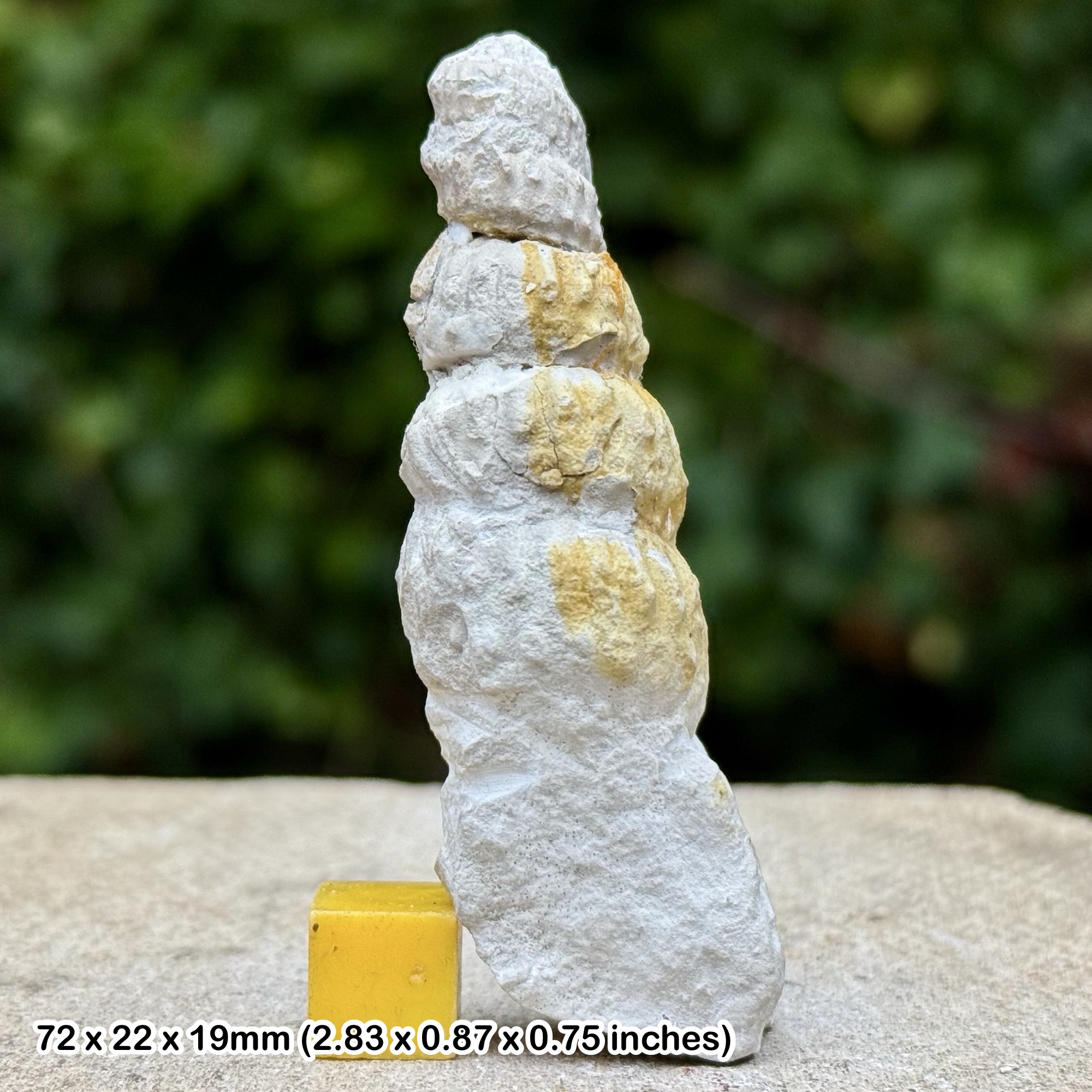
Rare Hypoturrilites mantelli Heteromorph Fossil Ammonite Cenomanian Cretaceous Sussex United Kingdom with COA
£ 18.00
RARE HYPOTURRILITES MANTELLI HETEROMORPH AMMONITE FROM SUSSEXThis listing offers a rare Hypoturrilites mantelli heteromorph fossil ammonite,
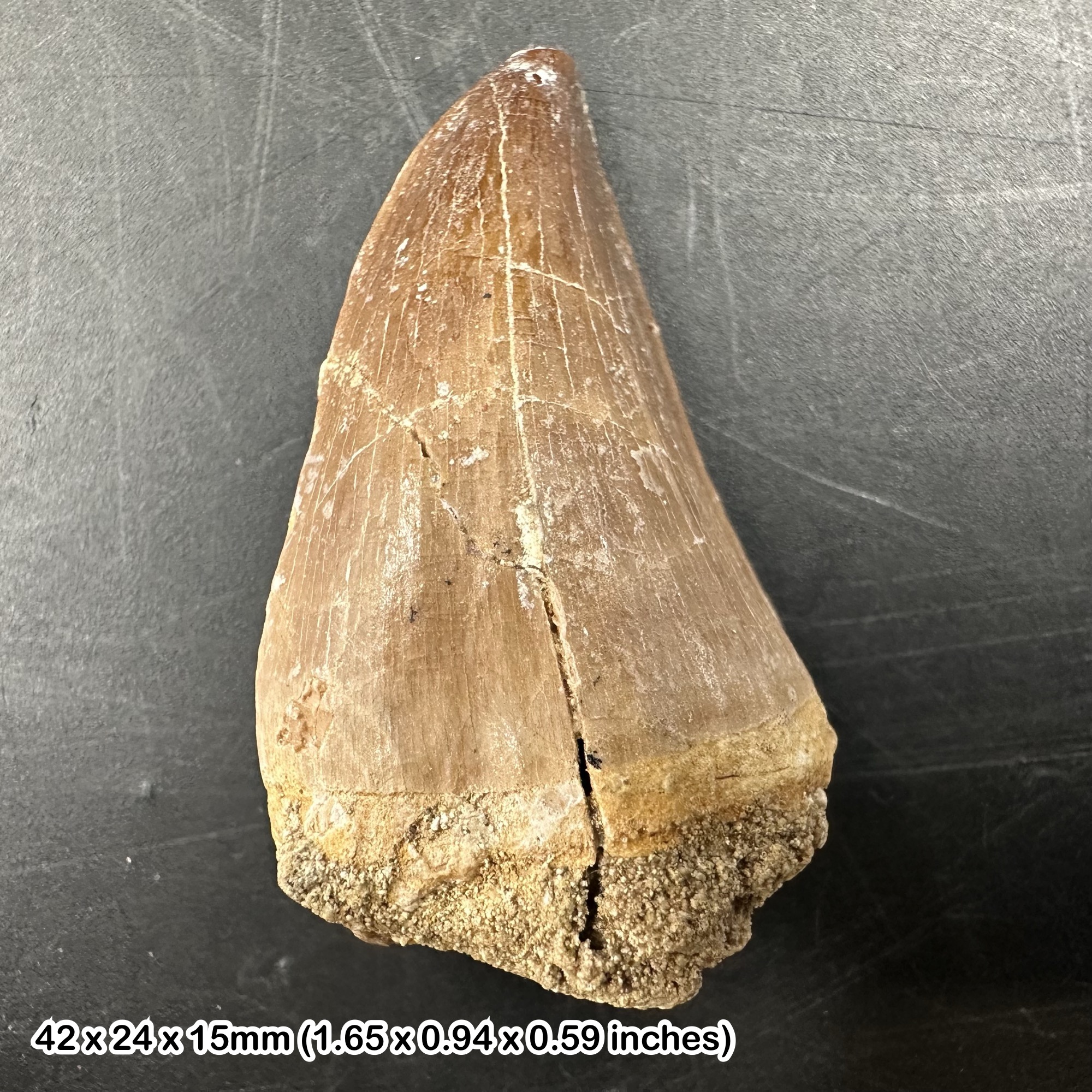
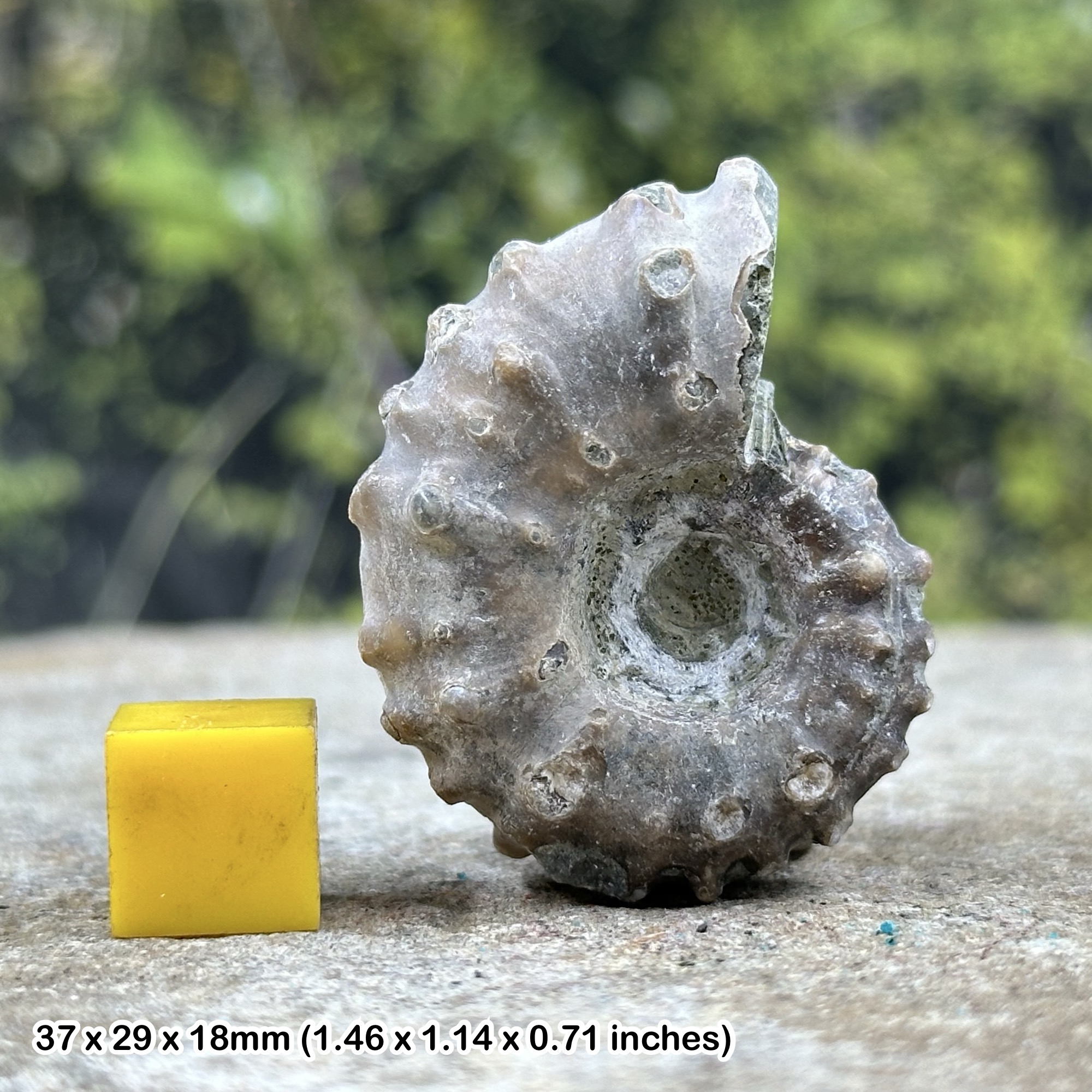
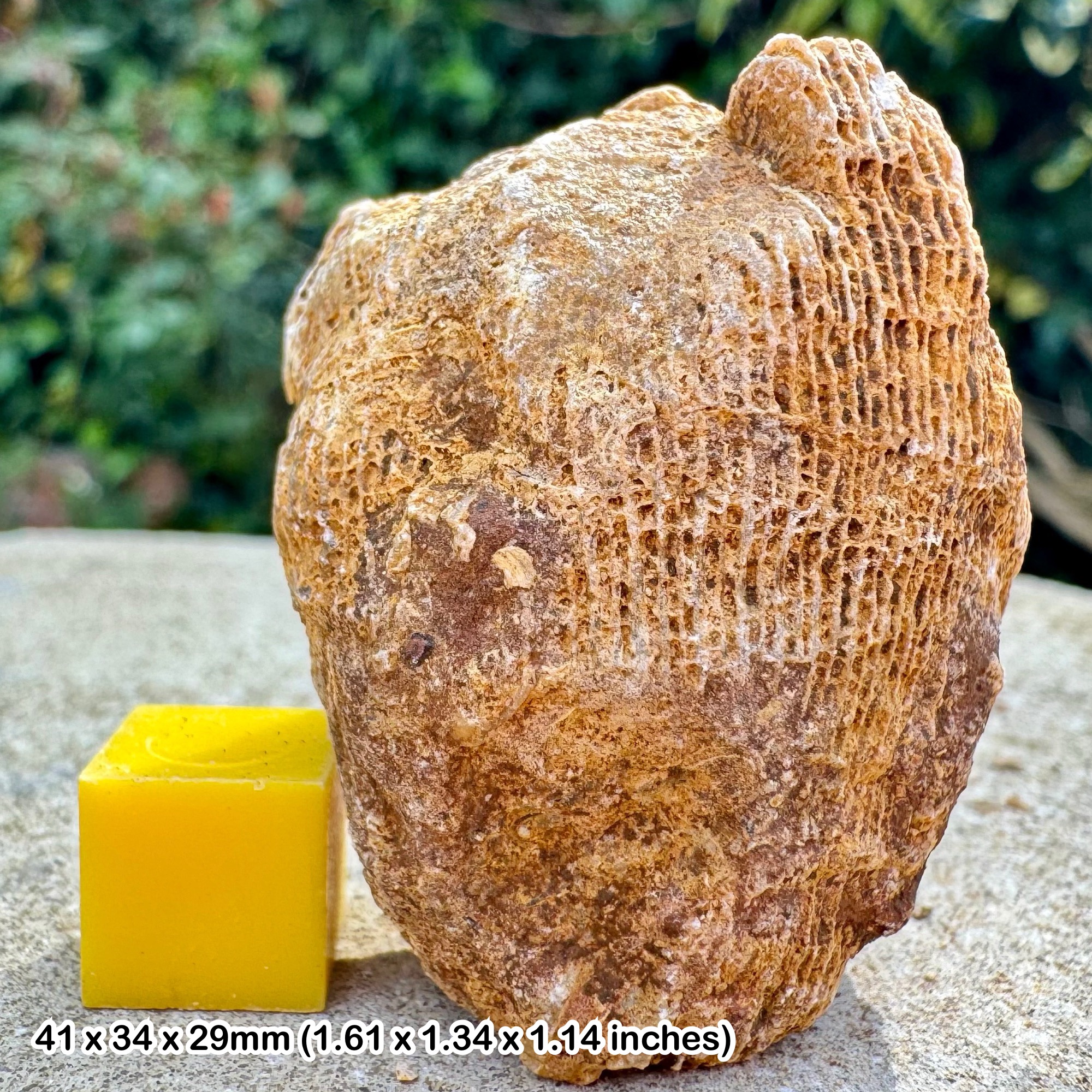
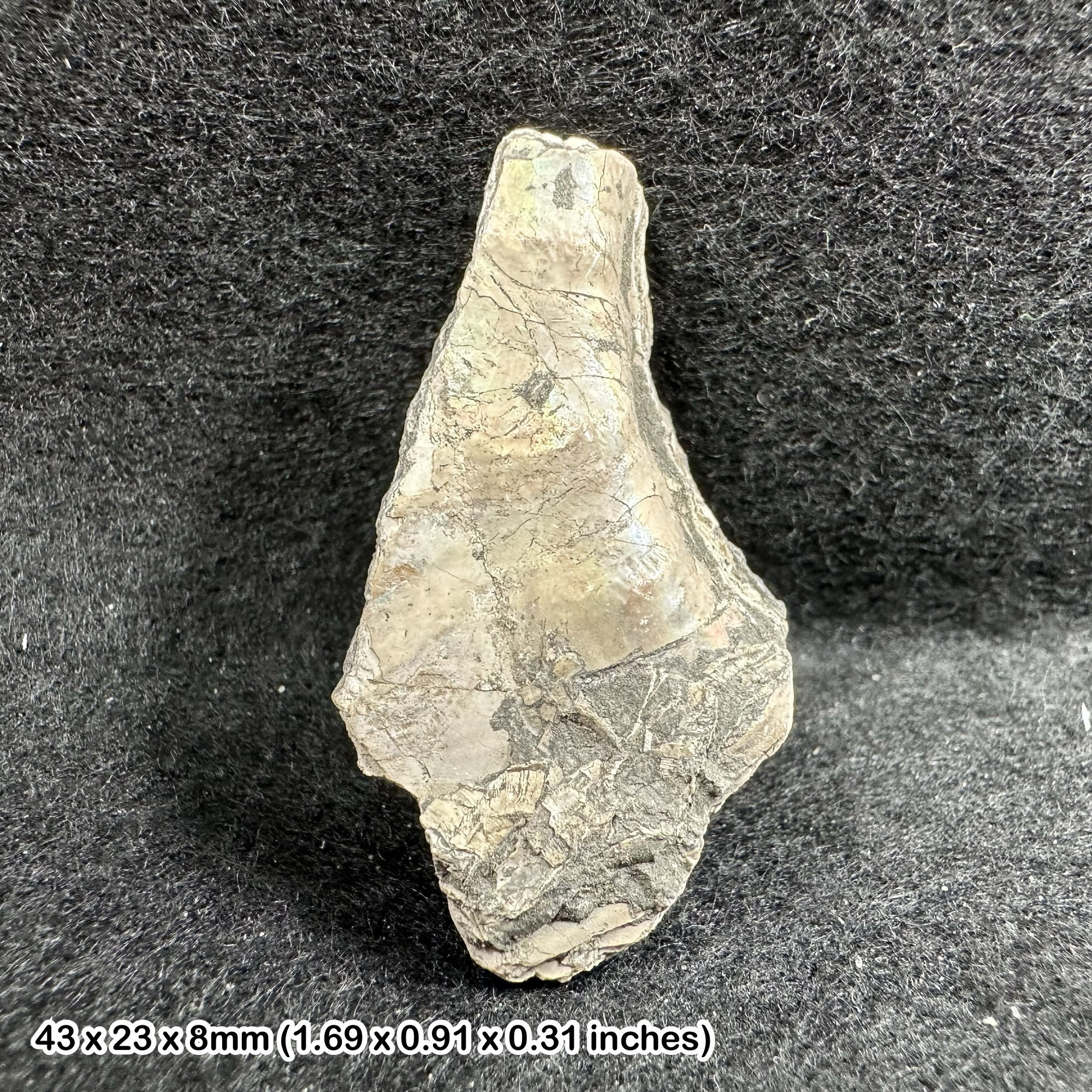
collected from the Cenomanian chalk deposits of Sussex, United Kingdom. Dating to the Late Cretaceous Period, around 100–94 million years ago, this species represents one of the distinctive heteromorph ammonites, characterised by their unusual, non-planispiral shell coiling. Fossils of Hypoturrilites mantelli are especially prized due to their rarity, diagnostic morphology, and scientific importance in stratigraphy.All our fossils are 100% genuine specimens and come with a Certificate of Authenticity. The specimen photographed is the exact fossil you will receive, with a 1cm scale cube and rule squares provided for accurate measurement reference. GEOLOGICAL AGE AND PROVENANCEThe fossil comes from the Cenomanian Stage, the first stage of the Late Cretaceous. This period was marked by globally high sea levels, when vast shallow seas extended across Europe. The warm marine environments supported thriving populations of ammonites, which evolved into diverse forms, including heteromorphs.The chalk formations of Sussex, part of the iconic White Chalk cliffs, are among the most important fossil-bearing strata in Europe. They preserve a wealth of marine life from the Cenomanian seas, with ammonites such as Hypoturrilites mantelli serving as crucial index fossils for precise geological dating. FOSSIL TYPE AND SCIENTIFIC CLASSIFICATION
• Genus: Hypoturrilites
• Species: Hypoturrilites mantelli
• Order: Ammonitida
• Superfamily: Turrilitoidea
• Family: TurrilitidaeHypoturrilites mantelli is a stratigraphically significant species, frequently used in biostratigraphy to identify and correlate Cenomanian sequences. Its distinctive shell form and restricted range make it especially valuable for geological studies. MORPHOLOGICAL FEATURESThis ammonite displays the key features typical of the genus Hypoturrilites:
• Helicoidal Shell Growth: The shell grows in a turreted or irregular spiral, distinguishing it from traditional flat-coiled ammonites.
• Strong Ribbing: Prominent ribs cross the flanks of the shell, often bifurcating or branching.
• Tubercles and Nodes: Diagnostic nodes frequently appear along the ribs, enhancing ornamentation and aiding species recognition.
• Keel Development: A keel often runs along the venter, adding structural strength and definition.These unique features give Hypoturrilites mantelli its striking appearance and high scientific value. SCIENTIFIC AND COLLECTOR IMPORTANCEAs a heteromorph ammonite, Hypoturrilites mantelli illustrates the evolutionary diversity of the Cretaceous seas. Its role as an index fossil makes it crucial for correlating Cenomanian chalk deposits across Europe. This species has also been historically significant, with specimens contributing to early palaeontological studies of English chalk formations.Collectors value Hypoturrilites mantelli for its rarity, its distinctive turret-like shell form, and its provenance from the historically important fossil beds of Sussex. Well-preserved specimens are increasingly difficult to obtain, adding to their desirability. DISPLAY AND EDUCATIONAL VALUEThis specimen has been carefully selected for its preservation and diagnostic features, making it an outstanding display piece and a scientifically meaningful fossil. Its dramatic heteromorph form makes it a natural focal point in any collection.Perfect for museum exhibits, educational displays, or private fossil collections, this rare Hypoturrilites mantelli ammonite from Sussex offers both aesthetic beauty and geological significance. It represents the fascinating evolutionary experimentation of heteromorph ammonites and provides a tangible connection to the warm shallow seas of the Cenomanian in the Late Cretaceous.
collected from the Cenomanian chalk deposits of Sussex, United Kingdom. Dating to the Late Cretaceous Period, around 100–94 million years ago, this species represents one of the distinctive heteromorph ammonites, characterised by their unusual, non-planispiral shell coiling. Fossils of Hypoturrilites mantelli are especially prized due to their rarity, diagnostic morphology, and scientific importance in stratigraphy.All our fossils are 100% genuine specimens and come with a Certificate of Authenticity. The specimen photographed is the exact fossil you will receive, with a 1cm scale cube and rule squares provided for accurate measurement reference. GEOLOGICAL AGE AND PROVENANCEThe fossil comes from the Cenomanian Stage, the first stage of the Late Cretaceous. This period was marked by globally high sea levels, when vast shallow seas extended across Europe. The warm marine environments supported thriving populations of ammonites, which evolved into diverse forms, including heteromorphs.The chalk formations of Sussex, part of the iconic White Chalk cliffs, are among the most important fossil-bearing strata in Europe. They preserve a wealth of marine life from the Cenomanian seas, with ammonites such as Hypoturrilites mantelli serving as crucial index fossils for precise geological dating. FOSSIL TYPE AND SCIENTIFIC CLASSIFICATION
• Genus: Hypoturrilites
• Species: Hypoturrilites mantelli
• Order: Ammonitida
• Superfamily: Turrilitoidea
• Family: TurrilitidaeHypoturrilites mantelli is a stratigraphically significant species, frequently used in biostratigraphy to identify and correlate Cenomanian sequences. Its distinctive shell form and restricted range make it especially valuable for geological studies. MORPHOLOGICAL FEATURESThis ammonite displays the key features typical of the genus Hypoturrilites:
• Helicoidal Shell Growth: The shell grows in a turreted or irregular spiral, distinguishing it from traditional flat-coiled ammonites.
• Strong Ribbing: Prominent ribs cross the flanks of the shell, often bifurcating or branching.
• Tubercles and Nodes: Diagnostic nodes frequently appear along the ribs, enhancing ornamentation and aiding species recognition.
• Keel Development: A keel often runs along the venter, adding structural strength and definition.These unique features give Hypoturrilites mantelli its striking appearance and high scientific value. SCIENTIFIC AND COLLECTOR IMPORTANCEAs a heteromorph ammonite, Hypoturrilites mantelli illustrates the evolutionary diversity of the Cretaceous seas. Its role as an index fossil makes it crucial for correlating Cenomanian chalk deposits across Europe. This species has also been historically significant, with specimens contributing to early palaeontological studies of English chalk formations.Collectors value Hypoturrilites mantelli for its rarity, its distinctive turret-like shell form, and its provenance from the historically important fossil beds of Sussex. Well-preserved specimens are increasingly difficult to obtain, adding to their desirability. DISPLAY AND EDUCATIONAL VALUEThis specimen has been carefully selected for its preservation and diagnostic features, making it an outstanding display piece and a scientifically meaningful fossil. Its dramatic heteromorph form makes it a natural focal point in any collection.Perfect for museum exhibits, educational displays, or private fossil collections, this rare Hypoturrilites mantelli ammonite from Sussex offers both aesthetic beauty and geological significance. It represents the fascinating evolutionary experimentation of heteromorph ammonites and provides a tangible connection to the warm shallow seas of the Cenomanian in the Late Cretaceous.