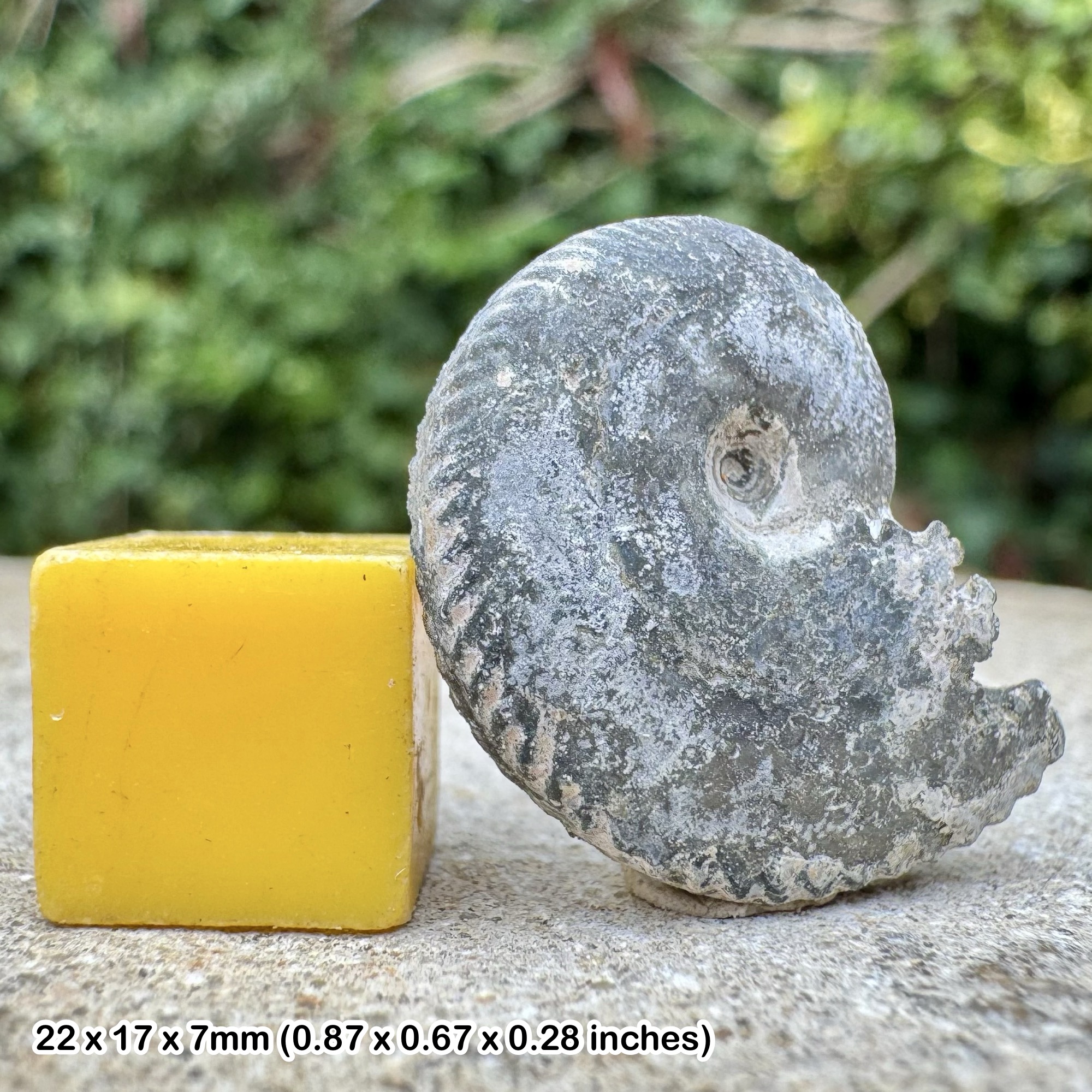
Anahoplites planus Ammonite Fossil Rare Gault Clay Albian Cretaceous Folkestone UK COA
£ 6.90
RARE ANAHOPLITES PLANUS AMMONITE FOSSIL FROM FOLKESTONE, UKThis listing features a rare and authentic Anahoplites planus ammonite fossil,
collected from the world-renowned Gault Clay Formation at Folkestone, Kent, United Kingdom. Dating to the Albian Stage of the Cretaceous period (c. 113–100 million years ago), this specimen represents one of the finest ammonites preserved from the famous English coastal exposures. Each fossil is carefully selected for its scientific importance and display quality, and this piece comes with a Certificate of Authenticity. The photographs provided show the exact specimen you will receive, with a 1 cm scale cube included for precise size reference. GEOLOGICAL CONTEXT: GAULT CLAY FORMATION, ALBIAN STAGEThe Gault Clay Formation is one of Britain’s most important fossil-bearing units, deposited during the Albian Stage of the Lower Cretaceous. Formed in a shallow marine environment, these fine blue-grey clays were laid down in calm, low-energy seas rich in marine fauna. Fossils from the Gault Clay are celebrated for their excellent preservation, often retaining fine details of ammonite shell structure.The Albian is a critical stage for ammonite biostratigraphy, with species like Anahoplites planus serving as zonal index fossils that help paleontologists correlate layers across different regions. Folkestone, in particular, is considered a global reference site for Cretaceous ammonites, making specimens from this locality especially prized. SCIENTIFIC CLASSIFICATION
• Fossil Type: Ammonite
• Genus: Anahoplites
• Species: planus
• Order: Ammonitida
• Superfamily: Hoplitaceae
• Family: Hoplitidae
• Geological Age: Albian Stage, Lower Cretaceous (c. 113–100 million years ago)
• Formation: Gault Clay
• Locality: Folkestone, Kent, United Kingdom MORPHOLOGICAL FEATURES OF ANAHOPLITES PLANUSAnahoplites planus is a distinctive ammonite known for its compressed, discoidal shell form with relatively flat sides. Key features of this species include:
• Fine, evenly spaced ribs crossing the flanks, providing an elegant ornamentation to the shell.
• Prominent keel running along the venter, enhancing hydrodynamic efficiency.
• Planispiral coiling, with the whorls enveloping each other in a smooth, regular fashion.
• Subtle tubercles or nodes on the ventrolateral margins, characteristic of Hoplitidae.These traits made Anahoplites planus well adapted to life as an active swimmer in mid-water marine environments. Its streamlined shape and strong ribbing suggest both strength and agility in the open Cretaceous seas. PALEOECOLOGICAL SIGNIFICANCEAs part of the Hoplitidae family, Anahoplites represents a group of ammonites that were highly successful during the Albian. These cephalopods lived as nektonic predators, actively hunting small crustaceans, molluscs, and planktonic organisms. At the same time, they formed part of the diet of larger marine reptiles such as ichthyosaurs and plesiosaurs.The Gault Clay environment at Folkestone captures a snapshot of marine life in the mid-Cretaceous, when rising sea levels transformed much of Europe into a shallow epicontinental sea. Fossils such as this ammonite provide a tangible connection to those ecosystems and are invaluable for reconstructing ancient marine biodiversity. COLLECTOR’S VALUE AND DISPLAY POTENTIALThis specimen of Anahoplites planus is not only scientifically important but also highly collectible. Its classic coiled shape and ribbed ornamentation make it a striking display fossil, ideal for both private collections and educational purposes. Fossils from Folkestone’s Gault Clay are increasingly scarce due to restricted collecting opportunities, which adds to their desirability and long-term value.Collectors of Cretaceous fossils, British ammonites, or rare marine invertebrates will recognise the importance of this specimen. Its provenance, combined with its geological age and well-defined features, ensures it stands as both a beautiful natural artifact and a scientifically relevant piece. KEY DETAILS
• Species: Anahoplites planus
• Age: Albian Stage, Lower Cretaceous (113–100 million years ago)
• Location: Folkestone, Kent, United Kingdom
• Formation: Gault Clay
• Features: Compressed planispiral shell, fine ribs, keel, subtle tubercles
• Authenticity: 100% genuine specimen with Certificate of Authenticity
• Exact Specimen: The fossil pictured is the one you will receive
• Scale: 1 cm reference cube shown in photosThis rare Anahoplites planus ammonite fossil from the Gault Clay of Folkestone offers an exceptional opportunity to own a scientifically valuable and visually captivating specimen from one of the most famous fossil sites in the world.
collected from the world-renowned Gault Clay Formation at Folkestone, Kent, United Kingdom. Dating to the Albian Stage of the Cretaceous period (c. 113–100 million years ago), this specimen represents one of the finest ammonites preserved from the famous English coastal exposures. Each fossil is carefully selected for its scientific importance and display quality, and this piece comes with a Certificate of Authenticity. The photographs provided show the exact specimen you will receive, with a 1 cm scale cube included for precise size reference. GEOLOGICAL CONTEXT: GAULT CLAY FORMATION, ALBIAN STAGEThe Gault Clay Formation is one of Britain’s most important fossil-bearing units, deposited during the Albian Stage of the Lower Cretaceous. Formed in a shallow marine environment, these fine blue-grey clays were laid down in calm, low-energy seas rich in marine fauna. Fossils from the Gault Clay are celebrated for their excellent preservation, often retaining fine details of ammonite shell structure.The Albian is a critical stage for ammonite biostratigraphy, with species like Anahoplites planus serving as zonal index fossils that help paleontologists correlate layers across different regions. Folkestone, in particular, is considered a global reference site for Cretaceous ammonites, making specimens from this locality especially prized. SCIENTIFIC CLASSIFICATION
• Fossil Type: Ammonite
• Genus: Anahoplites
• Species: planus
• Order: Ammonitida
• Superfamily: Hoplitaceae
• Family: Hoplitidae
• Geological Age: Albian Stage, Lower Cretaceous (c. 113–100 million years ago)
• Formation: Gault Clay
• Locality: Folkestone, Kent, United Kingdom MORPHOLOGICAL FEATURES OF ANAHOPLITES PLANUSAnahoplites planus is a distinctive ammonite known for its compressed, discoidal shell form with relatively flat sides. Key features of this species include:
• Fine, evenly spaced ribs crossing the flanks, providing an elegant ornamentation to the shell.
• Prominent keel running along the venter, enhancing hydrodynamic efficiency.
• Planispiral coiling, with the whorls enveloping each other in a smooth, regular fashion.
• Subtle tubercles or nodes on the ventrolateral margins, characteristic of Hoplitidae.These traits made Anahoplites planus well adapted to life as an active swimmer in mid-water marine environments. Its streamlined shape and strong ribbing suggest both strength and agility in the open Cretaceous seas. PALEOECOLOGICAL SIGNIFICANCEAs part of the Hoplitidae family, Anahoplites represents a group of ammonites that were highly successful during the Albian. These cephalopods lived as nektonic predators, actively hunting small crustaceans, molluscs, and planktonic organisms. At the same time, they formed part of the diet of larger marine reptiles such as ichthyosaurs and plesiosaurs.The Gault Clay environment at Folkestone captures a snapshot of marine life in the mid-Cretaceous, when rising sea levels transformed much of Europe into a shallow epicontinental sea. Fossils such as this ammonite provide a tangible connection to those ecosystems and are invaluable for reconstructing ancient marine biodiversity. COLLECTOR’S VALUE AND DISPLAY POTENTIALThis specimen of Anahoplites planus is not only scientifically important but also highly collectible. Its classic coiled shape and ribbed ornamentation make it a striking display fossil, ideal for both private collections and educational purposes. Fossils from Folkestone’s Gault Clay are increasingly scarce due to restricted collecting opportunities, which adds to their desirability and long-term value.Collectors of Cretaceous fossils, British ammonites, or rare marine invertebrates will recognise the importance of this specimen. Its provenance, combined with its geological age and well-defined features, ensures it stands as both a beautiful natural artifact and a scientifically relevant piece. KEY DETAILS
• Species: Anahoplites planus
• Age: Albian Stage, Lower Cretaceous (113–100 million years ago)
• Location: Folkestone, Kent, United Kingdom
• Formation: Gault Clay
• Features: Compressed planispiral shell, fine ribs, keel, subtle tubercles
• Authenticity: 100% genuine specimen with Certificate of Authenticity
• Exact Specimen: The fossil pictured is the one you will receive
• Scale: 1 cm reference cube shown in photosThis rare Anahoplites planus ammonite fossil from the Gault Clay of Folkestone offers an exceptional opportunity to own a scientifically valuable and visually captivating specimen from one of the most famous fossil sites in the world.
Other Products