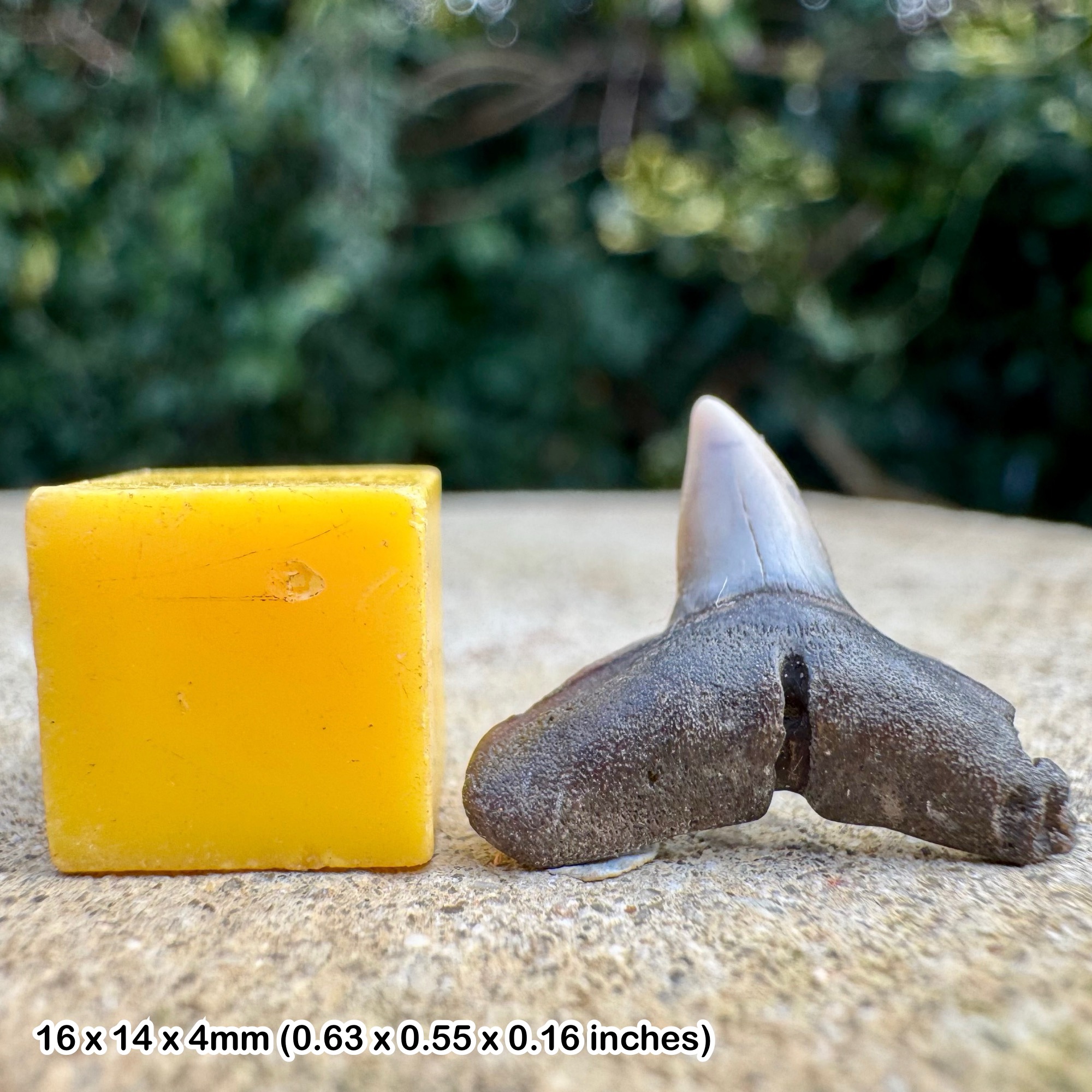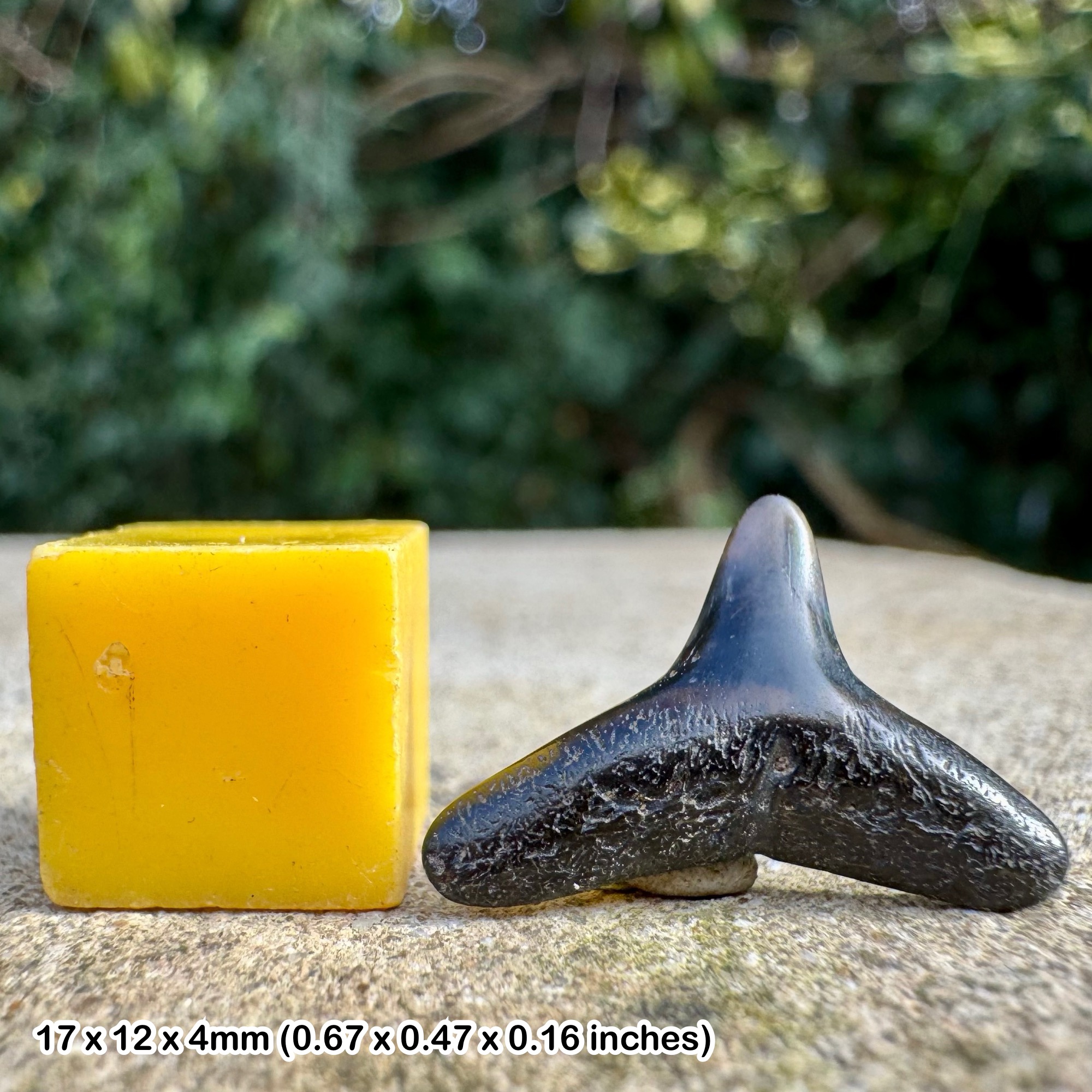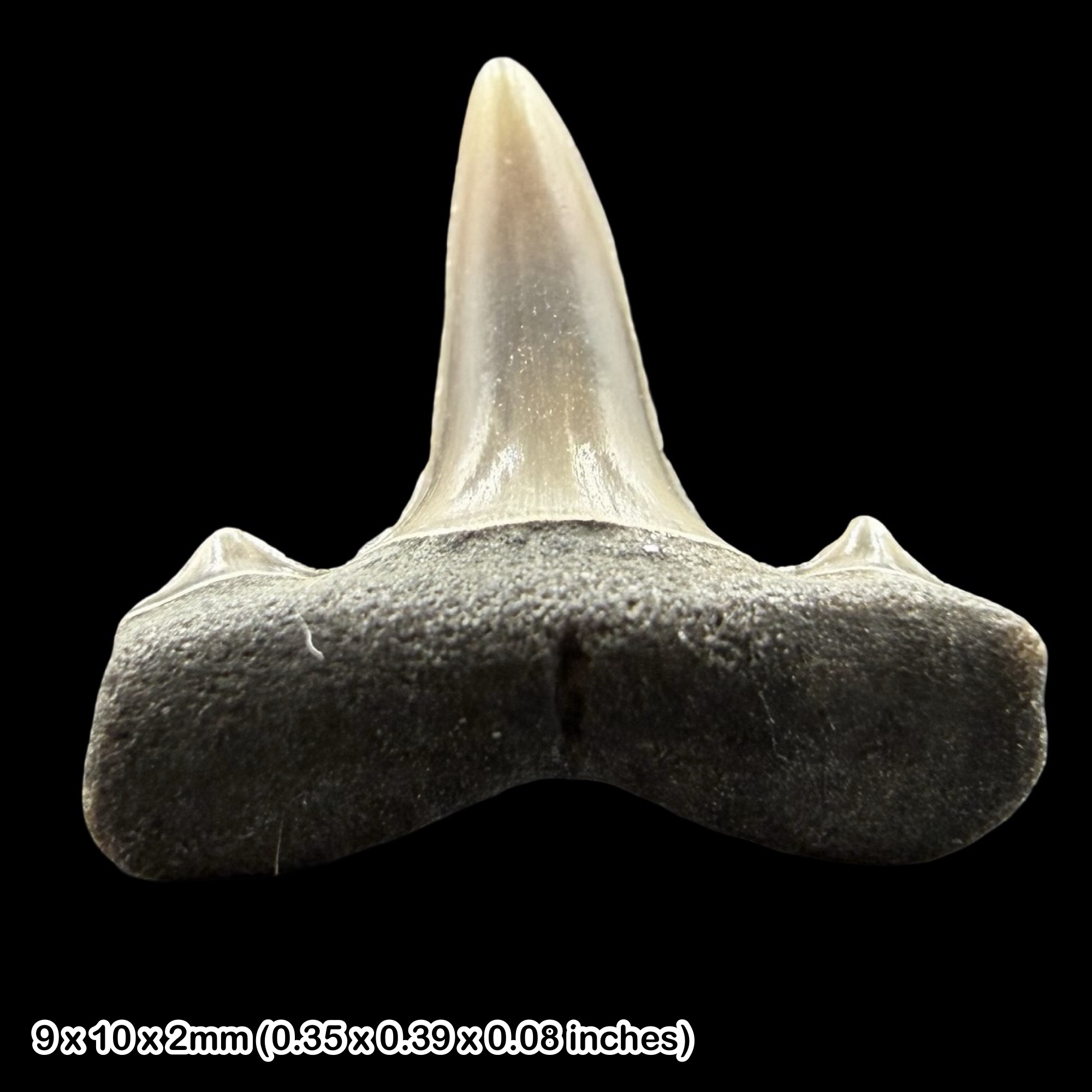
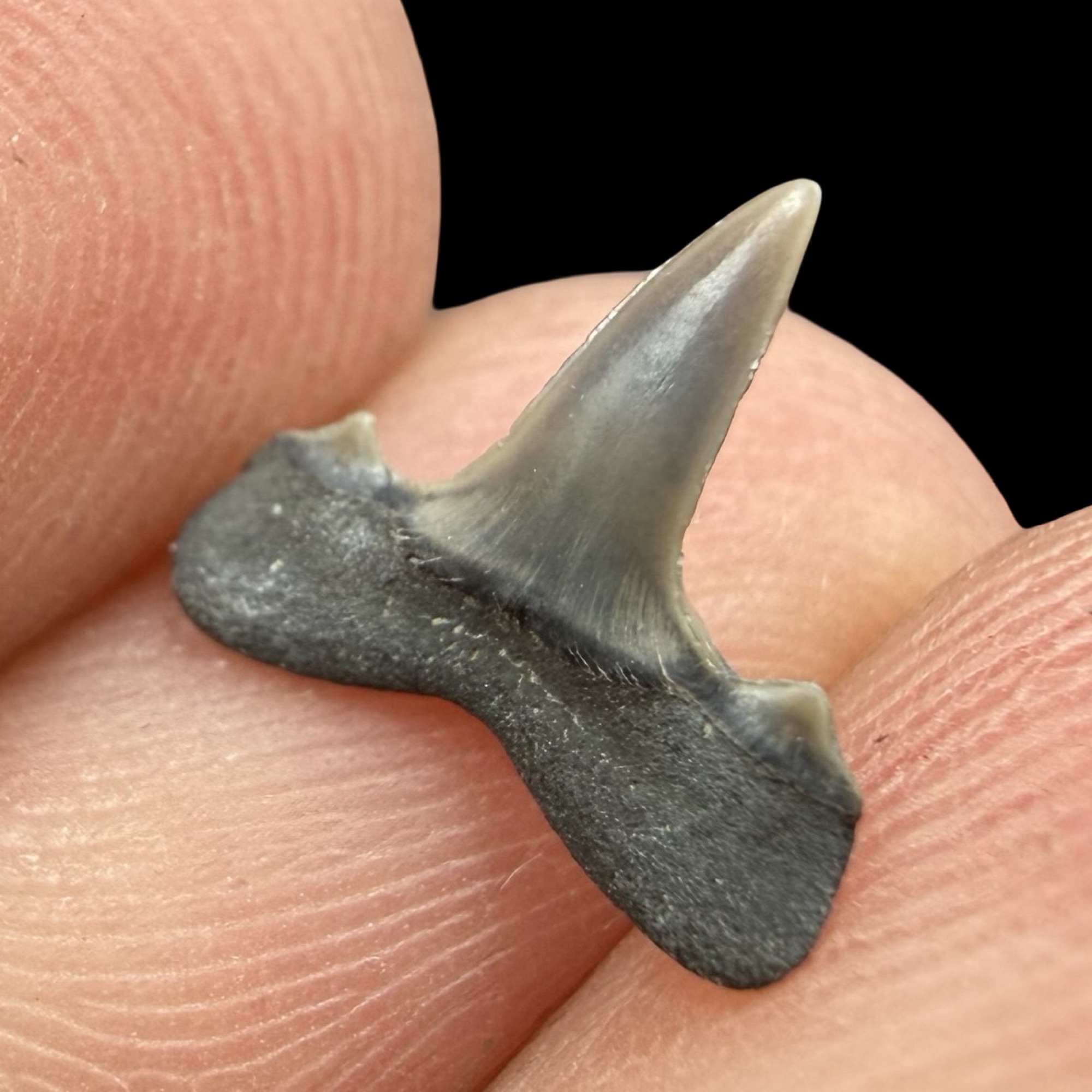
Rare Cretalamna appendiculata Shark Tooth Fossil Eocene London Clay Sheppey UK
£ 18.00
Rare Cretalamna appendiculata Shark Tooth from the London Clay FormationThis authentic fossil specimen is a rare shark tooth belonging to the species
Cretalamna appendiculata, discovered in the famous London Clay Formation of the Isle of Sheppey, Kent, United Kingdom. Dating to the Early Eocene Epoch (Ypresian Stage), approximately 56–47 million years ago, this fossil represents a powerful marine predator that inhabited the warm tropical seas that once covered southern Britain.The fossil tooth displayed in the listing photographs is the exact specimen you will receive, carefully selected for its preservation and natural character. Each specimen comes with a Certificate of Authenticity with a lifetime guarantee card, confirming that the fossil is a genuine prehistoric shark tooth.Full sizing is available in the listing photographs.Geological Origin – London Clay Formation, Isle of SheppeyThe Isle of Sheppey in Kent is internationally recognised as one of the most productive fossil localities in the United Kingdom for Eocene marine fossils. The fossils originate from the London Clay Formation, a thick marine sediment deposit laid down during the Ypresian Stage of the Early Eocene Epoch.These sediments accumulated in a subtropical marine basin that covered much of southern England around 50 million years ago. The London Clay consists primarily of fine-grained marine clay and silts deposited in relatively calm offshore conditions.The formation is renowned for preserving a diverse fossil assemblage including:
• Sharks and rays
• Fish remains
• Marine reptiles
• Molluscs and crustaceans
• Fossilised fruits and plant material transported from nearby tropical forestsStorm events and underwater currents occasionally concentrated shark teeth and other marine remains into fossil-bearing layers that are now exposed along the cliffs and beaches of the Isle of Sheppey.About Cretalamna appendiculata – An Ancient Lamniform SharkCretalamna appendiculata is an extinct species of lamniform shark, related to modern mackerel sharks such as the great white and mako sharks. This species first appeared during the Late Cretaceous and continued into the Paleogene, surviving the mass extinction that ended the age of dinosaurs.Taxonomic classification:
• Phylum: Chordata
• Class: Chondrichthyes
• Subclass: Elasmobranchii
• Order: Lamniformes
• Family: Otodontidae
• Genus: Cretalamna
• Species: Cretalamna appendiculataMembers of the genus Cretalamna are considered important ancestors within the evolutionary lineage that eventually produced large predatory sharks such as Otodus and Carcharocles.Morphology and Tooth CharacteristicsThe teeth of Cretalamna appendiculata are highly distinctive and well adapted for capturing and processing prey. The tooth structure reflects the feeding habits of an active marine predator.Typical features of this species include:
• A triangular central cusp forming the main cutting blade
• Smooth cutting edges suitable for slicing flesh
• One or more lateral cusplets positioned beside the main cusp
• A broad root structure providing strong attachment within the jaw
• Slight curvature of the crown depending on tooth position within the mouthThese sharks possessed multiple rows of teeth that were continuously replaced throughout their lives. Fossil teeth are therefore the most common remains preserved in the fossil record.The tooth shape indicates a predator capable of feeding on fish, marine reptiles, and other marine organisms inhabiting the Eocene seas.Eocene Marine Ecosystem of Southern EnglandDuring the Early Eocene, southern England lay within a warm subtropical marine environment that supported an incredibly diverse marine fauna. The seas were rich in fish and invertebrates, providing abundant food sources for sharks like Cretalamna appendiculata.The marine ecosystem included:
• Early teleost fish species
• Rays and smaller sharks
• Marine turtles
• Nautiloids and other molluscs
• Crustaceans and marine invertebratesThe Isle of Sheppey fossil deposits capture a snapshot of this ecosystem, preserving evidence of both marine life and the nearby tropical forests that bordered the ancient coastline.Authentic Fossil for Collectors and Natural History EnthusiastsThis fossil shark tooth represents a remarkable piece of Britain’s prehistoric marine history and comes from one of the country’s most famous fossil locations.Key features of this specimen:
• Genuine Cretalamna appendiculata shark tooth fossil
• From the London Clay Formation
• Early Eocene Ypresian Stage
• Collected on the Isle of Sheppey, Kent, UK
• The photographs show the exact fossil specimen you will receive
• Supplied with a Certificate of Authenticity and lifetime guaranteeThis specimen makes an excellent addition to fossil collections, shark tooth collections, natural history displays, or geological study collections, offering a direct connection to the ancient tropical seas that covered Britain around 50 million years ago.
Cretalamna appendiculata, discovered in the famous London Clay Formation of the Isle of Sheppey, Kent, United Kingdom. Dating to the Early Eocene Epoch (Ypresian Stage), approximately 56–47 million years ago, this fossil represents a powerful marine predator that inhabited the warm tropical seas that once covered southern Britain.The fossil tooth displayed in the listing photographs is the exact specimen you will receive, carefully selected for its preservation and natural character. Each specimen comes with a Certificate of Authenticity with a lifetime guarantee card, confirming that the fossil is a genuine prehistoric shark tooth.Full sizing is available in the listing photographs.Geological Origin – London Clay Formation, Isle of SheppeyThe Isle of Sheppey in Kent is internationally recognised as one of the most productive fossil localities in the United Kingdom for Eocene marine fossils. The fossils originate from the London Clay Formation, a thick marine sediment deposit laid down during the Ypresian Stage of the Early Eocene Epoch.These sediments accumulated in a subtropical marine basin that covered much of southern England around 50 million years ago. The London Clay consists primarily of fine-grained marine clay and silts deposited in relatively calm offshore conditions.The formation is renowned for preserving a diverse fossil assemblage including:
• Sharks and rays
• Fish remains
• Marine reptiles
• Molluscs and crustaceans
• Fossilised fruits and plant material transported from nearby tropical forestsStorm events and underwater currents occasionally concentrated shark teeth and other marine remains into fossil-bearing layers that are now exposed along the cliffs and beaches of the Isle of Sheppey.About Cretalamna appendiculata – An Ancient Lamniform SharkCretalamna appendiculata is an extinct species of lamniform shark, related to modern mackerel sharks such as the great white and mako sharks. This species first appeared during the Late Cretaceous and continued into the Paleogene, surviving the mass extinction that ended the age of dinosaurs.Taxonomic classification:
• Phylum: Chordata
• Class: Chondrichthyes
• Subclass: Elasmobranchii
• Order: Lamniformes
• Family: Otodontidae
• Genus: Cretalamna
• Species: Cretalamna appendiculataMembers of the genus Cretalamna are considered important ancestors within the evolutionary lineage that eventually produced large predatory sharks such as Otodus and Carcharocles.Morphology and Tooth CharacteristicsThe teeth of Cretalamna appendiculata are highly distinctive and well adapted for capturing and processing prey. The tooth structure reflects the feeding habits of an active marine predator.Typical features of this species include:
• A triangular central cusp forming the main cutting blade
• Smooth cutting edges suitable for slicing flesh
• One or more lateral cusplets positioned beside the main cusp
• A broad root structure providing strong attachment within the jaw
• Slight curvature of the crown depending on tooth position within the mouthThese sharks possessed multiple rows of teeth that were continuously replaced throughout their lives. Fossil teeth are therefore the most common remains preserved in the fossil record.The tooth shape indicates a predator capable of feeding on fish, marine reptiles, and other marine organisms inhabiting the Eocene seas.Eocene Marine Ecosystem of Southern EnglandDuring the Early Eocene, southern England lay within a warm subtropical marine environment that supported an incredibly diverse marine fauna. The seas were rich in fish and invertebrates, providing abundant food sources for sharks like Cretalamna appendiculata.The marine ecosystem included:
• Early teleost fish species
• Rays and smaller sharks
• Marine turtles
• Nautiloids and other molluscs
• Crustaceans and marine invertebratesThe Isle of Sheppey fossil deposits capture a snapshot of this ecosystem, preserving evidence of both marine life and the nearby tropical forests that bordered the ancient coastline.Authentic Fossil for Collectors and Natural History EnthusiastsThis fossil shark tooth represents a remarkable piece of Britain’s prehistoric marine history and comes from one of the country’s most famous fossil locations.Key features of this specimen:
• Genuine Cretalamna appendiculata shark tooth fossil
• From the London Clay Formation
• Early Eocene Ypresian Stage
• Collected on the Isle of Sheppey, Kent, UK
• The photographs show the exact fossil specimen you will receive
• Supplied with a Certificate of Authenticity and lifetime guaranteeThis specimen makes an excellent addition to fossil collections, shark tooth collections, natural history displays, or geological study collections, offering a direct connection to the ancient tropical seas that covered Britain around 50 million years ago.
Other Products