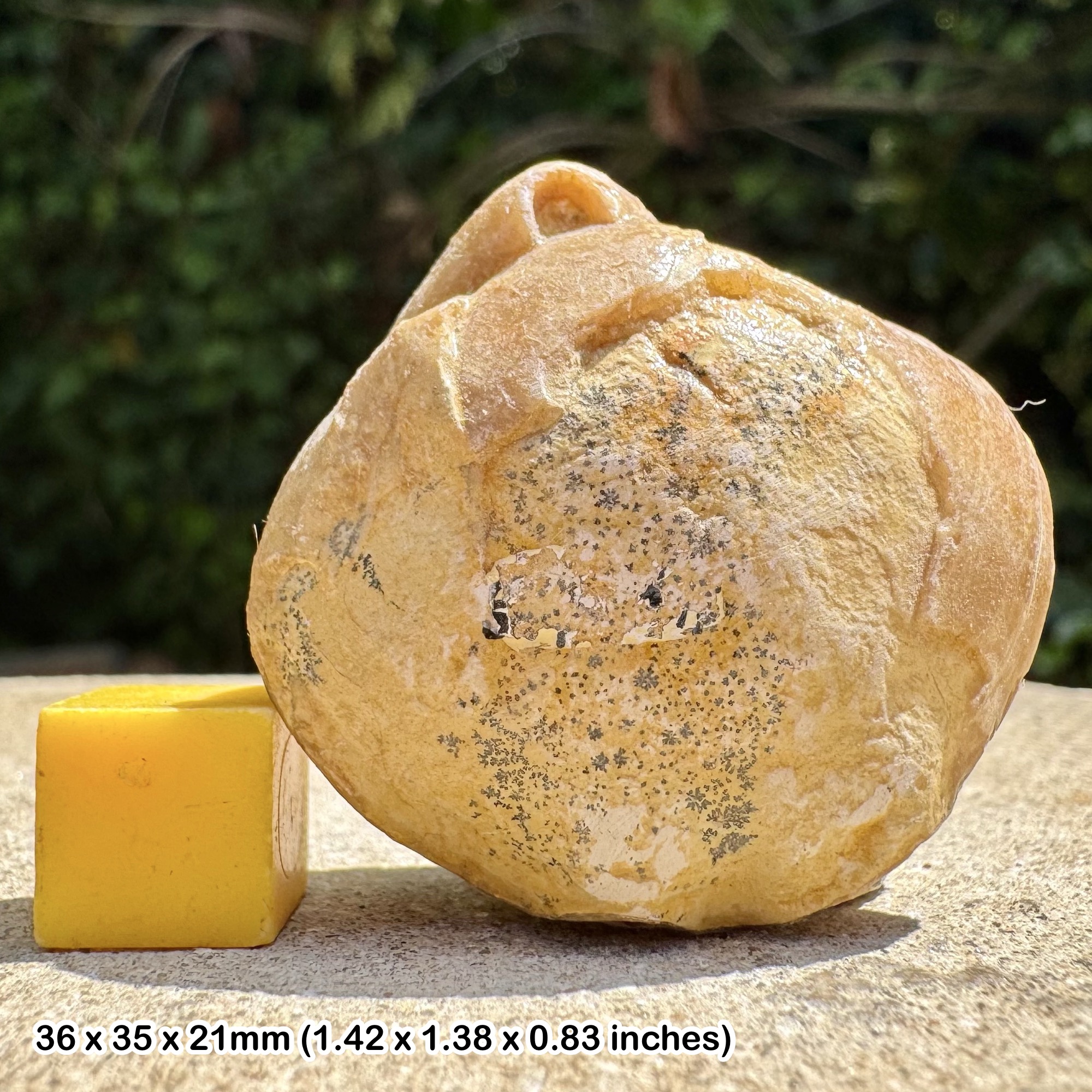
Epithyris oxonica Fossil Brachiopod – Great Oolite – Middle Jurassic – Dorset UK – Genuine Fossil with Certificate
£ 8.40
Epithyris oxonica Fossil BrachiopodGreat Oolite Formation, Middle Jurassic – Dorset, United KingdomSpecies: Epithyris oxonicaOrder: TerebratulidaSuperfamily: TerebratuloideaFamily: TerebratulidaeGeological Formation: Great Oolite GroupGeological Age: Middle JurassicStage: Bathonian (~168–166 million years ago)Locality: Dorset, United KingdomScale Reference: 1cm cube visible in image; see photo for full sizingAuthenticity: 100% Genuine – Includes Certificate of AuthenticityImage Note: The specimen photographed is the exact one you will receive.GEOLOGICAL AND MORPHOLOGICAL CONTEXT:Epithyris oxonica is a species of marine brachiopod that thrived during the
Middle Jurassic, specifically within the Bathonian Stage of the Great Oolite Group. These sedimentary limestones were deposited in shallow, warm, subtropical seas — an ideal environment for brachiopods and other invertebrate marine fauna.
• Morphology:
• This brachiopod features a classic biconvex shell, with an ovate to subcircular outline and smooth to faintly ribbed surface. The pedicle valve typically exhibits a well-defined beak, and the shell surface may show subtle growth lines. It has a short hingeline and is symmetrical about the midline.
• Stratigraphy and Biozone Context:
• The Great Oolite is divided into several regional members and layers. Epithyris oxonica is often associated with specific beds in the Forest Marble and equivalent lithofacies, although precise biozone information varies locally. The fossil can act as an indicator species in Bathonian brachiopod assemblages.
• Depositional Environment:
• The Great Oolite limestones are bioclastic in nature, indicating deposition in shallow marine carbonate platforms. Fossil preservation is typically excellent, with brachiopods like Epithyris oxonica often found fully articulated or as whole shells in oolitic or micritic limestone.
• Notable Scientific Importance:
• Described by historical palaeontologists studying the rich Middle Jurassic fauna of southern England, Epithyris oxonica is a representative member of the terebratulid brachiopods of the Bathonian.ABOUT THIS SPECIMEN:This Epithyris oxonica fossil was carefully selected from the Middle Jurassic rocks of Dorset, on England’s world-renowned Jurassic Coast. It is a genuine specimen from the Great Oolite Formation, showcasing excellent preservation and characteristic morphology of this classic brachiopod species.This fossil is part of our Alice Purnell Collection and is guaranteed authentic, complete with a Certificate of Authenticity. The image shows the exact specimen you will receive — no substitutes or stock images used.YOU WILL RECEIVE:
• 1 x Epithyris oxonica Fossil Brachiopod
• From the Great Oolite Formation, Bathonian Stage, Middle Jurassic
• Locality: Dorset, United Kingdom
• Certificate of Authenticity included
• The exact specimen shown in the photograph
• Sourced from the Alice Purnell CollectionSUMMARY:A top-quality, scientifically significant fossil brachiopod from the Middle Jurassic Great Oolite of Dorset. Perfect for fossil collectors, educators, or as a unique gift from Britain’s geological past.
Middle Jurassic, specifically within the Bathonian Stage of the Great Oolite Group. These sedimentary limestones were deposited in shallow, warm, subtropical seas — an ideal environment for brachiopods and other invertebrate marine fauna.
• Morphology:
• This brachiopod features a classic biconvex shell, with an ovate to subcircular outline and smooth to faintly ribbed surface. The pedicle valve typically exhibits a well-defined beak, and the shell surface may show subtle growth lines. It has a short hingeline and is symmetrical about the midline.
• Stratigraphy and Biozone Context:
• The Great Oolite is divided into several regional members and layers. Epithyris oxonica is often associated with specific beds in the Forest Marble and equivalent lithofacies, although precise biozone information varies locally. The fossil can act as an indicator species in Bathonian brachiopod assemblages.
• Depositional Environment:
• The Great Oolite limestones are bioclastic in nature, indicating deposition in shallow marine carbonate platforms. Fossil preservation is typically excellent, with brachiopods like Epithyris oxonica often found fully articulated or as whole shells in oolitic or micritic limestone.
• Notable Scientific Importance:
• Described by historical palaeontologists studying the rich Middle Jurassic fauna of southern England, Epithyris oxonica is a representative member of the terebratulid brachiopods of the Bathonian.ABOUT THIS SPECIMEN:This Epithyris oxonica fossil was carefully selected from the Middle Jurassic rocks of Dorset, on England’s world-renowned Jurassic Coast. It is a genuine specimen from the Great Oolite Formation, showcasing excellent preservation and characteristic morphology of this classic brachiopod species.This fossil is part of our Alice Purnell Collection and is guaranteed authentic, complete with a Certificate of Authenticity. The image shows the exact specimen you will receive — no substitutes or stock images used.YOU WILL RECEIVE:
• 1 x Epithyris oxonica Fossil Brachiopod
• From the Great Oolite Formation, Bathonian Stage, Middle Jurassic
• Locality: Dorset, United Kingdom
• Certificate of Authenticity included
• The exact specimen shown in the photograph
• Sourced from the Alice Purnell CollectionSUMMARY:A top-quality, scientifically significant fossil brachiopod from the Middle Jurassic Great Oolite of Dorset. Perfect for fossil collectors, educators, or as a unique gift from Britain’s geological past.
Other Products