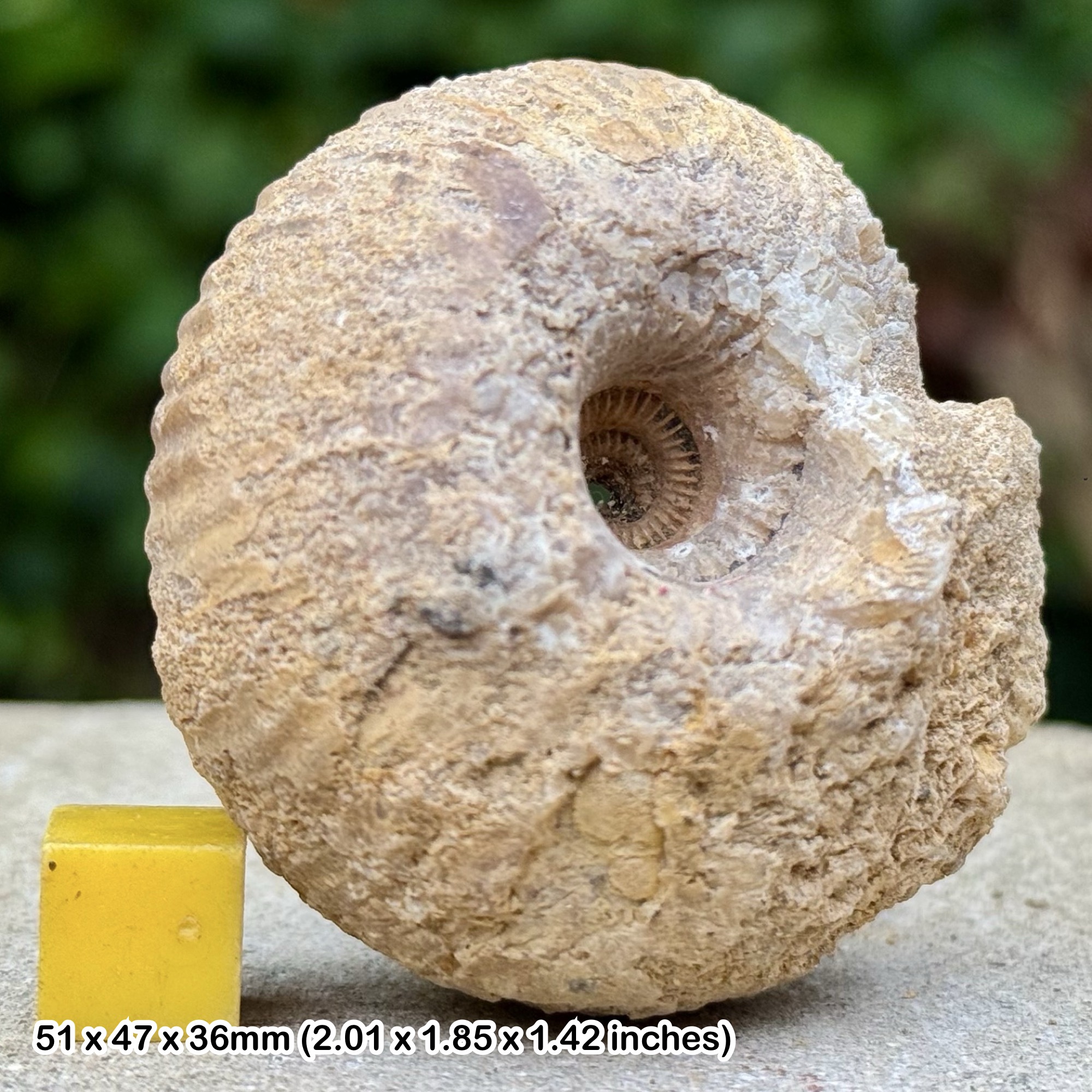
Cadoceras Ammonite Fossil from Callovian Jurassic Kellaways Beds Latton Quarry Cotswold Water Park UK
£ 18.00
GEOLOGICAL CONTEXT AND PROVENANCEThis specimen is a beautifully preserved Cadoceras ammonite fossil, collected
from the Kellaways Beds of the Callovian Stage, Middle Jurassic, dating back approximately 166 – 163 million years. It originates from Latton Quarry, located within the Cotswold Water Park near Swindon, United Kingdom, a site renowned for producing some of the most scientifically important and visually striking Jurassic fossils in Britain.The Kellaways Beds, part of the Great Oolite Group, consist mainly of sandy clays and fine silts laid down in a shallow marine environment. These conditions supported an abundant marine fauna, with ammonites such as Cadoceras serving as key index fossils for stratigraphic correlation. FOSSIL TYPE AND SPECIES INFORMATIONThe genus Cadoceras is part of the Order Ammonitida, Superfamily Stephanoceratoidea, and Family Cardioceratidae. These ammonites are widely recognised for their robust shells, strong ribbing, and distinctive coiling. Their morphology makes them highly diagnostic and useful for identifying zones within the Callovian.Cadoceras ammonites are particularly associated with cooler-water faunal provinces of the Middle Jurassic. They play a significant role in biozonation and are crucial for palaeontologists studying the evolution and dispersal of ammonite faunas across Europe during the Callovian. MORPHOLOGICAL FEATURESThis specimen exhibits the characteristic features of Cadoceras:
• Strong Ribbing – Prominent ribs radiate across the flanks and continue over the venter, giving the shell a striking ornamental appearance.
• Compressed Whorls – The whorls are relatively narrow, with a slightly compressed cross-section.
• Evolute Coiling – Earlier whorls remain partially visible, a typical feature of the genus.
• Robust Form – The overall shell structure is solid and well-developed, demonstrating the strength of this ammonite group.These features make Cadoceras fossils both scientifically valuable and aesthetically appealing to collectors. DEPOSITIONAL ENVIRONMENTDuring the Callovian, southern England was covered by a shallow epicontinental sea linked to the Tethys Ocean. The Kellaways Beds were deposited in this environment, where fine sediments accumulated on the sea floor. These calm depositional conditions provided excellent opportunities for the preservation of ammonites, with many retaining remarkable detail in their ribbing and coiling.This fossil reflects the thriving marine ecosystems of the Middle Jurassic, a period marked by rich ammonite diversity and the appearance of several important faunal groups. COLLECTOR AND SCIENTIFIC IMPORTANCEOwning a Cadoceras fossil offers both scientific and display value:
• Index Fossil Significance – Cadoceras is an important genus for dating and correlating Middle Jurassic rock layers.
• Aesthetic Qualities – The bold ribbing and clear coiling make this specimen a visually impressive piece.
• Rare Provenance – Specimens from Latton Quarry are increasingly difficult to obtain, making this a desirable addition to any collection. AUTHENTICITY AND PRESENTATION
• 100% Genuine Specimen – Supplied with a Certificate of Authenticity.
• Exact Fossil Shown – Photographs depict the actual specimen you will receive.
• Scale Reference – Scale rule squares / cube = 1 cm. Please see photos for full sizing.This Cadoceras ammonite fossil from the Callovian of Swindon is an exceptional piece of Jurassic natural history, combining scientific value, rarity, and aesthetic appeal. Perfect for collectors, educators, and enthusiasts of palaeontology alike.
from the Kellaways Beds of the Callovian Stage, Middle Jurassic, dating back approximately 166 – 163 million years. It originates from Latton Quarry, located within the Cotswold Water Park near Swindon, United Kingdom, a site renowned for producing some of the most scientifically important and visually striking Jurassic fossils in Britain.The Kellaways Beds, part of the Great Oolite Group, consist mainly of sandy clays and fine silts laid down in a shallow marine environment. These conditions supported an abundant marine fauna, with ammonites such as Cadoceras serving as key index fossils for stratigraphic correlation. FOSSIL TYPE AND SPECIES INFORMATIONThe genus Cadoceras is part of the Order Ammonitida, Superfamily Stephanoceratoidea, and Family Cardioceratidae. These ammonites are widely recognised for their robust shells, strong ribbing, and distinctive coiling. Their morphology makes them highly diagnostic and useful for identifying zones within the Callovian.Cadoceras ammonites are particularly associated with cooler-water faunal provinces of the Middle Jurassic. They play a significant role in biozonation and are crucial for palaeontologists studying the evolution and dispersal of ammonite faunas across Europe during the Callovian. MORPHOLOGICAL FEATURESThis specimen exhibits the characteristic features of Cadoceras:
• Strong Ribbing – Prominent ribs radiate across the flanks and continue over the venter, giving the shell a striking ornamental appearance.
• Compressed Whorls – The whorls are relatively narrow, with a slightly compressed cross-section.
• Evolute Coiling – Earlier whorls remain partially visible, a typical feature of the genus.
• Robust Form – The overall shell structure is solid and well-developed, demonstrating the strength of this ammonite group.These features make Cadoceras fossils both scientifically valuable and aesthetically appealing to collectors. DEPOSITIONAL ENVIRONMENTDuring the Callovian, southern England was covered by a shallow epicontinental sea linked to the Tethys Ocean. The Kellaways Beds were deposited in this environment, where fine sediments accumulated on the sea floor. These calm depositional conditions provided excellent opportunities for the preservation of ammonites, with many retaining remarkable detail in their ribbing and coiling.This fossil reflects the thriving marine ecosystems of the Middle Jurassic, a period marked by rich ammonite diversity and the appearance of several important faunal groups. COLLECTOR AND SCIENTIFIC IMPORTANCEOwning a Cadoceras fossil offers both scientific and display value:
• Index Fossil Significance – Cadoceras is an important genus for dating and correlating Middle Jurassic rock layers.
• Aesthetic Qualities – The bold ribbing and clear coiling make this specimen a visually impressive piece.
• Rare Provenance – Specimens from Latton Quarry are increasingly difficult to obtain, making this a desirable addition to any collection. AUTHENTICITY AND PRESENTATION
• 100% Genuine Specimen – Supplied with a Certificate of Authenticity.
• Exact Fossil Shown – Photographs depict the actual specimen you will receive.
• Scale Reference – Scale rule squares / cube = 1 cm. Please see photos for full sizing.This Cadoceras ammonite fossil from the Callovian of Swindon is an exceptional piece of Jurassic natural history, combining scientific value, rarity, and aesthetic appeal. Perfect for collectors, educators, and enthusiasts of palaeontology alike.
Other Products