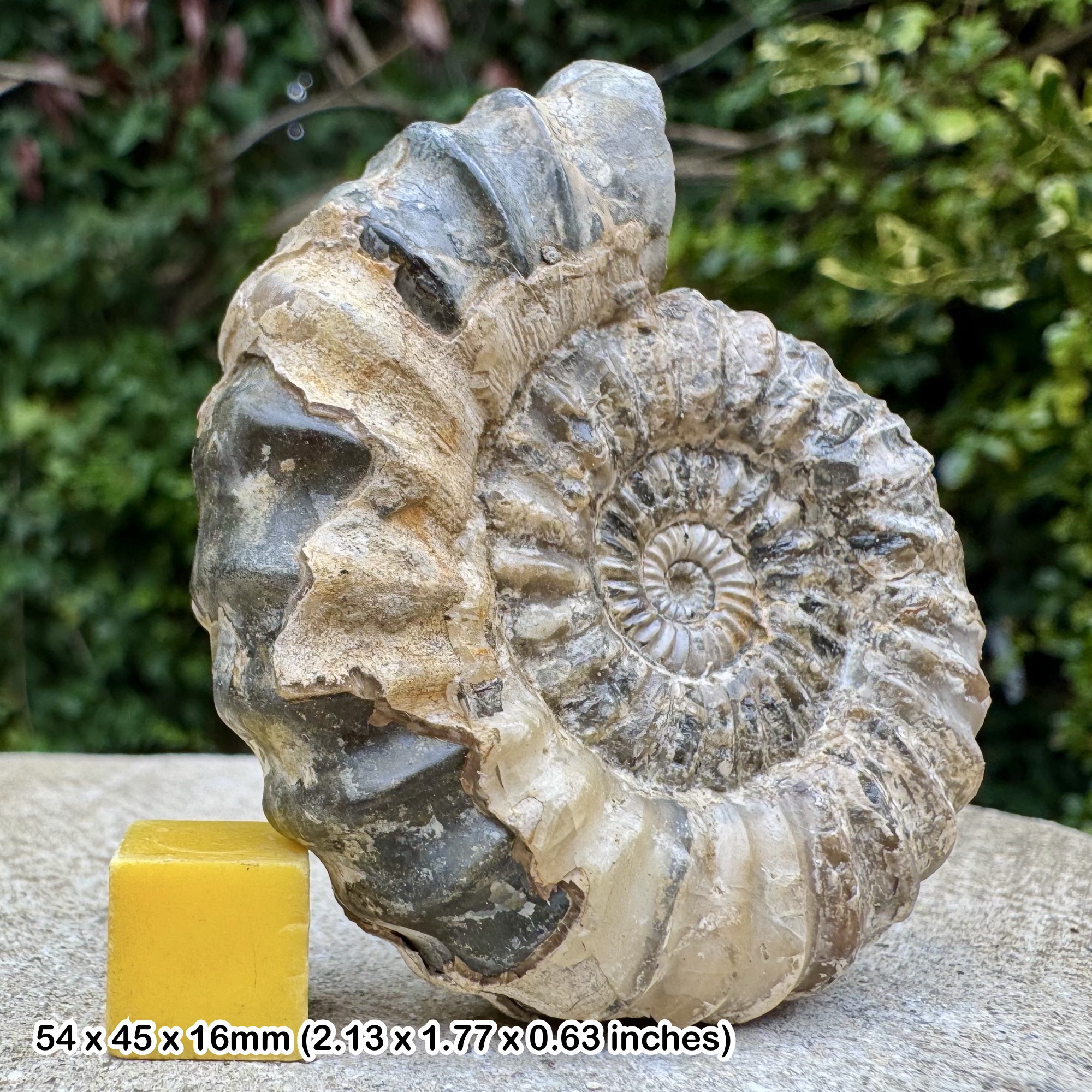
RARE Oistoceras figulinum Ammonite Fossil Upper Pliensbachian Jurassic Lincolnshire UK
£ 36.00
RARE OISTOCERAS FIGULINUM AMMONITE FOSSIL FROM LINCOLNSHIRE, UKThis listing offers a rare and genuine specimen of Oistoceras figulinum, a
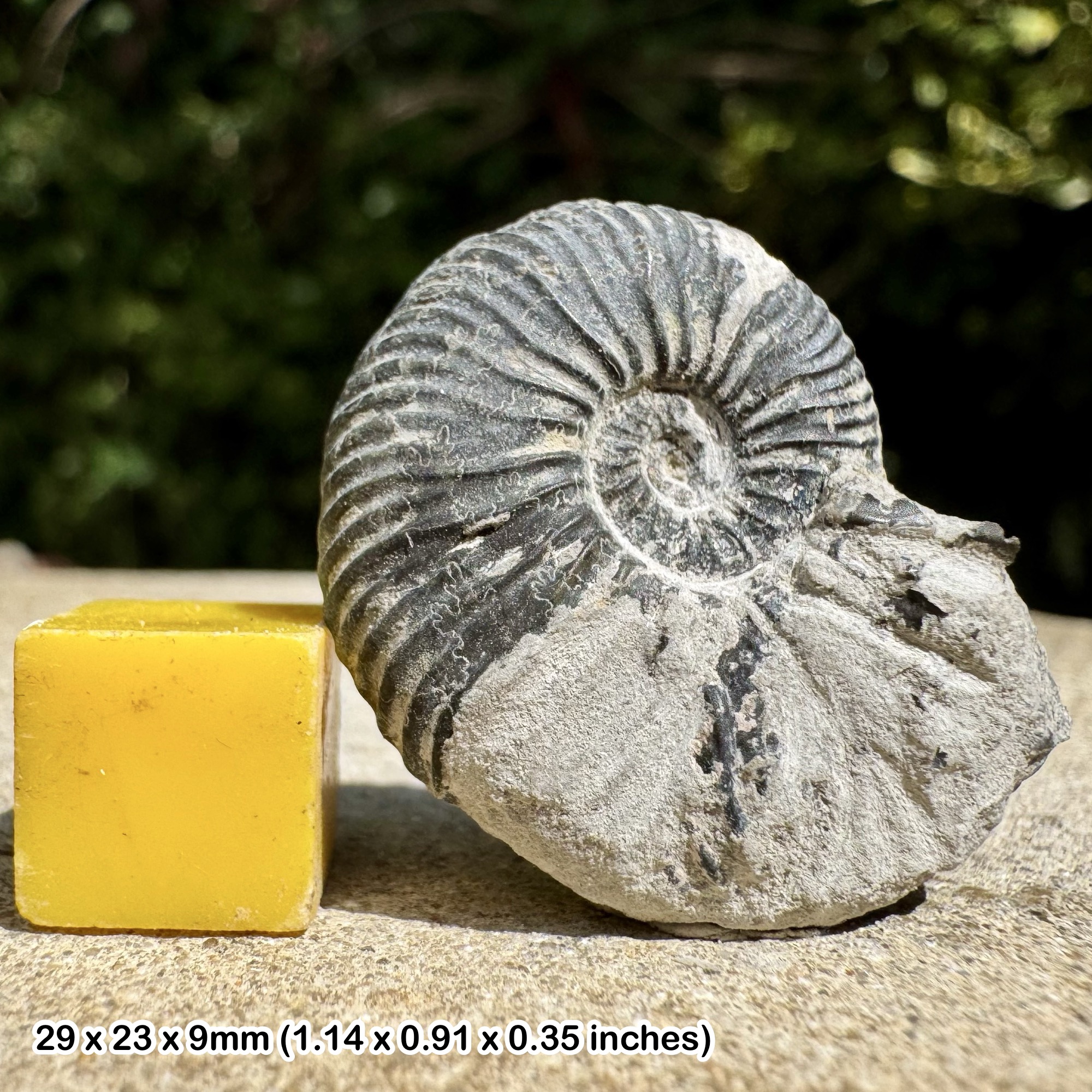
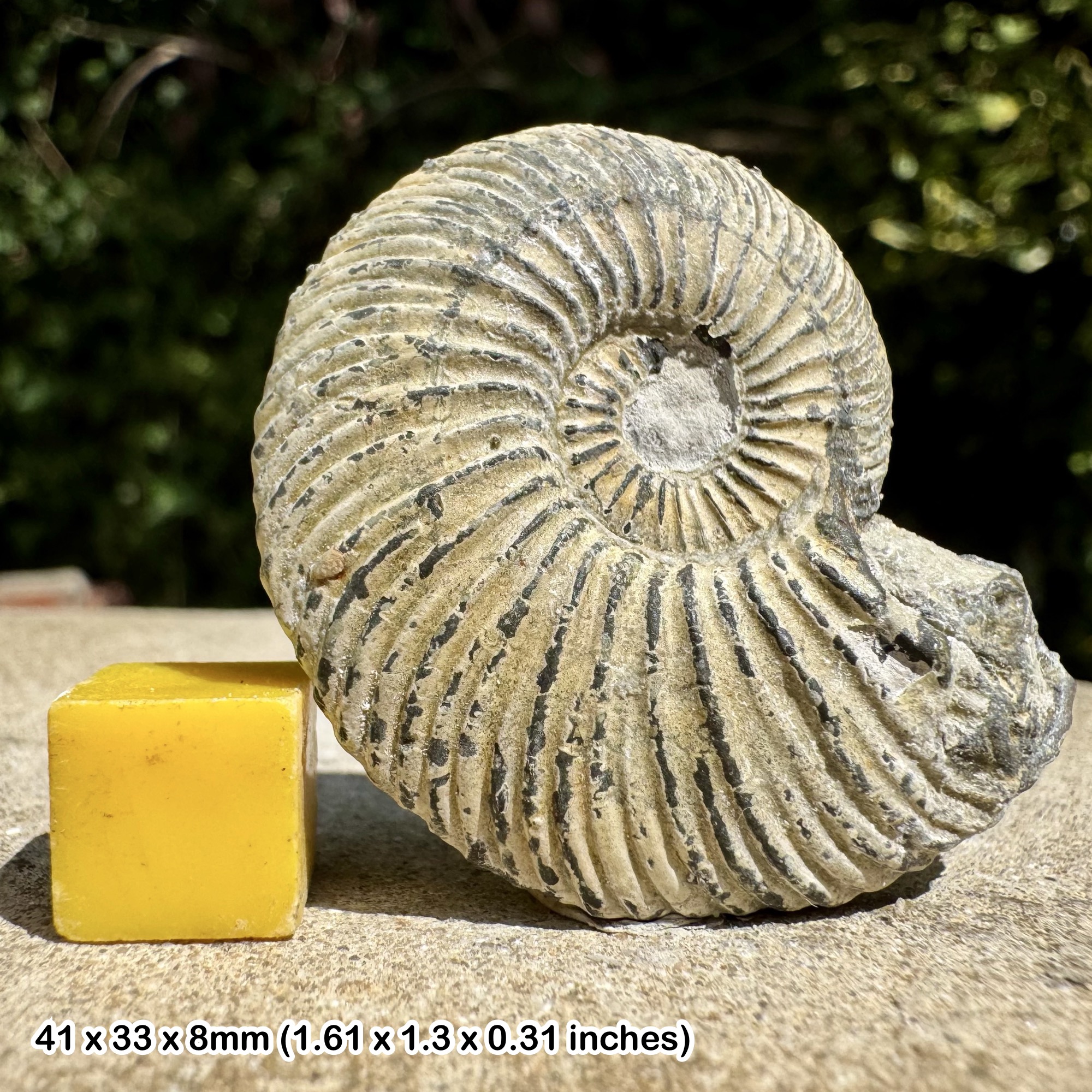
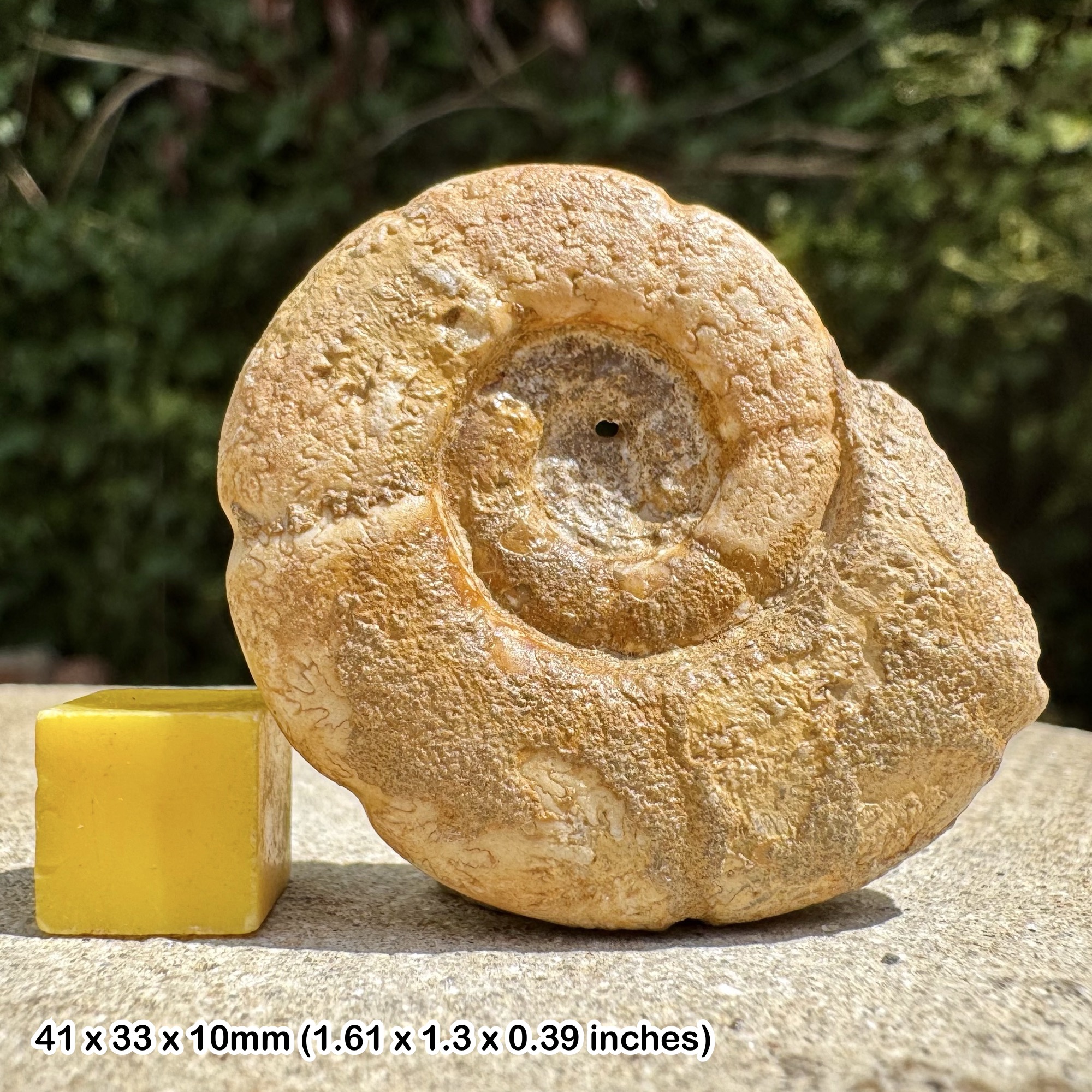
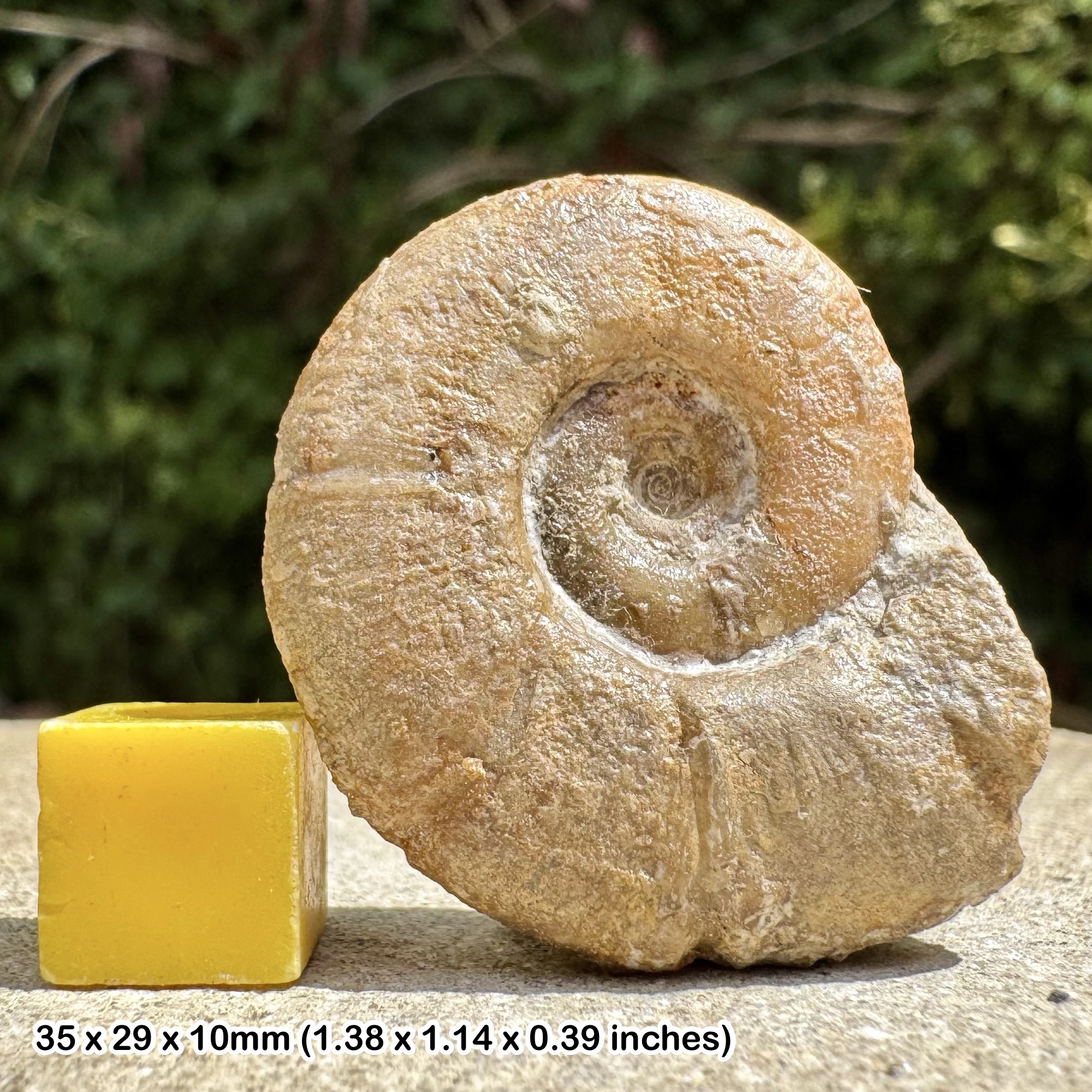
distinctive ammonite from the Upper Pliensbachian stage of the Early Jurassic (~189–183 million years ago). This exceptional fossil was collected at Waddington, near Lincoln in Lincolnshire, England, a location well known for producing ammonites of this stage. The specimen pictured is the actual fossil you will receive, displayed with a 1 cm scale cube for accurate sizing. Each fossil comes with a Certificate of Authenticity, guaranteeing its provenance and genuine nature. GEOLOGICAL CONTEXT
• Geological Period: Jurassic
• Stage: Upper Pliensbachian (~189–183 million years ago)
• Stratigraphy: Lias Group deposits of Lincolnshire
• Locality: Waddington, Lincoln, Lincolnshire, United KingdomDuring the Pliensbachian, much of present-day Lincolnshire was submerged beneath shallow seas. Fine marine clays and silts accumulated in these environments, producing the dark shales and limestones of the Lias Group that are now rich in ammonite fossils. These sediments created the perfect conditions for preserving ammonites such as Oistoceras figulinum, leaving behind beautifully detailed shells that remain scientifically important today. TAXONOMIC CLASSIFICATION
• Kingdom: Animalia
• Phylum: Mollusca
• Class: Cephalopoda
• Order: Ammonitida
• Superfamily: Eoderoceratoidea
• Family: Dactylioceratidae
• Genus: Oistoceras
• Species: Oistoceras figulinumAs a member of the Dactylioceratidae, Oistoceras figulinum is closely related to other strongly ribbed ammonites of the Lower Jurassic. It is recognised as a useful biostratigraphic indicator for correlating Upper Pliensbachian strata, making it both scientifically and historically significant. MORPHOLOGICAL FEATURESThis specimen of Oistoceras figulinum displays several classic traits of the species:
• Planispiral coiling, typical of ammonites, with moderate involution.
• Strong ribbing running across the shell flanks, with ribs often bifurcating or branching.
• Prominent tubercles and nodes, which may have functioned as hydrodynamic adaptations or strengthening structures.
• Well-defined venter (outer edge) crossed by ribs, enhancing the fossil’s distinctive appearance.These morphological characteristics make Oistoceras figulinum highly identifiable, while also providing palaeontologists with valuable data on ammonite evolution during the Jurassic seas of Europe. SCIENTIFIC AND COLLECTING IMPORTANCEOistoceras figulinum is regarded as an index fossil of the Upper Pliensbachian, meaning it is used by geologists to identify and correlate rocks of this age. Its relatively short stratigraphic range and distinctive features make it an essential tool in Jurassic stratigraphy.For collectors, this species holds equal appeal. Its rarity in British localities such as Lincolnshire, combined with its striking ribbed shell and historical importance, ensures it is a standout fossil in any collection. Fossils from Waddington are particularly valued due to the quality of preservation and the geological significance of the site. KEY DETAILS
• Fossil Type: Ammonite (Oistoceras figulinum)
• Age: Upper Pliensbachian, Early Jurassic (~189–183 million years old)
• Location: Waddington, Lincolnshire, United Kingdom
• Features: Strong ribbing, characteristic tubercles, well-preserved shell morphology
• Authenticity: 100% genuine specimen, with Certificate of Authenticity AUTHENTICITY AND COLLECTABILITYAll of our fossils are carefully selected genuine specimens. This rare Oistoceras figulinum ammonite fossil from Waddington, Lincolnshire is a remarkable example, combining scientific significance with aesthetic appeal. Its ribbed, detailed structure and rarity make it an important piece for both professional collectors and enthusiasts of natural history.OWNING THIS AMMONITE MEANS HOLDING A PIECE OF EARTH’S DEEP HISTORY — A FOSSIL THAT HAS ENDURED FOR NEARLY 190 MILLION YEARS, PRESERVING THE STORY OF JURASSIC SEAS AND THEIR EXTRAORDINARY MARINE LIFE.
distinctive ammonite from the Upper Pliensbachian stage of the Early Jurassic (~189–183 million years ago). This exceptional fossil was collected at Waddington, near Lincoln in Lincolnshire, England, a location well known for producing ammonites of this stage. The specimen pictured is the actual fossil you will receive, displayed with a 1 cm scale cube for accurate sizing. Each fossil comes with a Certificate of Authenticity, guaranteeing its provenance and genuine nature. GEOLOGICAL CONTEXT
• Geological Period: Jurassic
• Stage: Upper Pliensbachian (~189–183 million years ago)
• Stratigraphy: Lias Group deposits of Lincolnshire
• Locality: Waddington, Lincoln, Lincolnshire, United KingdomDuring the Pliensbachian, much of present-day Lincolnshire was submerged beneath shallow seas. Fine marine clays and silts accumulated in these environments, producing the dark shales and limestones of the Lias Group that are now rich in ammonite fossils. These sediments created the perfect conditions for preserving ammonites such as Oistoceras figulinum, leaving behind beautifully detailed shells that remain scientifically important today. TAXONOMIC CLASSIFICATION
• Kingdom: Animalia
• Phylum: Mollusca
• Class: Cephalopoda
• Order: Ammonitida
• Superfamily: Eoderoceratoidea
• Family: Dactylioceratidae
• Genus: Oistoceras
• Species: Oistoceras figulinumAs a member of the Dactylioceratidae, Oistoceras figulinum is closely related to other strongly ribbed ammonites of the Lower Jurassic. It is recognised as a useful biostratigraphic indicator for correlating Upper Pliensbachian strata, making it both scientifically and historically significant. MORPHOLOGICAL FEATURESThis specimen of Oistoceras figulinum displays several classic traits of the species:
• Planispiral coiling, typical of ammonites, with moderate involution.
• Strong ribbing running across the shell flanks, with ribs often bifurcating or branching.
• Prominent tubercles and nodes, which may have functioned as hydrodynamic adaptations or strengthening structures.
• Well-defined venter (outer edge) crossed by ribs, enhancing the fossil’s distinctive appearance.These morphological characteristics make Oistoceras figulinum highly identifiable, while also providing palaeontologists with valuable data on ammonite evolution during the Jurassic seas of Europe. SCIENTIFIC AND COLLECTING IMPORTANCEOistoceras figulinum is regarded as an index fossil of the Upper Pliensbachian, meaning it is used by geologists to identify and correlate rocks of this age. Its relatively short stratigraphic range and distinctive features make it an essential tool in Jurassic stratigraphy.For collectors, this species holds equal appeal. Its rarity in British localities such as Lincolnshire, combined with its striking ribbed shell and historical importance, ensures it is a standout fossil in any collection. Fossils from Waddington are particularly valued due to the quality of preservation and the geological significance of the site. KEY DETAILS
• Fossil Type: Ammonite (Oistoceras figulinum)
• Age: Upper Pliensbachian, Early Jurassic (~189–183 million years old)
• Location: Waddington, Lincolnshire, United Kingdom
• Features: Strong ribbing, characteristic tubercles, well-preserved shell morphology
• Authenticity: 100% genuine specimen, with Certificate of Authenticity AUTHENTICITY AND COLLECTABILITYAll of our fossils are carefully selected genuine specimens. This rare Oistoceras figulinum ammonite fossil from Waddington, Lincolnshire is a remarkable example, combining scientific significance with aesthetic appeal. Its ribbed, detailed structure and rarity make it an important piece for both professional collectors and enthusiasts of natural history.OWNING THIS AMMONITE MEANS HOLDING A PIECE OF EARTH’S DEEP HISTORY — A FOSSIL THAT HAS ENDURED FOR NEARLY 190 MILLION YEARS, PRESERVING THE STORY OF JURASSIC SEAS AND THEIR EXTRAORDINARY MARINE LIFE.