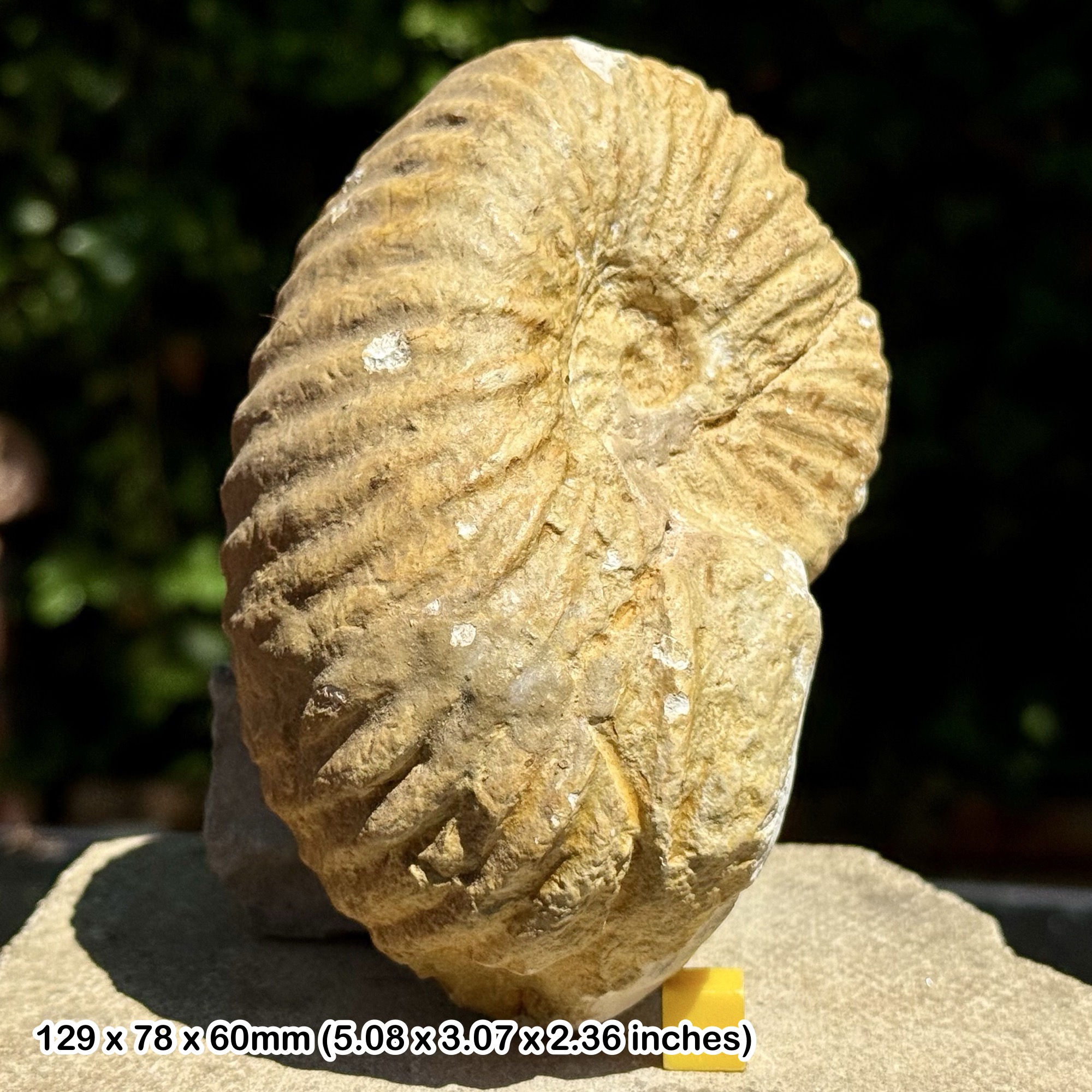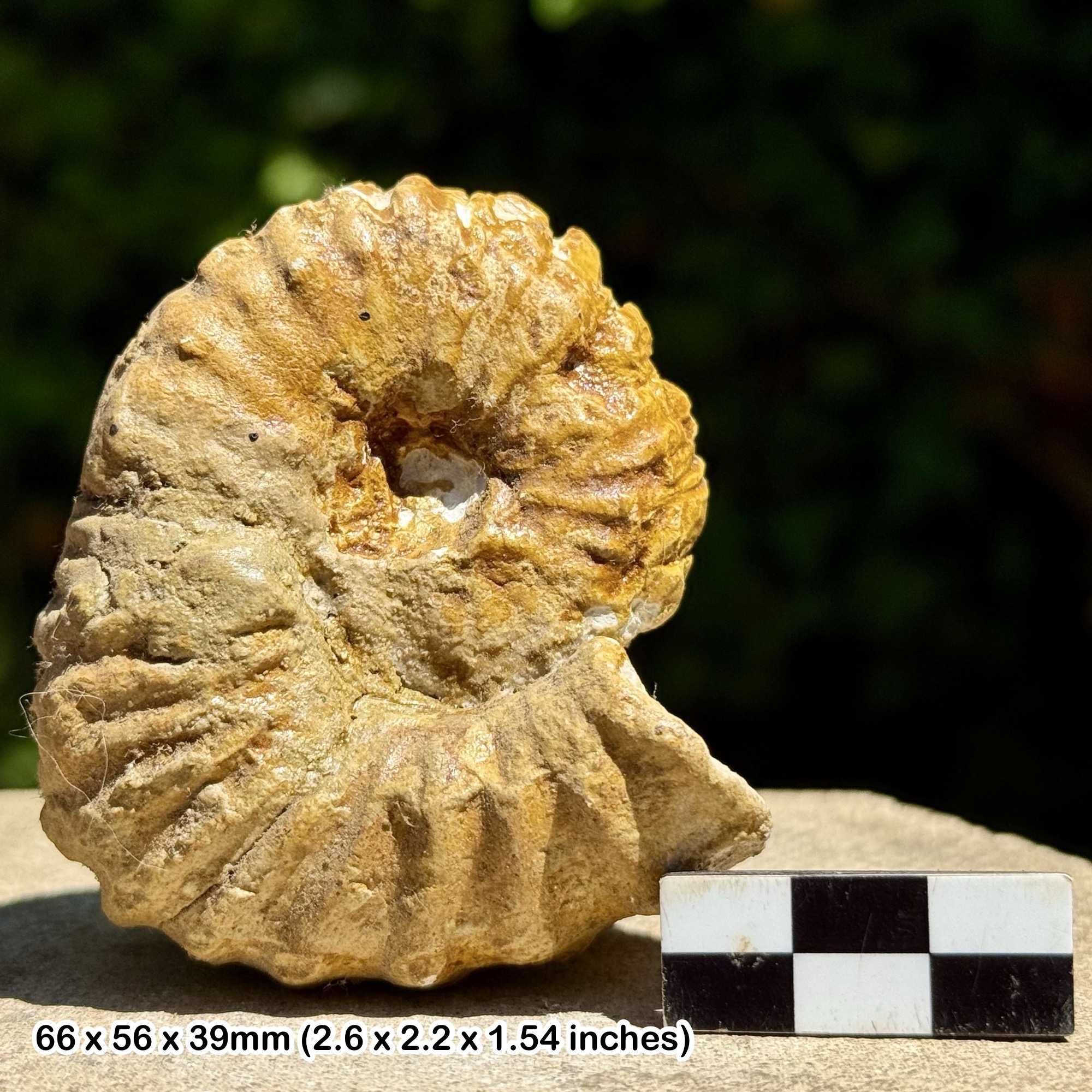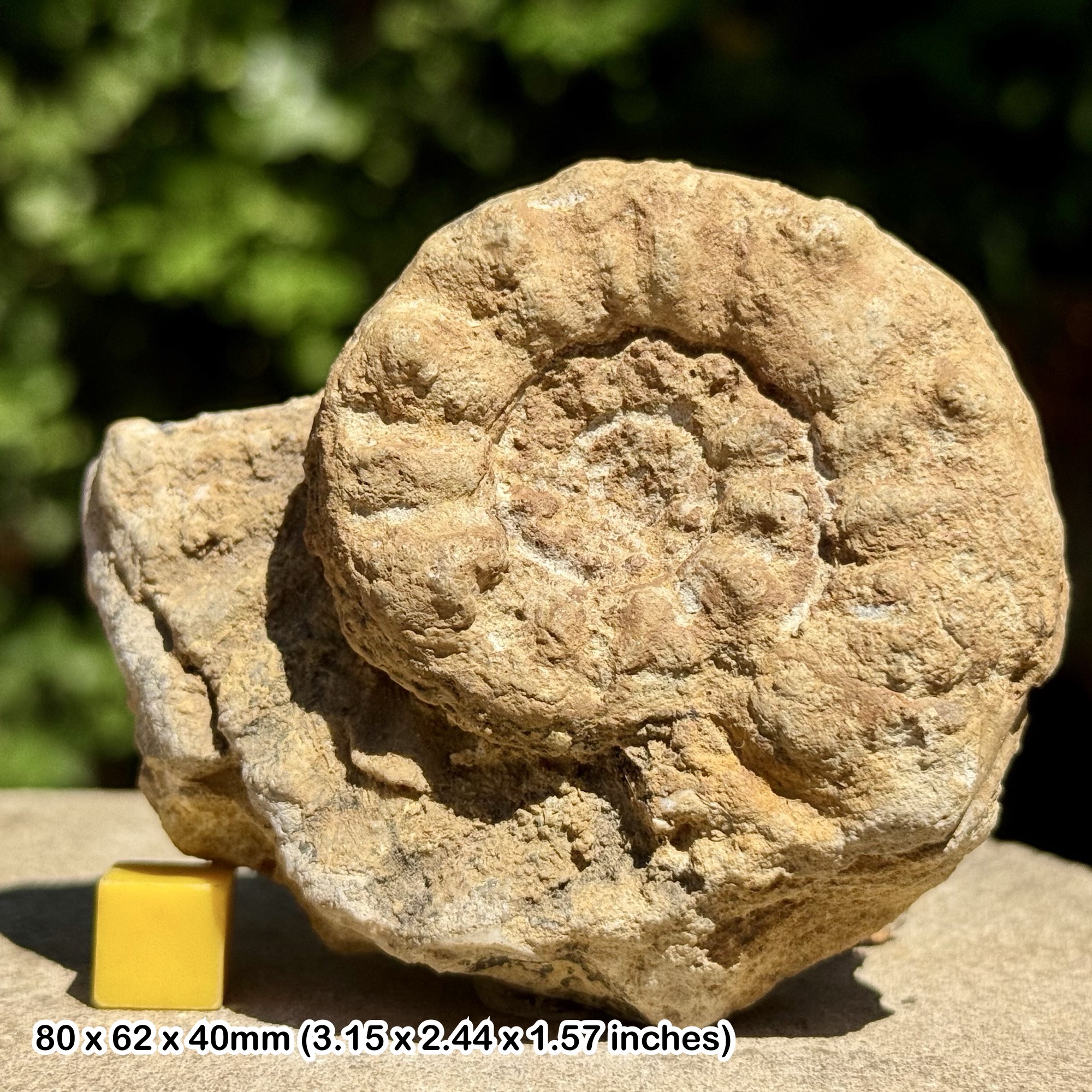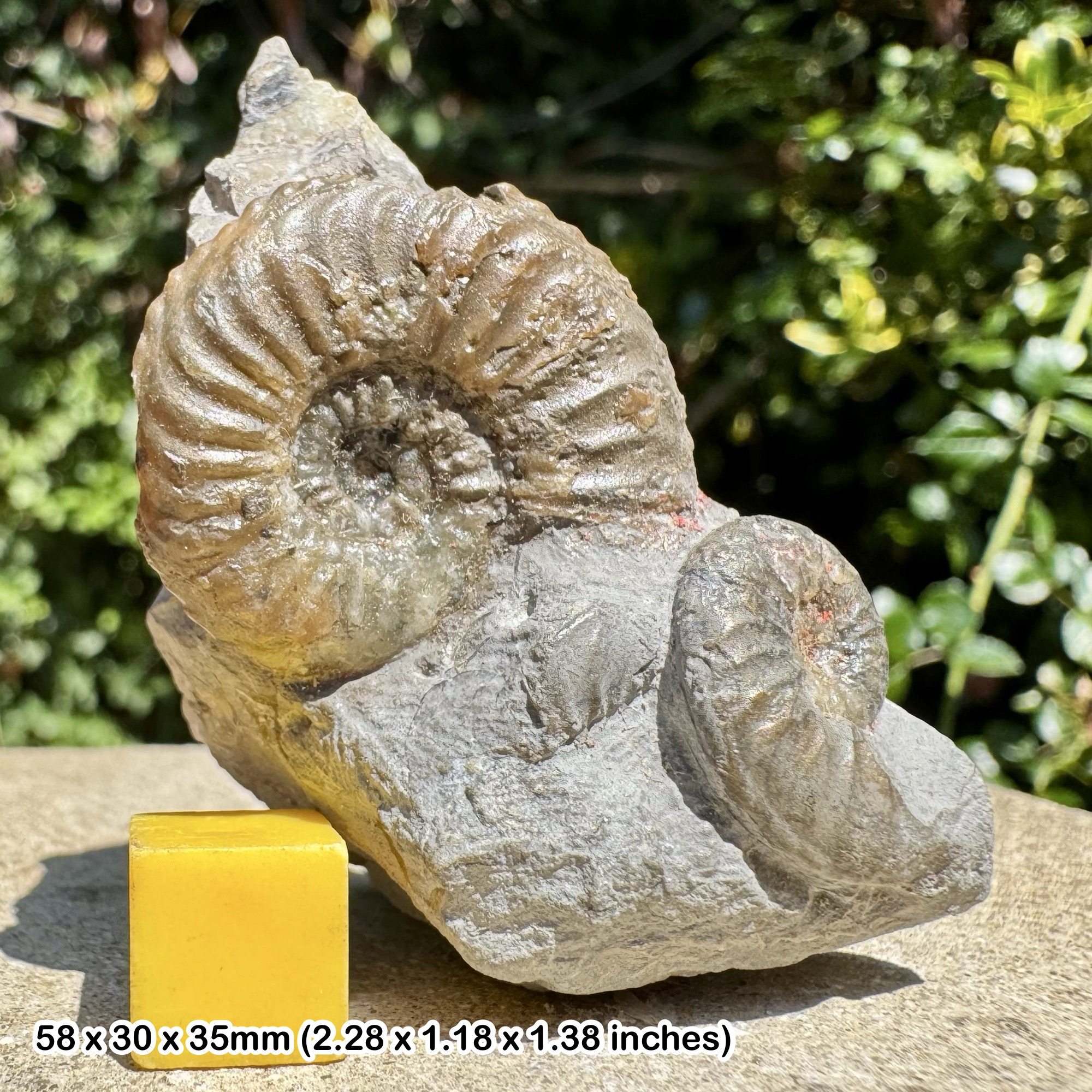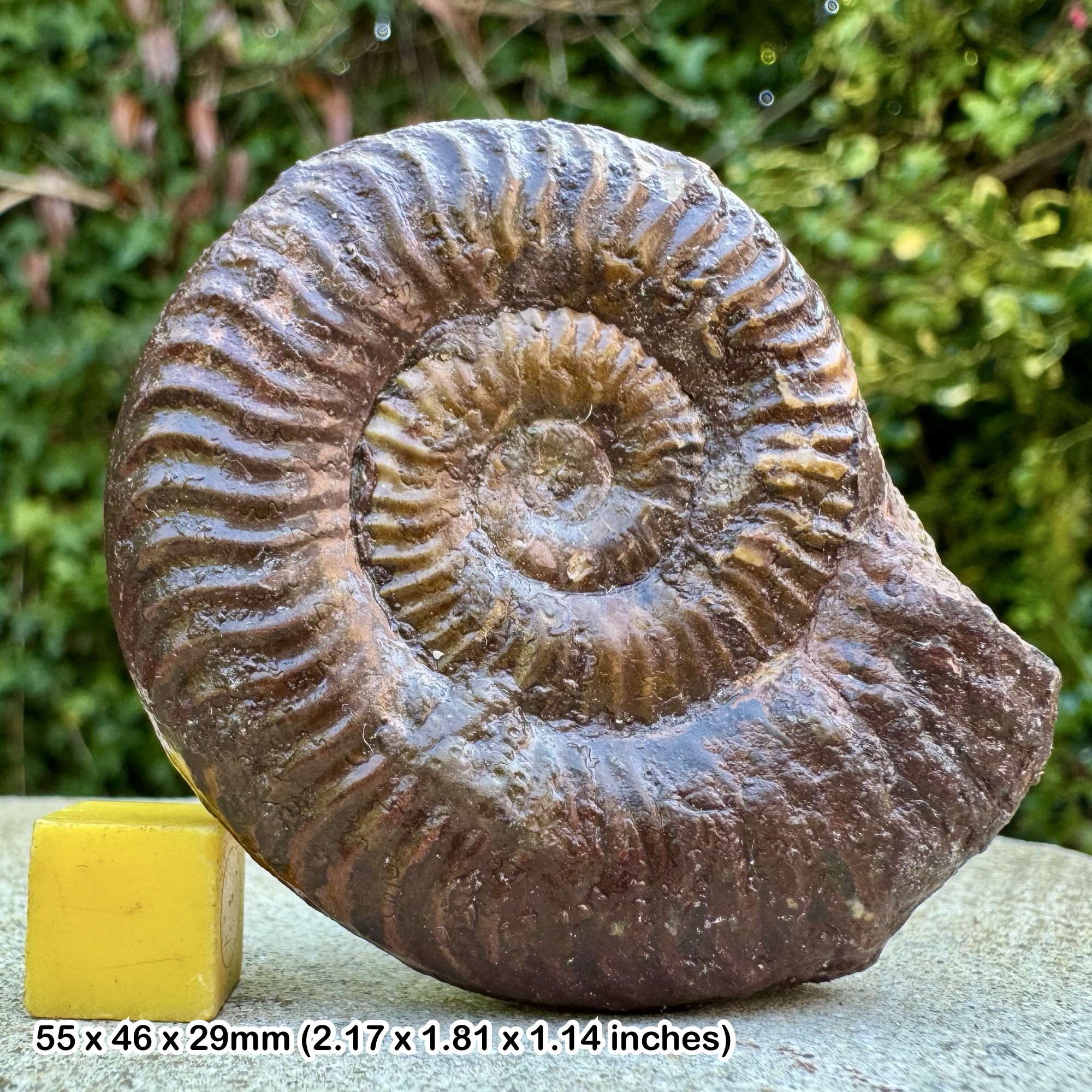
Rare Pseudogrammoceras thrasu Ammonite Fossil from Upper Toarcian Jurassic Belmont Rhone France
£ 36.00
GEOLOGICAL CONTEXTThis authentic Pseudogrammoceras thrasu ammonite fossil originates from the
Upper Toarcian Stage of the Jurassic Period, approximately 183 to 174 million years ago. The specimen was recovered from the renowned fossil-bearing beds near Belmont, Rhône, France, a locality well known for its rich ammonite assemblages and excellent preservation conditions. The Toarcian Stage is globally significant for its ammonite diversity and is particularly important for biostratigraphy, as many ammonite species from this time are used as zonal fossils to correlate rock layers across Europe and beyond. TAXONOMIC CLASSIFICATION
• Kingdom: Animalia
• Phylum: Mollusca
• Class: Cephalopoda
• Order: Ammonitida
• Superfamily: Hildoceratoidea
• Family: Hildoceratidae
• Genus: Pseudogrammoceras
• Species: Pseudogrammoceras thrasuAs a representative of the Hildoceratidae family, Pseudogrammoceras is closely related to the better-known Hildoceras, sharing similar morphological features while maintaining distinctive shell structures. MORPHOLOGICAL FEATURESThis fossil displays several defining characteristics of Pseudogrammoceras thrasu:
• Planispiral coiling, with tightly wound whorls.
• Finely ribbed ornamentation, running across the flanks, consistent with the genus.
• A relatively compressed whorl section, giving the ammonite a streamlined appearance.
• Clear suture lines preserved on the fossil surface, reflecting the intricate internal chamber divisions that provided buoyancy control.These features not only aid in scientific identification but also make the specimen highly attractive for collectors due to its visual clarity and preservation of fine structural detail. PALAEOENVIRONMENT AND DEPOSITIONAL SETTINGDuring the Toarcian, the Belmont area of Rhône was part of a shallow marine shelf environment within the Tethys Ocean. Warm, nutrient-rich seas provided ideal conditions for ammonites, marine reptiles, and other invertebrates. The fine-grained sedimentary deposits in this region allowed for excellent fossil preservation, often capturing delicate shell details. Pseudogrammoceras thrasu lived in open marine waters, where it likely preyed on small crustaceans and planktonic organisms while itself forming part of the food chain for larger marine reptiles and fish. SCIENTIFIC AND COLLECTOR IMPORTANCE
• Biostratigraphy: Pseudogrammoceras thrasu is an important ammonite species for correlating Upper Toarcian deposits across Europe.
• Evolutionary Significance: This species provides insight into the diversification of the Hildoceratidae during the Jurassic.
• Collector Appeal: With its fine ribbing, distinct morphology, and provenance from Belmont, France, this ammonite is a rare and desirable piece for both amateur and professional collectors.
• Educational Use: Ideal for teaching about Jurassic marine life, ammonite morphology, and the significance of index fossils. AUTHENTICITY AND PRESENTATION
• This fossil is 100% genuine and comes with a Certificate of Authenticity.
• The photographs show the exact specimen you will receive, carefully chosen for quality and preservation.
• A 1 cm scale cube is included in the images for accurate size reference.This Pseudogrammoceras thrasu ammonite fossil from the Upper Toarcian of Belmont, Rhône, France is a scientifically valuable and visually appealing specimen. Its combination of fine ribbing, historical age, and excellent preservation makes it a perfect addition to any fossil collection, display, or educational resource.
Upper Toarcian Stage of the Jurassic Period, approximately 183 to 174 million years ago. The specimen was recovered from the renowned fossil-bearing beds near Belmont, Rhône, France, a locality well known for its rich ammonite assemblages and excellent preservation conditions. The Toarcian Stage is globally significant for its ammonite diversity and is particularly important for biostratigraphy, as many ammonite species from this time are used as zonal fossils to correlate rock layers across Europe and beyond. TAXONOMIC CLASSIFICATION
• Kingdom: Animalia
• Phylum: Mollusca
• Class: Cephalopoda
• Order: Ammonitida
• Superfamily: Hildoceratoidea
• Family: Hildoceratidae
• Genus: Pseudogrammoceras
• Species: Pseudogrammoceras thrasuAs a representative of the Hildoceratidae family, Pseudogrammoceras is closely related to the better-known Hildoceras, sharing similar morphological features while maintaining distinctive shell structures. MORPHOLOGICAL FEATURESThis fossil displays several defining characteristics of Pseudogrammoceras thrasu:
• Planispiral coiling, with tightly wound whorls.
• Finely ribbed ornamentation, running across the flanks, consistent with the genus.
• A relatively compressed whorl section, giving the ammonite a streamlined appearance.
• Clear suture lines preserved on the fossil surface, reflecting the intricate internal chamber divisions that provided buoyancy control.These features not only aid in scientific identification but also make the specimen highly attractive for collectors due to its visual clarity and preservation of fine structural detail. PALAEOENVIRONMENT AND DEPOSITIONAL SETTINGDuring the Toarcian, the Belmont area of Rhône was part of a shallow marine shelf environment within the Tethys Ocean. Warm, nutrient-rich seas provided ideal conditions for ammonites, marine reptiles, and other invertebrates. The fine-grained sedimentary deposits in this region allowed for excellent fossil preservation, often capturing delicate shell details. Pseudogrammoceras thrasu lived in open marine waters, where it likely preyed on small crustaceans and planktonic organisms while itself forming part of the food chain for larger marine reptiles and fish. SCIENTIFIC AND COLLECTOR IMPORTANCE
• Biostratigraphy: Pseudogrammoceras thrasu is an important ammonite species for correlating Upper Toarcian deposits across Europe.
• Evolutionary Significance: This species provides insight into the diversification of the Hildoceratidae during the Jurassic.
• Collector Appeal: With its fine ribbing, distinct morphology, and provenance from Belmont, France, this ammonite is a rare and desirable piece for both amateur and professional collectors.
• Educational Use: Ideal for teaching about Jurassic marine life, ammonite morphology, and the significance of index fossils. AUTHENTICITY AND PRESENTATION
• This fossil is 100% genuine and comes with a Certificate of Authenticity.
• The photographs show the exact specimen you will receive, carefully chosen for quality and preservation.
• A 1 cm scale cube is included in the images for accurate size reference.This Pseudogrammoceras thrasu ammonite fossil from the Upper Toarcian of Belmont, Rhône, France is a scientifically valuable and visually appealing specimen. Its combination of fine ribbing, historical age, and excellent preservation makes it a perfect addition to any fossil collection, display, or educational resource.
Other Products