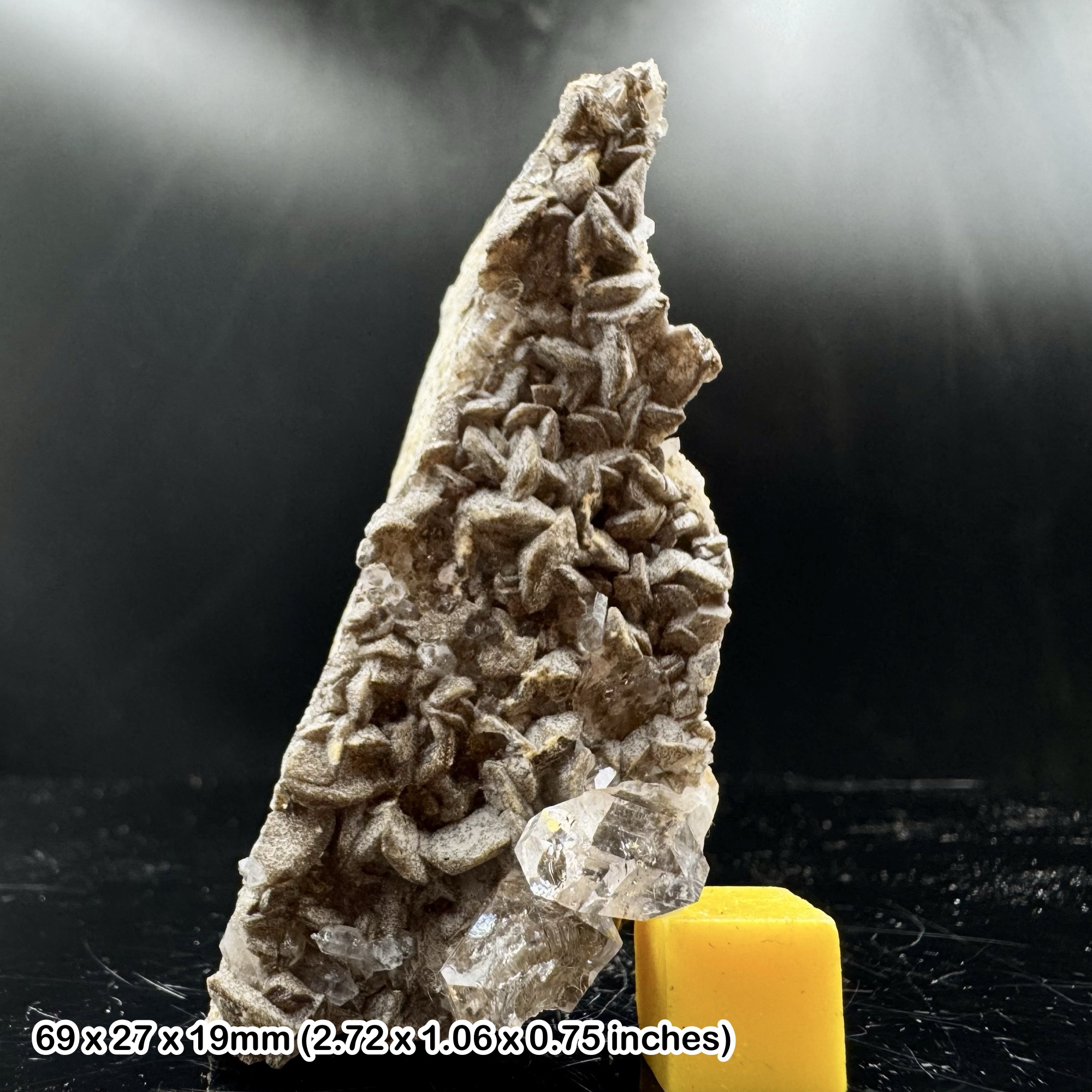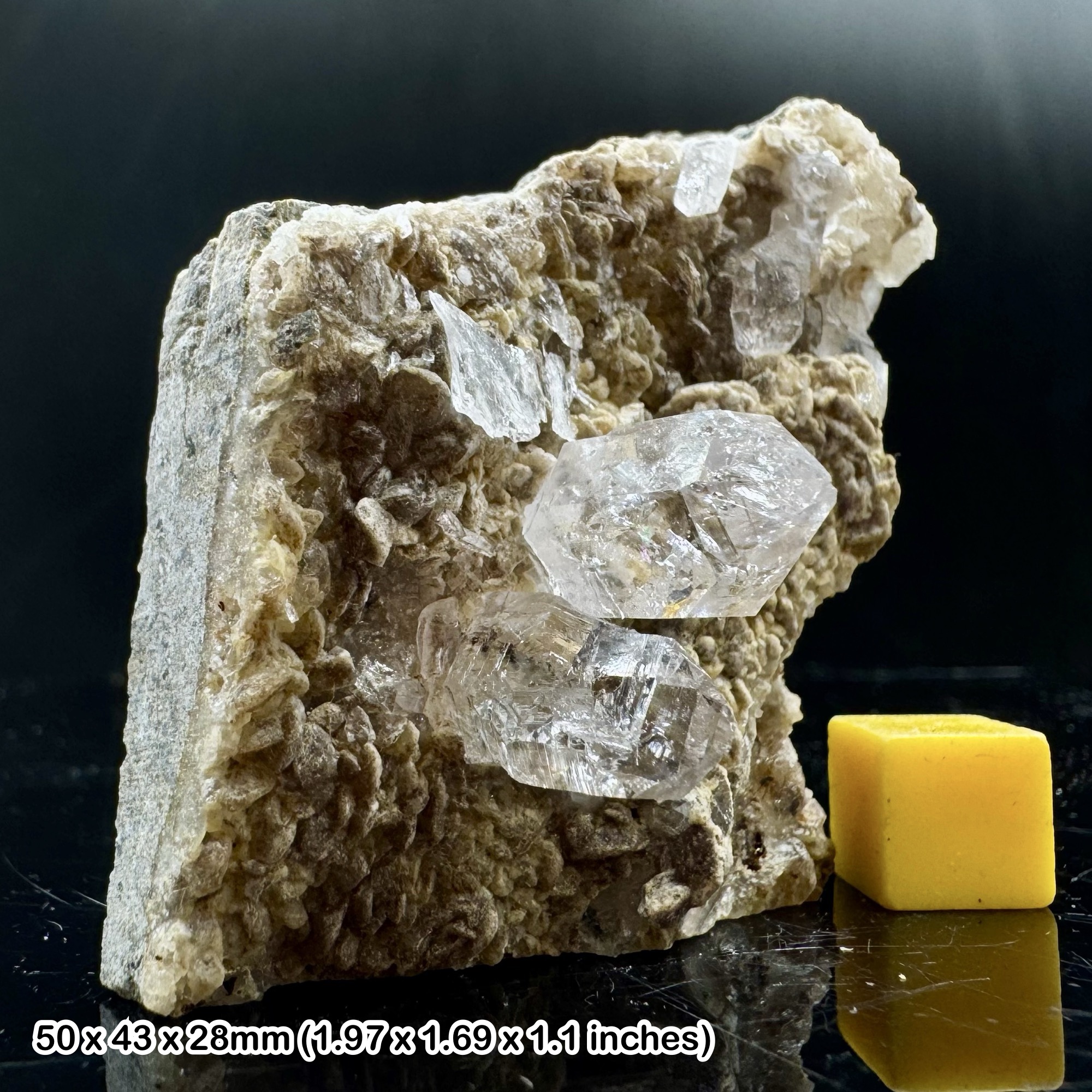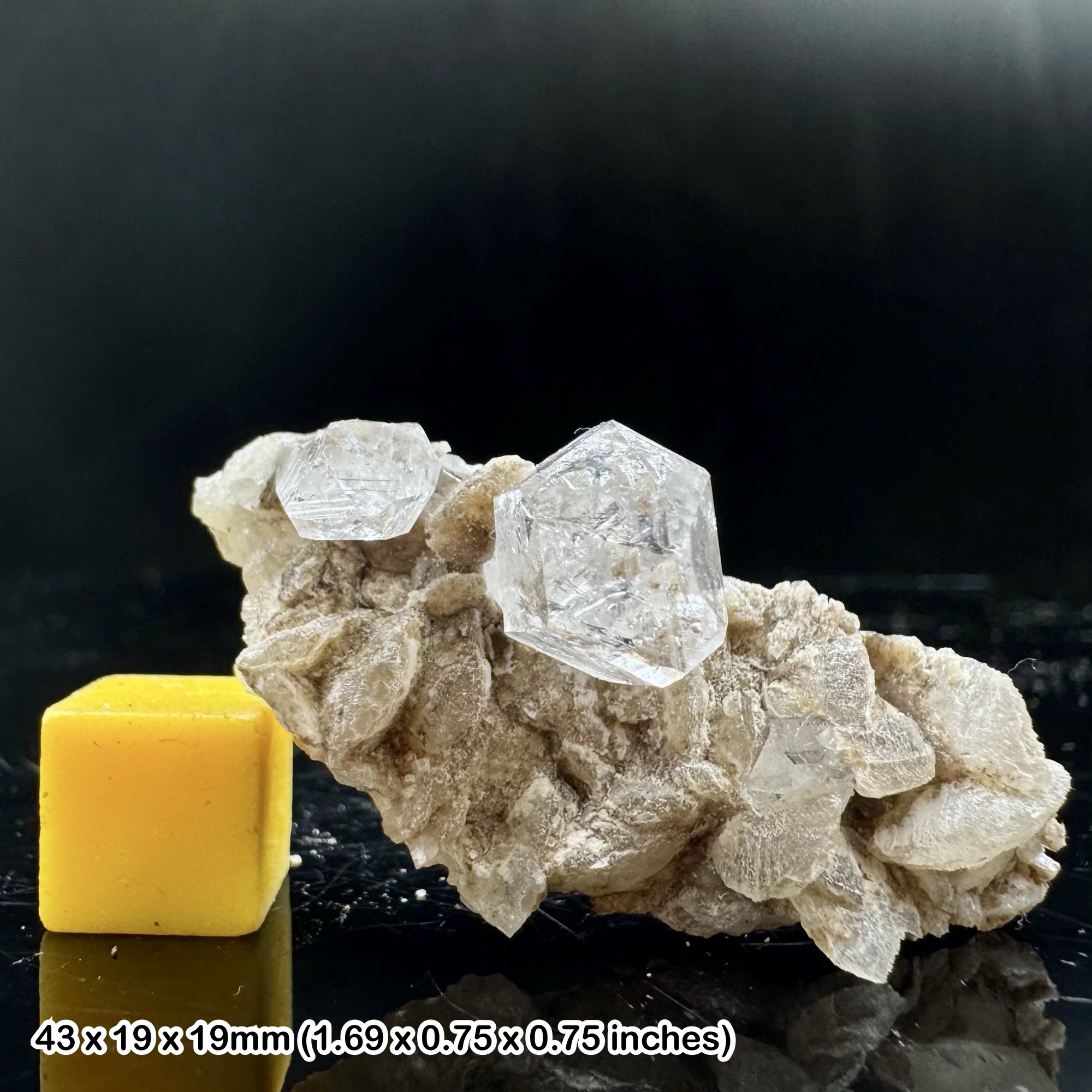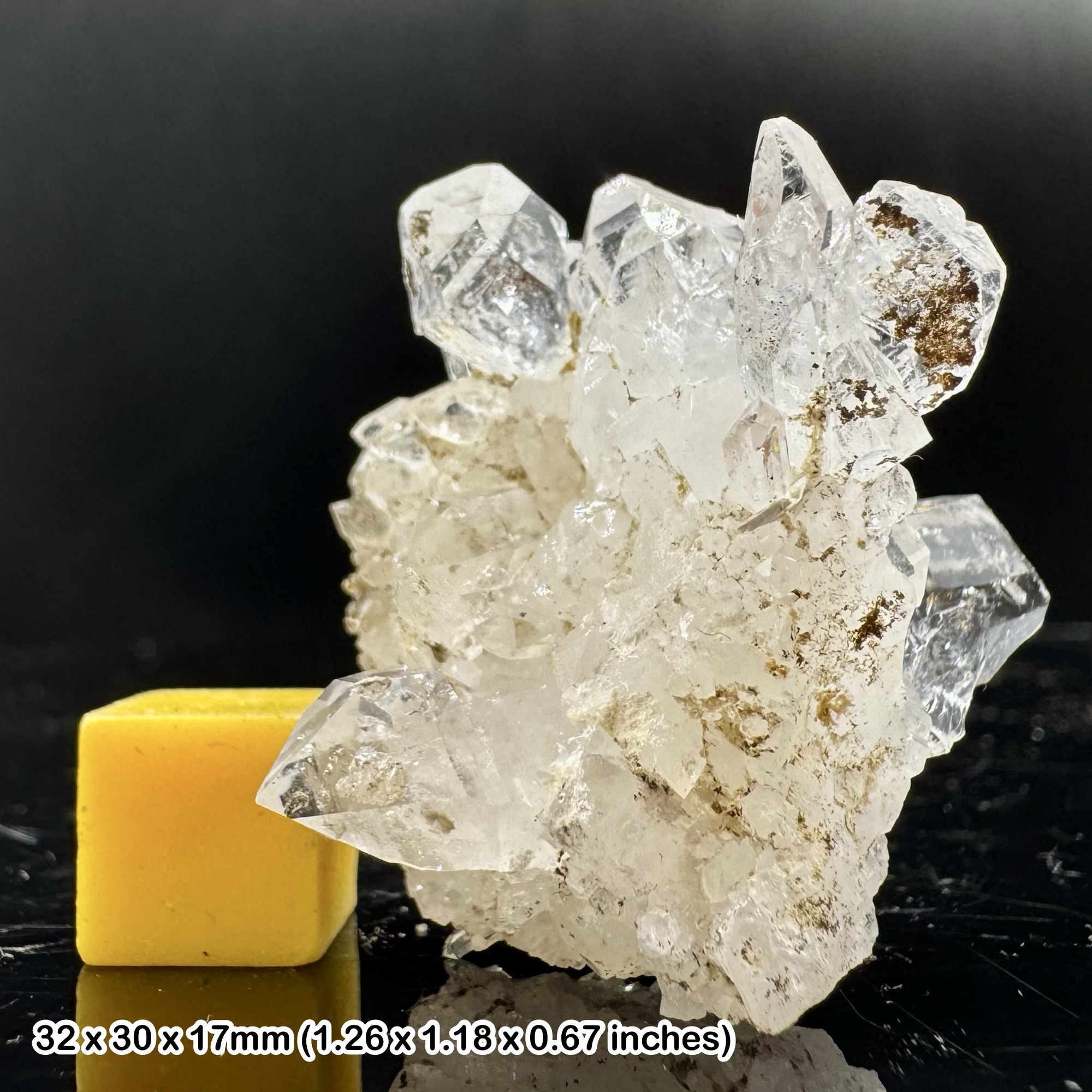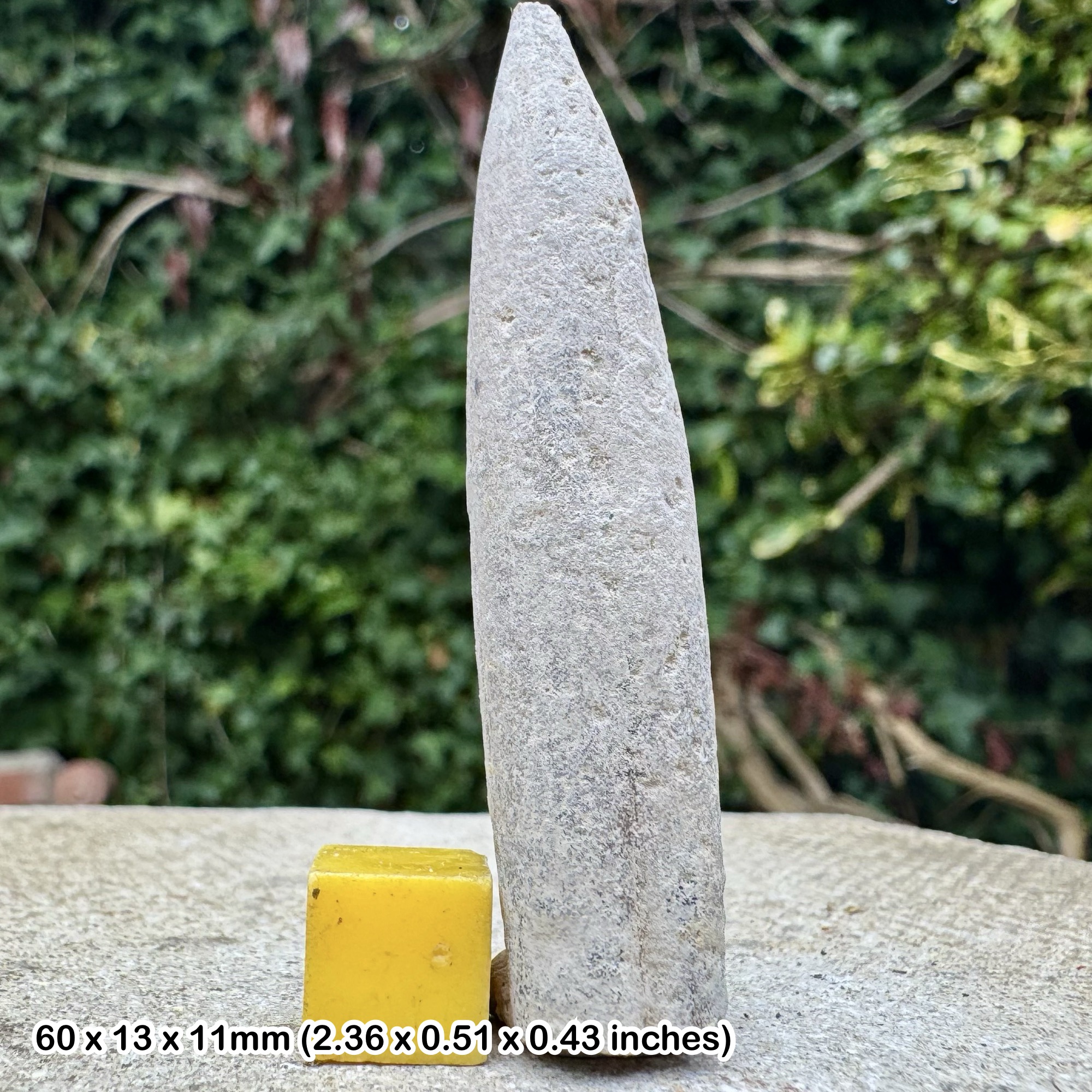
Belemnites sulcatus Fossil Belemnite Oxfordian Jurassic Zalas Poland with Certificate of Authenticity
£ 12.60
BELEMNITES SULCATUS FROM ZALAS, POLANDPresented here is a genuine Belemnites sulcatus fossil belemnite, originating
from the Oxfordian Stage of the Late Jurassic, collected at Zalas, Poland. Dating back approximately 163–157 million years, this fossil represents the internal guard (rostrum) of a marine cephalopod closely related to modern squids and cuttlefish. Specimens such as this are important scientifically as index fossils and highly valued by collectors for their elegance and historic significance.Every fossil we supply is 100% genuine and is provided with a Certificate of Authenticity. The photographs show the actual specimen you will receive, with a 1cm scale cube and rule squares included for exact size reference. GEOLOGICAL AGE AND PROVENANCEThis specimen dates to the Oxfordian Stage of the Jurassic Period, a time when shallow tropical seas covered much of Europe. These environments were rich in marine life, with ammonites, belemnites, bivalves, and marine reptiles thriving in abundance.The Zalas locality in southern Poland is renowned for its Oxfordian deposits, which have yielded some of the finest examples of Late Jurassic cephalopods. The sedimentary layers here preserve fossils with excellent structural detail, making them valuable both scientifically and for display purposes. FOSSIL TYPE AND SCIENTIFIC CLASSIFICATION
• Genus: Belemnites
• Species: Belemnites sulcatus
• Order: Belemnitida
• Superfamily: Belemnitoidea
• Family: BelemnitidaeBelemnites are extinct squid-like cephalopods that swam the Jurassic seas. Their bullet-shaped rostra are the most commonly preserved part of their anatomy, representing the internal skeleton that stabilised them in life. Belemnites sulcatus is one of the best-known Oxfordian species and serves as an important reference fossil for Jurassic stratigraphy. MORPHOLOGICAL FEATURESThe diagnostic traits of Belemnites sulcatus include:
• Elongated Guard (Rostrum): A cylindrical, bullet-like fossil with a smooth outer surface.
• Sulcate Features: Subtle grooves or sulci that provide distinction from other species.
• Tapered Apex: A pointed posterior end aiding streamlining in the water.
• Alveolus: An anterior cavity where the phragmocone (the chambered shell portion) was attached.These features allowed Belemnites sulcatus to move effectively as a nektonic predator, much like modern squid. SCIENTIFIC AND COLLECTOR IMPORTANCEBelemnites are widely used as index fossils, helping geologists identify and date Jurassic marine deposits. Belemnites sulcatus is significant in the Oxfordian biozones, providing key data for stratigraphic correlation across Europe.For collectors, the species is highly valued due to its well-preserved bullet-shaped form and its historical importance in palaeontology. Specimens from Zalas, Poland, are especially desirable, being from one of Europe’s classic Oxfordian fossil localities. DISPLAY AND EDUCATIONAL VALUEThis fossil has been carefully selected for its preservation and clarity of form. Its smooth, tapered rostrum makes it a striking display item, while its scientific context adds depth and value.Ideal for private collections, teaching environments, or museum displays, this Belemnites sulcatus belemnite from Zalas, Poland represents an authentic piece of Jurassic history. It captures both the beauty and the scientific importance of cephalopods that once dominated Europe’s ancient seas more than 160 million years ago.
from the Oxfordian Stage of the Late Jurassic, collected at Zalas, Poland. Dating back approximately 163–157 million years, this fossil represents the internal guard (rostrum) of a marine cephalopod closely related to modern squids and cuttlefish. Specimens such as this are important scientifically as index fossils and highly valued by collectors for their elegance and historic significance.Every fossil we supply is 100% genuine and is provided with a Certificate of Authenticity. The photographs show the actual specimen you will receive, with a 1cm scale cube and rule squares included for exact size reference. GEOLOGICAL AGE AND PROVENANCEThis specimen dates to the Oxfordian Stage of the Jurassic Period, a time when shallow tropical seas covered much of Europe. These environments were rich in marine life, with ammonites, belemnites, bivalves, and marine reptiles thriving in abundance.The Zalas locality in southern Poland is renowned for its Oxfordian deposits, which have yielded some of the finest examples of Late Jurassic cephalopods. The sedimentary layers here preserve fossils with excellent structural detail, making them valuable both scientifically and for display purposes. FOSSIL TYPE AND SCIENTIFIC CLASSIFICATION
• Genus: Belemnites
• Species: Belemnites sulcatus
• Order: Belemnitida
• Superfamily: Belemnitoidea
• Family: BelemnitidaeBelemnites are extinct squid-like cephalopods that swam the Jurassic seas. Their bullet-shaped rostra are the most commonly preserved part of their anatomy, representing the internal skeleton that stabilised them in life. Belemnites sulcatus is one of the best-known Oxfordian species and serves as an important reference fossil for Jurassic stratigraphy. MORPHOLOGICAL FEATURESThe diagnostic traits of Belemnites sulcatus include:
• Elongated Guard (Rostrum): A cylindrical, bullet-like fossil with a smooth outer surface.
• Sulcate Features: Subtle grooves or sulci that provide distinction from other species.
• Tapered Apex: A pointed posterior end aiding streamlining in the water.
• Alveolus: An anterior cavity where the phragmocone (the chambered shell portion) was attached.These features allowed Belemnites sulcatus to move effectively as a nektonic predator, much like modern squid. SCIENTIFIC AND COLLECTOR IMPORTANCEBelemnites are widely used as index fossils, helping geologists identify and date Jurassic marine deposits. Belemnites sulcatus is significant in the Oxfordian biozones, providing key data for stratigraphic correlation across Europe.For collectors, the species is highly valued due to its well-preserved bullet-shaped form and its historical importance in palaeontology. Specimens from Zalas, Poland, are especially desirable, being from one of Europe’s classic Oxfordian fossil localities. DISPLAY AND EDUCATIONAL VALUEThis fossil has been carefully selected for its preservation and clarity of form. Its smooth, tapered rostrum makes it a striking display item, while its scientific context adds depth and value.Ideal for private collections, teaching environments, or museum displays, this Belemnites sulcatus belemnite from Zalas, Poland represents an authentic piece of Jurassic history. It captures both the beauty and the scientific importance of cephalopods that once dominated Europe’s ancient seas more than 160 million years ago.
Other Products