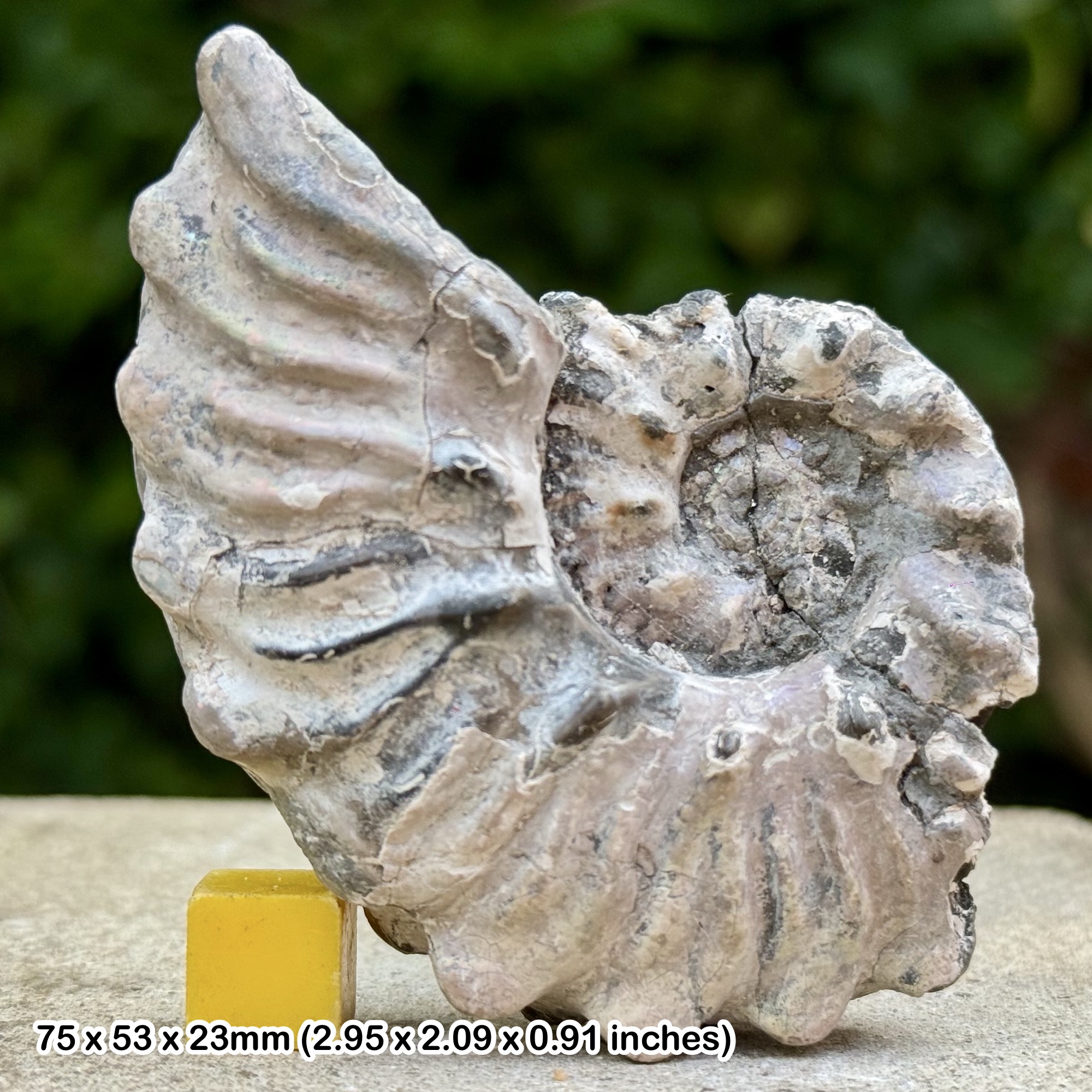
Rare Dimorphoplites biplicatus Fossil Ammonite Albian Cretaceous Mt Carmel Haifa Israel with COA
£ 36.00
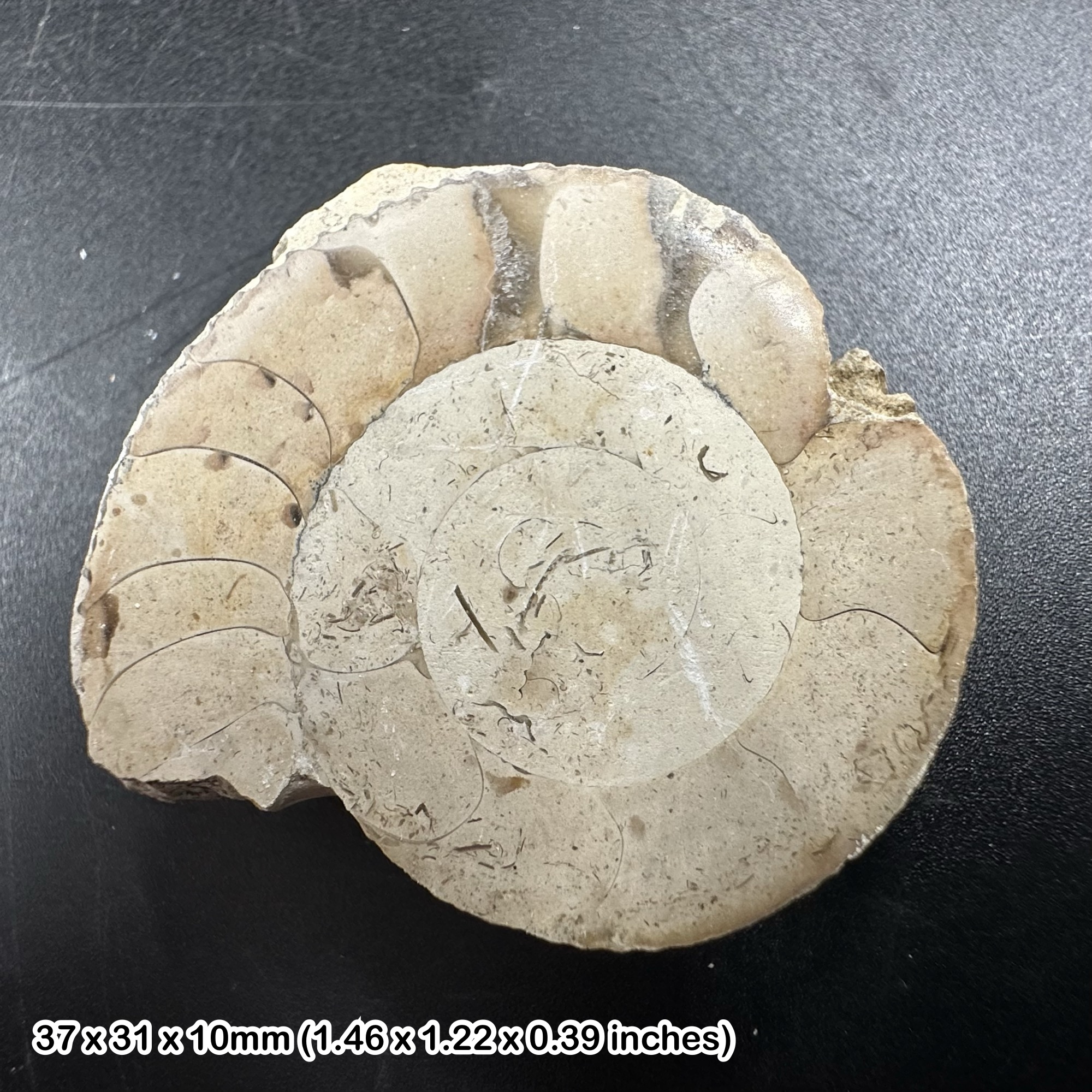
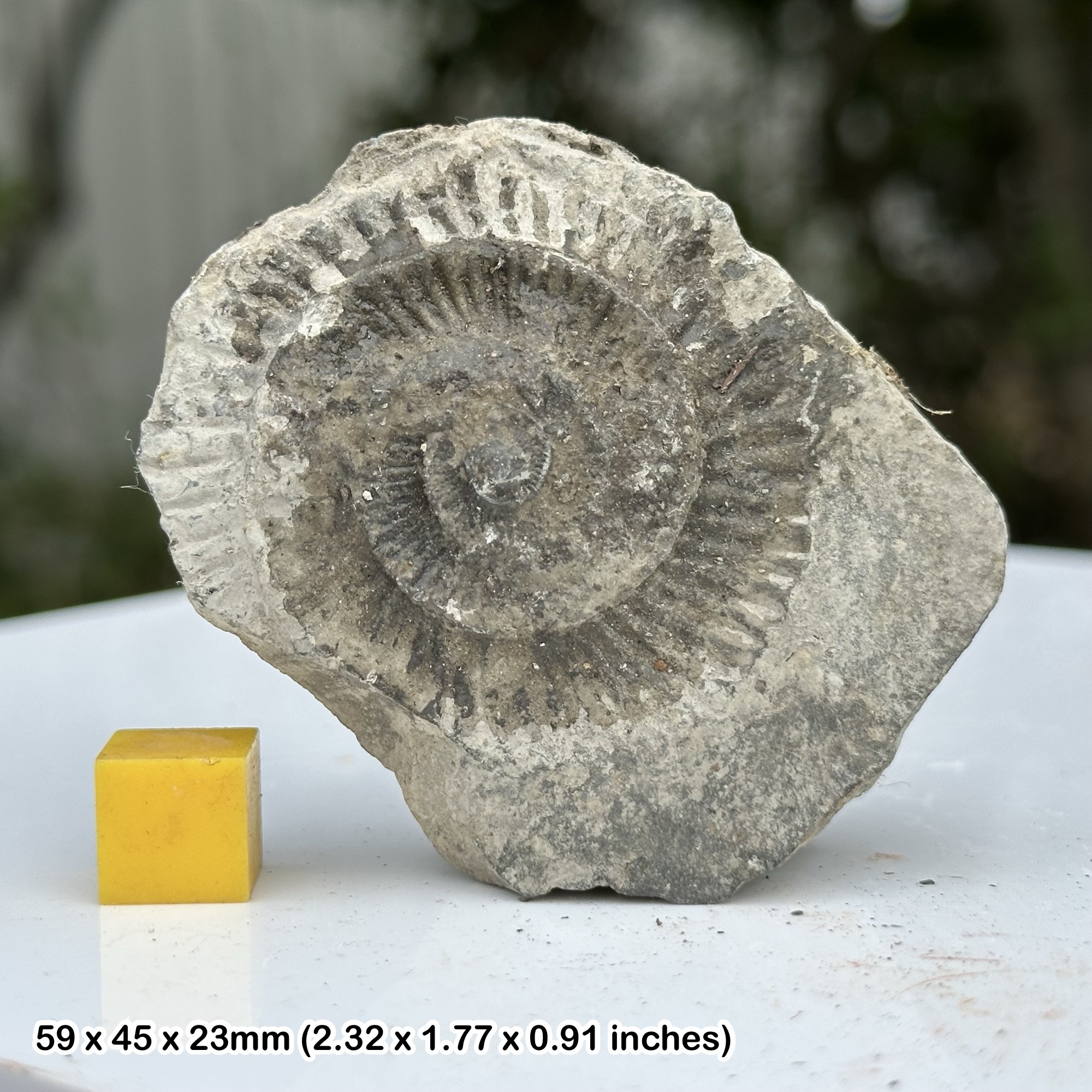
RARE DIMORPHOPLITES BIPLICATUS FOSSIL AMMONITE FROM MT CARMEL, ISRAELThis is a rare Dimorphoplites biplicatus fossil ammonite, originating from the
Albian Stage of the Cretaceous Period, discovered at Mount Carmel, Haifa, Israel. Dating back approximately 113–100 million years, this ammonite is a highly desirable specimen due to both its rarity and scientific value, as fossils from this region are far less commonly available compared to classic European localities.All of our fossils are 100% genuine specimens and are accompanied by a Certificate of Authenticity. The photographs show the actual fossil you will receive, with a 1cm scale cube and rule squares included for accurate sizing. GEOLOGICAL AGE AND LOCALITYThe Albian Stage of the Lower Cretaceous was a period of global marine expansion, when seas advanced across continental margins, creating diverse shallow marine ecosystems. Ammonites such as Dimorphoplites biplicatus thrived in these environments, their rapid evolutionary changes making them highly valuable for stratigraphic dating.The fossil-bearing deposits at Mt Carmel, Haifa, are significant as they record an important window into the Cretaceous marine life of the eastern Mediterranean. These exposures preserve a rare assemblage of ammonites, bivalves, and other invertebrates, contributing greatly to our understanding of regional palaeontology and biostratigraphy. FOSSIL TYPE AND SCIENTIFIC CLASSIFICATION
• Genus: Dimorphoplites
• Species: Dimorphoplites biplicatus
• Order: Ammonitida
• Superfamily: Hoplitoidea
• Family: HoplitidaeDimorphoplites biplicatus is a stratigraphically significant ammonite species, widely used as an index fossil for the Albian Stage. Its distinctive shell features and restricted age range make it particularly useful for correlating Albian deposits across different regions. MORPHOLOGICAL FEATURESThis ammonite species is characterised by a distinctive shell morphology that reflects its evolutionary adaptations:
• Evolute Coiling: The whorls are well exposed, resulting in a broad and open spiral.
• Bifurcating Ribs: Strong ribs typically branch into two as they cross the flanks, producing the diagnostic “biplicatus” ribbing pattern.
• Tuberculation: Subtle nodes or tubercles often appear along rib intersections, aiding identification.
• Keel Development: A keel runs along the venter, enhancing hydrodynamic stability in the water.These traits make Dimorphoplites biplicatus readily recognisable, even among closely related Hoplitidae ammonites, and highlight why the species is so useful in defining Albian biozones. SCIENTIFIC AND COLLECTOR IMPORTANCEThe species Dimorphoplites biplicatus is of major importance in biostratigraphy, forming the basis of the Biplicatus Zone within the Albian. As such, it is invaluable to geologists and palaeontologists for precise dating and correlation of Lower Cretaceous rock sequences.For collectors, the rarity of Dimorphoplites fossils from Israel makes them particularly prized. While ammonites from Western Europe are well documented and relatively abundant, material from Mt Carmel and the Levant region is far scarcer, adding prestige and uniqueness to any collection. DISPLAY AND EDUCATIONAL VALUEThis specimen was carefully chosen for its quality and well-preserved ribbing, which captures the essence of Dimorphoplites biplicatus. Its aesthetic appeal lies in the clarity of its ornamentation and the completeness of its shell whorls.Ideal for display in a collector’s cabinet, teaching collection, or museum exhibit, this ammonite also serves as an excellent tool for explaining biostratigraphy and Cretaceous marine environments. With its rarity, provenance, and scientific significance, it represents an outstanding acquisition for fossil enthusiasts.Owning a rare Dimorphoplites biplicatus ammonite from Mt Carmel, Haifa, Israel offers a direct connection to the ancient seas of the Albian Stage, preserving a remarkable piece of Earth’s evolutionary history and the story of life during the Cretaceous Period.
Albian Stage of the Cretaceous Period, discovered at Mount Carmel, Haifa, Israel. Dating back approximately 113–100 million years, this ammonite is a highly desirable specimen due to both its rarity and scientific value, as fossils from this region are far less commonly available compared to classic European localities.All of our fossils are 100% genuine specimens and are accompanied by a Certificate of Authenticity. The photographs show the actual fossil you will receive, with a 1cm scale cube and rule squares included for accurate sizing. GEOLOGICAL AGE AND LOCALITYThe Albian Stage of the Lower Cretaceous was a period of global marine expansion, when seas advanced across continental margins, creating diverse shallow marine ecosystems. Ammonites such as Dimorphoplites biplicatus thrived in these environments, their rapid evolutionary changes making them highly valuable for stratigraphic dating.The fossil-bearing deposits at Mt Carmel, Haifa, are significant as they record an important window into the Cretaceous marine life of the eastern Mediterranean. These exposures preserve a rare assemblage of ammonites, bivalves, and other invertebrates, contributing greatly to our understanding of regional palaeontology and biostratigraphy. FOSSIL TYPE AND SCIENTIFIC CLASSIFICATION
• Genus: Dimorphoplites
• Species: Dimorphoplites biplicatus
• Order: Ammonitida
• Superfamily: Hoplitoidea
• Family: HoplitidaeDimorphoplites biplicatus is a stratigraphically significant ammonite species, widely used as an index fossil for the Albian Stage. Its distinctive shell features and restricted age range make it particularly useful for correlating Albian deposits across different regions. MORPHOLOGICAL FEATURESThis ammonite species is characterised by a distinctive shell morphology that reflects its evolutionary adaptations:
• Evolute Coiling: The whorls are well exposed, resulting in a broad and open spiral.
• Bifurcating Ribs: Strong ribs typically branch into two as they cross the flanks, producing the diagnostic “biplicatus” ribbing pattern.
• Tuberculation: Subtle nodes or tubercles often appear along rib intersections, aiding identification.
• Keel Development: A keel runs along the venter, enhancing hydrodynamic stability in the water.These traits make Dimorphoplites biplicatus readily recognisable, even among closely related Hoplitidae ammonites, and highlight why the species is so useful in defining Albian biozones. SCIENTIFIC AND COLLECTOR IMPORTANCEThe species Dimorphoplites biplicatus is of major importance in biostratigraphy, forming the basis of the Biplicatus Zone within the Albian. As such, it is invaluable to geologists and palaeontologists for precise dating and correlation of Lower Cretaceous rock sequences.For collectors, the rarity of Dimorphoplites fossils from Israel makes them particularly prized. While ammonites from Western Europe are well documented and relatively abundant, material from Mt Carmel and the Levant region is far scarcer, adding prestige and uniqueness to any collection. DISPLAY AND EDUCATIONAL VALUEThis specimen was carefully chosen for its quality and well-preserved ribbing, which captures the essence of Dimorphoplites biplicatus. Its aesthetic appeal lies in the clarity of its ornamentation and the completeness of its shell whorls.Ideal for display in a collector’s cabinet, teaching collection, or museum exhibit, this ammonite also serves as an excellent tool for explaining biostratigraphy and Cretaceous marine environments. With its rarity, provenance, and scientific significance, it represents an outstanding acquisition for fossil enthusiasts.Owning a rare Dimorphoplites biplicatus ammonite from Mt Carmel, Haifa, Israel offers a direct connection to the ancient seas of the Albian Stage, preserving a remarkable piece of Earth’s evolutionary history and the story of life during the Cretaceous Period.
Other Products