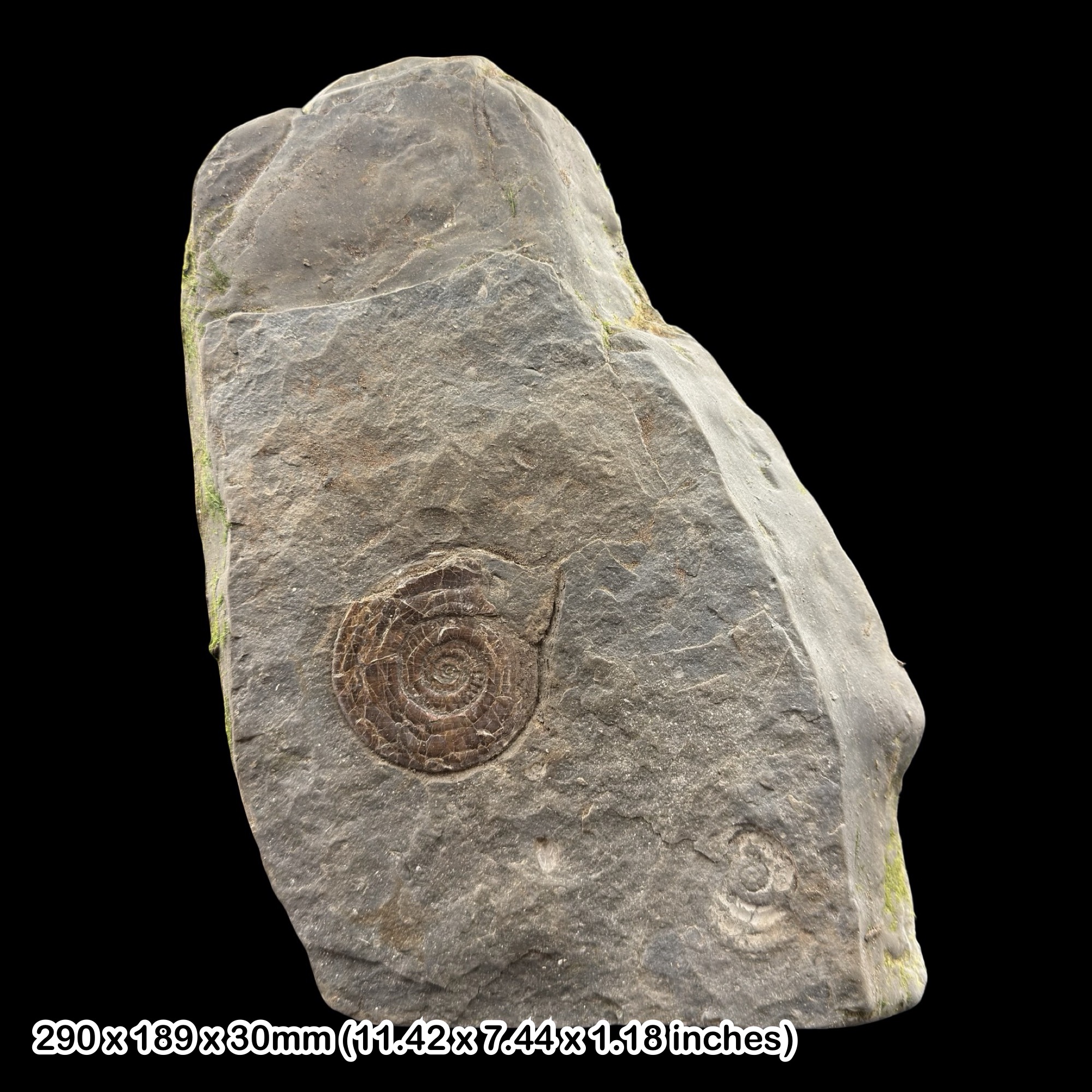
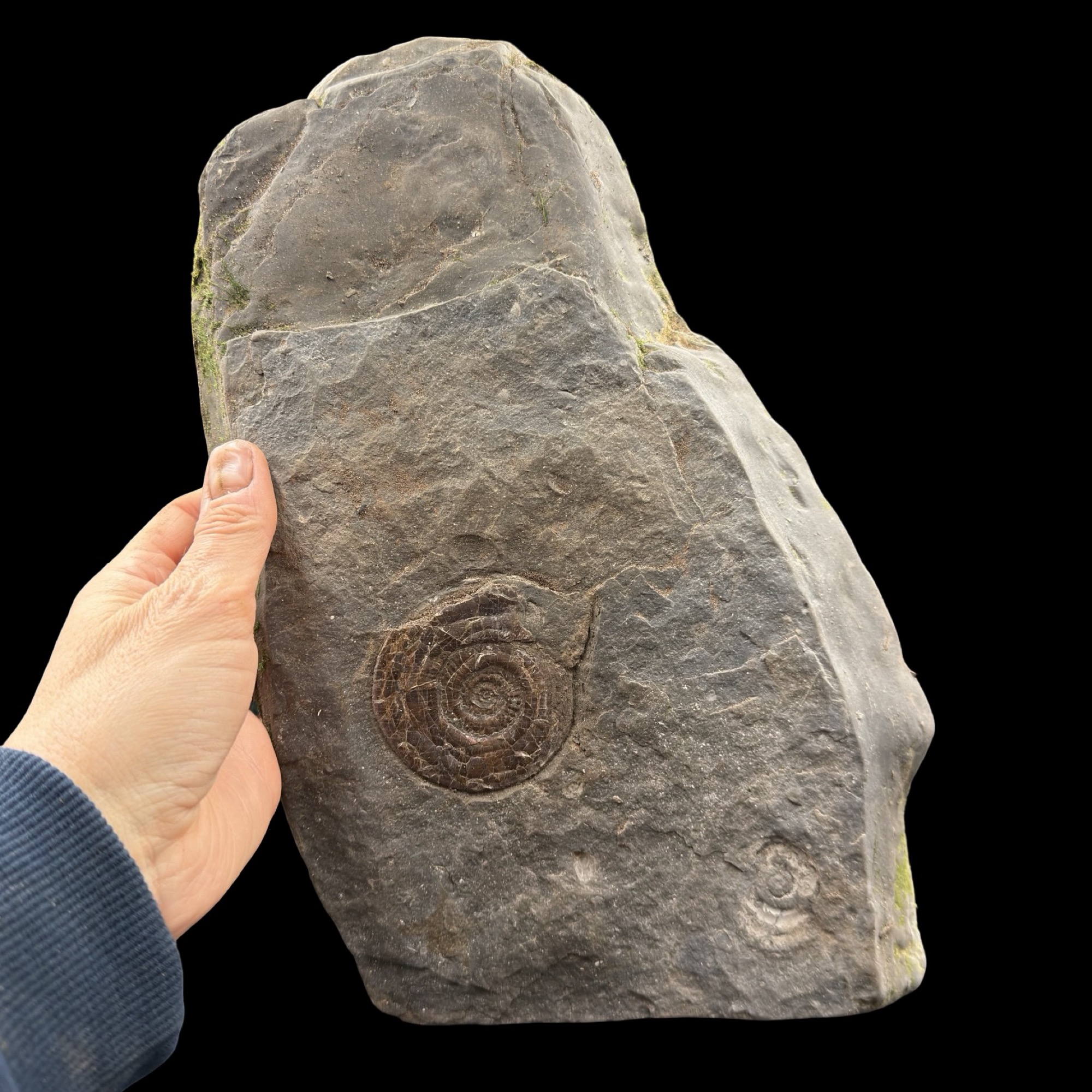
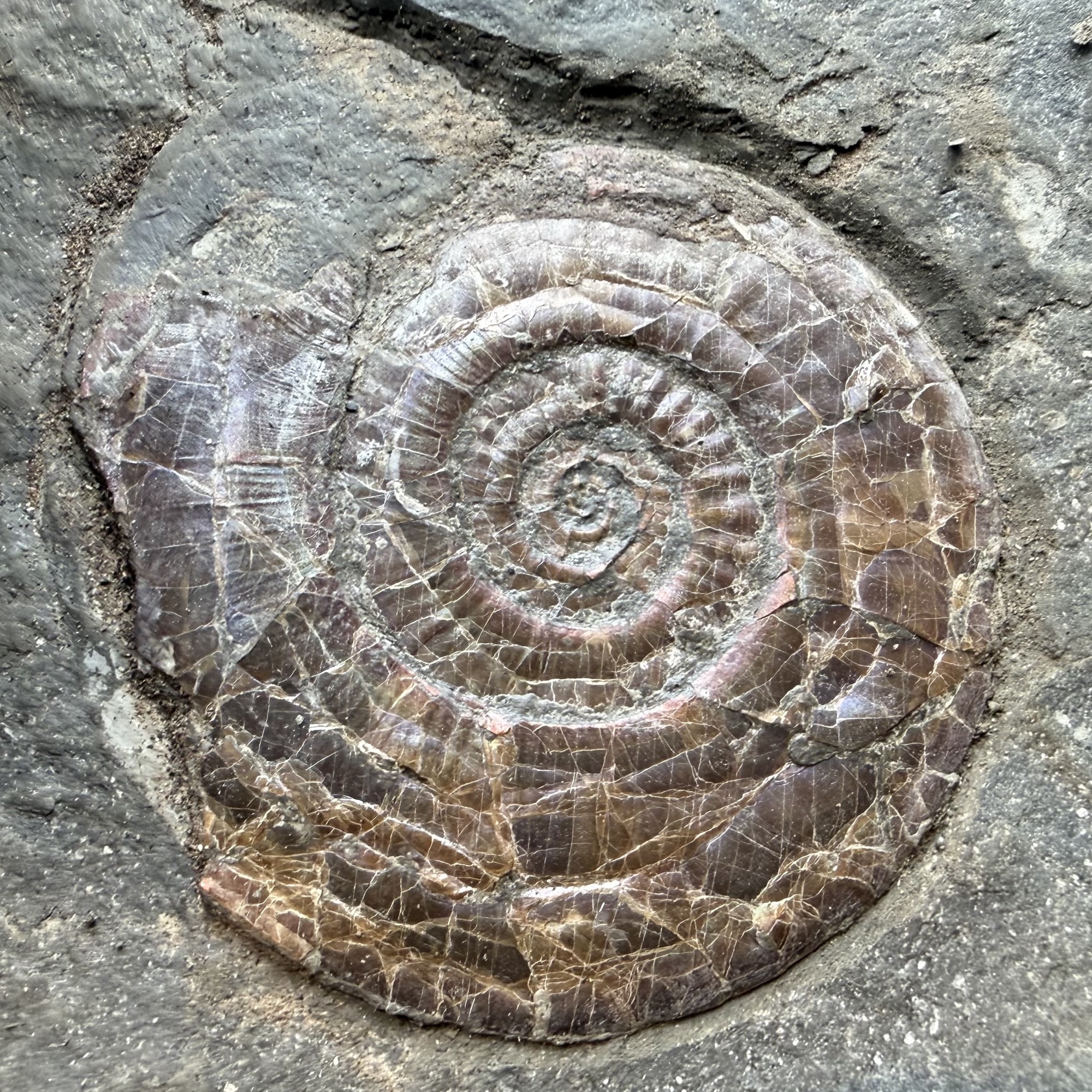
Iridescent Caloceras johnstoni Ammonite Fossil Blue Lias Jurassic Doniford Bay UK
£ 84.00
Iridescent Caloceras johnstoni Ammonite Fossil from the Blue Lias of SomersetThis beautiful iridescent ammonite fossil of Caloceras johnstoni comes from the
famous Blue Lias Formation at Doniford Bay near Watchet, Somerset, United Kingdom. Preserved within Jurassic limestone and shale, this specimen displays the elegant spiral shell typical of early Jurassic ammonites along with subtle natural iridescence that enhances the visual character of the fossil.The fossil you see in the photographs is the exact specimen you will receive. This fossil is a genuine specimen and includes a Certificate of Authenticity lifetime guarantee generic card. For full sizing please see photo.This specimen was discovered by our own team members, Alister and Alison, on the 28 February 2026 along the Somerset coast. After discovery, the fossil was carefully cleaned, prepared, and stabilised by Alison to reveal the ammonite’s natural form and preserve its surface detail.Species Identification and Scientific ClassificationThe fossil belongs to the species Caloceras johnstoni, an early Jurassic ammonite belonging to the family Psiloceratidae. These ammonites are important index fossils used in geological stratigraphy and are characteristic of the earliest stages of the Jurassic period.Scientific classification:Order: AmmonitidaSuperfamily: PsiloceratoideaFamily: PsiloceratidaeGenus: CalocerasSpecies: Caloceras johnstoniThe genus Caloceras was established by the British paleontologist Alpheus Hyatt in the nineteenth century. Species such as Caloceras johnstoni are particularly associated with the early Hettangian Stage of the Jurassic and occur within the Caloceras johnstoni Biozone, an important stratigraphic marker within the lower Blue Lias sequence.These ammonites represent some of the earliest evolutionary forms to appear after the end-Triassic extinction event that reshaped marine ecosystems around 201 million years ago.Geological Age and the Blue Lias FormationThis fossil originates from the Blue Lias Formation, a sequence of alternating limestone and shale beds deposited during the earliest Jurassic Period approximately 201 to 199 million years ago.The sediments forming the Blue Lias accumulated in a shallow epicontinental sea that covered much of southern Britain. Still marine conditions allowed fine sediments to settle onto the sea floor, creating ideal preservation environments for marine organisms including ammonites, bivalves, crustaceans, fish, and marine reptiles.The rhythmic alternation of limestone and shale beds reflects environmental cycles in the Jurassic sea, likely influenced by climatic and sea-level fluctuations. Ammonite shells settled on the seabed after death and were rapidly buried by sediment, allowing their delicate structures to be preserved as fossils.Doniford Bay near Watchet is a well-known fossil locality where erosion along the coastline regularly exposes new Blue Lias fossils.Morphology and Features of Caloceras johnstoniAmmonites were marine cephalopods closely related to modern squid, octopus, and cuttlefish. Their external shells were divided into chambers separated by septa, with the living animal occupying the outermost chamber.The shell of Caloceras johnstoni is characterised by a tightly coiled spiral with smooth whorls and a relatively simple shell ornamentation typical of early psiloceratid ammonites. These shells tend to have rounded whorl profiles and subtle growth lines rather than heavy ribbing seen in later Jurassic ammonites.The fossil preserves the elegant spiral form that makes ammonites one of the most recognisable fossil groups. The natural iridescent sheen occasionally seen on the shell surface results from mineral replacement and microstructural preservation of the original shell layers.In life, ammonites controlled their buoyancy using gas-filled chambers within their shells, allowing them to move through the water column. They likely preyed on small marine organisms such as plankton, crustaceans, and juvenile fish.Early Jurassic Marine EcosystemsDuring the Hettangian Stage of the Early Jurassic, the seas covering Somerset supported a thriving marine ecosystem. Ammonites were among the most abundant and widespread marine animals in these waters and formed an important part of the marine food web.They were preyed upon by larger marine predators including fish and early marine reptiles such as ichthyosaurs. Their rapid evolution and widespread distribution make ammonites some of the most important fossils for understanding Jurassic marine environments.The presence of Caloceras johnstoni in the Blue Lias indicates the earliest Jurassic marine recovery following the mass extinction at the end of the Triassic.A Carefully Collected Somerset AmmoniteThis specimen represents a genuine piece of Britain’s Jurassic coastline and the ancient seas that once covered Somerset. The iridescent preservation combined with the clear spiral morphology makes this ammonite an attractive and scientifically interesting fossil.Discovered by Alister and Alison at Doniford Bay and carefully prepared by Alison, the specimen retains its natural detail and geological authenticity.The photograph shows the actual specimen you will receive. This fossil is a genuine specimen and includes a Certificate of Authenticity lifetime guarantee generic card, making it an excellent addition to any collection of Jurassic ammonites, British fossils, or specimens from the renowned Blue Lias Formation of Somerset, United Kingdom.
famous Blue Lias Formation at Doniford Bay near Watchet, Somerset, United Kingdom. Preserved within Jurassic limestone and shale, this specimen displays the elegant spiral shell typical of early Jurassic ammonites along with subtle natural iridescence that enhances the visual character of the fossil.The fossil you see in the photographs is the exact specimen you will receive. This fossil is a genuine specimen and includes a Certificate of Authenticity lifetime guarantee generic card. For full sizing please see photo.This specimen was discovered by our own team members, Alister and Alison, on the 28 February 2026 along the Somerset coast. After discovery, the fossil was carefully cleaned, prepared, and stabilised by Alison to reveal the ammonite’s natural form and preserve its surface detail.Species Identification and Scientific ClassificationThe fossil belongs to the species Caloceras johnstoni, an early Jurassic ammonite belonging to the family Psiloceratidae. These ammonites are important index fossils used in geological stratigraphy and are characteristic of the earliest stages of the Jurassic period.Scientific classification:Order: AmmonitidaSuperfamily: PsiloceratoideaFamily: PsiloceratidaeGenus: CalocerasSpecies: Caloceras johnstoniThe genus Caloceras was established by the British paleontologist Alpheus Hyatt in the nineteenth century. Species such as Caloceras johnstoni are particularly associated with the early Hettangian Stage of the Jurassic and occur within the Caloceras johnstoni Biozone, an important stratigraphic marker within the lower Blue Lias sequence.These ammonites represent some of the earliest evolutionary forms to appear after the end-Triassic extinction event that reshaped marine ecosystems around 201 million years ago.Geological Age and the Blue Lias FormationThis fossil originates from the Blue Lias Formation, a sequence of alternating limestone and shale beds deposited during the earliest Jurassic Period approximately 201 to 199 million years ago.The sediments forming the Blue Lias accumulated in a shallow epicontinental sea that covered much of southern Britain. Still marine conditions allowed fine sediments to settle onto the sea floor, creating ideal preservation environments for marine organisms including ammonites, bivalves, crustaceans, fish, and marine reptiles.The rhythmic alternation of limestone and shale beds reflects environmental cycles in the Jurassic sea, likely influenced by climatic and sea-level fluctuations. Ammonite shells settled on the seabed after death and were rapidly buried by sediment, allowing their delicate structures to be preserved as fossils.Doniford Bay near Watchet is a well-known fossil locality where erosion along the coastline regularly exposes new Blue Lias fossils.Morphology and Features of Caloceras johnstoniAmmonites were marine cephalopods closely related to modern squid, octopus, and cuttlefish. Their external shells were divided into chambers separated by septa, with the living animal occupying the outermost chamber.The shell of Caloceras johnstoni is characterised by a tightly coiled spiral with smooth whorls and a relatively simple shell ornamentation typical of early psiloceratid ammonites. These shells tend to have rounded whorl profiles and subtle growth lines rather than heavy ribbing seen in later Jurassic ammonites.The fossil preserves the elegant spiral form that makes ammonites one of the most recognisable fossil groups. The natural iridescent sheen occasionally seen on the shell surface results from mineral replacement and microstructural preservation of the original shell layers.In life, ammonites controlled their buoyancy using gas-filled chambers within their shells, allowing them to move through the water column. They likely preyed on small marine organisms such as plankton, crustaceans, and juvenile fish.Early Jurassic Marine EcosystemsDuring the Hettangian Stage of the Early Jurassic, the seas covering Somerset supported a thriving marine ecosystem. Ammonites were among the most abundant and widespread marine animals in these waters and formed an important part of the marine food web.They were preyed upon by larger marine predators including fish and early marine reptiles such as ichthyosaurs. Their rapid evolution and widespread distribution make ammonites some of the most important fossils for understanding Jurassic marine environments.The presence of Caloceras johnstoni in the Blue Lias indicates the earliest Jurassic marine recovery following the mass extinction at the end of the Triassic.A Carefully Collected Somerset AmmoniteThis specimen represents a genuine piece of Britain’s Jurassic coastline and the ancient seas that once covered Somerset. The iridescent preservation combined with the clear spiral morphology makes this ammonite an attractive and scientifically interesting fossil.Discovered by Alister and Alison at Doniford Bay and carefully prepared by Alison, the specimen retains its natural detail and geological authenticity.The photograph shows the actual specimen you will receive. This fossil is a genuine specimen and includes a Certificate of Authenticity lifetime guarantee generic card, making it an excellent addition to any collection of Jurassic ammonites, British fossils, or specimens from the renowned Blue Lias Formation of Somerset, United Kingdom.