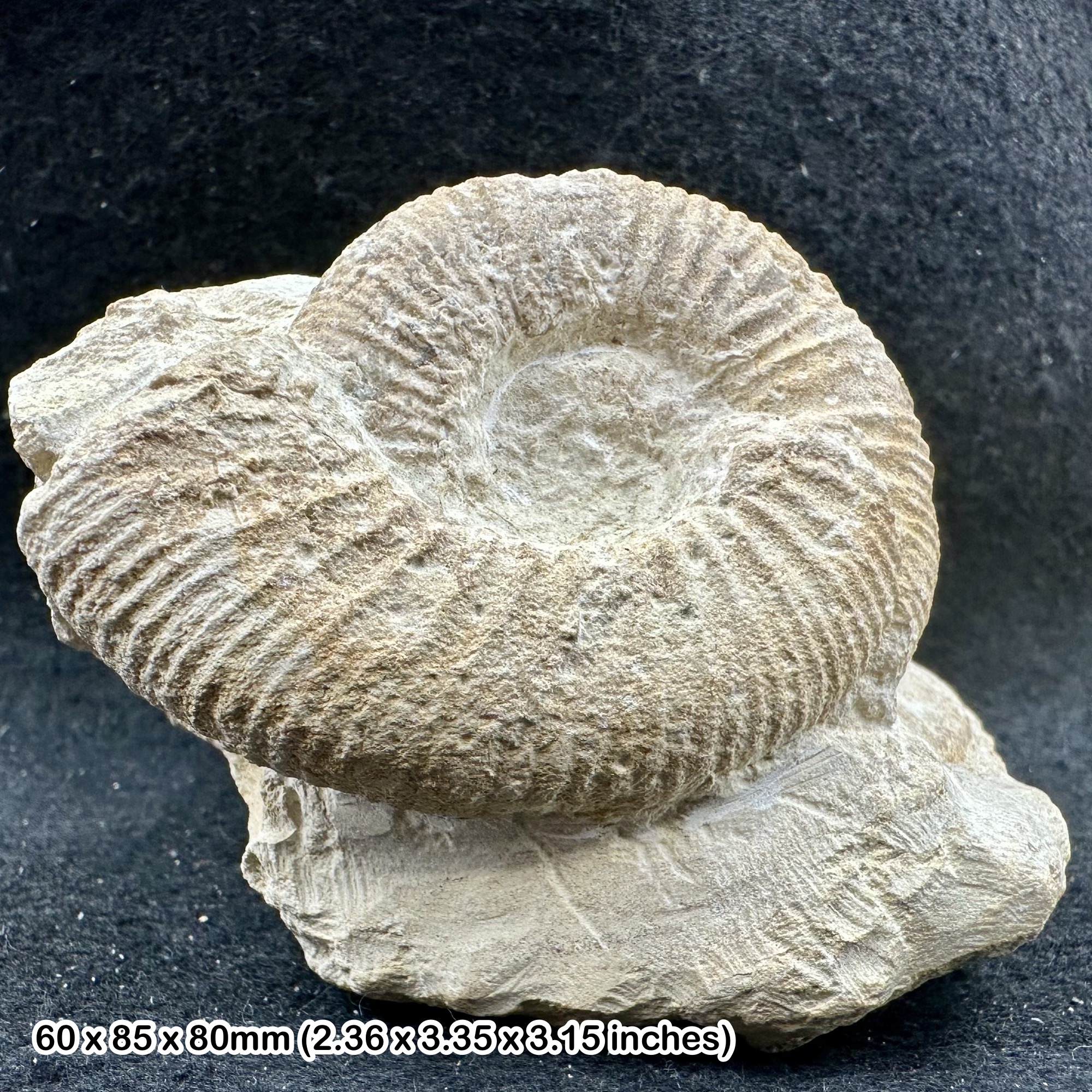
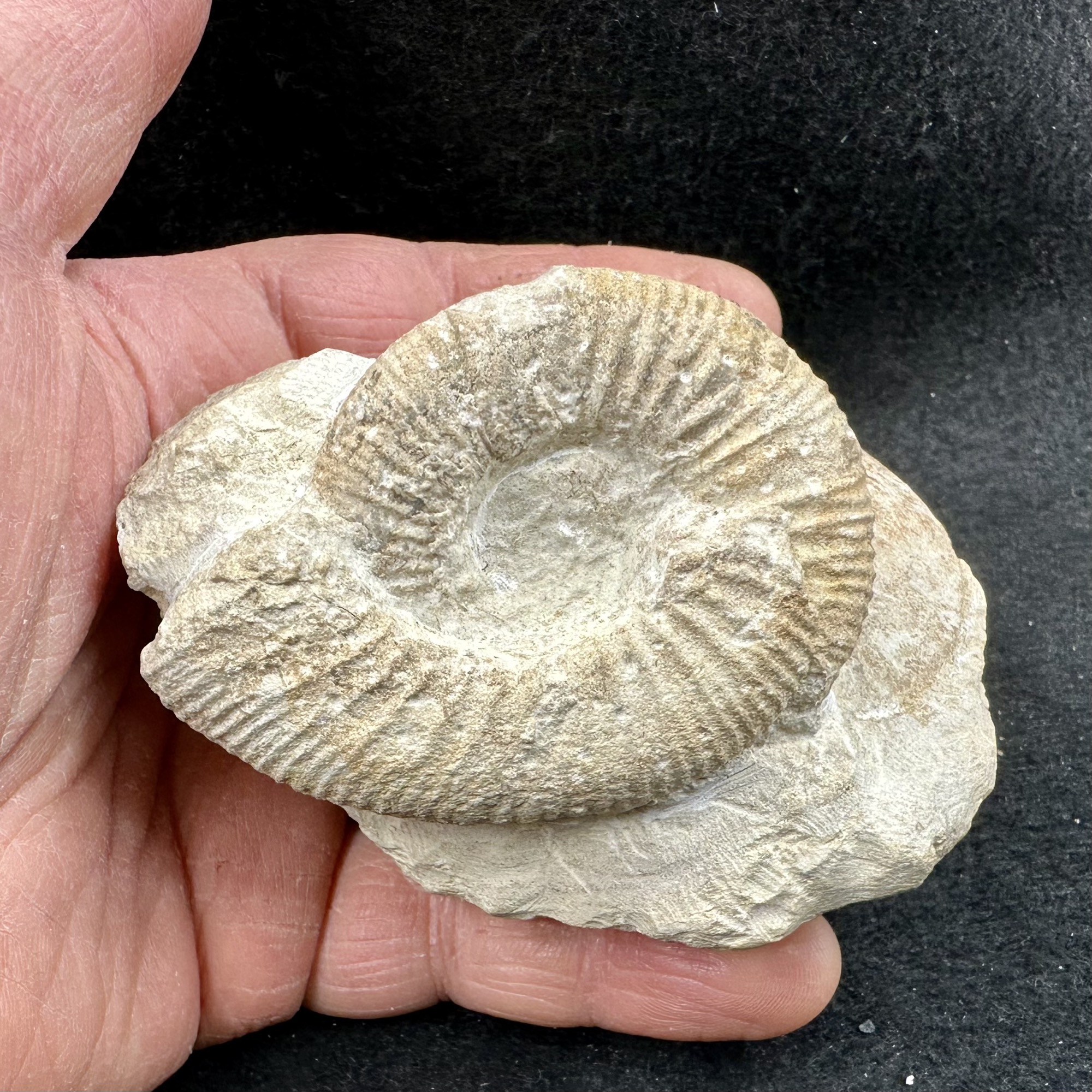
Grossouvria Hyperlioceras Ammonite Fossil Jurassic France Callovian Lorraine Rare Dual Specimen Authentic Display Piece
£ 24.00
Dual Ammonite Fossil from the Jurassic Seas of FranceThis remarkable fossil features two distinct ammonite genera, Grossouvria and
Hyperlioceras, preserved together within a single specimen from the Callovian stage of the Middle Jurassic. Sourced from Lorraine, France, this piece represents a rare and visually compelling example of marine life from approximately 166–163 million years ago. The natural association of two ammonites within one matrix enhances both its scientific interest and display appeal, making it a highly desirable collector’s item.Geological Context and AgeThe Callovian stage forms part of the Middle Jurassic, a period when much of Europe, including present-day France, was submerged beneath warm, shallow epicontinental seas. The Lorraine Basin is well known for its fossil-rich sedimentary deposits, primarily composed of marine limestones and marls that accumulated in relatively calm offshore environments.These depositional conditions allowed fine sediments to settle gently over marine organisms, promoting excellent preservation. Periodic low-oxygen conditions on the sea floor further limited decay and scavenging, enabling delicate shell features to be retained over millions of years. Fossils from this region are often associated with diverse marine faunas, reflecting a thriving Jurassic ecosystem.Species and Taxonomic SignificanceBoth Grossouvria and Hyperlioceras belong to the order Ammonitida, a highly successful group of extinct marine cephalopods. These genera are part of the superfamily Perisphinctoidea, which is known for its evolutionary diversity and importance in Jurassic biostratigraphy.Grossouvria is typically associated with later Middle Jurassic strata and is recognised for its more robust shell form, while Hyperlioceras represents an earlier lineage within the Callovian, often displaying finer ribbing and more delicate ornamentation. Together, these genera provide insight into the evolutionary transitions occurring within ammonite groups during this period.Ammonites such as these are widely used as index fossils, helping geologists accurately date and correlate sedimentary rock layers across different regions due to their rapid evolution and widespread distribution.Morphology and Visual FeaturesThis specimen showcases two contrasting ammonite morphologies within a single piece. Grossouvria generally exhibits a moderately evolute shell with strong, pronounced ribbing that may bifurcate across the flanks, giving it a bold and structured appearance. In contrast, Hyperlioceras tends to display finer, more closely spaced ribs and a slightly more compressed shell form.Both ammonites exhibit the classic planispiral coiling typical of the group, with visible whorls that create an elegant spiral pattern. The variation in ribbing and shell structure between the two genera adds visual depth and interest, making this specimen particularly attractive for display.The fossil is naturally preserved within its original matrix, enhancing its authenticity and providing geological context. The combination of two species within one piece is uncommon and adds to its collectability.Authenticity and ProvenanceThis is a genuine fossil specimen, carefully selected for its quality, uniqueness, and visual appeal. The photograph provided shows the exact specimen you will receive, ensuring complete transparency and confidence in your purchase.Included is a Certificate of Authenticity lifetime guarantee card, confirming the fossil’s legitimacy and origin. This provides assurance for collectors and adds long-term value to the piece.A Unique Collector’s Display PieceDual ammonite specimens such as this are highly sought after due to their rarity and the insight they provide into ancient marine ecosystems. The presence of both Grossouvria and Hyperlioceras within a single matrix captures a moment in Jurassic history, preserved for over 160 million years.From the renowned fossil beds of Lorraine, this specimen combines scientific significance with natural beauty, making it an exceptional addition to any fossil collection or display.
Hyperlioceras, preserved together within a single specimen from the Callovian stage of the Middle Jurassic. Sourced from Lorraine, France, this piece represents a rare and visually compelling example of marine life from approximately 166–163 million years ago. The natural association of two ammonites within one matrix enhances both its scientific interest and display appeal, making it a highly desirable collector’s item.Geological Context and AgeThe Callovian stage forms part of the Middle Jurassic, a period when much of Europe, including present-day France, was submerged beneath warm, shallow epicontinental seas. The Lorraine Basin is well known for its fossil-rich sedimentary deposits, primarily composed of marine limestones and marls that accumulated in relatively calm offshore environments.These depositional conditions allowed fine sediments to settle gently over marine organisms, promoting excellent preservation. Periodic low-oxygen conditions on the sea floor further limited decay and scavenging, enabling delicate shell features to be retained over millions of years. Fossils from this region are often associated with diverse marine faunas, reflecting a thriving Jurassic ecosystem.Species and Taxonomic SignificanceBoth Grossouvria and Hyperlioceras belong to the order Ammonitida, a highly successful group of extinct marine cephalopods. These genera are part of the superfamily Perisphinctoidea, which is known for its evolutionary diversity and importance in Jurassic biostratigraphy.Grossouvria is typically associated with later Middle Jurassic strata and is recognised for its more robust shell form, while Hyperlioceras represents an earlier lineage within the Callovian, often displaying finer ribbing and more delicate ornamentation. Together, these genera provide insight into the evolutionary transitions occurring within ammonite groups during this period.Ammonites such as these are widely used as index fossils, helping geologists accurately date and correlate sedimentary rock layers across different regions due to their rapid evolution and widespread distribution.Morphology and Visual FeaturesThis specimen showcases two contrasting ammonite morphologies within a single piece. Grossouvria generally exhibits a moderately evolute shell with strong, pronounced ribbing that may bifurcate across the flanks, giving it a bold and structured appearance. In contrast, Hyperlioceras tends to display finer, more closely spaced ribs and a slightly more compressed shell form.Both ammonites exhibit the classic planispiral coiling typical of the group, with visible whorls that create an elegant spiral pattern. The variation in ribbing and shell structure between the two genera adds visual depth and interest, making this specimen particularly attractive for display.The fossil is naturally preserved within its original matrix, enhancing its authenticity and providing geological context. The combination of two species within one piece is uncommon and adds to its collectability.Authenticity and ProvenanceThis is a genuine fossil specimen, carefully selected for its quality, uniqueness, and visual appeal. The photograph provided shows the exact specimen you will receive, ensuring complete transparency and confidence in your purchase.Included is a Certificate of Authenticity lifetime guarantee card, confirming the fossil’s legitimacy and origin. This provides assurance for collectors and adds long-term value to the piece.A Unique Collector’s Display PieceDual ammonite specimens such as this are highly sought after due to their rarity and the insight they provide into ancient marine ecosystems. The presence of both Grossouvria and Hyperlioceras within a single matrix captures a moment in Jurassic history, preserved for over 160 million years.From the renowned fossil beds of Lorraine, this specimen combines scientific significance with natural beauty, making it an exceptional addition to any fossil collection or display.