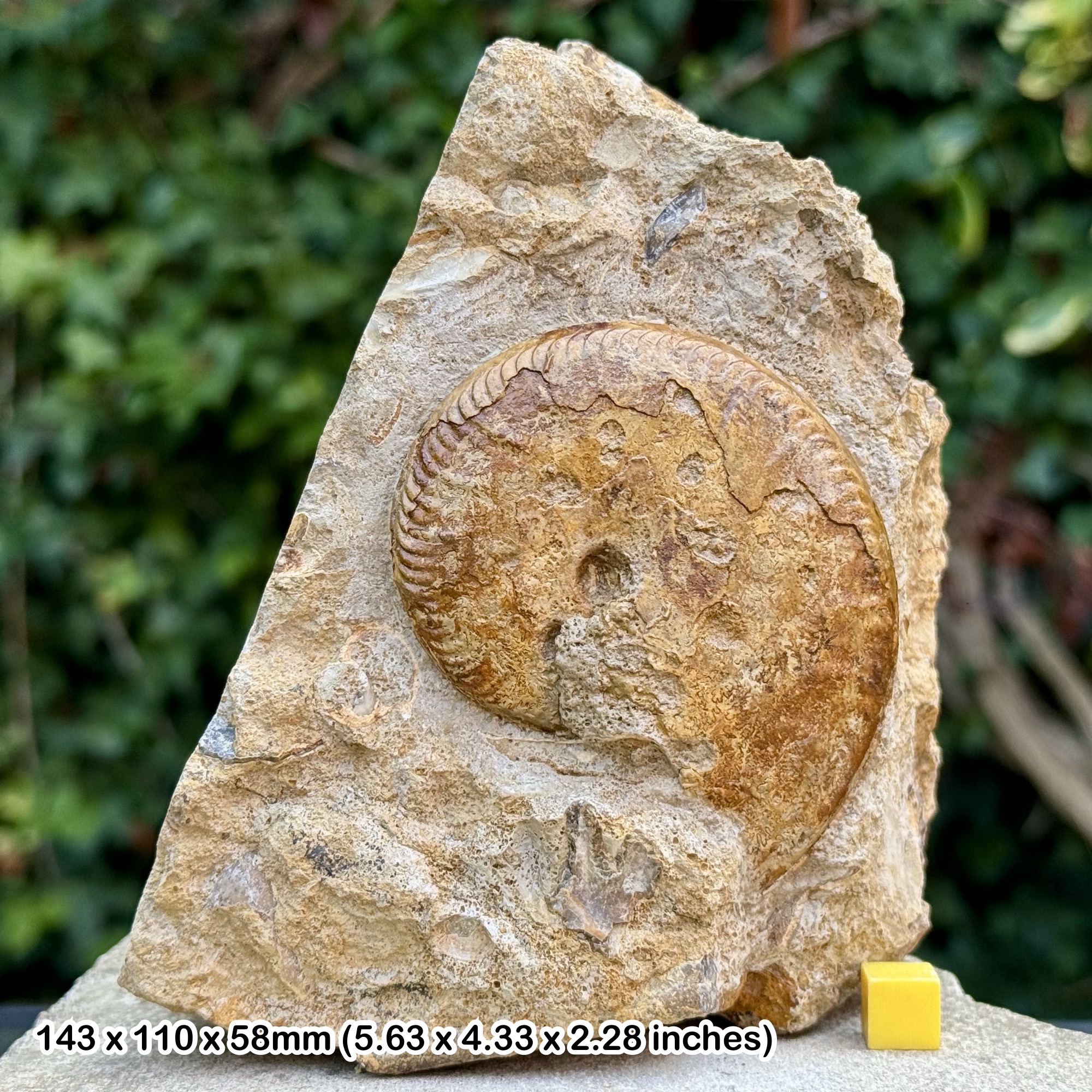
3" Graphoceras Fossil Ammonite Bajocian Jurassic Dorset UK Genuine Horn Park Ammonite Specimen with Certificate of Authenticity
£ 42.00
AUTHENTIC 3" GRAPHOCERAS FOSSIL AMMONITEThis listing features a finely preserved 3-inch Graphoceras ammonite fossil from
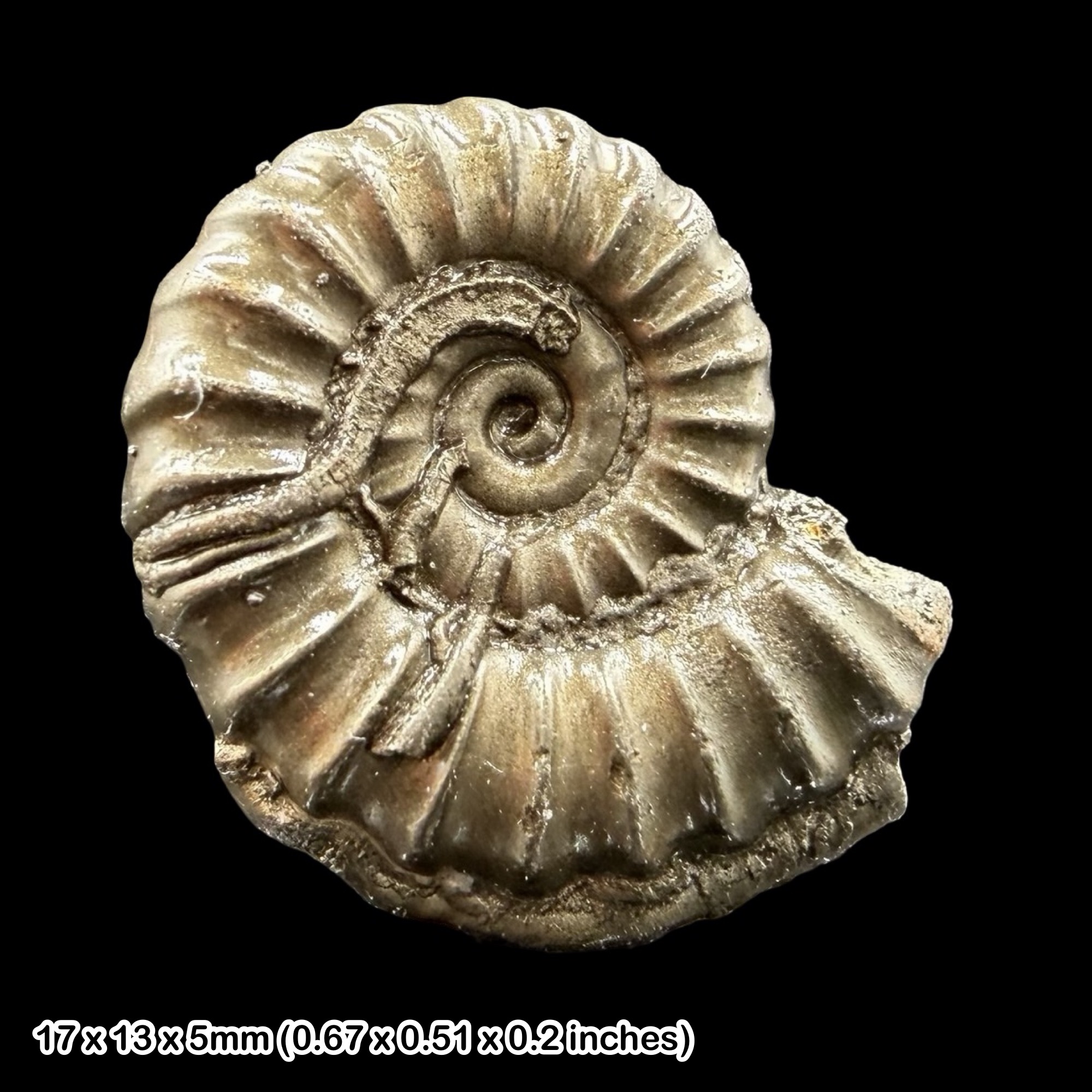
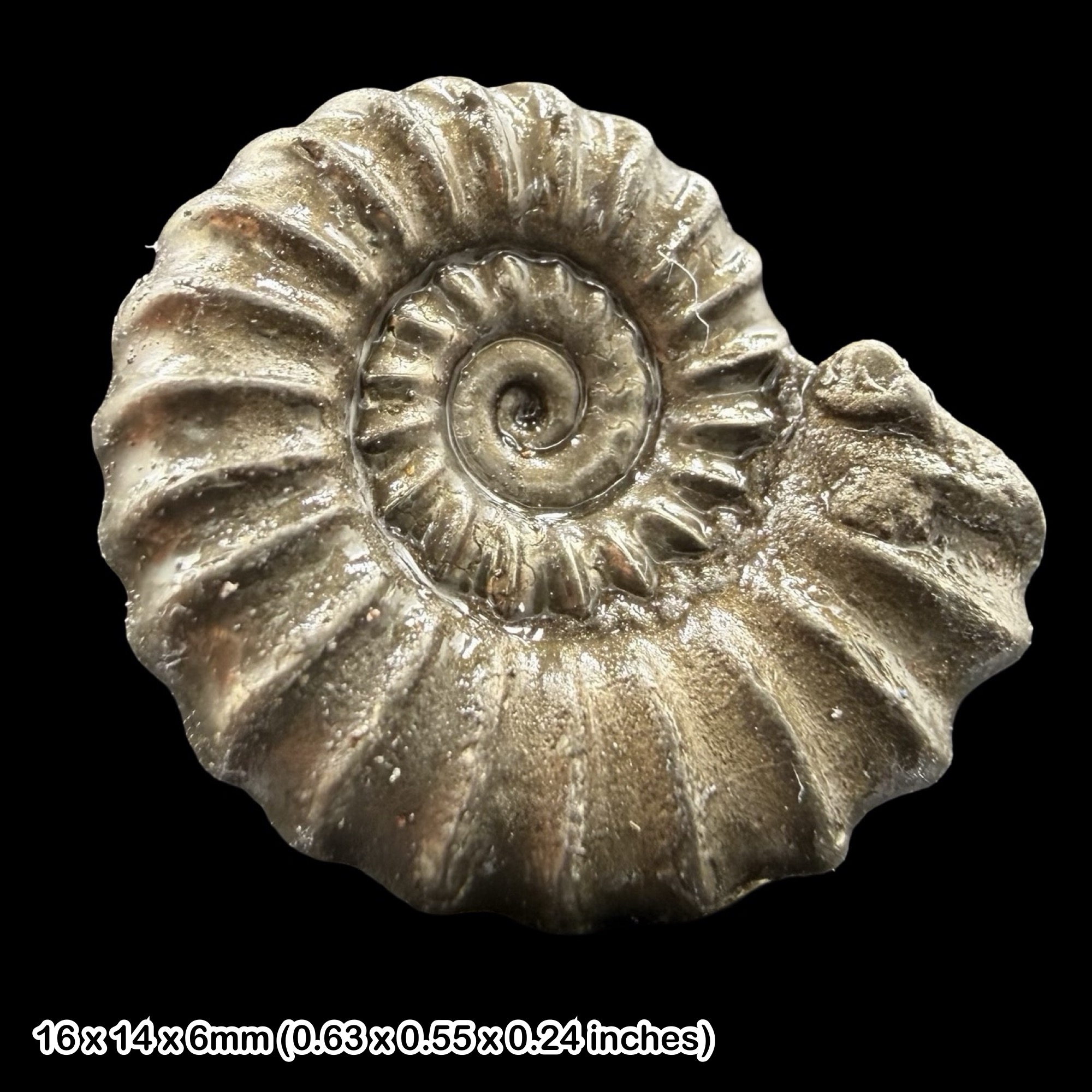
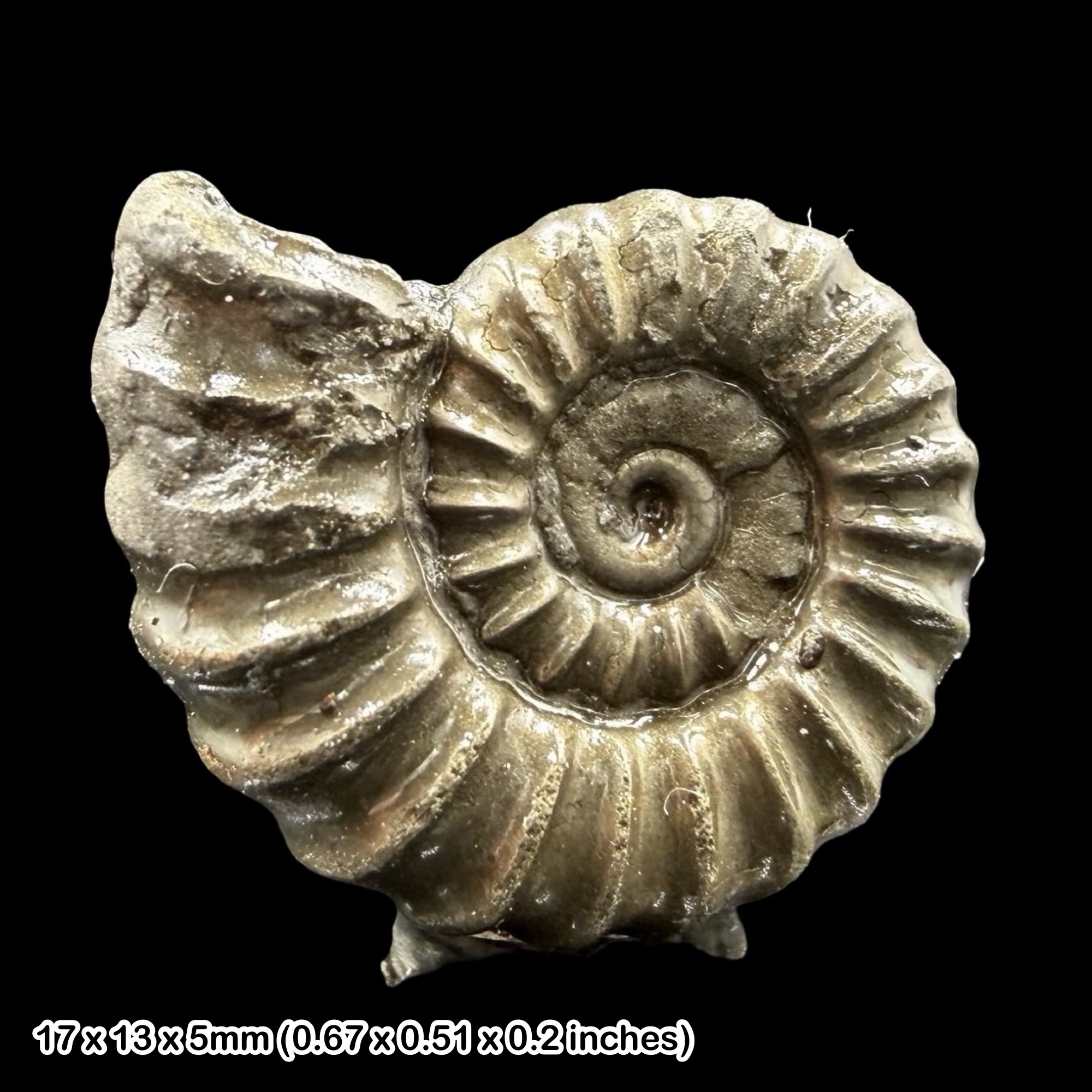
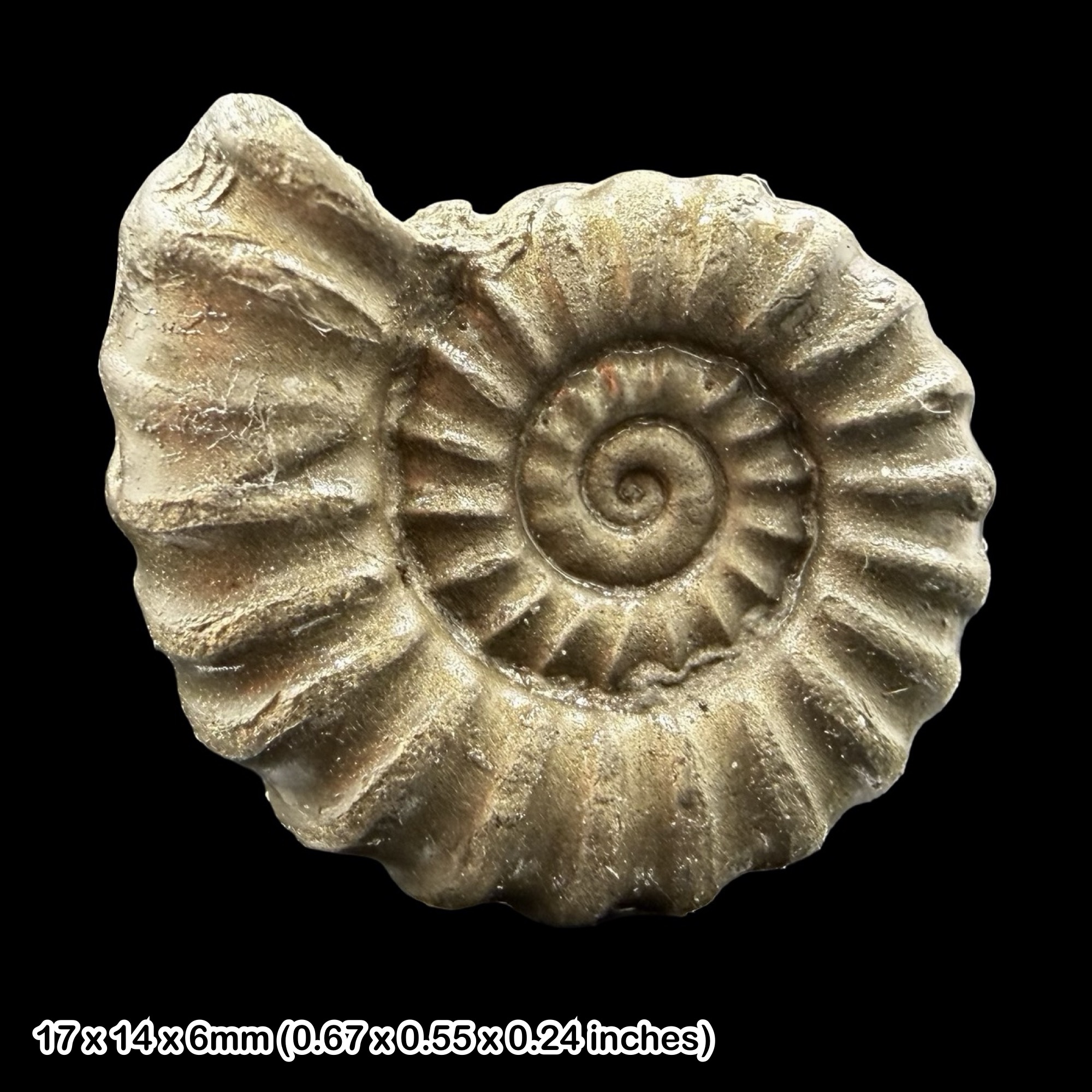
the Bajocian stage of the Middle Jurassic, collected at the historically significant Horn Park Quarry in Dorset, United Kingdom. With its distinctive ribbing and elegant shell form, this ammonite is both a scientifically valuable specimen and an attractive display piece. The exact specimen shown in the photographs, complete with 1 cm scale cube and rule squares, is the one you will receive. Every fossil we supply is 100% genuine and comes with a Certificate of Authenticity. GEOLOGICAL CONTEXT – BAJOCIAN STAGE OF HORN PARKThe Bajocian stage, dating to approximately 170.3–168.3 million years ago, represents a time of remarkable diversity and radiation among ammonites. The Horn Park Quarry, located in Dorset, is one of the most famous and important Bajocian fossil localities in Britain. It is particularly renowned for its ammonite faunas, which are vital for understanding Jurassic stratigraphy. Fossils from this site were deposited in shallow marine environments, where warm seas and lime-rich sediments preserved a wealth of ammonites and other invertebrates. Today, Horn Park ammonites are highly prized by collectors worldwide. SPECIES OVERVIEW – GRAPHOCERASThe genus Graphoceras belongs to the family Graphoceratidae within the order Ammonitida and the superfamily Hildoceratoidea. These ammonites are known for their compressed shells, involute coiling, and strong ribbing. Graphoceras species are important stratigraphic markers, particularly within the Middle Jurassic, where their distribution defines several biozones within the Bajocian stage. Their fossils are often used by geologists and palaeontologists to date Jurassic rocks with precision and correlate sequences across Europe. MORPHOLOGICAL FEATURESThis specimen displays the characteristic traits of Graphoceras ammonites. Its shell is compressed and involute, meaning that the inner whorls are partially hidden by the outer ones. Strong ribs run across the flanks, sometimes bifurcating as they approach the venter (outer edge), giving the ammonite its distinctive appearance. The narrow venter and pronounced ribbing make Graphoceras easy to distinguish from related genera. These morphological features are preserved in excellent detail on this specimen, making it both a scientific reference fossil and an eye-catching collector’s piece. SCIENTIFIC AND COLLECTIBLE IMPORTANCEAs a biostratigraphically significant ammonite, Graphoceras plays a crucial role in defining Bajocian ammonite zones. Its widespread occurrence and distinctive morphology make it a reliable index fossil for the Middle Jurassic. For collectors, this specimen combines the appeal of a well-preserved ammonite with the scientific significance of a stratigraphically important genus. Its size, preservation, and provenance make it ideal for display, teaching, or as part of a research collection. PROVENANCE AND GUARANTEEThis specimen was collected from Horn Park Quarry in Dorset, one of the most important Jurassic fossil localities in the UK. It has been carefully selected for quality and preservation, highlighting the diagnostic features of Graphoceras. As with all of our fossils, this ammonite comes with a Certificate of Authenticity, ensuring its provenance and guaranteeing that it is a genuine specimen. The fossil pictured is the exact one you will receive. A RARE JURASSIC FOSSIL FROM DORSETThis 3-inch Graphoceras ammonite from the Bajocian of Horn Park represents both scientific value and aesthetic beauty. With its finely ribbed shell, historic provenance, and role as an index fossil of the Middle Jurassic, it is a desirable and significant addition to any fossil collection.
the Bajocian stage of the Middle Jurassic, collected at the historically significant Horn Park Quarry in Dorset, United Kingdom. With its distinctive ribbing and elegant shell form, this ammonite is both a scientifically valuable specimen and an attractive display piece. The exact specimen shown in the photographs, complete with 1 cm scale cube and rule squares, is the one you will receive. Every fossil we supply is 100% genuine and comes with a Certificate of Authenticity. GEOLOGICAL CONTEXT – BAJOCIAN STAGE OF HORN PARKThe Bajocian stage, dating to approximately 170.3–168.3 million years ago, represents a time of remarkable diversity and radiation among ammonites. The Horn Park Quarry, located in Dorset, is one of the most famous and important Bajocian fossil localities in Britain. It is particularly renowned for its ammonite faunas, which are vital for understanding Jurassic stratigraphy. Fossils from this site were deposited in shallow marine environments, where warm seas and lime-rich sediments preserved a wealth of ammonites and other invertebrates. Today, Horn Park ammonites are highly prized by collectors worldwide. SPECIES OVERVIEW – GRAPHOCERASThe genus Graphoceras belongs to the family Graphoceratidae within the order Ammonitida and the superfamily Hildoceratoidea. These ammonites are known for their compressed shells, involute coiling, and strong ribbing. Graphoceras species are important stratigraphic markers, particularly within the Middle Jurassic, where their distribution defines several biozones within the Bajocian stage. Their fossils are often used by geologists and palaeontologists to date Jurassic rocks with precision and correlate sequences across Europe. MORPHOLOGICAL FEATURESThis specimen displays the characteristic traits of Graphoceras ammonites. Its shell is compressed and involute, meaning that the inner whorls are partially hidden by the outer ones. Strong ribs run across the flanks, sometimes bifurcating as they approach the venter (outer edge), giving the ammonite its distinctive appearance. The narrow venter and pronounced ribbing make Graphoceras easy to distinguish from related genera. These morphological features are preserved in excellent detail on this specimen, making it both a scientific reference fossil and an eye-catching collector’s piece. SCIENTIFIC AND COLLECTIBLE IMPORTANCEAs a biostratigraphically significant ammonite, Graphoceras plays a crucial role in defining Bajocian ammonite zones. Its widespread occurrence and distinctive morphology make it a reliable index fossil for the Middle Jurassic. For collectors, this specimen combines the appeal of a well-preserved ammonite with the scientific significance of a stratigraphically important genus. Its size, preservation, and provenance make it ideal for display, teaching, or as part of a research collection. PROVENANCE AND GUARANTEEThis specimen was collected from Horn Park Quarry in Dorset, one of the most important Jurassic fossil localities in the UK. It has been carefully selected for quality and preservation, highlighting the diagnostic features of Graphoceras. As with all of our fossils, this ammonite comes with a Certificate of Authenticity, ensuring its provenance and guaranteeing that it is a genuine specimen. The fossil pictured is the exact one you will receive. A RARE JURASSIC FOSSIL FROM DORSETThis 3-inch Graphoceras ammonite from the Bajocian of Horn Park represents both scientific value and aesthetic beauty. With its finely ribbed shell, historic provenance, and role as an index fossil of the Middle Jurassic, it is a desirable and significant addition to any fossil collection.
Other Products