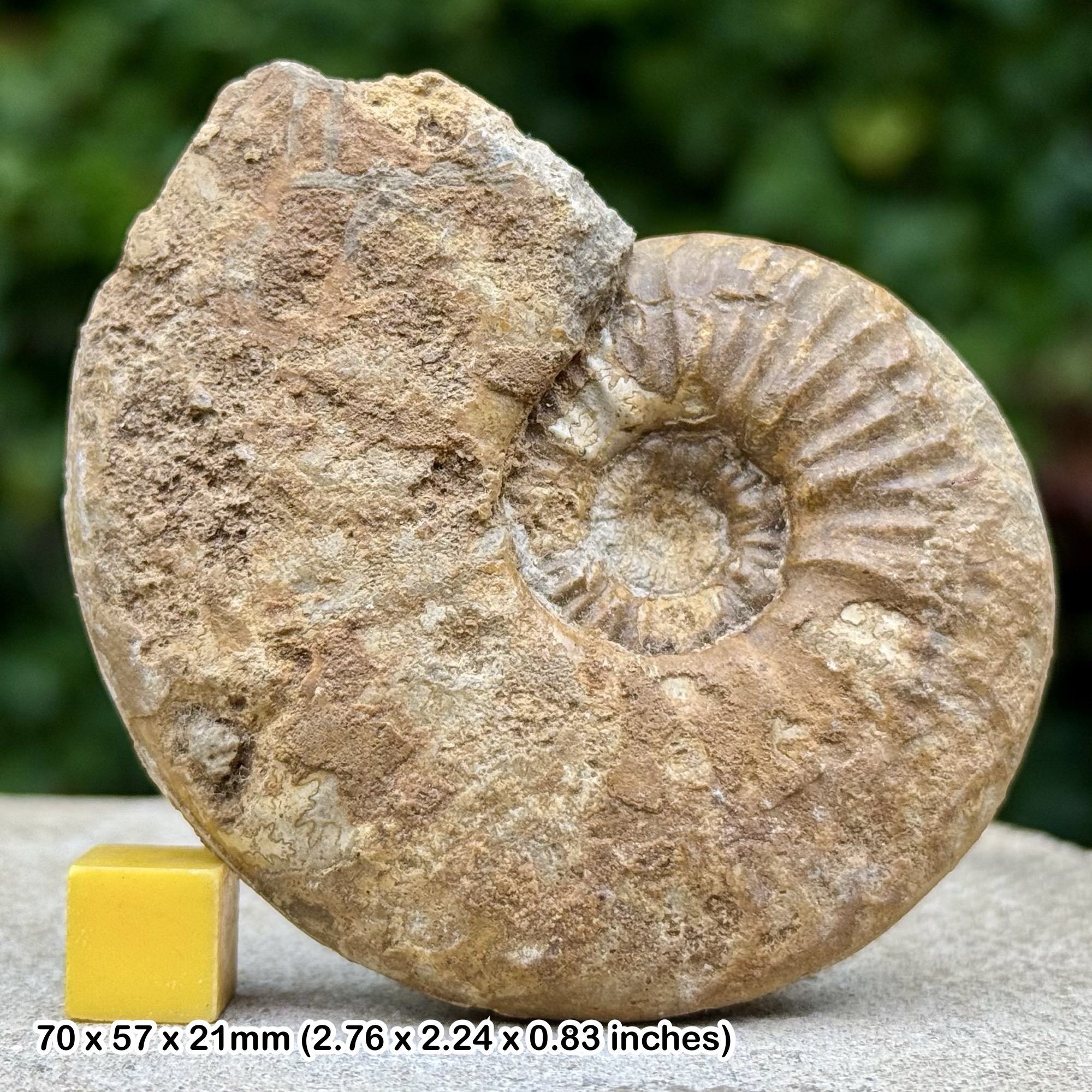
Fossil Ammonite Kosmoceras duncani Callovian Jurassic VILLEURS S MER France
£ 24.00
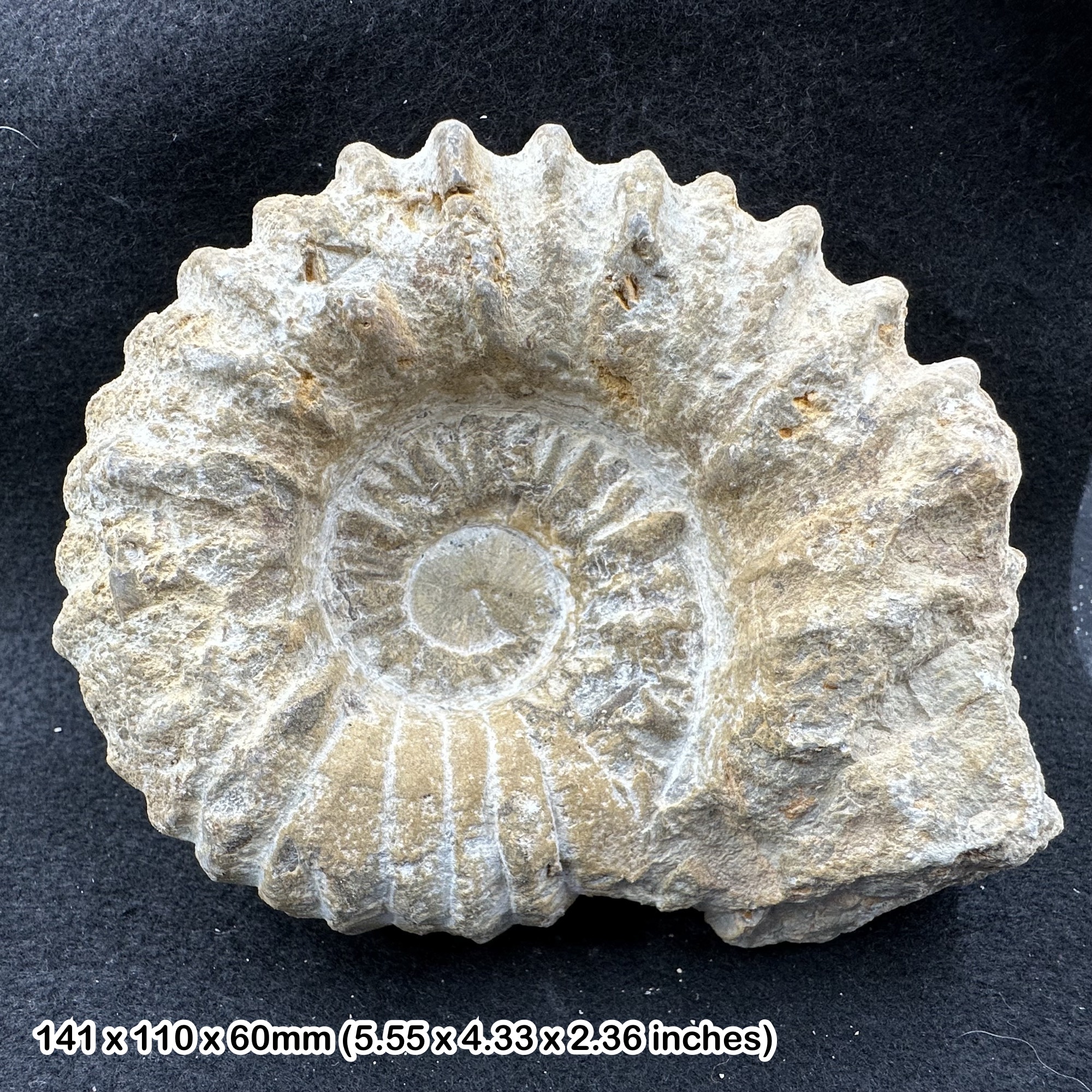
AUTHENTIC JURASSIC FOSSIL AMMONITE – KOSMOCERAS DUNCANIThis listing offers a genuine fossil ammonite, Kosmoceras duncani, from the
Callovian stage of the Jurassic period, discovered at Villiers-sur-Mer, France. This is a carefully chosen specimen, photographed with a 1cm scale cube to provide precise size reference. The fossil shown in the images is the exact one you will receive. As with all of our fossils, it comes with a Certificate of Authenticity, guaranteeing that it is a 100% genuine natural specimen. GEOLOGICAL SETTING – CALLOVIAN, JURASSIC PERIODThe fossil originates from the Callovian stage (166–163 million years ago) of the Middle Jurassic. During this time, much of what is now northern France was covered by warm, shallow epicontinental seas, rich in marine life. Sediments deposited in these environments included clays, marls, and fine-grained limestones, which created excellent conditions for fossil preservation.Villiers-sur-Mer, located in Normandy, is one of the most famous Jurassic fossil localities in France. This region is renowned for yielding ammonites, belemnites, and marine bivalves, all preserved in layers that provide a detailed record of Jurassic marine ecosystems. Fossils from this site are scientifically valuable and highly prized by collectors worldwide. SCIENTIFIC CLASSIFICATION
• Kingdom: Animalia
• Phylum: Mollusca
• Class: Cephalopoda
• Order: Ammonitida
• Superfamily: Stephanoceratoidea
• Family: Kosmoceratidae
• Genus: Kosmoceras
• Species: Kosmoceras duncaniAmmonites of the genus Kosmoceras are noted for their ribbed and tuberculated shells, making them both distinctive and aesthetically striking. This particular species, K. duncani, is a classic representative of Callovian ammonite faunas. MORPHOLOGY AND DISTINCTIVE FEATURESThe fossilised shell of Kosmoceras duncani displays several notable features:
• Planispiral coiling with a moderately involute shell.
• Strong ribbing across the whorls, providing structural strength and a striking appearance.
• Tubercles (small nodules) located along the ribs, a diagnostic feature of the genus.
• Evidence of the complex suture lines, typical of ammonites, reflecting their evolutionary adaptations.These traits not only make this ammonite visually impressive but also provide key details for paleontologists in identifying species and reconstructing Jurassic marine biodiversity. PALAEOECOLOGY AND LIFESTYLELike other ammonites, Kosmoceras duncani was a nektonic marine cephalopod, actively swimming in the warm Jurassic seas. It likely fed on plankton, small crustaceans, and other marine organisms, using its tentacles to capture prey. Its ribbed and tuberculate shell offered both protection and hydrodynamic stability, allowing it to thrive in the diverse marine ecosystems of the Callovian seas.Fossils such as this one provide critical evidence of Jurassic biodiversity and the evolution of ammonites, which were among the most successful groups of marine invertebrates before their extinction at the end of the Cretaceous. COLLECTING AND DISPLAY VALUEThis specimen of Kosmoceras duncani is not only a scientifically significant fossil but also an attractive display piece. Its ribbed shell, distinct morphology, and origin from a classic fossil locality make it an excellent addition to any collection. Collectors of Jurassic ammonites will especially appreciate the provenance from Villiers-sur-Mer, a site celebrated for its exceptional preservation and fossil richness. PROVENANCE AND AUTHENTICITY
• Species: Kosmoceras duncani
• Age: Jurassic, Callovian Stage (~166–163 million years ago)
• Locality: Villiers-sur-Mer, Normandy, FranceEvery fossil we sell is carefully selected for quality and authenticity, supplied with a Certificate of Authenticity. The fossil shown in the listing photographs is the exact specimen you will receive.This authentic Jurassic ammonite, Kosmoceras duncani, from Villiers-sur-Mer, France, is a rare and scientifically important specimen that captures the rich marine history of the Callovian seas, offering both aesthetic and educational value.
Callovian stage of the Jurassic period, discovered at Villiers-sur-Mer, France. This is a carefully chosen specimen, photographed with a 1cm scale cube to provide precise size reference. The fossil shown in the images is the exact one you will receive. As with all of our fossils, it comes with a Certificate of Authenticity, guaranteeing that it is a 100% genuine natural specimen. GEOLOGICAL SETTING – CALLOVIAN, JURASSIC PERIODThe fossil originates from the Callovian stage (166–163 million years ago) of the Middle Jurassic. During this time, much of what is now northern France was covered by warm, shallow epicontinental seas, rich in marine life. Sediments deposited in these environments included clays, marls, and fine-grained limestones, which created excellent conditions for fossil preservation.Villiers-sur-Mer, located in Normandy, is one of the most famous Jurassic fossil localities in France. This region is renowned for yielding ammonites, belemnites, and marine bivalves, all preserved in layers that provide a detailed record of Jurassic marine ecosystems. Fossils from this site are scientifically valuable and highly prized by collectors worldwide. SCIENTIFIC CLASSIFICATION
• Kingdom: Animalia
• Phylum: Mollusca
• Class: Cephalopoda
• Order: Ammonitida
• Superfamily: Stephanoceratoidea
• Family: Kosmoceratidae
• Genus: Kosmoceras
• Species: Kosmoceras duncaniAmmonites of the genus Kosmoceras are noted for their ribbed and tuberculated shells, making them both distinctive and aesthetically striking. This particular species, K. duncani, is a classic representative of Callovian ammonite faunas. MORPHOLOGY AND DISTINCTIVE FEATURESThe fossilised shell of Kosmoceras duncani displays several notable features:
• Planispiral coiling with a moderately involute shell.
• Strong ribbing across the whorls, providing structural strength and a striking appearance.
• Tubercles (small nodules) located along the ribs, a diagnostic feature of the genus.
• Evidence of the complex suture lines, typical of ammonites, reflecting their evolutionary adaptations.These traits not only make this ammonite visually impressive but also provide key details for paleontologists in identifying species and reconstructing Jurassic marine biodiversity. PALAEOECOLOGY AND LIFESTYLELike other ammonites, Kosmoceras duncani was a nektonic marine cephalopod, actively swimming in the warm Jurassic seas. It likely fed on plankton, small crustaceans, and other marine organisms, using its tentacles to capture prey. Its ribbed and tuberculate shell offered both protection and hydrodynamic stability, allowing it to thrive in the diverse marine ecosystems of the Callovian seas.Fossils such as this one provide critical evidence of Jurassic biodiversity and the evolution of ammonites, which were among the most successful groups of marine invertebrates before their extinction at the end of the Cretaceous. COLLECTING AND DISPLAY VALUEThis specimen of Kosmoceras duncani is not only a scientifically significant fossil but also an attractive display piece. Its ribbed shell, distinct morphology, and origin from a classic fossil locality make it an excellent addition to any collection. Collectors of Jurassic ammonites will especially appreciate the provenance from Villiers-sur-Mer, a site celebrated for its exceptional preservation and fossil richness. PROVENANCE AND AUTHENTICITY
• Species: Kosmoceras duncani
• Age: Jurassic, Callovian Stage (~166–163 million years ago)
• Locality: Villiers-sur-Mer, Normandy, FranceEvery fossil we sell is carefully selected for quality and authenticity, supplied with a Certificate of Authenticity. The fossil shown in the listing photographs is the exact specimen you will receive.This authentic Jurassic ammonite, Kosmoceras duncani, from Villiers-sur-Mer, France, is a rare and scientifically important specimen that captures the rich marine history of the Callovian seas, offering both aesthetic and educational value.