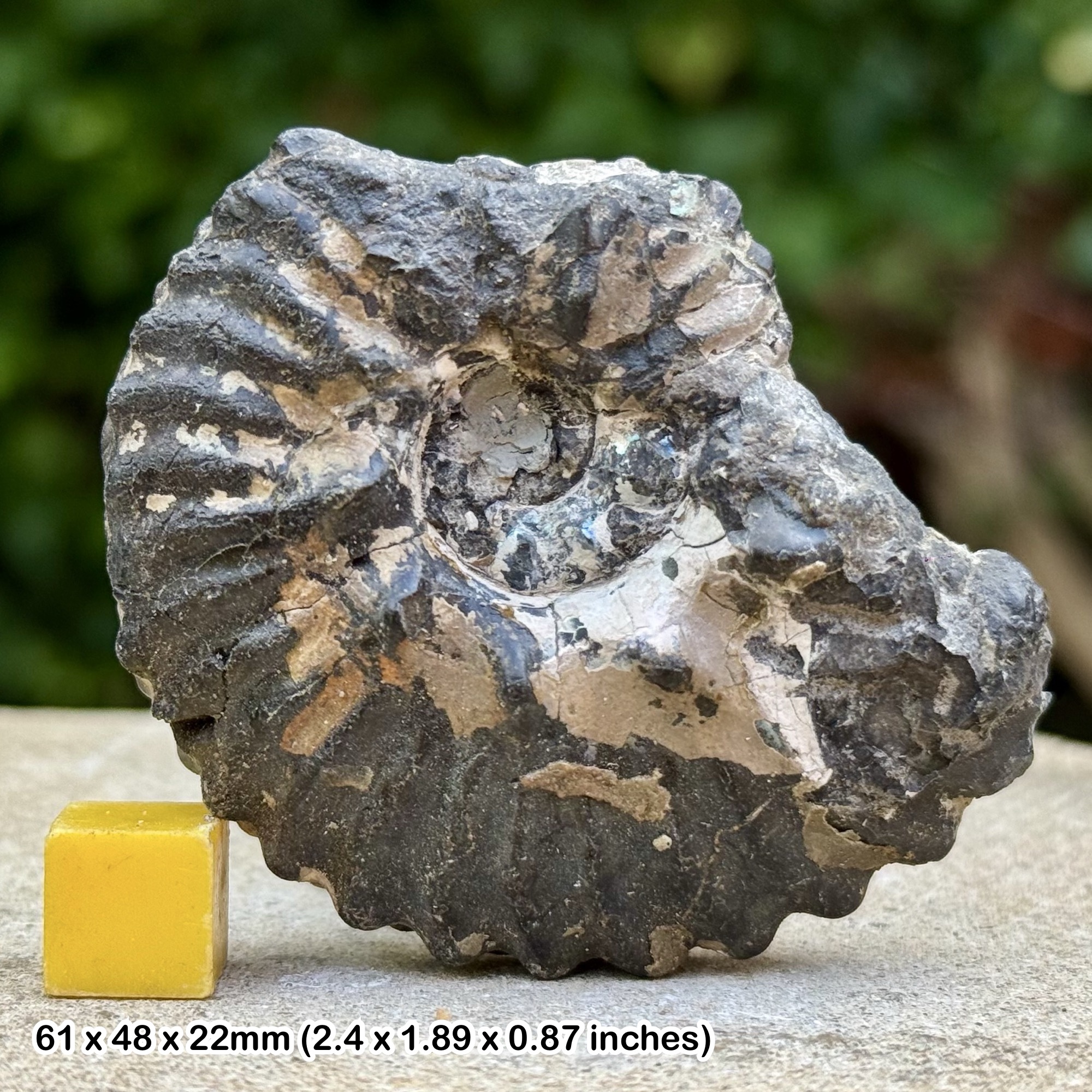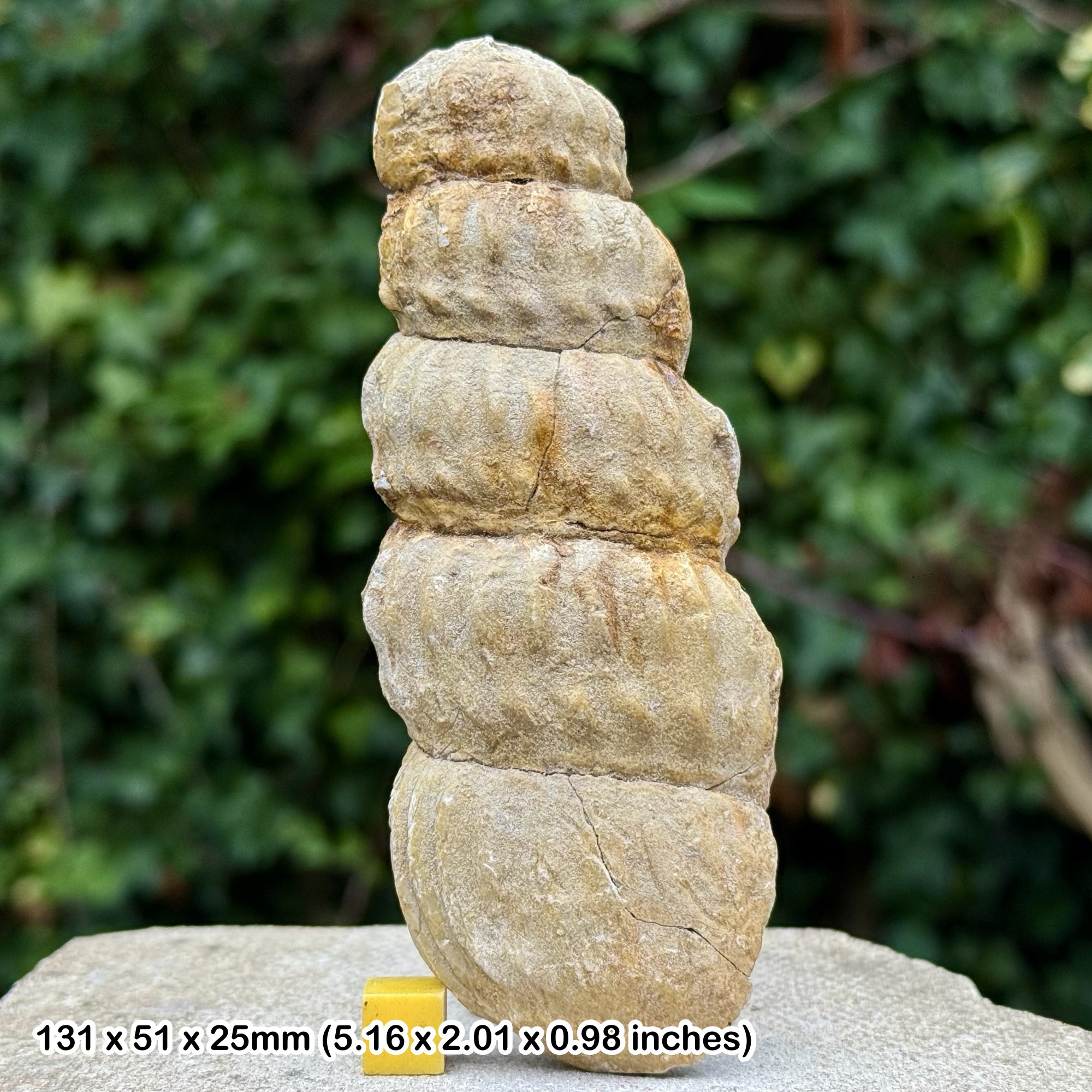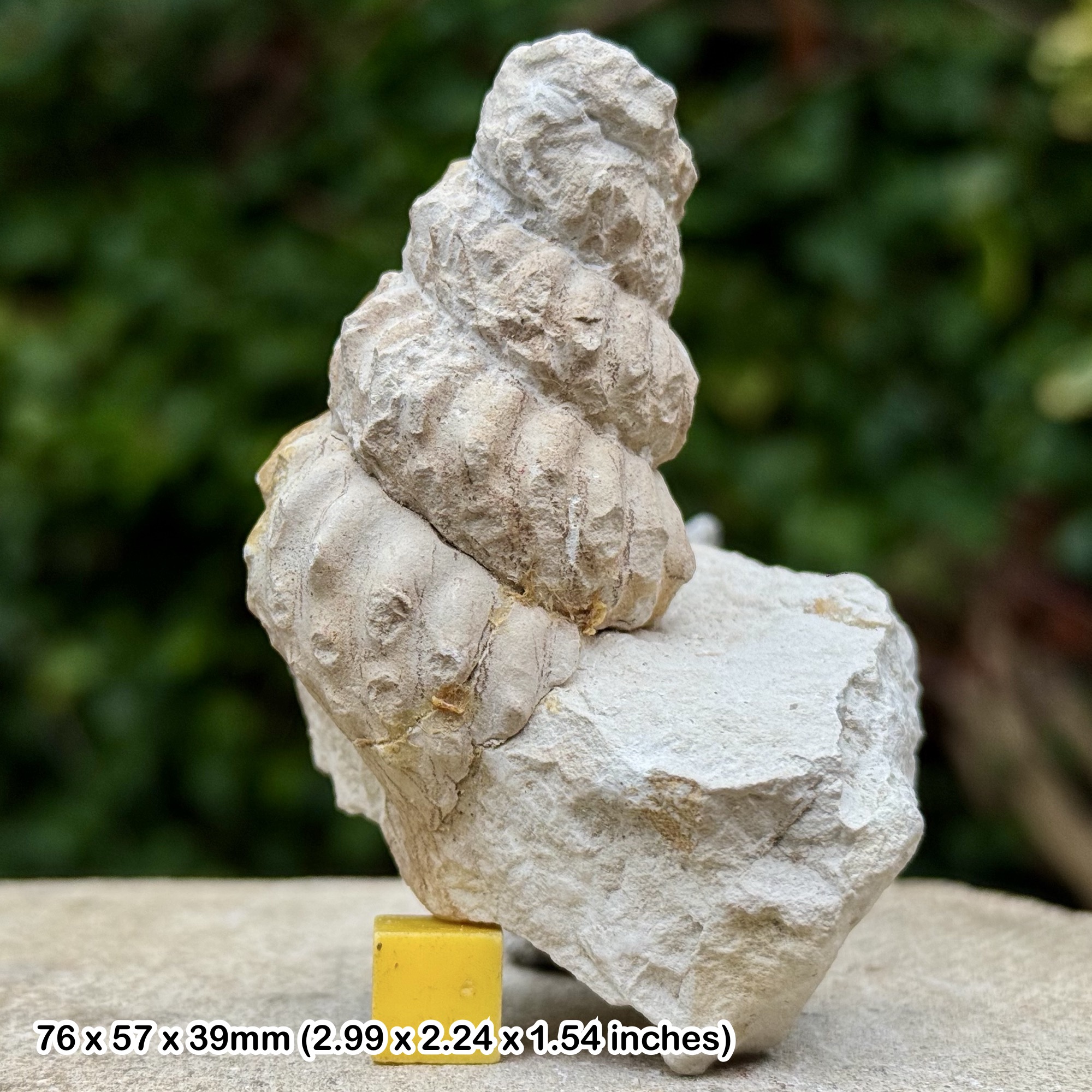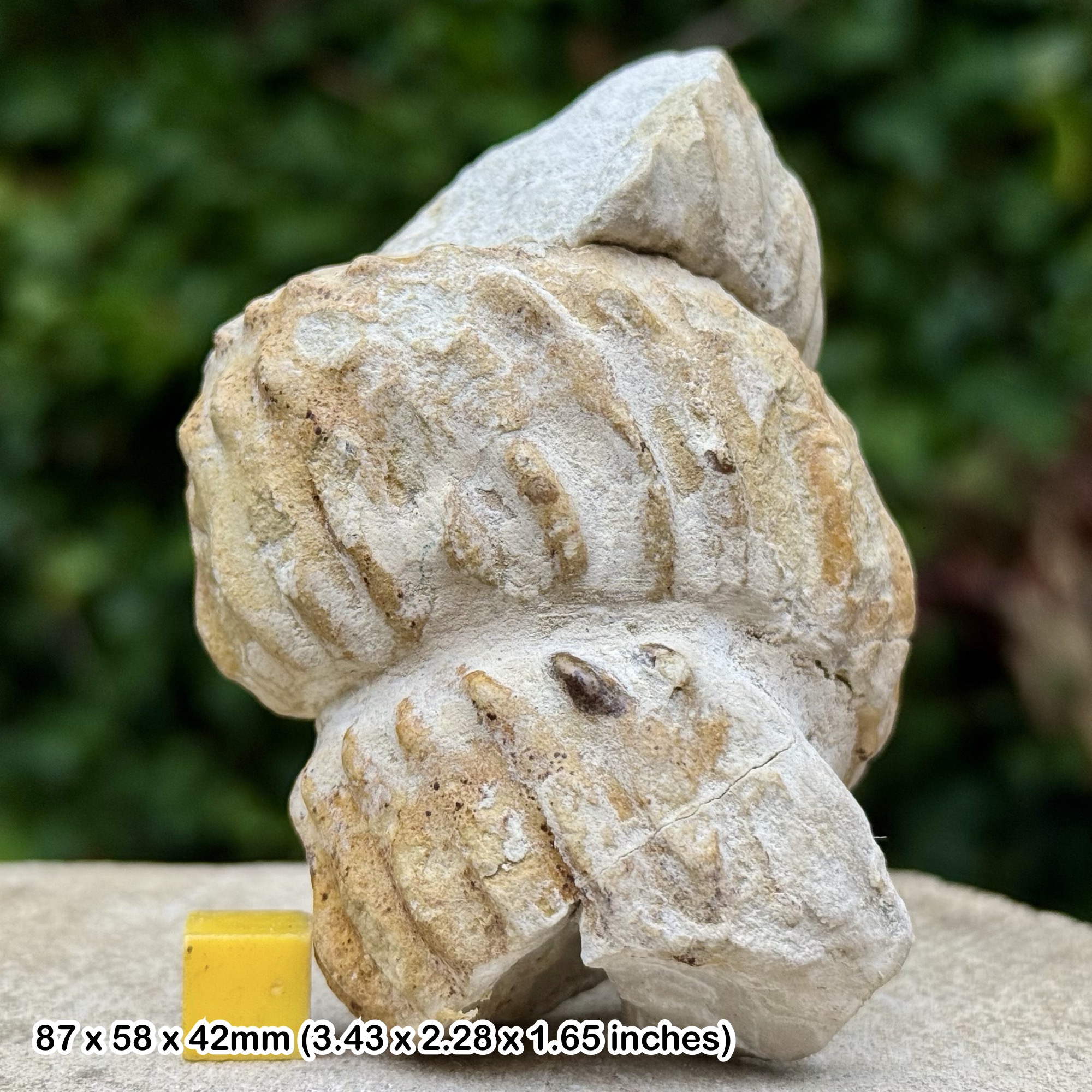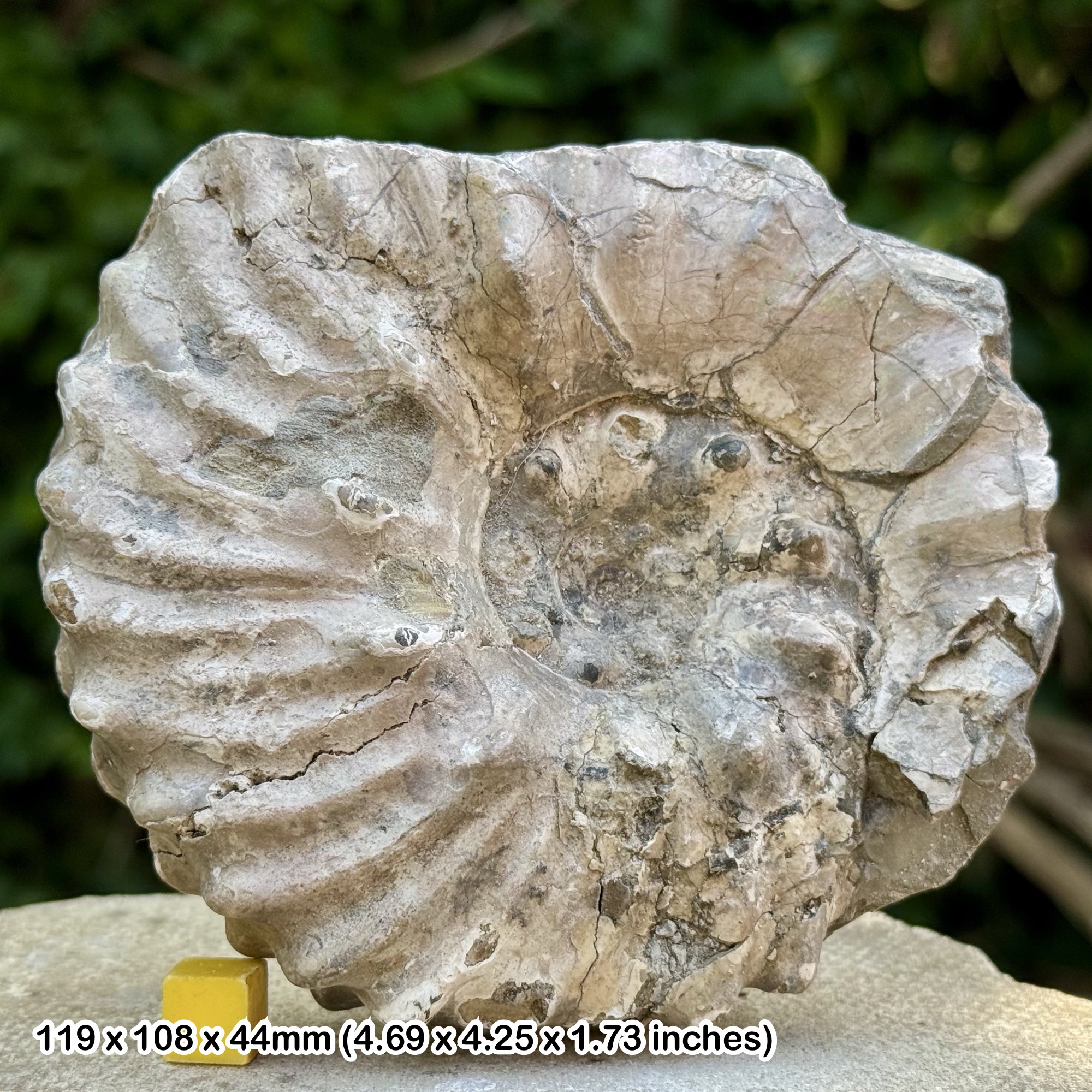
RARE Euhoplites loricatus Fossil Ammonite Gault Clay Aptian Cretaceous Folkestone Kent United Kingdom with Certificate
£ 60.00
RARE EUHOPLITES LORICATUS FOSSIL AMMONITE FROM FOLKESTONEThis listing features a rare Euhoplites loricatus fossil ammonite from the
renowned Gault Clay Formation at Folkestone, Kent, United Kingdom. This specimen dates to the Aptian stage of the Early Cretaceous Period, approximately 125–113 million years ago, and represents one of the most sought-after ammonites from this classic fossil locality. With its distinctive ribbing and historical significance, it is a valuable piece for collectors, researchers, and enthusiasts of Cretaceous palaeontology.All our fossils are 100% genuine specimens and are accompanied by a Certificate of Authenticity. The photographs show the exact specimen you will receive, with a 1 cm scale cube and rule squares included for precise size reference. GEOLOGICAL CONTEXT AND AGEThe Gault Clay Formation is a world-famous marine deposit spanning the Aptian to Albian stages of the Early Cretaceous. These sediments accumulated in a shallow sea that once covered much of southern England, connected to the wider Tethys Ocean. The fine-grained clay is particularly well known for producing beautifully preserved ammonites, belemnites, and other marine fossils.Within this formation, Euhoplites loricatus serves as an important index fossil, allowing geologists to identify and date specific intervals within the Aptian. Its relatively short stratigraphic range makes it especially useful for correlating sedimentary layers both in the United Kingdom and across Europe. MORPHOLOGY AND DISTINCTIVE FEATURESEuhoplites loricatus belongs to the family Hoplitidae, within the order Ammonitida. Its shell is involute and strongly ribbed, with pronounced ornamentation that makes it highly recognisable. The ribs are typically strong and may form tubercles (small nodes) along the flanks, giving the shell a somewhat armoured appearance, which inspired the species name “loricatus” (meaning “armoured” or “protected”).The venter (outer rim of the shell) is keeled, a feature that provided hydrodynamic stability while the ammonite was swimming in the mid-Cretaceous seas. These features distinguish Euhoplites loricatus from other species within the genus and make it one of the more striking ammonites from the Gault Clay. SCIENTIFIC IMPORTANCEThe presence of Euhoplites loricatus in the Gault Clay provides a vital tool for biostratigraphy. As an index species, it allows precise subdivision of the Aptian and helps geologists correlate equivalent strata across different regions. Its distinctive morphology makes it easy to identify, ensuring reliability in dating and correlation.From an evolutionary perspective, Euhoplites loricatus highlights the adaptive radiation of ammonites during the Early Cretaceous. The robust ornamentation and keeled venter suggest ecological adaptations that helped these animals thrive in dynamic marine environments. COLLECTOR AND DISPLAY VALUEThis rare ammonite fossil from Folkestone is not only scientifically significant but also highly appealing as a display specimen. Its bold ribbing and characteristic features make it an eye-catching addition to any fossil collection. Fossils from the Gault Clay are internationally recognised for their importance, and Euhoplites loricatus is among the more desirable and uncommon finds from this locality.Collectors of ammonites, Cretaceous fossils, or British palaeontology will particularly value this piece for its rarity, historical context, and excellent preservation. YOUR GUARANTEE OF AUTHENTICITY
• 100% genuine Euhoplites loricatus ammonite fossil
• Geological age: Aptian stage, Early Cretaceous (approx. 125–113 million years ago)
• Formation: Gault Clay Formation, Folkestone, Kent, UK
• Family: Hoplitidae, Order: Ammonitida
• Distinctive features: strong ribbing, tubercles, keeled venter
• Exact specimen shown in the photographs (not a stock image)
• Supplied with a Certificate of Authenticity
• Scale cube and rule squares = 1 cm for accurate size referenceThis rare Euhoplites loricatus fossil ammonite offers an exceptional opportunity to own a scientifically and historically significant specimen from one of England’s most famous fossil sites.
renowned Gault Clay Formation at Folkestone, Kent, United Kingdom. This specimen dates to the Aptian stage of the Early Cretaceous Period, approximately 125–113 million years ago, and represents one of the most sought-after ammonites from this classic fossil locality. With its distinctive ribbing and historical significance, it is a valuable piece for collectors, researchers, and enthusiasts of Cretaceous palaeontology.All our fossils are 100% genuine specimens and are accompanied by a Certificate of Authenticity. The photographs show the exact specimen you will receive, with a 1 cm scale cube and rule squares included for precise size reference. GEOLOGICAL CONTEXT AND AGEThe Gault Clay Formation is a world-famous marine deposit spanning the Aptian to Albian stages of the Early Cretaceous. These sediments accumulated in a shallow sea that once covered much of southern England, connected to the wider Tethys Ocean. The fine-grained clay is particularly well known for producing beautifully preserved ammonites, belemnites, and other marine fossils.Within this formation, Euhoplites loricatus serves as an important index fossil, allowing geologists to identify and date specific intervals within the Aptian. Its relatively short stratigraphic range makes it especially useful for correlating sedimentary layers both in the United Kingdom and across Europe. MORPHOLOGY AND DISTINCTIVE FEATURESEuhoplites loricatus belongs to the family Hoplitidae, within the order Ammonitida. Its shell is involute and strongly ribbed, with pronounced ornamentation that makes it highly recognisable. The ribs are typically strong and may form tubercles (small nodes) along the flanks, giving the shell a somewhat armoured appearance, which inspired the species name “loricatus” (meaning “armoured” or “protected”).The venter (outer rim of the shell) is keeled, a feature that provided hydrodynamic stability while the ammonite was swimming in the mid-Cretaceous seas. These features distinguish Euhoplites loricatus from other species within the genus and make it one of the more striking ammonites from the Gault Clay. SCIENTIFIC IMPORTANCEThe presence of Euhoplites loricatus in the Gault Clay provides a vital tool for biostratigraphy. As an index species, it allows precise subdivision of the Aptian and helps geologists correlate equivalent strata across different regions. Its distinctive morphology makes it easy to identify, ensuring reliability in dating and correlation.From an evolutionary perspective, Euhoplites loricatus highlights the adaptive radiation of ammonites during the Early Cretaceous. The robust ornamentation and keeled venter suggest ecological adaptations that helped these animals thrive in dynamic marine environments. COLLECTOR AND DISPLAY VALUEThis rare ammonite fossil from Folkestone is not only scientifically significant but also highly appealing as a display specimen. Its bold ribbing and characteristic features make it an eye-catching addition to any fossil collection. Fossils from the Gault Clay are internationally recognised for their importance, and Euhoplites loricatus is among the more desirable and uncommon finds from this locality.Collectors of ammonites, Cretaceous fossils, or British palaeontology will particularly value this piece for its rarity, historical context, and excellent preservation. YOUR GUARANTEE OF AUTHENTICITY
• 100% genuine Euhoplites loricatus ammonite fossil
• Geological age: Aptian stage, Early Cretaceous (approx. 125–113 million years ago)
• Formation: Gault Clay Formation, Folkestone, Kent, UK
• Family: Hoplitidae, Order: Ammonitida
• Distinctive features: strong ribbing, tubercles, keeled venter
• Exact specimen shown in the photographs (not a stock image)
• Supplied with a Certificate of Authenticity
• Scale cube and rule squares = 1 cm for accurate size referenceThis rare Euhoplites loricatus fossil ammonite offers an exceptional opportunity to own a scientifically and historically significant specimen from one of England’s most famous fossil sites.
Other Products