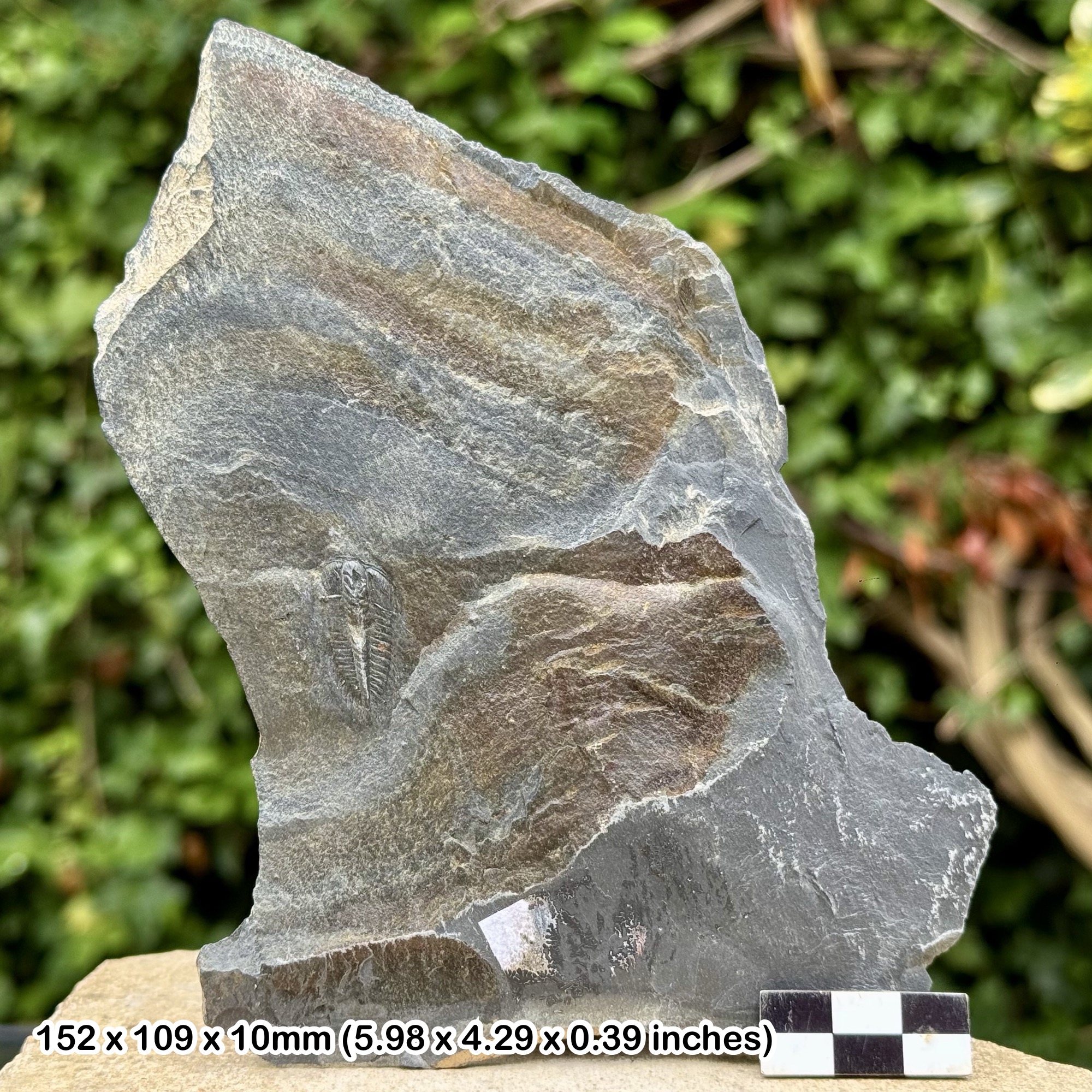
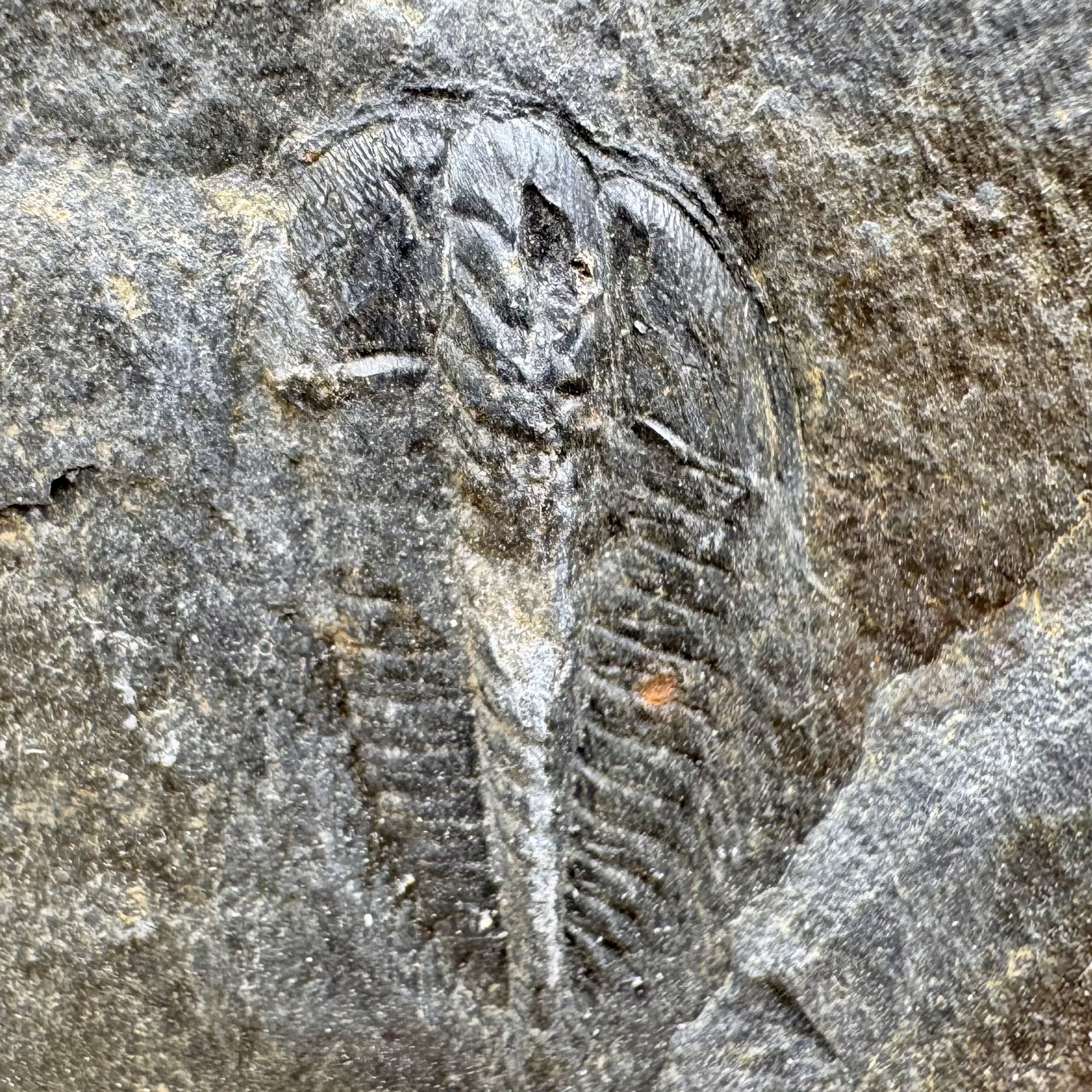
RARE Parabolina spinulosa Trilobite Fossil – Upper Cambrian – Dolgellau Series – P. spinulosa Zone – Foel Gron, Wales
£ 84.00
RARE Parabolina spinulosa Trilobite FossilUpper Cambrian – Dolgellau SeriesParabolina spinulosa Zone, Foel Gron, Meirionnydd, Wales, UKThis listing is for a rare and scientifically significant specimen of the
trilobite species Parabolina spinulosa, collected from the Foel Gron exposure in Meirionnydd, North Wales. The fossil originates from the Dolgellau Series, a classic British Upper Cambrian geological sequence.This trilobite species is a diagnostic fossil of the P. spinulosa Zone, one of the key biostratigraphic markers in the late Cambrian of Wales. It offers excellent insight into the paleoecology and biostratigraphy of the British Cambrian seas.Geological & Palaeontological Details:
• Species: Parabolina spinulosa
• Fossil Type: Complete or partial trilobite impression/preservation
• Locality: Foel Gron, near Trawsfynydd, Meirionnydd, North Wales, UK
• Formation/Series: Dolgellau Series (Upper Cambrian)
• Zone: Parabolina spinulosa Zone
• Geological Stage: Furongian (formerly part of Upper Cambrian)
• Depositional Environment:
• Fine-grained, anoxic marine mudstones
• Deep shelf or basinal environment with low oxygen levels, promoting preservation of soft-bodied faunas
• Biozone Significance: The P. spinulosa Zone serves as a key trilobite biostratigraphic unit for correlating Upper Cambrian successions across Britain
• Family: Olenidae
• Superfamily: Olenoidea
• Order: Ptychopariida
• Formally Described By: John William Salter, 1866Morphological Features:
• Characterised by:
• Long, sweeping genal spines extending from the cephalon
• Distinct glabella with fine segmentation
• Thin exoskeleton with possible ventral impression
• Often found as flattened impressions or compressed fossils within fine-grained matrix
• Important for correlation of trilobite zones across northwestern EuropeNotable & Scientific Importance:
• A well-documented and biostratigraphically important species
• Commonly used in defining Upper Cambrian zonation in the British Isles
• Trilobites of the Olenidae family are often associated with low-oxygen marine environments, supporting an ecological interpretation of dysoxic Cambrian settingsProduct Details:
• You will receive the actual fossil shown in the photo
• Scale Rule Squares / Cube = 1cm — please refer to photos for full measurements
• Supplied with a Certificate of Authenticity
• Professionally prepped and stabilised for long-term preservation
• Carefully sourced and selected for quality, detail, and provenanceOur Commitment to Authenticity:All of our Fossils are 100% Genuine Specimens & come with a Certificate of Authenticity. This specimen has been responsibly sourced and curated by our specialist team, offering both educational and collector value.If you have any questions or require more photos, feel free to contact us directly.
trilobite species Parabolina spinulosa, collected from the Foel Gron exposure in Meirionnydd, North Wales. The fossil originates from the Dolgellau Series, a classic British Upper Cambrian geological sequence.This trilobite species is a diagnostic fossil of the P. spinulosa Zone, one of the key biostratigraphic markers in the late Cambrian of Wales. It offers excellent insight into the paleoecology and biostratigraphy of the British Cambrian seas.Geological & Palaeontological Details:
• Species: Parabolina spinulosa
• Fossil Type: Complete or partial trilobite impression/preservation
• Locality: Foel Gron, near Trawsfynydd, Meirionnydd, North Wales, UK
• Formation/Series: Dolgellau Series (Upper Cambrian)
• Zone: Parabolina spinulosa Zone
• Geological Stage: Furongian (formerly part of Upper Cambrian)
• Depositional Environment:
• Fine-grained, anoxic marine mudstones
• Deep shelf or basinal environment with low oxygen levels, promoting preservation of soft-bodied faunas
• Biozone Significance: The P. spinulosa Zone serves as a key trilobite biostratigraphic unit for correlating Upper Cambrian successions across Britain
• Family: Olenidae
• Superfamily: Olenoidea
• Order: Ptychopariida
• Formally Described By: John William Salter, 1866Morphological Features:
• Characterised by:
• Long, sweeping genal spines extending from the cephalon
• Distinct glabella with fine segmentation
• Thin exoskeleton with possible ventral impression
• Often found as flattened impressions or compressed fossils within fine-grained matrix
• Important for correlation of trilobite zones across northwestern EuropeNotable & Scientific Importance:
• A well-documented and biostratigraphically important species
• Commonly used in defining Upper Cambrian zonation in the British Isles
• Trilobites of the Olenidae family are often associated with low-oxygen marine environments, supporting an ecological interpretation of dysoxic Cambrian settingsProduct Details:
• You will receive the actual fossil shown in the photo
• Scale Rule Squares / Cube = 1cm — please refer to photos for full measurements
• Supplied with a Certificate of Authenticity
• Professionally prepped and stabilised for long-term preservation
• Carefully sourced and selected for quality, detail, and provenanceOur Commitment to Authenticity:All of our Fossils are 100% Genuine Specimens & come with a Certificate of Authenticity. This specimen has been responsibly sourced and curated by our specialist team, offering both educational and collector value.If you have any questions or require more photos, feel free to contact us directly.
Other Products