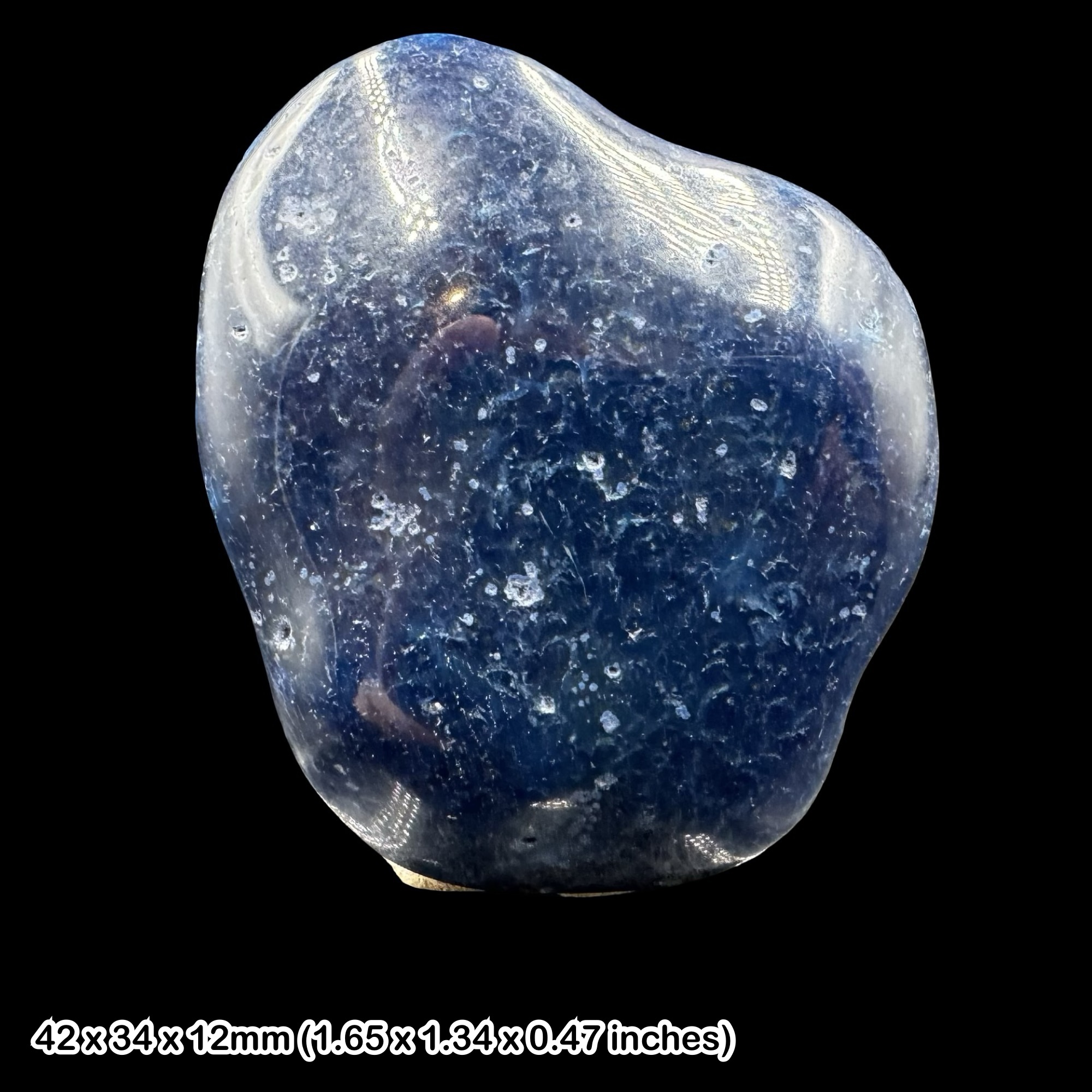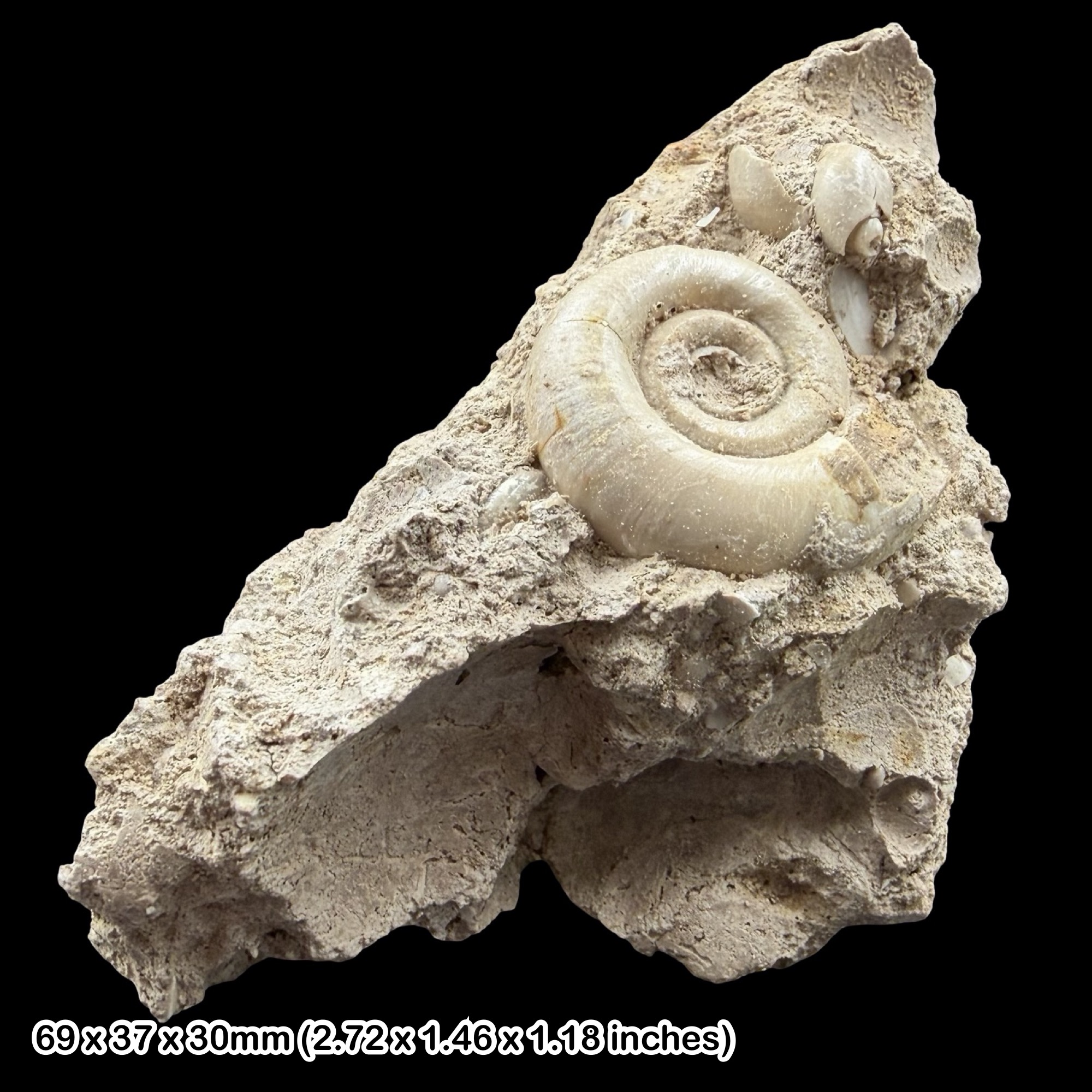
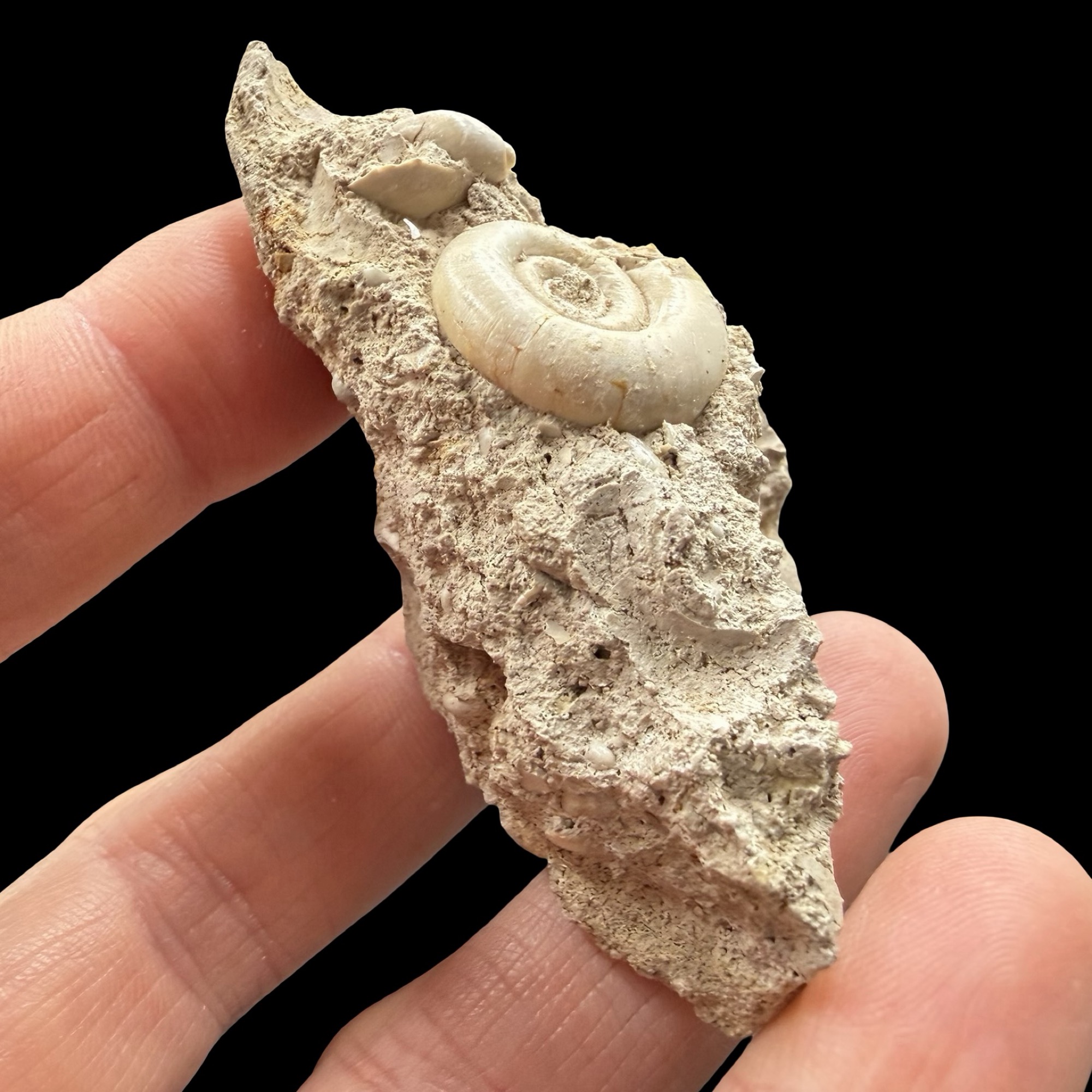
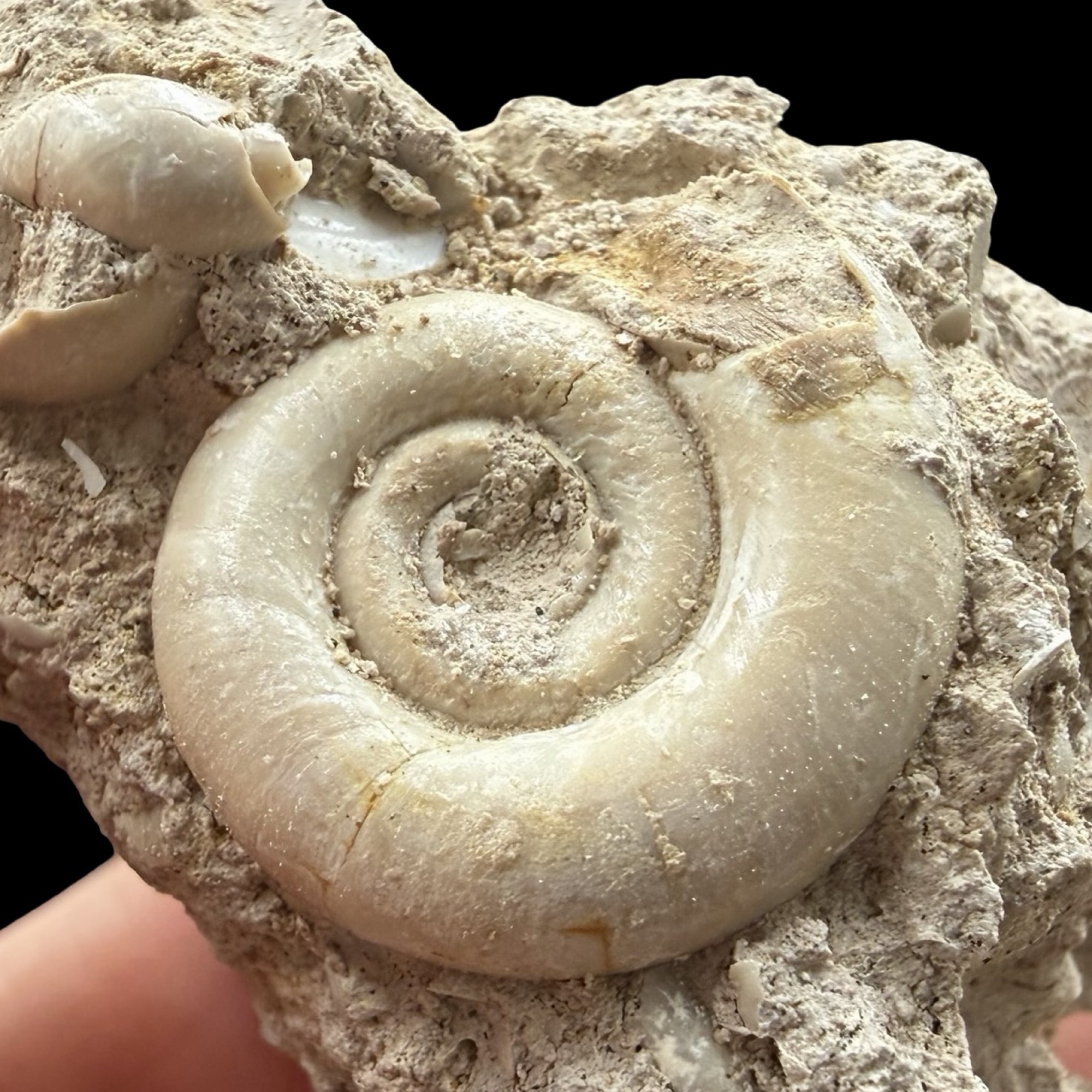
Australorbis euomphalus Gastropod Fossil Eocene Isle of Wight Totland Bay UK Authentic Specimen Certified Rare Planorbis
£ 24.00
Australorbis euomphalus Gastropod Fossil – Genuine Eocene SpecimenThis authentic Australorbis euomphalus gastropod fossil, historically referred
to as Planorbis, originates from the Hatherwood Limestone Member of the Headon Hill Formation at Totland Bay on the Isle of Wight. This classic Eocene locality is renowned for its exceptionally preserved freshwater fossils. The specimen shown in the photographs is the exact fossil you will receive, carefully selected for its clarity and preservation. This is a genuine fossil and includes a Certificate of Authenticity with a lifetime guarantee, ensuring full confidence in its provenance.Discovery and Professional PreparationYour fossil was discovered by our experienced team members, Alister and Alison, ensuring complete traceability from field collection to final presentation. After excavation, the specimen was expertly cleaned, stabilised, and prepared by Alison. This meticulous preparation enhances the natural detail of the fossil while preserving its delicate structure, allowing the fine morphology of the shell to be clearly observed.Geological Context – Hatherwood Limestone Member, Eocene EpochThe Hatherwood Limestone Member forms part of the Headon Hill Formation, dating to the late Eocene epoch, approximately 34 to 38 million years ago. This unit represents a freshwater to marginal lagoonal depositional environment, characterised by calm, low-energy conditions ideal for preserving delicate shells. Totland Bay is particularly known for its fossil-rich limestones, which capture a detailed snapshot of ancient freshwater ecosystems that once thrived in subtropical southern Britain.About Australorbis euomphalus – Planorbid GastropodAustralorbis euomphalus is a freshwater gastropod belonging to the family Planorbidae within the class Gastropoda. Planorbids are commonly known as ramshorn snails due to their distinctive coiled shells, which are typically planispiral—coiled in a single flat plane. These snails inhabited freshwater environments such as lakes, ponds, and slow-moving rivers, feeding on algae and organic material. Their fossils are important indicators of freshwater conditions in ancient environments.Shell Morphology and Notable FeaturesThis fossil displays the characteristic planispiral shell structure of Australorbis, with tightly coiled whorls forming a flattened, disc-like shape. The smooth curvature and symmetry of the shell are clearly visible, reflecting the species’ distinctive morphology. Fine growth lines may be present, indicating incremental shell development during the animal’s life. The fossilisation process has preserved these details, while natural mineralisation has added subtle tonal variation, enhancing its visual appeal.Palaeoenvironment and Ecological InsightDuring the Eocene, the Isle of Wight supported a rich network of freshwater habitats populated by gastropods, bivalves, fish, turtles, and crocodilians. Australorbis played an important ecological role within these environments, contributing to nutrient cycling and forming part of the food web. Its presence in the fossil record provides valuable insight into the environmental conditions and biodiversity of these ancient freshwater systems.Collector Appeal and Display ValueGastropods from the Headon Hill Formation, particularly well-preserved planorbid specimens, are highly desirable among collectors due to their distinctive shape and geological significance. This specimen offers both scientific interest and aesthetic appeal, making it an excellent addition to any fossil collection. Its compact size and elegant form make it ideal for display in a cabinet, study, or educational setting.Authenticity, Provenance and PresentationThis fossil has been carefully chosen for its authenticity, quality, and presentation. It is a genuine piece of natural history, professionally prepared and ready for display. Full sizing can be confirmed via the provided photographs, ensuring transparency before purchase. Each specimen is unique, preserving a fragment of ancient freshwater life from the Eocene of the Isle of Wight.
to as Planorbis, originates from the Hatherwood Limestone Member of the Headon Hill Formation at Totland Bay on the Isle of Wight. This classic Eocene locality is renowned for its exceptionally preserved freshwater fossils. The specimen shown in the photographs is the exact fossil you will receive, carefully selected for its clarity and preservation. This is a genuine fossil and includes a Certificate of Authenticity with a lifetime guarantee, ensuring full confidence in its provenance.Discovery and Professional PreparationYour fossil was discovered by our experienced team members, Alister and Alison, ensuring complete traceability from field collection to final presentation. After excavation, the specimen was expertly cleaned, stabilised, and prepared by Alison. This meticulous preparation enhances the natural detail of the fossil while preserving its delicate structure, allowing the fine morphology of the shell to be clearly observed.Geological Context – Hatherwood Limestone Member, Eocene EpochThe Hatherwood Limestone Member forms part of the Headon Hill Formation, dating to the late Eocene epoch, approximately 34 to 38 million years ago. This unit represents a freshwater to marginal lagoonal depositional environment, characterised by calm, low-energy conditions ideal for preserving delicate shells. Totland Bay is particularly known for its fossil-rich limestones, which capture a detailed snapshot of ancient freshwater ecosystems that once thrived in subtropical southern Britain.About Australorbis euomphalus – Planorbid GastropodAustralorbis euomphalus is a freshwater gastropod belonging to the family Planorbidae within the class Gastropoda. Planorbids are commonly known as ramshorn snails due to their distinctive coiled shells, which are typically planispiral—coiled in a single flat plane. These snails inhabited freshwater environments such as lakes, ponds, and slow-moving rivers, feeding on algae and organic material. Their fossils are important indicators of freshwater conditions in ancient environments.Shell Morphology and Notable FeaturesThis fossil displays the characteristic planispiral shell structure of Australorbis, with tightly coiled whorls forming a flattened, disc-like shape. The smooth curvature and symmetry of the shell are clearly visible, reflecting the species’ distinctive morphology. Fine growth lines may be present, indicating incremental shell development during the animal’s life. The fossilisation process has preserved these details, while natural mineralisation has added subtle tonal variation, enhancing its visual appeal.Palaeoenvironment and Ecological InsightDuring the Eocene, the Isle of Wight supported a rich network of freshwater habitats populated by gastropods, bivalves, fish, turtles, and crocodilians. Australorbis played an important ecological role within these environments, contributing to nutrient cycling and forming part of the food web. Its presence in the fossil record provides valuable insight into the environmental conditions and biodiversity of these ancient freshwater systems.Collector Appeal and Display ValueGastropods from the Headon Hill Formation, particularly well-preserved planorbid specimens, are highly desirable among collectors due to their distinctive shape and geological significance. This specimen offers both scientific interest and aesthetic appeal, making it an excellent addition to any fossil collection. Its compact size and elegant form make it ideal for display in a cabinet, study, or educational setting.Authenticity, Provenance and PresentationThis fossil has been carefully chosen for its authenticity, quality, and presentation. It is a genuine piece of natural history, professionally prepared and ready for display. Full sizing can be confirmed via the provided photographs, ensuring transparency before purchase. Each specimen is unique, preserving a fragment of ancient freshwater life from the Eocene of the Isle of Wight.
Other Products