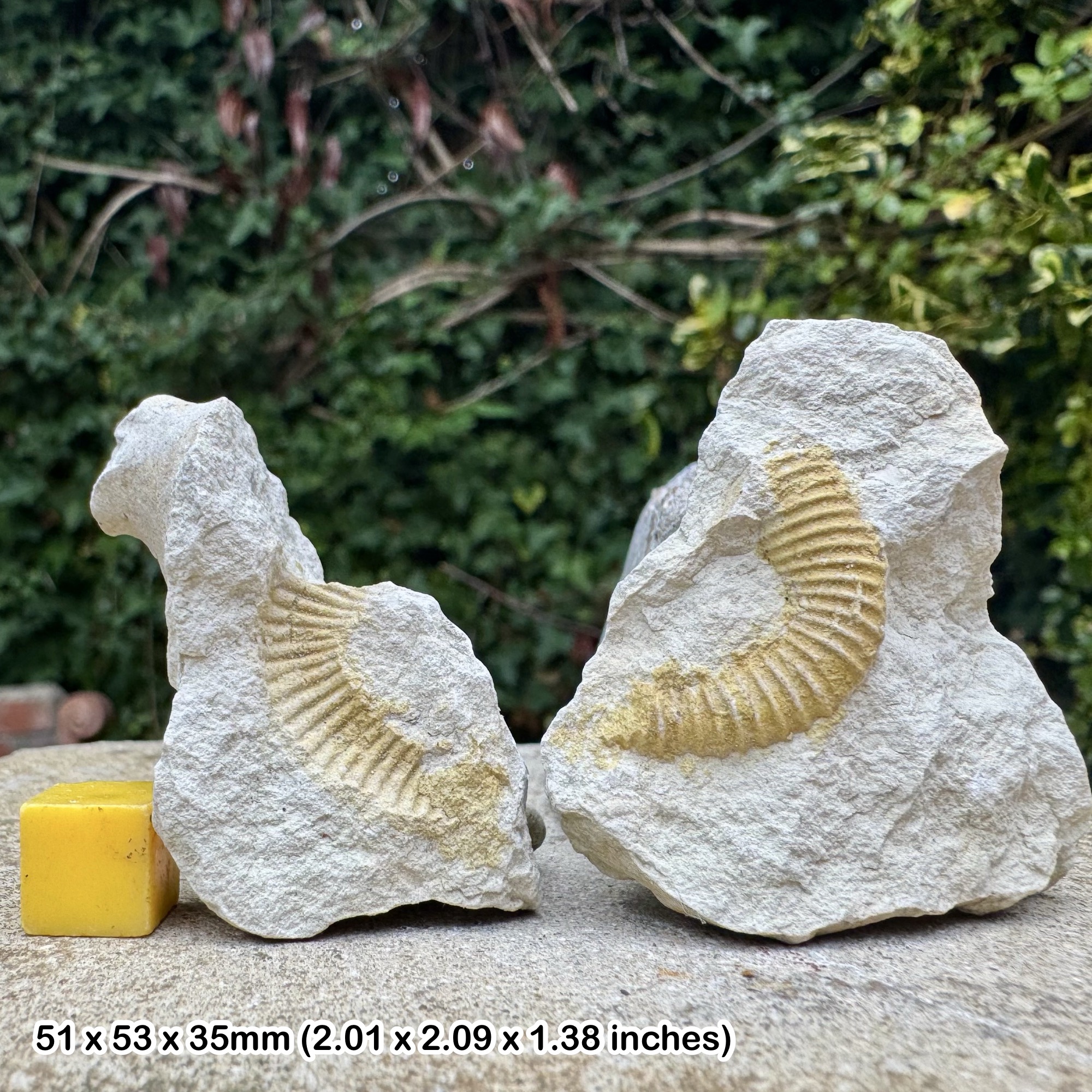
Rare Idiohamites alternatus Heteromorph Ammonite Fossil Upper Cenomanian Cretaceous Sussex United Kingdom
£ 36.00
GEOLOGICAL CONTEXT AND PROVENANCEThis rare specimen is a genuine Idiohamites alternatus heteromorph ammonite
fossil from the Upper Cenomanian Stage of the Late Cretaceous Period, approximately 95 – 93 million years old. It originates from Sussex, United Kingdom, a region globally renowned for its rich Cretaceous chalk deposits. These chalk beds formed in warm, shallow marine environments that covered much of southern England during the Late Cretaceous, preserving a wealth of ammonites and other marine fauna.The Cenomanian is a pivotal stage in Earth’s history, representing the beginning of the Late Cretaceous. During this time, sea levels reached one of their highest points, flooding continental interiors and creating widespread shallow seas. Ammonites like Idiohamites alternatus are essential for biostratigraphy, helping geologists define zones and correlate marine sediments across Europe and beyond. FOSSIL TYPE AND SPECIES INFORMATIONIdiohamites alternatus belongs to the Order Ammonitida, Superfamily Turrilitoidea, and Family Hamitidae. Unlike traditional coiled ammonites, hamitids were heteromorph ammonites, characterised by uncoiled, hook-like, or irregular shell morphologies. These unusual forms represent a fascinating evolutionary departure from the typical planispiral ammonite shell.The genus Idiohamites is especially important for Cenomanian faunas, with alternatus recognised by its alternating rib structure and heteromorph coiling. Its distinct shell ornamentation makes it easily identifiable to palaeontologists and highly attractive to collectors. MORPHOLOGICAL FEATURES AND IDENTIFICATIONThis specimen of Idiohamites alternatus exhibits the classic heteromorph growth pattern. Rather than maintaining a tight spiral, the shell is uncoiled and curved into irregular segments, giving it a distinctive shape. Strong ribs run along the shell surface, often alternating in strength, creating a striking and diagnostic ornamentation.The heteromorph form likely influenced the lifestyle of these ammonites. While tightly coiled ammonites were agile swimmers, Idiohamites may have been less hydrodynamically efficient, instead drifting or hovering in the water column. This morphology suggests a more planktonic or opportunistic feeding strategy, capturing small invertebrates and plankton in the open seas. DEPOSITIONAL ENVIRONMENTDuring the Upper Cenomanian, Sussex was part of a warm, shallow marine shelf system that formed part of the great chalk seas of northwestern Europe. These seas were nutrient-rich, supporting a diverse ecosystem of ammonites, belemnites, bivalves, echinoids, gastropods, and marine reptiles. Fine-grained chalk and marl deposits ensured the excellent preservation of ammonites such as Idiohamites alternatus.The presence of heteromorph ammonites in these environments reflects the adaptability of ammonites during times of ecological change. Their abundance and diversity make them vital for understanding Late Cretaceous marine ecosystems. COLLECTOR APPEAL AND AUTHENTICITYThis Idiohamites alternatus ammonite fossil is an outstanding specimen of a rare heteromorph species. Its unusual shell morphology, alternating ribbing, and provenance from the classic Upper Cenomanian chalk beds of Sussex make it both scientifically important and visually striking.
• 100% Genuine Specimen – Every fossil we sell is authentic and comes with a Certificate of Authenticity.
• Exact Fossil Shown – The photographs represent the actual specimen you will receive.
• Scale Reference – Scale rule squares / cube = 1 cm. Please consult the images for precise sizing.This carefully selected Idiohamites alternatus heteromorph ammonite fossil offers a fascinating glimpse into the evolutionary experimentation of the Late Cretaceous seas. With its rarity, aesthetic appeal, and geological importance, it is an exceptional addition to any fossil collection or natural history display.
fossil from the Upper Cenomanian Stage of the Late Cretaceous Period, approximately 95 – 93 million years old. It originates from Sussex, United Kingdom, a region globally renowned for its rich Cretaceous chalk deposits. These chalk beds formed in warm, shallow marine environments that covered much of southern England during the Late Cretaceous, preserving a wealth of ammonites and other marine fauna.The Cenomanian is a pivotal stage in Earth’s history, representing the beginning of the Late Cretaceous. During this time, sea levels reached one of their highest points, flooding continental interiors and creating widespread shallow seas. Ammonites like Idiohamites alternatus are essential for biostratigraphy, helping geologists define zones and correlate marine sediments across Europe and beyond. FOSSIL TYPE AND SPECIES INFORMATIONIdiohamites alternatus belongs to the Order Ammonitida, Superfamily Turrilitoidea, and Family Hamitidae. Unlike traditional coiled ammonites, hamitids were heteromorph ammonites, characterised by uncoiled, hook-like, or irregular shell morphologies. These unusual forms represent a fascinating evolutionary departure from the typical planispiral ammonite shell.The genus Idiohamites is especially important for Cenomanian faunas, with alternatus recognised by its alternating rib structure and heteromorph coiling. Its distinct shell ornamentation makes it easily identifiable to palaeontologists and highly attractive to collectors. MORPHOLOGICAL FEATURES AND IDENTIFICATIONThis specimen of Idiohamites alternatus exhibits the classic heteromorph growth pattern. Rather than maintaining a tight spiral, the shell is uncoiled and curved into irregular segments, giving it a distinctive shape. Strong ribs run along the shell surface, often alternating in strength, creating a striking and diagnostic ornamentation.The heteromorph form likely influenced the lifestyle of these ammonites. While tightly coiled ammonites were agile swimmers, Idiohamites may have been less hydrodynamically efficient, instead drifting or hovering in the water column. This morphology suggests a more planktonic or opportunistic feeding strategy, capturing small invertebrates and plankton in the open seas. DEPOSITIONAL ENVIRONMENTDuring the Upper Cenomanian, Sussex was part of a warm, shallow marine shelf system that formed part of the great chalk seas of northwestern Europe. These seas were nutrient-rich, supporting a diverse ecosystem of ammonites, belemnites, bivalves, echinoids, gastropods, and marine reptiles. Fine-grained chalk and marl deposits ensured the excellent preservation of ammonites such as Idiohamites alternatus.The presence of heteromorph ammonites in these environments reflects the adaptability of ammonites during times of ecological change. Their abundance and diversity make them vital for understanding Late Cretaceous marine ecosystems. COLLECTOR APPEAL AND AUTHENTICITYThis Idiohamites alternatus ammonite fossil is an outstanding specimen of a rare heteromorph species. Its unusual shell morphology, alternating ribbing, and provenance from the classic Upper Cenomanian chalk beds of Sussex make it both scientifically important and visually striking.
• 100% Genuine Specimen – Every fossil we sell is authentic and comes with a Certificate of Authenticity.
• Exact Fossil Shown – The photographs represent the actual specimen you will receive.
• Scale Reference – Scale rule squares / cube = 1 cm. Please consult the images for precise sizing.This carefully selected Idiohamites alternatus heteromorph ammonite fossil offers a fascinating glimpse into the evolutionary experimentation of the Late Cretaceous seas. With its rarity, aesthetic appeal, and geological importance, it is an exceptional addition to any fossil collection or natural history display.
Other Products