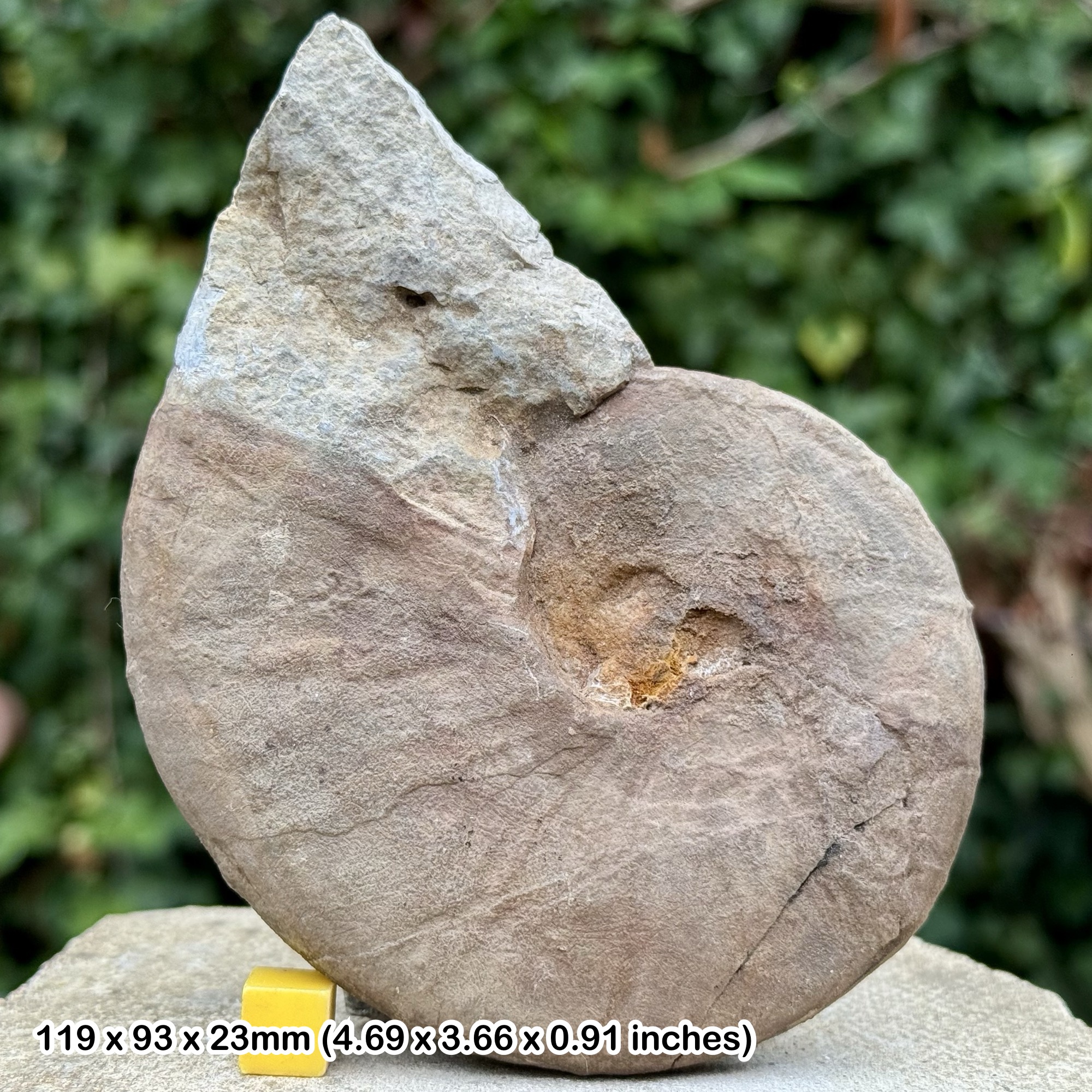
Rare Raspailiceras cassidum Ammonite Fossil from Barremian Cretaceous Drome Region France Authentic Specimen
£ 36.00
GEOLOGICAL CONTEXT AND PROVENANCEThis rare specimen is a genuine Raspailiceras cassidum ammonite fossil from the
Barremian Stage of the Early Cretaceous Period, approximately 129 – 125 million years ago. It was collected in the Drôme region of southeastern France, a locality renowned for its rich Lower Cretaceous marine deposits. The Barremian is a key stage in Cretaceous geology, marking a period of major evolutionary radiation among ammonites, corals, and other marine organisms.The Drôme deposits represent sediments laid down in shallow marine environments along the margins of the Tethys Ocean. Warm seas and nutrient-rich waters supported an abundance of ammonites, which became some of the most important biostratigraphic index fossils of the Cretaceous. Specimens from this region are highly prized due to their preservation, scientific value, and their role in understanding Barremian stratigraphy. FOSSIL TYPE AND SPECIES INFORMATIONRaspailiceras cassidum is a distinctive ammonite species within the Order Ammonitida, Superfamily Desmoceratoidea, and Family Desmoceratidae. This genus is characterised by its large, robust shells, often with strongly ribbed ornamentation and compressed whorl sections. Raspailiceras is regarded as a significant fossil taxon because of its use in defining zones within the Lower Cretaceous succession.The species cassidum is particularly noteworthy for its inflated shell form and ornamented ribbing, which distinguish it from related ammonite taxa. Its presence in Barremian strata is widely used to correlate deposits across Europe, North Africa, and beyond, making it a cornerstone in Early Cretaceous ammonite biostratigraphy. MORPHOLOGICAL FEATURES AND IDENTIFICATIONThis specimen exhibits the diagnostic features of Raspailiceras cassidum, including strong, well-defined ribs that traverse the whorl flanks and prominent tuberculation along the ventrolateral regions. The ornamentation creates a striking, sculptural appearance, enhancing its visual and scientific appeal.The ammonite’s suture lines, though partially obscured in some specimens, display the intricate lobes and saddles typical of the Desmoceratidae. The shell’s robust build reflects adaptations to open marine habitats, where buoyancy control and shell strength were vital for survival in predator-rich environments. DEPOSITIONAL ENVIRONMENTDuring the Barremian, the Drôme region was part of a shallow shelf environment at the northern margin of the Tethys Ocean. Warm, tropical conditions supported diverse marine ecosystems, including ammonites, belemnites, bivalves, and marine reptiles. The fine-grained limestones and marls of this region provided ideal conditions for fossilisation, preserving ammonites such as Raspailiceras cassidum in exceptional detail.The combination of biological abundance and favourable depositional environments made the Drôme area one of Europe’s key sites for Barremian fossils, and this ammonite reflects both the beauty and scientific significance of those deposits. COLLECTOR APPEAL AND AUTHENTICITYRaspailiceras cassidum fossils are considered highly desirable due to their rarity, impressive ornamentation, and role as biostratigraphic markers of the Lower Cretaceous. This specimen is a carefully chosen piece that showcases the distinctive ribbing and shell form of the species, making it both a display-worthy fossil and a valuable scientific reference.
• 100% Genuine Specimen – All of our fossils are guaranteed authentic and supplied with a Certificate of Authenticity.
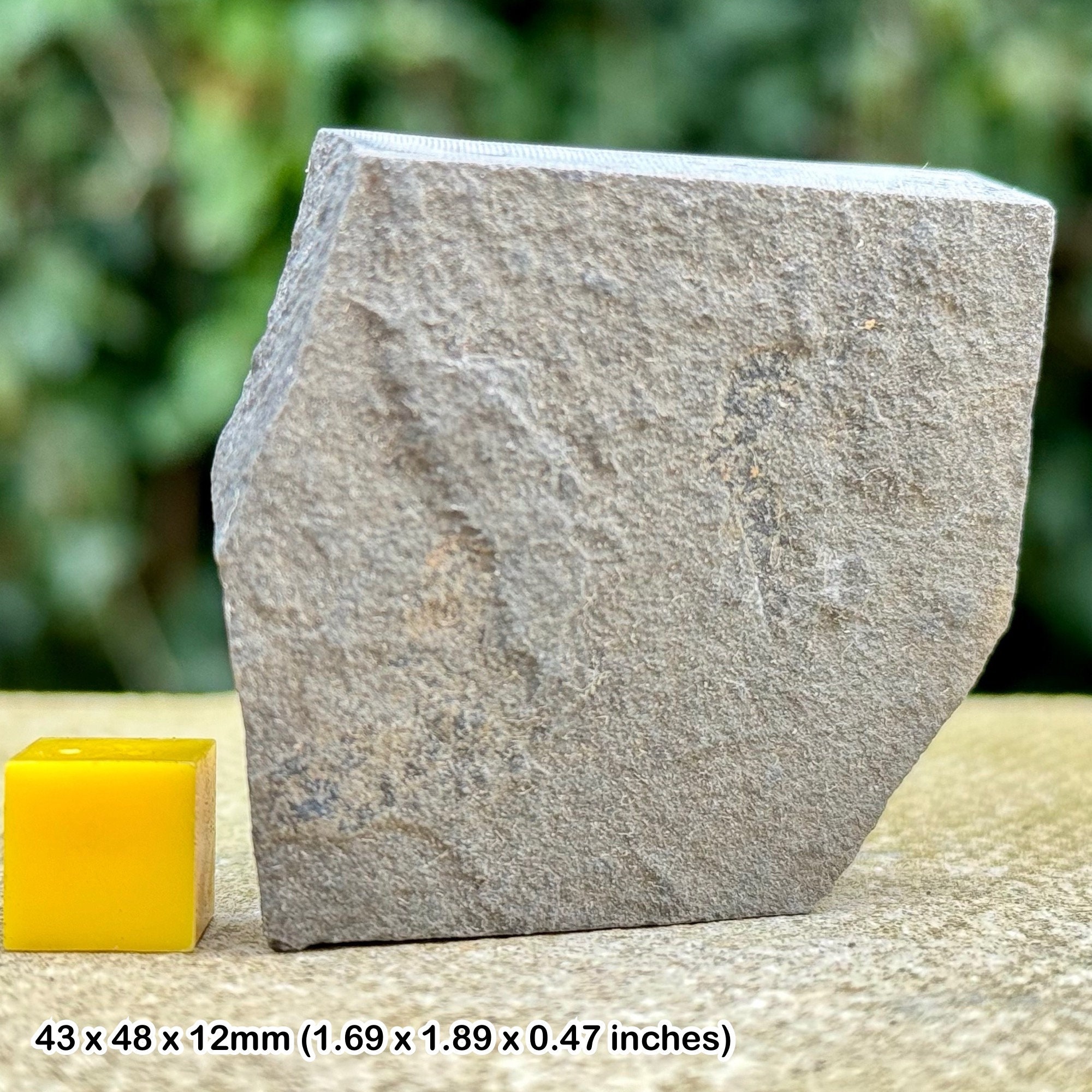
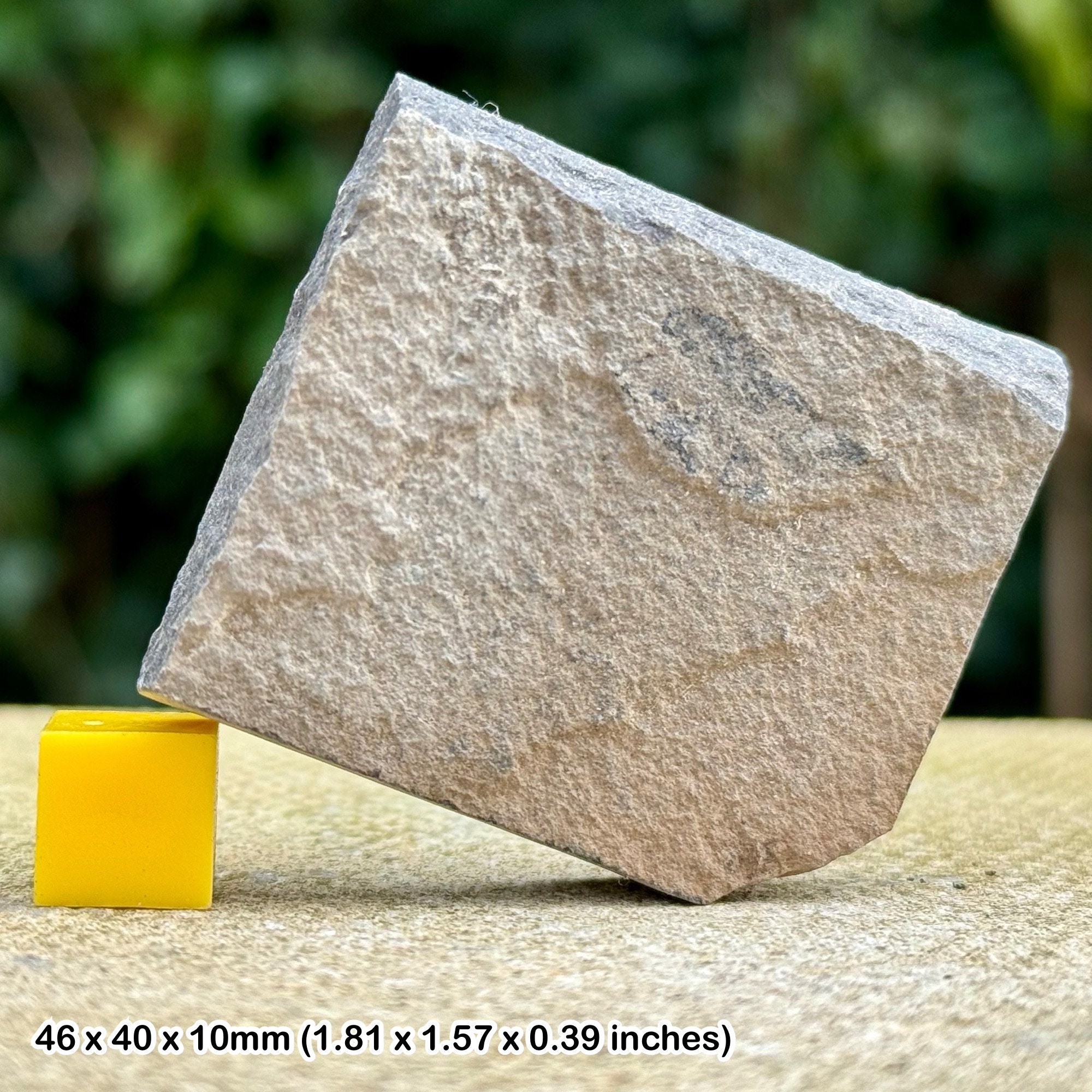
• Exact Fossil Shown – The photographs provided are of the actual ammonite you will receive.
• Scale Reference – Scale rule squares / cube = 1 cm. Please see photos for precise dimensions.This rare Raspailiceras cassidum ammonite is not only a tangible connection to the Early Cretaceous seas of France but also a highly collectible specimen that will enhance any fossil or natural history collection.
Barremian Stage of the Early Cretaceous Period, approximately 129 – 125 million years ago. It was collected in the Drôme region of southeastern France, a locality renowned for its rich Lower Cretaceous marine deposits. The Barremian is a key stage in Cretaceous geology, marking a period of major evolutionary radiation among ammonites, corals, and other marine organisms.The Drôme deposits represent sediments laid down in shallow marine environments along the margins of the Tethys Ocean. Warm seas and nutrient-rich waters supported an abundance of ammonites, which became some of the most important biostratigraphic index fossils of the Cretaceous. Specimens from this region are highly prized due to their preservation, scientific value, and their role in understanding Barremian stratigraphy. FOSSIL TYPE AND SPECIES INFORMATIONRaspailiceras cassidum is a distinctive ammonite species within the Order Ammonitida, Superfamily Desmoceratoidea, and Family Desmoceratidae. This genus is characterised by its large, robust shells, often with strongly ribbed ornamentation and compressed whorl sections. Raspailiceras is regarded as a significant fossil taxon because of its use in defining zones within the Lower Cretaceous succession.The species cassidum is particularly noteworthy for its inflated shell form and ornamented ribbing, which distinguish it from related ammonite taxa. Its presence in Barremian strata is widely used to correlate deposits across Europe, North Africa, and beyond, making it a cornerstone in Early Cretaceous ammonite biostratigraphy. MORPHOLOGICAL FEATURES AND IDENTIFICATIONThis specimen exhibits the diagnostic features of Raspailiceras cassidum, including strong, well-defined ribs that traverse the whorl flanks and prominent tuberculation along the ventrolateral regions. The ornamentation creates a striking, sculptural appearance, enhancing its visual and scientific appeal.The ammonite’s suture lines, though partially obscured in some specimens, display the intricate lobes and saddles typical of the Desmoceratidae. The shell’s robust build reflects adaptations to open marine habitats, where buoyancy control and shell strength were vital for survival in predator-rich environments. DEPOSITIONAL ENVIRONMENTDuring the Barremian, the Drôme region was part of a shallow shelf environment at the northern margin of the Tethys Ocean. Warm, tropical conditions supported diverse marine ecosystems, including ammonites, belemnites, bivalves, and marine reptiles. The fine-grained limestones and marls of this region provided ideal conditions for fossilisation, preserving ammonites such as Raspailiceras cassidum in exceptional detail.The combination of biological abundance and favourable depositional environments made the Drôme area one of Europe’s key sites for Barremian fossils, and this ammonite reflects both the beauty and scientific significance of those deposits. COLLECTOR APPEAL AND AUTHENTICITYRaspailiceras cassidum fossils are considered highly desirable due to their rarity, impressive ornamentation, and role as biostratigraphic markers of the Lower Cretaceous. This specimen is a carefully chosen piece that showcases the distinctive ribbing and shell form of the species, making it both a display-worthy fossil and a valuable scientific reference.
• 100% Genuine Specimen – All of our fossils are guaranteed authentic and supplied with a Certificate of Authenticity.
• Exact Fossil Shown – The photographs provided are of the actual ammonite you will receive.
• Scale Reference – Scale rule squares / cube = 1 cm. Please see photos for precise dimensions.This rare Raspailiceras cassidum ammonite is not only a tangible connection to the Early Cretaceous seas of France but also a highly collectible specimen that will enhance any fossil or natural history collection.
Other Products