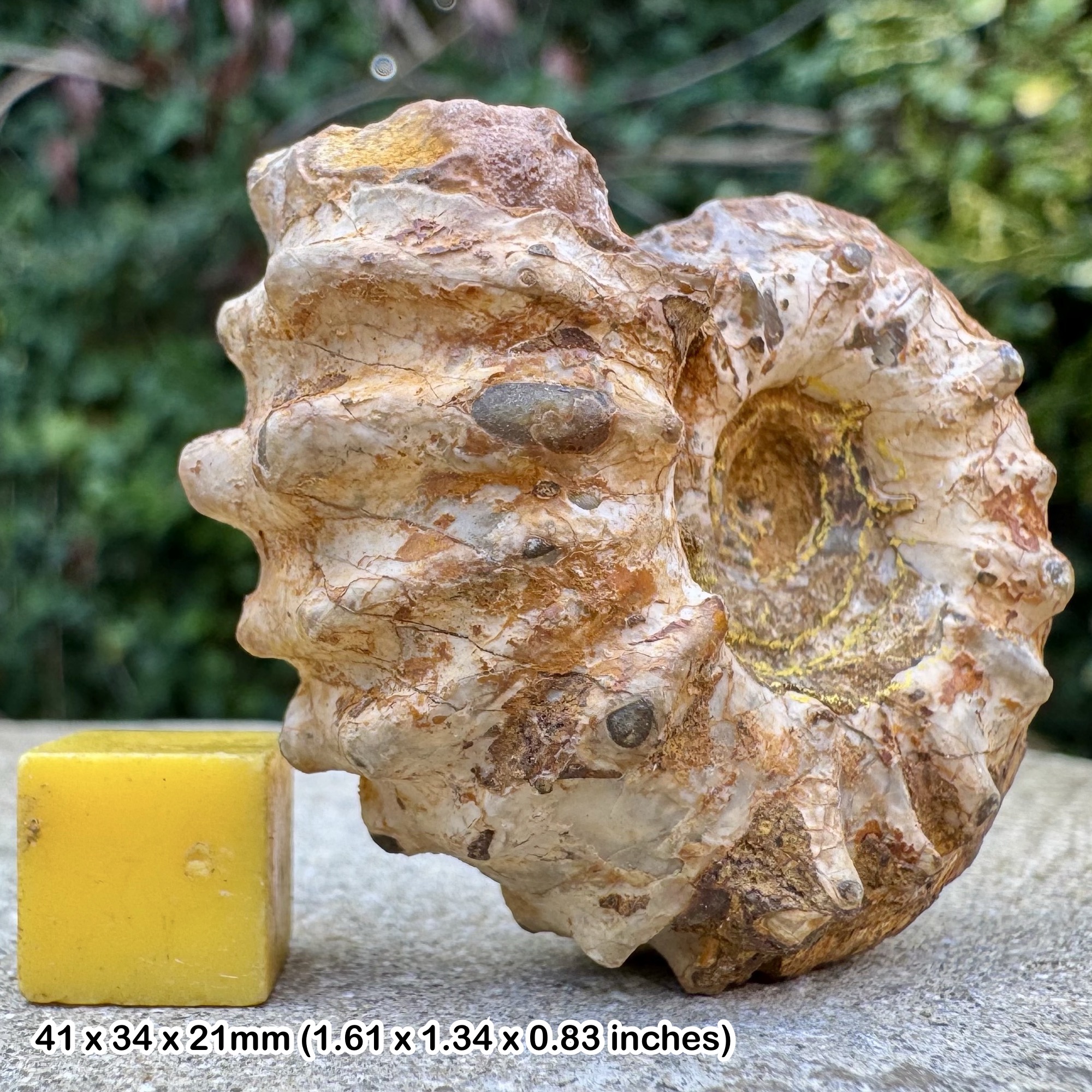
Fossil Ammonite Epicheloniceras tschernyschewi Upper Aptian Cretaceous Auggusac Tarn France with Certificate of Authenticity
£ 36.00
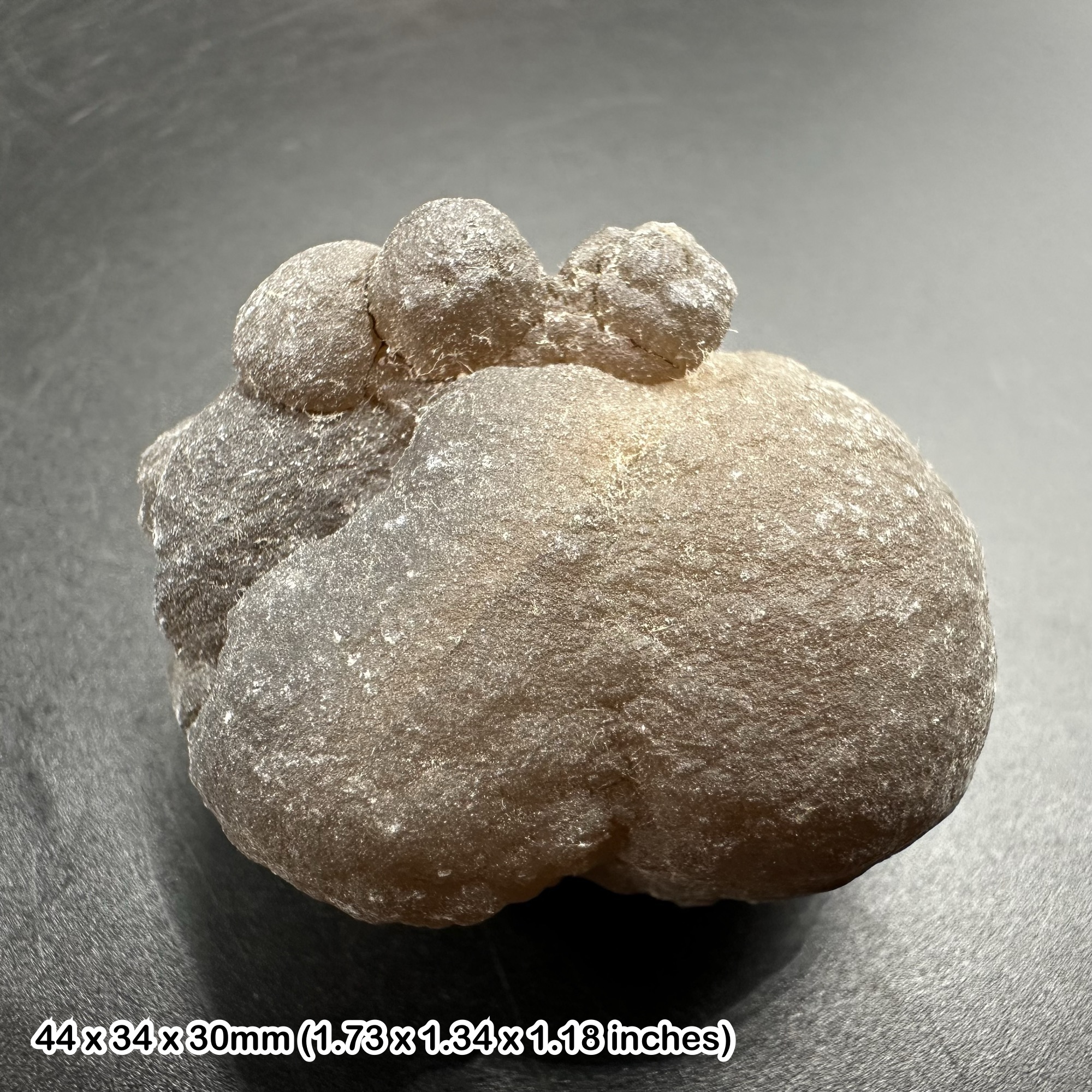
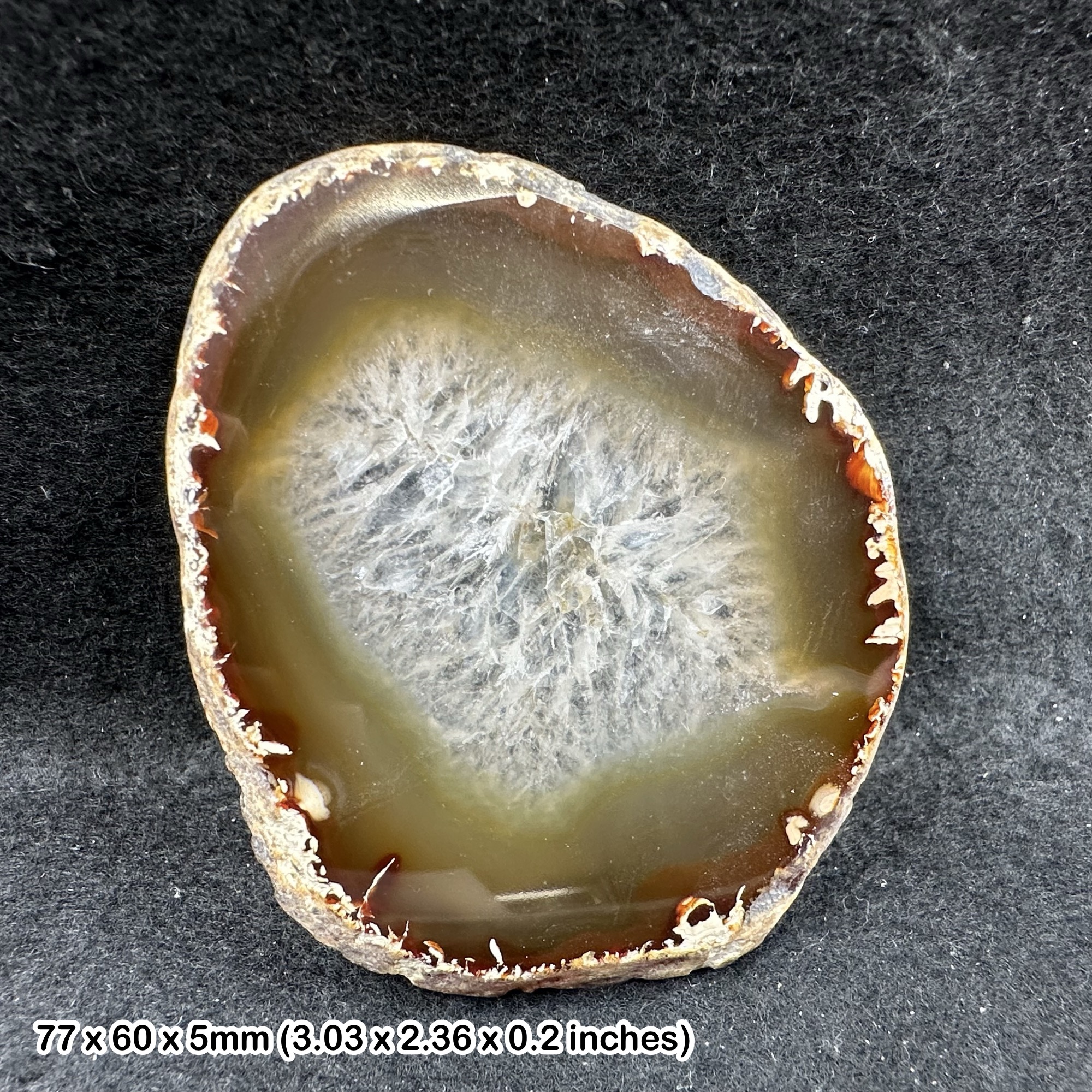
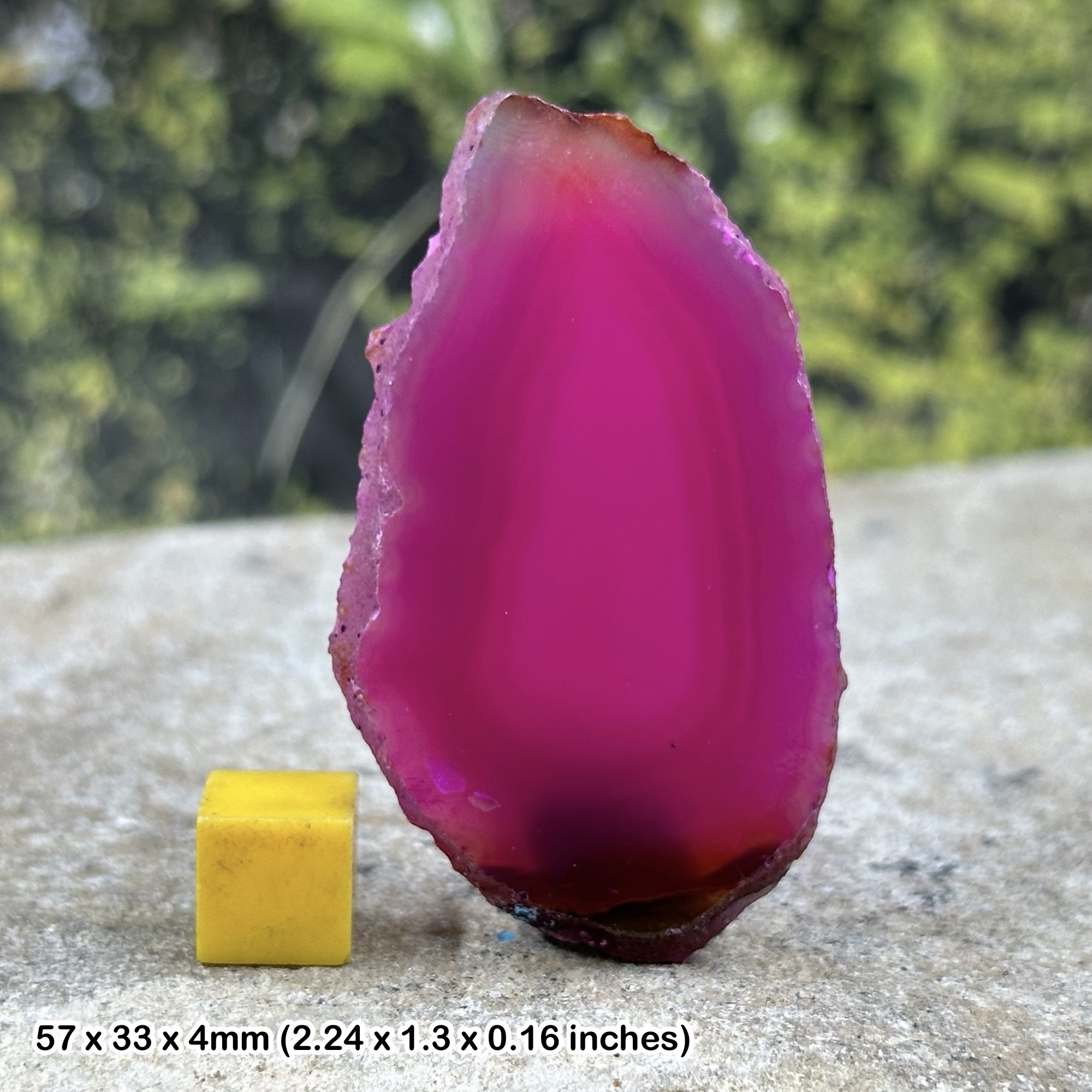
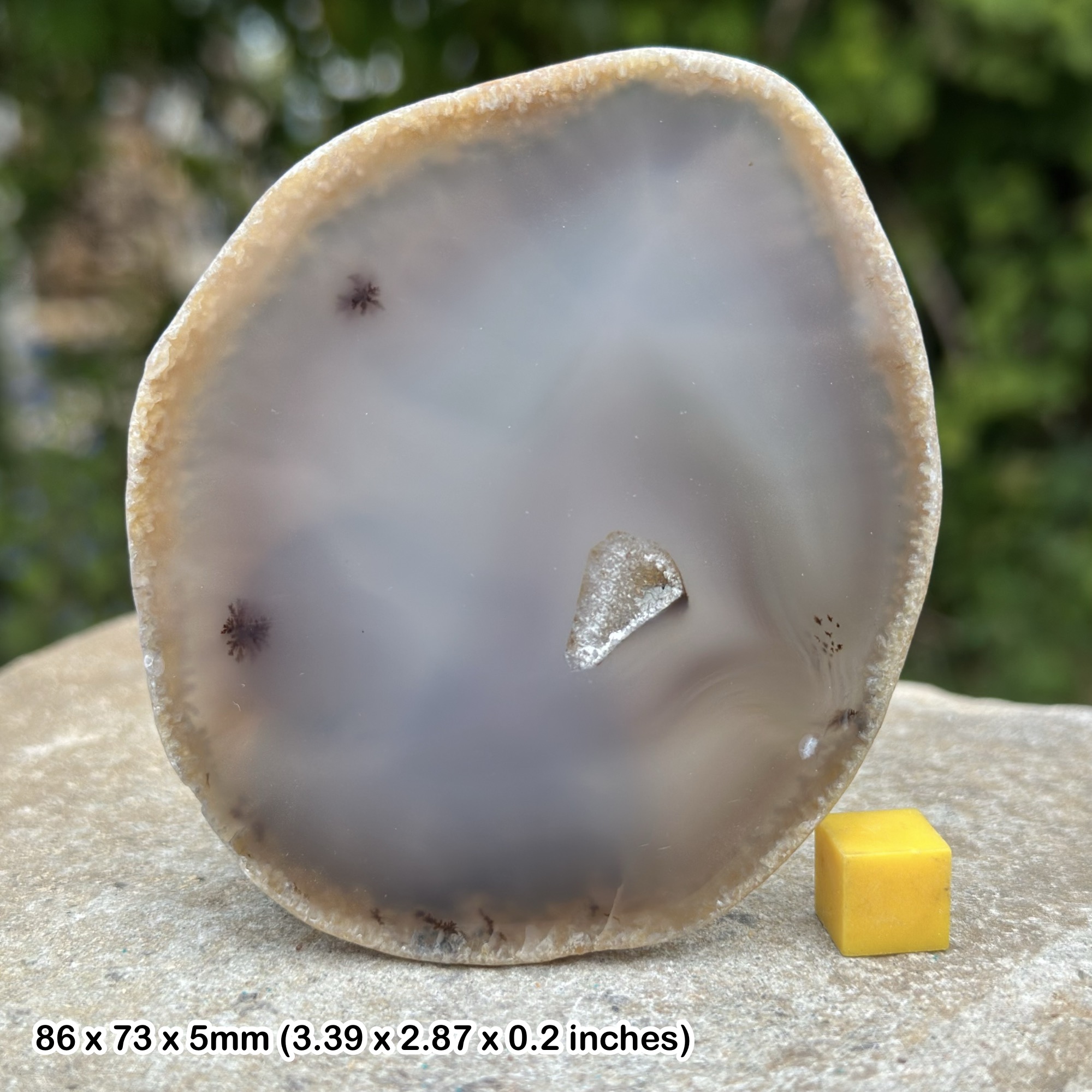
AUTHENTIC FOSSIL AMMONITE FROM FRANCEThis listing offers a genuine fossil ammonite, Epicheloniceras tschernyschewi,
from the world-famous Cretaceous deposits of Auggusac, Tarn, France. Dating to the Upper Aptian stage of the Early Cretaceous (around 120–113 million years ago), this specimen is a beautiful and scientifically valuable piece of ancient marine history. The photographs show the exact fossil you will receive, carefully chosen for its preservation and display quality. Scale rule squares / cube = 1 cm – please see photos for full sizing details. All of our fossils are 100% genuine specimens and come with a Certificate of Authenticity for complete peace of mind. GEOLOGICAL CONTEXT: UPPER APTIAN OF THE CRETACEOUSThe ammonite originates from the Upper Aptian stage, a critical interval of the Early Cretaceous marked by significant marine diversification. The Aptian seas covered much of what is now Europe, with France representing a particularly rich source of marine fossils. The locality of Auggusac, Tarn, is renowned for its finely preserved ammonites, deposited in sediments that accumulated on the marine continental shelf.The depositional environment consisted of warm, shallow epicontinental seas, where conditions allowed the preservation of ammonites, bivalves, gastropods, and other marine invertebrates. Fossils from this stage are often used to refine our understanding of marine stratigraphy and evolutionary change during the Cretaceous. THE SPECIES: EPICHELONICERAS TSCHERNYSCHEWIEpicheloniceras tschernyschewi is an extinct ammonite belonging to the order Ammonitida, superfamily Desmoceratoidea, and family Cheloniceratidae. These ammonites are particularly notable for their ornamented shells, which display strong ribbing and tuberculation across their whorls. The shell morphology shows the classic planispiral form, with ribs that cross the venter, sometimes with nodose or tuberculate ornamentation, making them highly recognisable.This species is an important biostratigraphic marker within the Aptian, helping geologists to date and correlate sedimentary layers across Europe. Its presence is closely tied to the Epicheloniceras martini biozone, making it significant in the subdivision of Aptian stratigraphy. MORPHOLOGICAL FEATURES
• Order: Ammonitida
• Superfamily: Desmoceratoidea
• Family: Cheloniceratidae
• Genus and Species: Epicheloniceras tschernyschewi
• Geological Stage: Upper Aptian, Early Cretaceous (c. 120–113 Ma)
• Locality: Auggusac, Tarn, France
• Shell Traits: Strong ribbing, occasional tubercles, compressed whorls, distinctive ornamentation
• Significance: Index fossil for Upper Aptian stratigraphyThe robust shell and complex ornamentation of Epicheloniceras tschernyschewi suggest adaptations for survival in open marine environments. Like other ammonites, it was a nektonic predator, feeding on smaller marine organisms such as plankton, crustaceans, and juvenile molluscs. SCIENTIFIC AND COLLECTOR IMPORTANCEAmmonites like Epicheloniceras tschernyschewi hold both scientific and aesthetic value. Scientifically, they provide important evidence for dating Cretaceous sediments and understanding faunal distribution during the Early Cretaceous. Their detailed suture lines and distinctive ornamentation make them valuable for paleontologists studying evolutionary trends in ammonites.For collectors, this specimen is a striking fossil, both in its natural beauty and historical significance. Fossils from the Aptian stage of southern France are highly regarded for their preservation and clarity of detail, making them excellent additions to private or educational collections. A UNIQUE COLLECTOR’S FOSSILOwning this ammonite connects you directly to the ancient marine ecosystems of the Cretaceous period. This Epicheloniceras tschernyschewi is a carefully chosen specimen, well-preserved, and fully authenticated. Its striking ribbing and form make it a visually impressive display fossil as well as a scientifically important piece.All of our fossils are supplied with a Certificate of Authenticity. This ensures that your specimen is not only a fascinating collector’s item but also a genuine piece of Earth’s deep history from one of France’s most renowned fossil localities.
from the world-famous Cretaceous deposits of Auggusac, Tarn, France. Dating to the Upper Aptian stage of the Early Cretaceous (around 120–113 million years ago), this specimen is a beautiful and scientifically valuable piece of ancient marine history. The photographs show the exact fossil you will receive, carefully chosen for its preservation and display quality. Scale rule squares / cube = 1 cm – please see photos for full sizing details. All of our fossils are 100% genuine specimens and come with a Certificate of Authenticity for complete peace of mind. GEOLOGICAL CONTEXT: UPPER APTIAN OF THE CRETACEOUSThe ammonite originates from the Upper Aptian stage, a critical interval of the Early Cretaceous marked by significant marine diversification. The Aptian seas covered much of what is now Europe, with France representing a particularly rich source of marine fossils. The locality of Auggusac, Tarn, is renowned for its finely preserved ammonites, deposited in sediments that accumulated on the marine continental shelf.The depositional environment consisted of warm, shallow epicontinental seas, where conditions allowed the preservation of ammonites, bivalves, gastropods, and other marine invertebrates. Fossils from this stage are often used to refine our understanding of marine stratigraphy and evolutionary change during the Cretaceous. THE SPECIES: EPICHELONICERAS TSCHERNYSCHEWIEpicheloniceras tschernyschewi is an extinct ammonite belonging to the order Ammonitida, superfamily Desmoceratoidea, and family Cheloniceratidae. These ammonites are particularly notable for their ornamented shells, which display strong ribbing and tuberculation across their whorls. The shell morphology shows the classic planispiral form, with ribs that cross the venter, sometimes with nodose or tuberculate ornamentation, making them highly recognisable.This species is an important biostratigraphic marker within the Aptian, helping geologists to date and correlate sedimentary layers across Europe. Its presence is closely tied to the Epicheloniceras martini biozone, making it significant in the subdivision of Aptian stratigraphy. MORPHOLOGICAL FEATURES
• Order: Ammonitida
• Superfamily: Desmoceratoidea
• Family: Cheloniceratidae
• Genus and Species: Epicheloniceras tschernyschewi
• Geological Stage: Upper Aptian, Early Cretaceous (c. 120–113 Ma)
• Locality: Auggusac, Tarn, France
• Shell Traits: Strong ribbing, occasional tubercles, compressed whorls, distinctive ornamentation
• Significance: Index fossil for Upper Aptian stratigraphyThe robust shell and complex ornamentation of Epicheloniceras tschernyschewi suggest adaptations for survival in open marine environments. Like other ammonites, it was a nektonic predator, feeding on smaller marine organisms such as plankton, crustaceans, and juvenile molluscs. SCIENTIFIC AND COLLECTOR IMPORTANCEAmmonites like Epicheloniceras tschernyschewi hold both scientific and aesthetic value. Scientifically, they provide important evidence for dating Cretaceous sediments and understanding faunal distribution during the Early Cretaceous. Their detailed suture lines and distinctive ornamentation make them valuable for paleontologists studying evolutionary trends in ammonites.For collectors, this specimen is a striking fossil, both in its natural beauty and historical significance. Fossils from the Aptian stage of southern France are highly regarded for their preservation and clarity of detail, making them excellent additions to private or educational collections. A UNIQUE COLLECTOR’S FOSSILOwning this ammonite connects you directly to the ancient marine ecosystems of the Cretaceous period. This Epicheloniceras tschernyschewi is a carefully chosen specimen, well-preserved, and fully authenticated. Its striking ribbing and form make it a visually impressive display fossil as well as a scientifically important piece.All of our fossils are supplied with a Certificate of Authenticity. This ensures that your specimen is not only a fascinating collector’s item but also a genuine piece of Earth’s deep history from one of France’s most renowned fossil localities.
Other Products