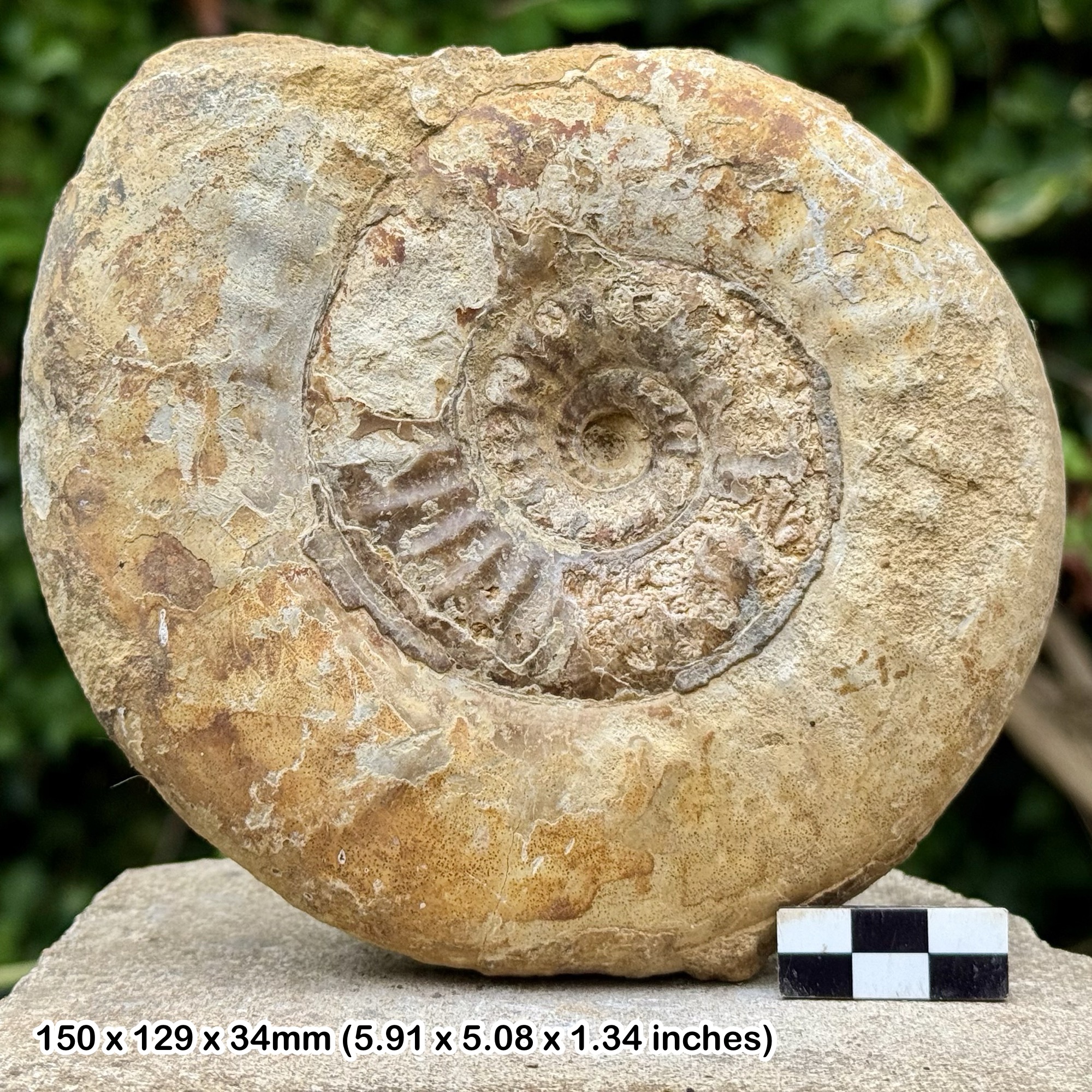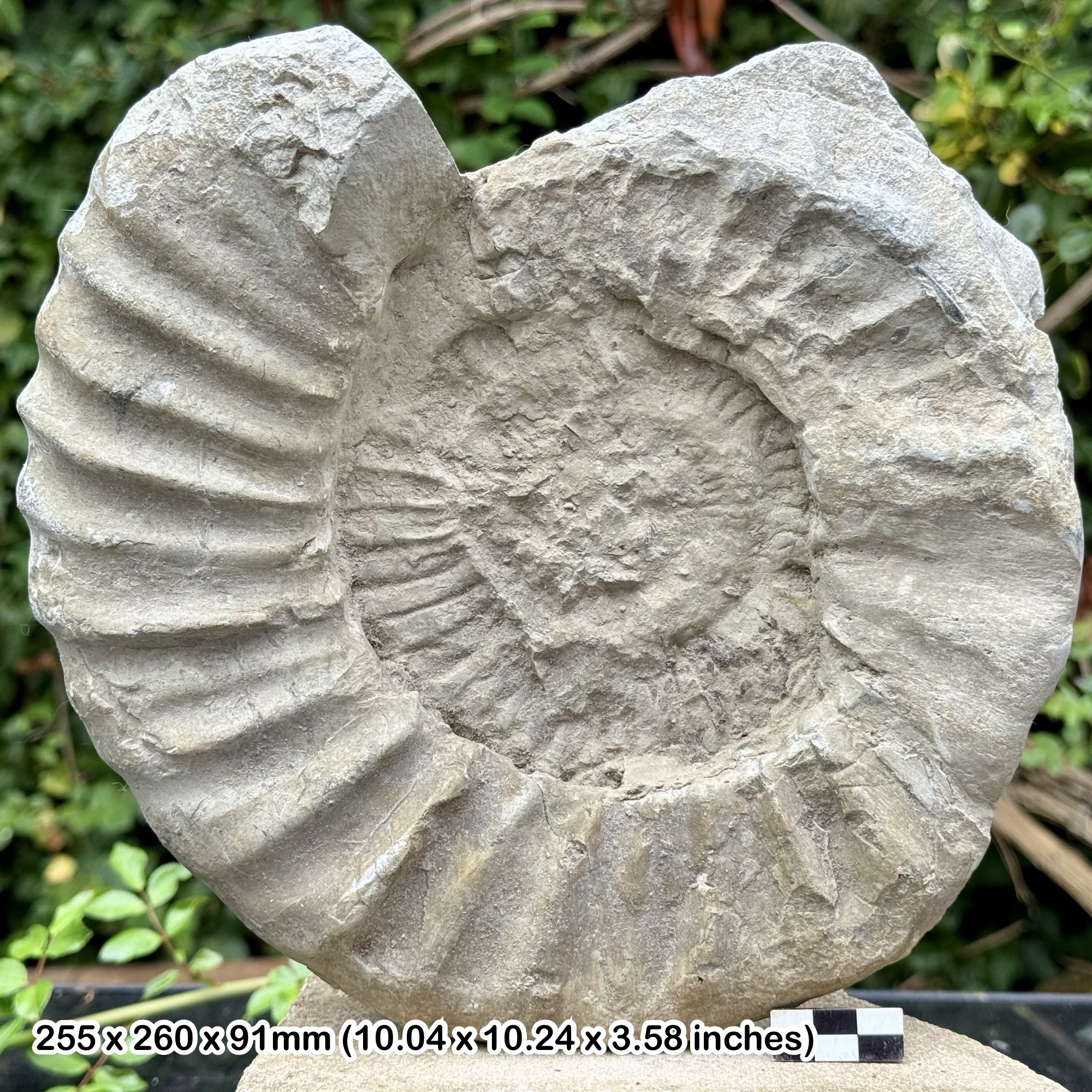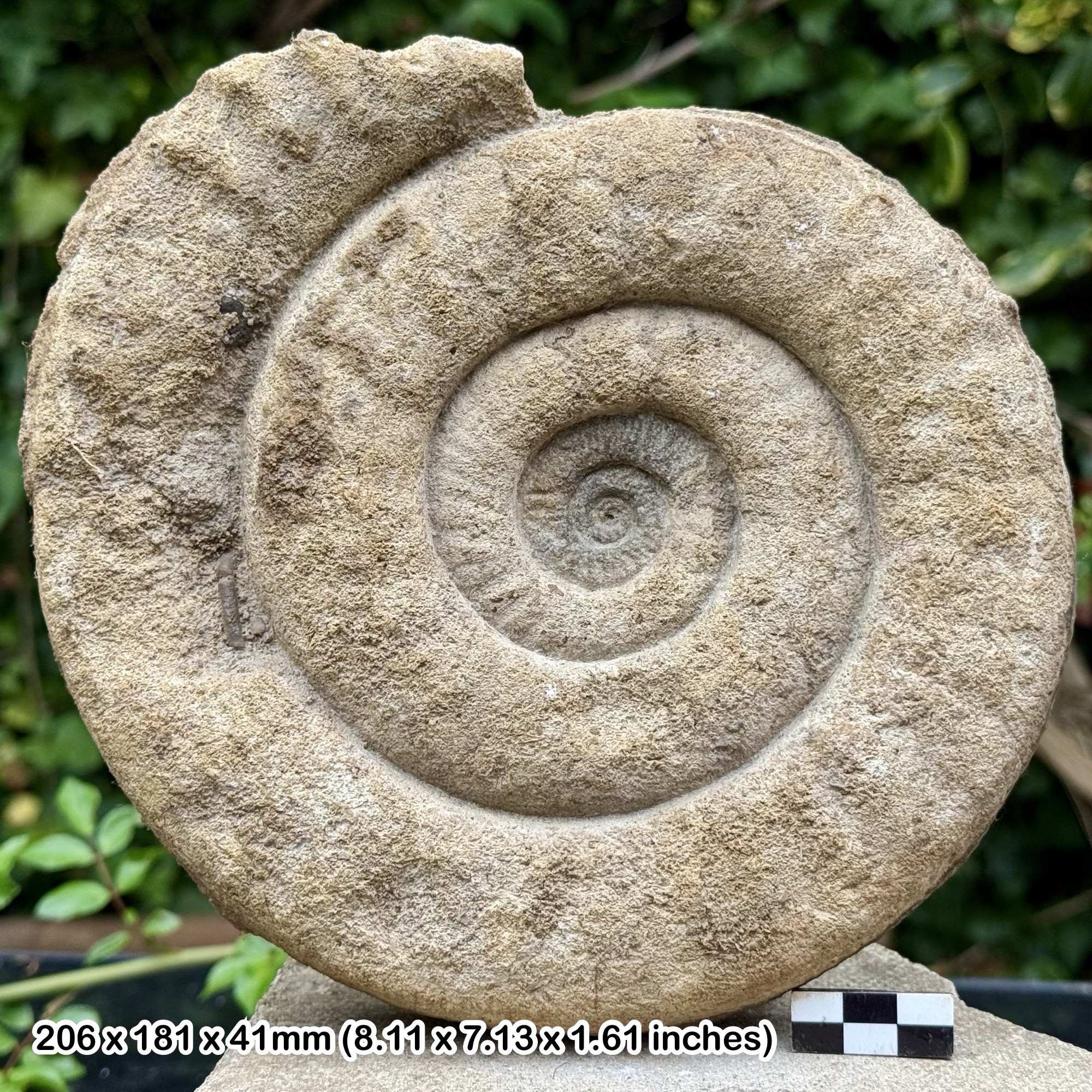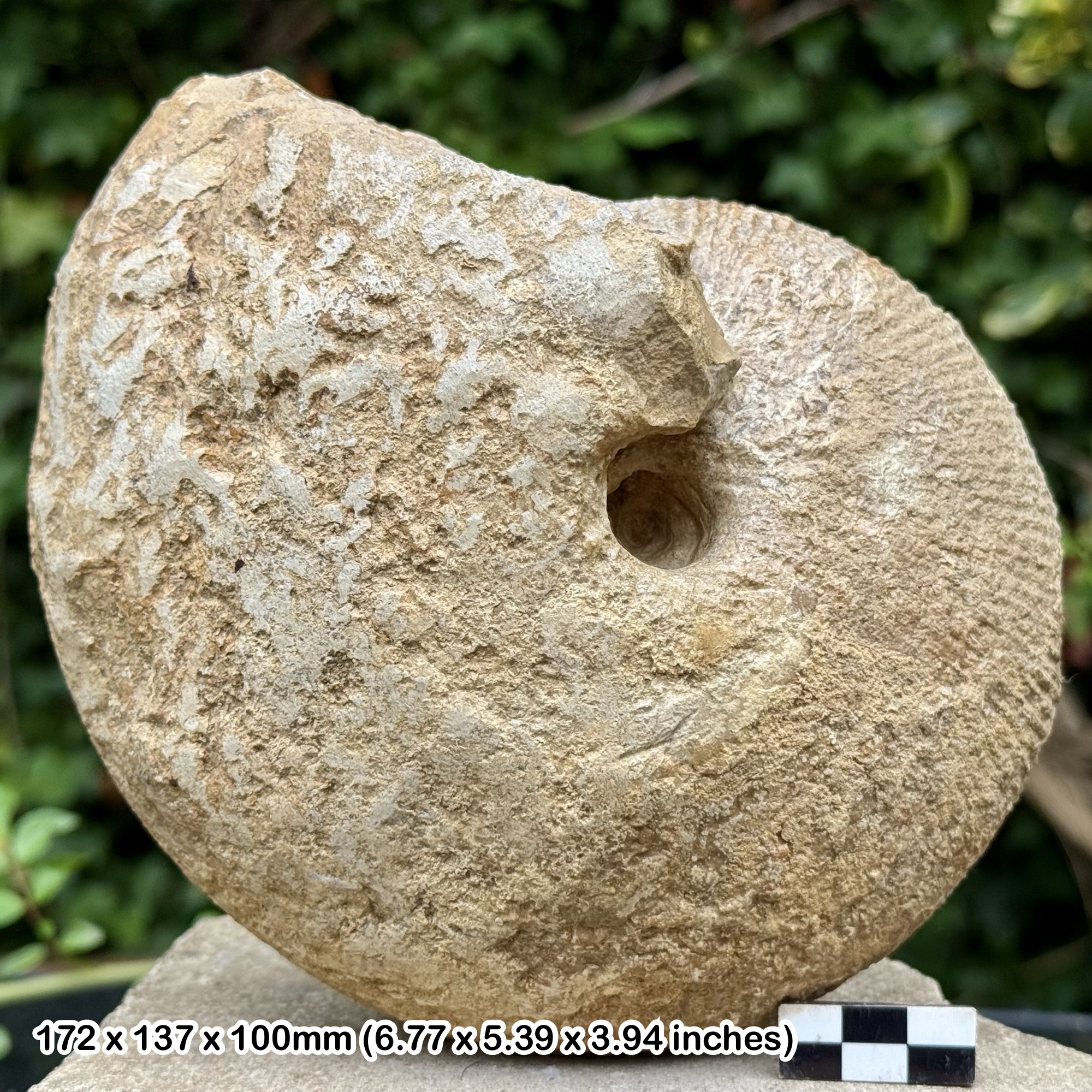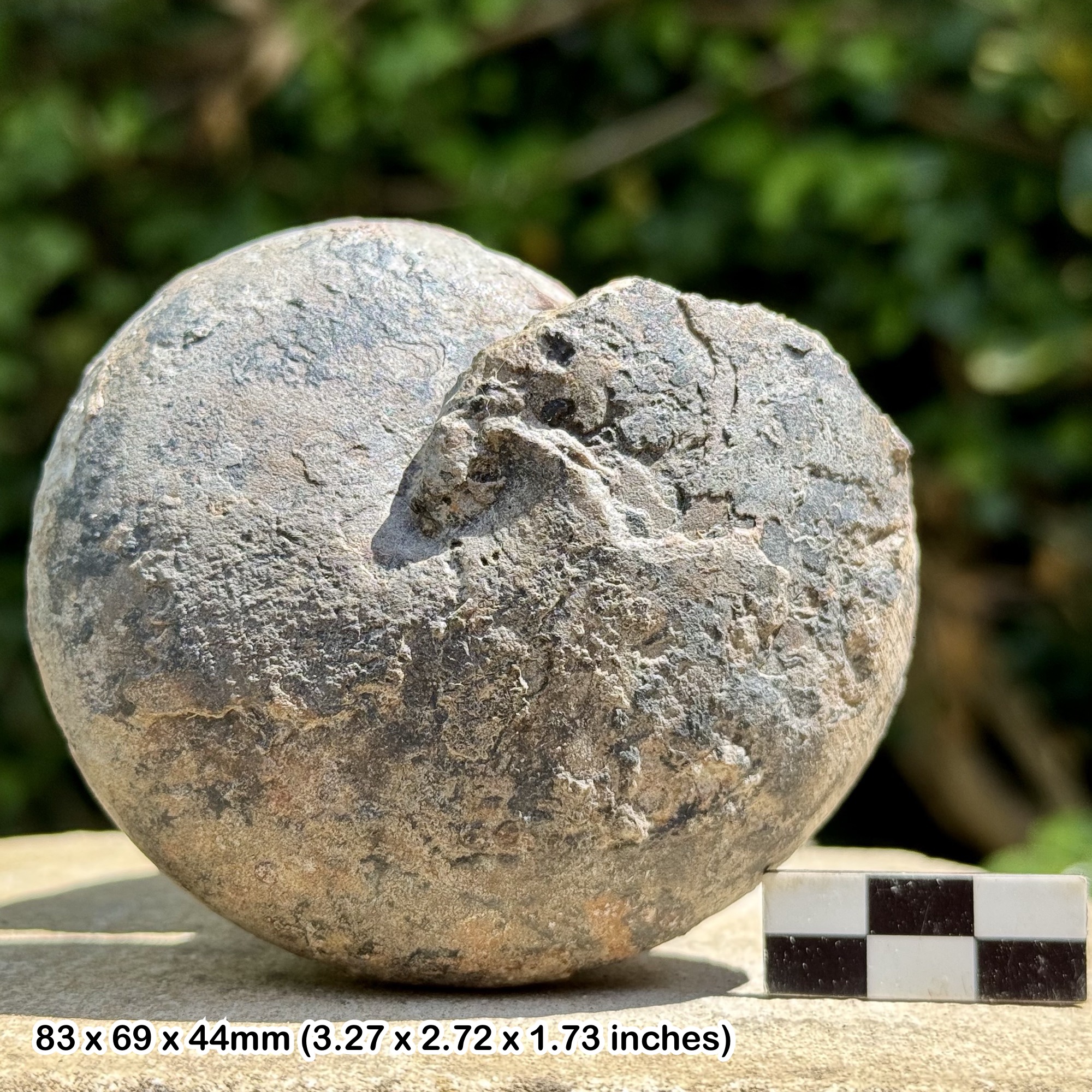
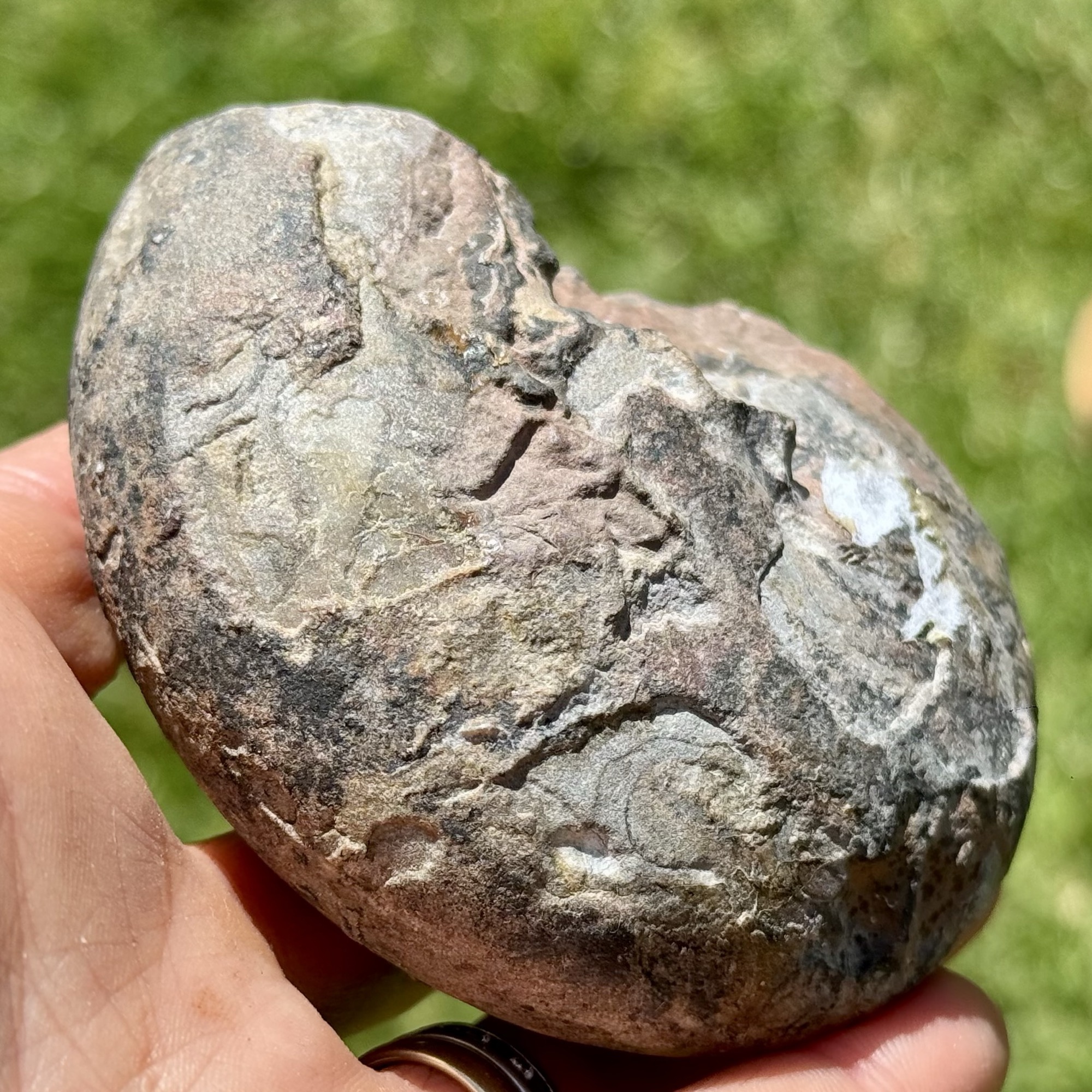
Rare Large Sporadoceras muesteri Goniatite Fossil Ammonite Upper Devonian Morocco Genuine + COA
£ 36.00
Rare Large Sporadoceras muesteri Goniatite Fossil – Upper Devonian – MoroccoThis striking and rare fossil is a beautifully preserved specimen of the extinct
ammonoid genus Sporadoceras, specifically the species Sporadoceras muesteri. It hails from the Upper Devonian period and was discovered in Morocco, a region well-known for its rich and diverse fossil beds.Geological Details:
• Species: Sporadoceras muesteri
• Type: Goniatite (extinct ammonoid cephalopod)
• Geological Period: Upper Devonian (~382 - 359 million years ago)
• Formation: Likely derived from the Anti-Atlas region's marine Devonian limestone deposits
• Location Found: Morocco
• Zone/Biozone: Specific zone data not clearly defined for this specimen
• Stage: Possibly Frasnian or Famennian Stage
• Family: Tornoceratidae
• Superfamily: Tornoceratoidea
• Order: GoniatitidaMorphological Features:
• Involute shell structure with gently curved, lobed sutures characteristic of goniatites
• Fine ribbing and smooth whorls
• Prominent suture lines visible, showcasing evolutionary development from nautiloids to more derived ammonoids
• The size and quality make this a particularly desirable collector’s itemDepositional Environment: The fossil was formed in a shallow marine shelf setting, rich in carbonate sediments typical of Devonian warm tropical seas that covered much of what is now North Africa. The conditions promoted exceptional preservation.Notable Information:
• Goniatites are ancestors of modern cephalopods such as squid and octopus
• The genus Sporadoceras is significant in biostratigraphy for helping to date Devonian marine strataSpecimen Specifics:
• You will receive the exact specimen shown in the photo
• Scale Rule Squares / Cube = 1cm for size reference
• Please refer to photos for full sizing and detail Certificate of Authenticity: All of our fossils are 100% genuine and carefully selected. A Certificate of Authenticity is included with every purchase for your confidence and records. Add this exceptional and scientifically significant piece to your fossil collection today. A unique window into the ancient marine ecosystems of the Devonian seas!
ammonoid genus Sporadoceras, specifically the species Sporadoceras muesteri. It hails from the Upper Devonian period and was discovered in Morocco, a region well-known for its rich and diverse fossil beds.Geological Details:
• Species: Sporadoceras muesteri
• Type: Goniatite (extinct ammonoid cephalopod)
• Geological Period: Upper Devonian (~382 - 359 million years ago)
• Formation: Likely derived from the Anti-Atlas region's marine Devonian limestone deposits
• Location Found: Morocco
• Zone/Biozone: Specific zone data not clearly defined for this specimen
• Stage: Possibly Frasnian or Famennian Stage
• Family: Tornoceratidae
• Superfamily: Tornoceratoidea
• Order: GoniatitidaMorphological Features:
• Involute shell structure with gently curved, lobed sutures characteristic of goniatites
• Fine ribbing and smooth whorls
• Prominent suture lines visible, showcasing evolutionary development from nautiloids to more derived ammonoids
• The size and quality make this a particularly desirable collector’s itemDepositional Environment: The fossil was formed in a shallow marine shelf setting, rich in carbonate sediments typical of Devonian warm tropical seas that covered much of what is now North Africa. The conditions promoted exceptional preservation.Notable Information:
• Goniatites are ancestors of modern cephalopods such as squid and octopus
• The genus Sporadoceras is significant in biostratigraphy for helping to date Devonian marine strataSpecimen Specifics:
• You will receive the exact specimen shown in the photo
• Scale Rule Squares / Cube = 1cm for size reference
• Please refer to photos for full sizing and detail Certificate of Authenticity: All of our fossils are 100% genuine and carefully selected. A Certificate of Authenticity is included with every purchase for your confidence and records. Add this exceptional and scientifically significant piece to your fossil collection today. A unique window into the ancient marine ecosystems of the Devonian seas!
Other Products