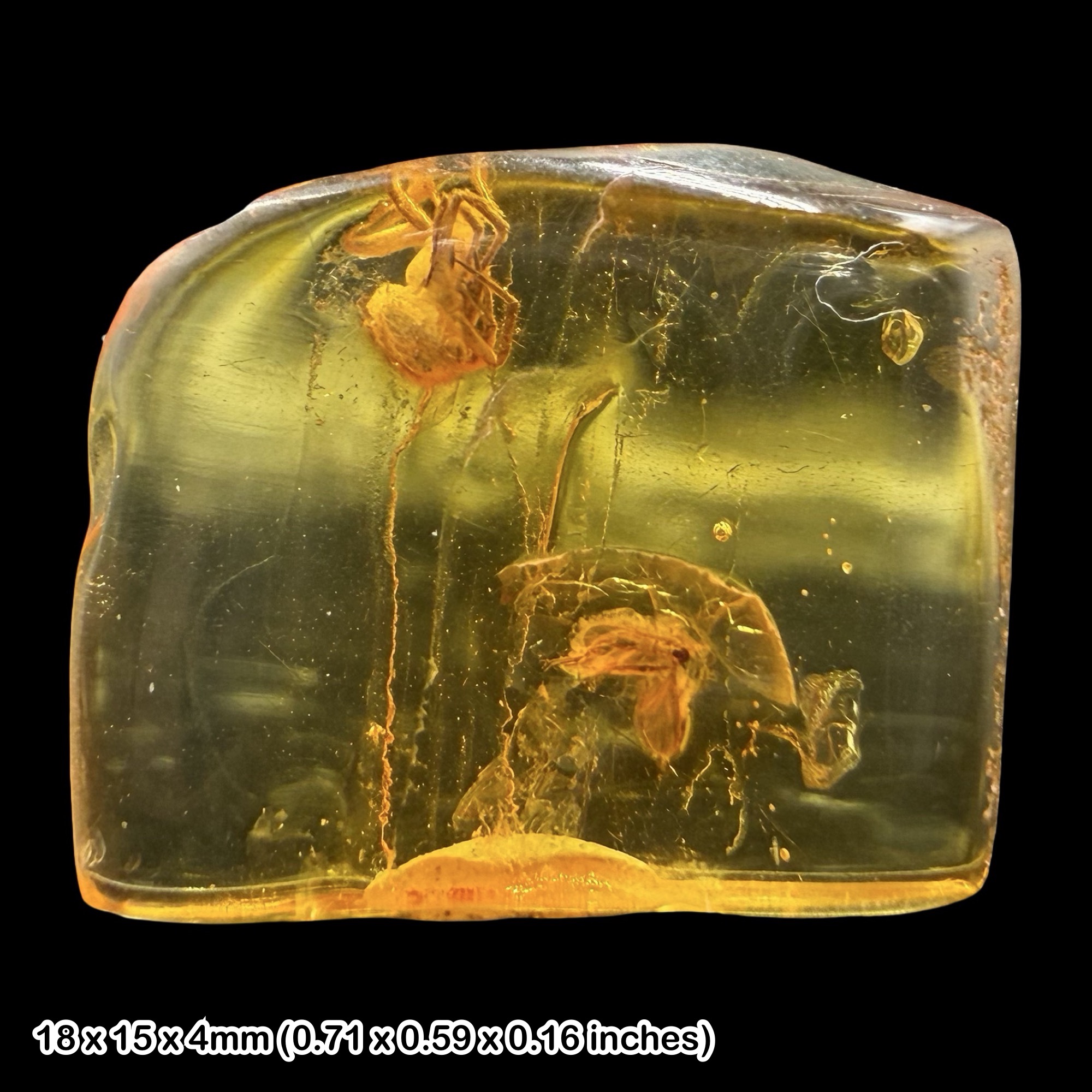
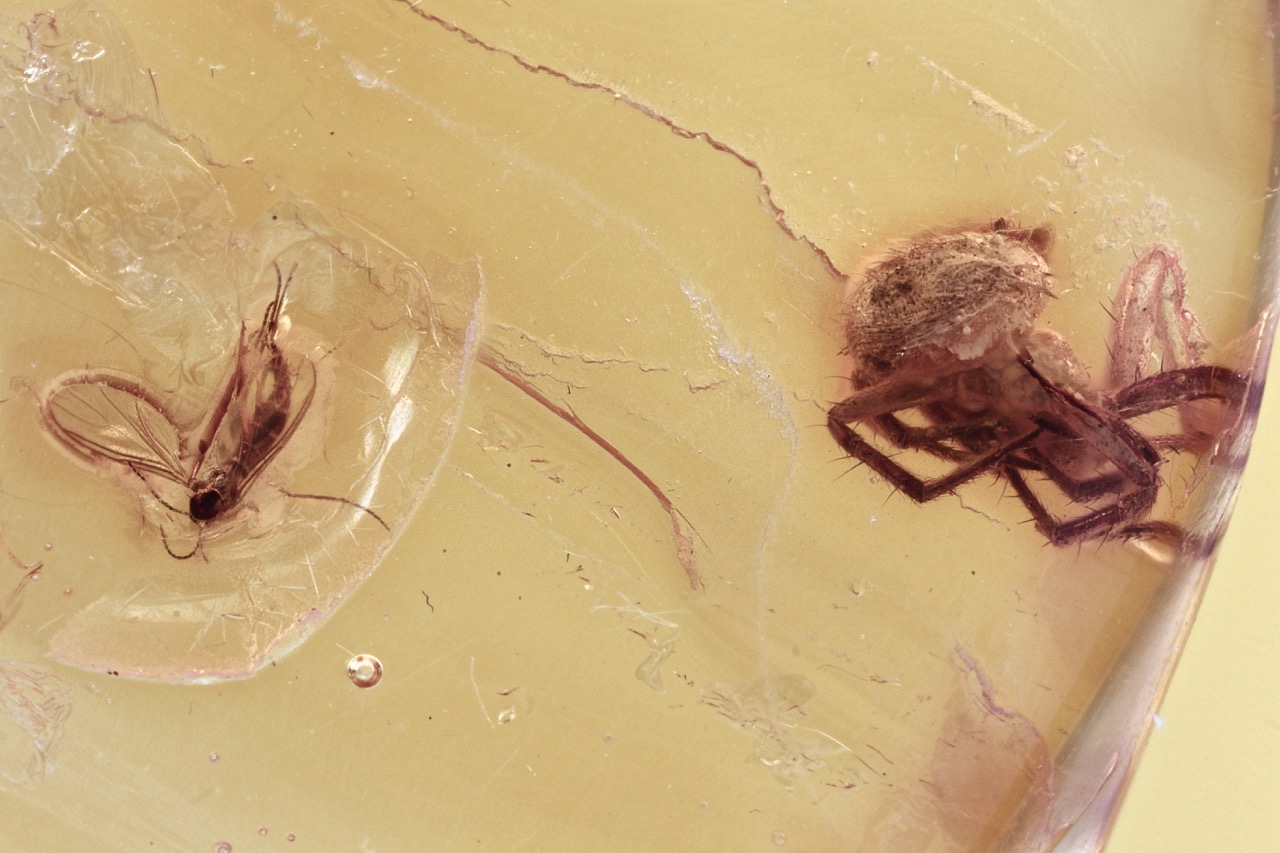
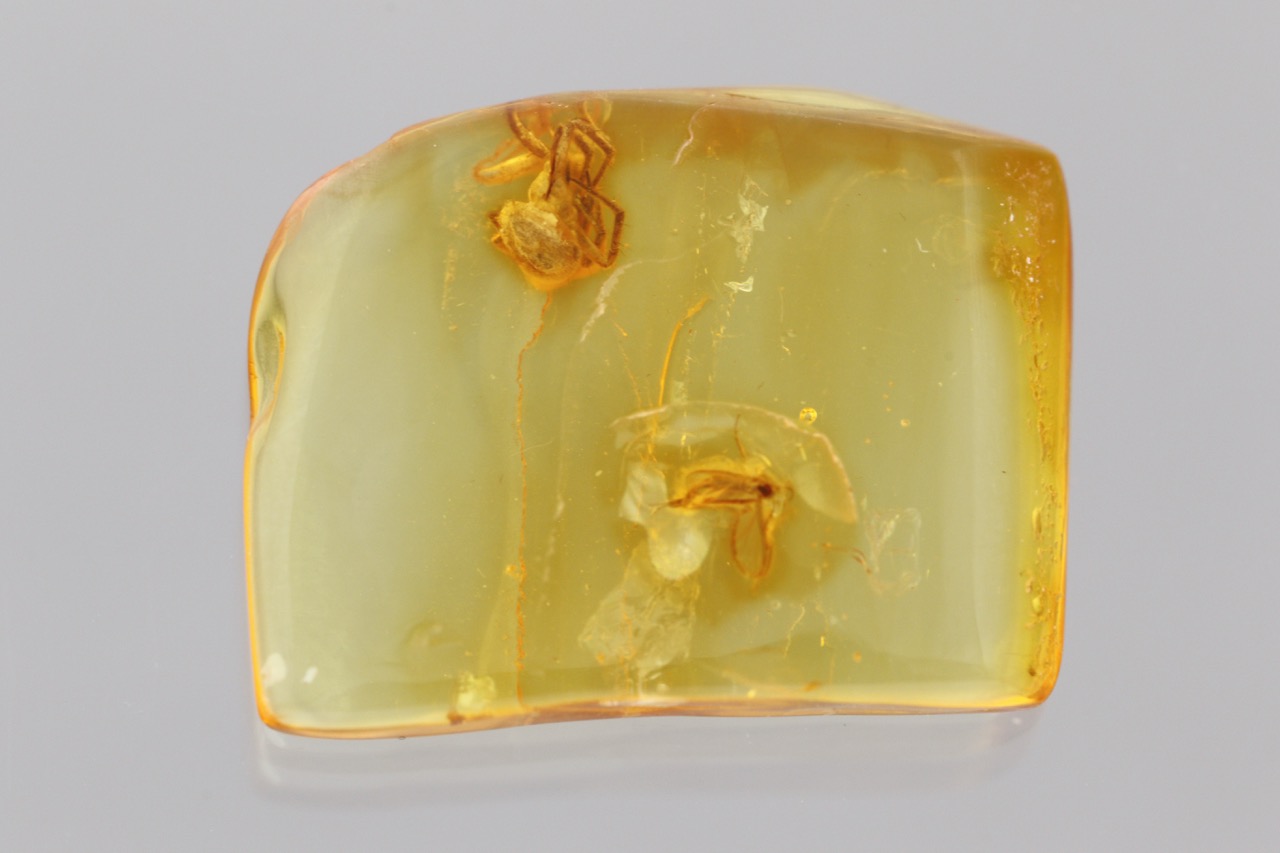
Baltic Amber Fossil Spider and Fungus Gnat Inclusion Araneae Sciaridae Eocene Genuine Fossil with Certificate of Authenticity
£ 120.00
Genuine Baltic Amber Fossil – Spider and Fungus Gnat InclusionThis fascinating Baltic amber specimen preserves two prehistoric arthropods
trapped in ancient tree resin during the Eocene epoch approximately 56–33.9 million years ago. Encased within the fossilised amber are a spider belonging to the order Araneae and a dark-winged fungus gnat from the family Sciaridae. The delicate preservation of these organisms provides an exceptional glimpse into the biodiversity of Eocene forest ecosystems that once surrounded the Baltic Sea.The fossil shown in the photographs is the exact specimen you will receive. Each amber piece is carefully selected for the clarity of its inclusions and the natural quality of the fossil resin. This genuine fossil specimen includes a Certificate of Authenticity lifetime guarantee card confirming that the amber and its inclusions are authentic.Geological Age and Formation of Baltic AmberBaltic amber originates from vast conifer-dominated forests that flourished across northern Europe during the Eocene epoch of the Paleogene Period. These forests existed under warm temperate to subtropical climatic conditions and produced large quantities of resin. The primary resin-producing trees are widely attributed to extinct relatives of pine, commonly associated with the species Pinus succinifera.Resin flowed down the trunks and branches of these ancient trees, often dripping onto bark, leaves, and the forest floor. The sticky resin served as a natural trap for small organisms including insects, spiders, and plant fragments. Once organisms became trapped, the resin sealed them away from oxygen, preventing decay.Over millions of years the resin hardened and underwent polymerisation, transforming into amber. Resin pieces were transported by rivers and eventually deposited in shallow marine sediments around the Baltic Sea basin. These amber-bearing layers, often associated with glauconitic sands, preserve one of the richest fossil insect and arthropod assemblages known.Fossil Identification and Scientific ClassificationThis specimen contains two inclusions representing different arthropod groups that lived within Eocene forests.SpiderClass: ArachnidaOrder: AraneaeFungus gnatOrder: DipteraSuperfamily: SciaroideaFamily: SciaridaeSpiders of the order Araneae are predatory arachnids that play a crucial ecological role in controlling insect populations. Many species inhabit forest vegetation, bark surfaces, or leaf litter where they construct webs or hunt actively for prey.Sciaridae, commonly known as dark-winged fungus gnats, are small flies closely associated with moist environments and fungal growth. Their larvae develop within soil, decaying plant matter, or fungal substrates where they feed on organic material and fungi.Morphological Characteristics and PreservationAmber fossilisation preserves arthropods with remarkable anatomical detail. The spider inclusion may show key morphological features typical of Araneae, including multiple segmented legs, a compact cephalothorax, and a rounded abdomen. Depending on the orientation within the amber, the legs and body structure can often be clearly observed.The fungus gnat inclusion displays the slender body, long legs, and narrow wings typical of Sciaridae flies. These insects possess delicate wing venation and elongated antennae adapted for sensing their environment in dim forest habitats.Because amber preserves organisms in three dimensions rather than compressing them like sedimentary fossils, the spider and gnat may appear strikingly lifelike despite being preserved for tens of millions of years.Eocene Forest Ecosystem of the Baltic RegionDuring the Eocene epoch the Baltic region supported dense conifer forests rich in plant and insect diversity. The warm climate allowed complex ecosystems to flourish, with numerous insects, spiders, and other arthropods occupying different ecological niches.Fungus gnats were particularly common in moist forest environments where fungi grew abundantly among decaying wood and leaf litter. Their larvae depended on fungal growth and decomposing organic material for food.Spiders occupied a variety of ecological roles within these forests, acting as predators that fed on insects such as gnats and flies. The presence of both a spider and a fungus gnat within the same amber piece may represent a moment captured within this ancient predator-prey ecosystem.Amber inclusions provide an extraordinary window into these prehistoric environments, preserving organisms exactly as they existed millions of years ago.Amber Preservation and Scientific ImportanceAmber is one of the most remarkable fossil preservation media known in palaeontology. When resin rapidly encapsulates organisms, delicate structures such as legs, wings, antennae, and body segmentation can remain intact for tens of millions of years.Baltic amber is particularly famous for preserving a wide range of prehistoric arthropods including flies, beetles, ants, wasps, spiders, and mites. Thousands of species have been documented from these deposits, offering valuable insights into ancient biodiversity and evolutionary history.Specimens that contain multiple organisms, such as this spider and fungus gnat inclusion, are especially interesting because they reveal interactions between different species within ancient ecosystems.Authenticity and CollectingThis specimen is a genuine Baltic amber fossil formed approximately 56–33.9 million years ago during the Eocene epoch. The amber has been carefully selected and prepared to highlight the preserved inclusions while maintaining the natural appearance of the fossil resin.The photographs show the exact specimen you will receive. Please refer to the images for full sizing and scale.Each fossil includes a Certificate of Authenticity lifetime guarantee card confirming that the amber and its inclusions are genuine. This specimen makes an excellent addition to fossil collections, natural history displays, educational collections, or for anyone fascinated by the remarkable preservation of prehistoric life within Baltic amber.
trapped in ancient tree resin during the Eocene epoch approximately 56–33.9 million years ago. Encased within the fossilised amber are a spider belonging to the order Araneae and a dark-winged fungus gnat from the family Sciaridae. The delicate preservation of these organisms provides an exceptional glimpse into the biodiversity of Eocene forest ecosystems that once surrounded the Baltic Sea.The fossil shown in the photographs is the exact specimen you will receive. Each amber piece is carefully selected for the clarity of its inclusions and the natural quality of the fossil resin. This genuine fossil specimen includes a Certificate of Authenticity lifetime guarantee card confirming that the amber and its inclusions are authentic.Geological Age and Formation of Baltic AmberBaltic amber originates from vast conifer-dominated forests that flourished across northern Europe during the Eocene epoch of the Paleogene Period. These forests existed under warm temperate to subtropical climatic conditions and produced large quantities of resin. The primary resin-producing trees are widely attributed to extinct relatives of pine, commonly associated with the species Pinus succinifera.Resin flowed down the trunks and branches of these ancient trees, often dripping onto bark, leaves, and the forest floor. The sticky resin served as a natural trap for small organisms including insects, spiders, and plant fragments. Once organisms became trapped, the resin sealed them away from oxygen, preventing decay.Over millions of years the resin hardened and underwent polymerisation, transforming into amber. Resin pieces were transported by rivers and eventually deposited in shallow marine sediments around the Baltic Sea basin. These amber-bearing layers, often associated with glauconitic sands, preserve one of the richest fossil insect and arthropod assemblages known.Fossil Identification and Scientific ClassificationThis specimen contains two inclusions representing different arthropod groups that lived within Eocene forests.SpiderClass: ArachnidaOrder: AraneaeFungus gnatOrder: DipteraSuperfamily: SciaroideaFamily: SciaridaeSpiders of the order Araneae are predatory arachnids that play a crucial ecological role in controlling insect populations. Many species inhabit forest vegetation, bark surfaces, or leaf litter where they construct webs or hunt actively for prey.Sciaridae, commonly known as dark-winged fungus gnats, are small flies closely associated with moist environments and fungal growth. Their larvae develop within soil, decaying plant matter, or fungal substrates where they feed on organic material and fungi.Morphological Characteristics and PreservationAmber fossilisation preserves arthropods with remarkable anatomical detail. The spider inclusion may show key morphological features typical of Araneae, including multiple segmented legs, a compact cephalothorax, and a rounded abdomen. Depending on the orientation within the amber, the legs and body structure can often be clearly observed.The fungus gnat inclusion displays the slender body, long legs, and narrow wings typical of Sciaridae flies. These insects possess delicate wing venation and elongated antennae adapted for sensing their environment in dim forest habitats.Because amber preserves organisms in three dimensions rather than compressing them like sedimentary fossils, the spider and gnat may appear strikingly lifelike despite being preserved for tens of millions of years.Eocene Forest Ecosystem of the Baltic RegionDuring the Eocene epoch the Baltic region supported dense conifer forests rich in plant and insect diversity. The warm climate allowed complex ecosystems to flourish, with numerous insects, spiders, and other arthropods occupying different ecological niches.Fungus gnats were particularly common in moist forest environments where fungi grew abundantly among decaying wood and leaf litter. Their larvae depended on fungal growth and decomposing organic material for food.Spiders occupied a variety of ecological roles within these forests, acting as predators that fed on insects such as gnats and flies. The presence of both a spider and a fungus gnat within the same amber piece may represent a moment captured within this ancient predator-prey ecosystem.Amber inclusions provide an extraordinary window into these prehistoric environments, preserving organisms exactly as they existed millions of years ago.Amber Preservation and Scientific ImportanceAmber is one of the most remarkable fossil preservation media known in palaeontology. When resin rapidly encapsulates organisms, delicate structures such as legs, wings, antennae, and body segmentation can remain intact for tens of millions of years.Baltic amber is particularly famous for preserving a wide range of prehistoric arthropods including flies, beetles, ants, wasps, spiders, and mites. Thousands of species have been documented from these deposits, offering valuable insights into ancient biodiversity and evolutionary history.Specimens that contain multiple organisms, such as this spider and fungus gnat inclusion, are especially interesting because they reveal interactions between different species within ancient ecosystems.Authenticity and CollectingThis specimen is a genuine Baltic amber fossil formed approximately 56–33.9 million years ago during the Eocene epoch. The amber has been carefully selected and prepared to highlight the preserved inclusions while maintaining the natural appearance of the fossil resin.The photographs show the exact specimen you will receive. Please refer to the images for full sizing and scale.Each fossil includes a Certificate of Authenticity lifetime guarantee card confirming that the amber and its inclusions are genuine. This specimen makes an excellent addition to fossil collections, natural history displays, educational collections, or for anyone fascinated by the remarkable preservation of prehistoric life within Baltic amber.