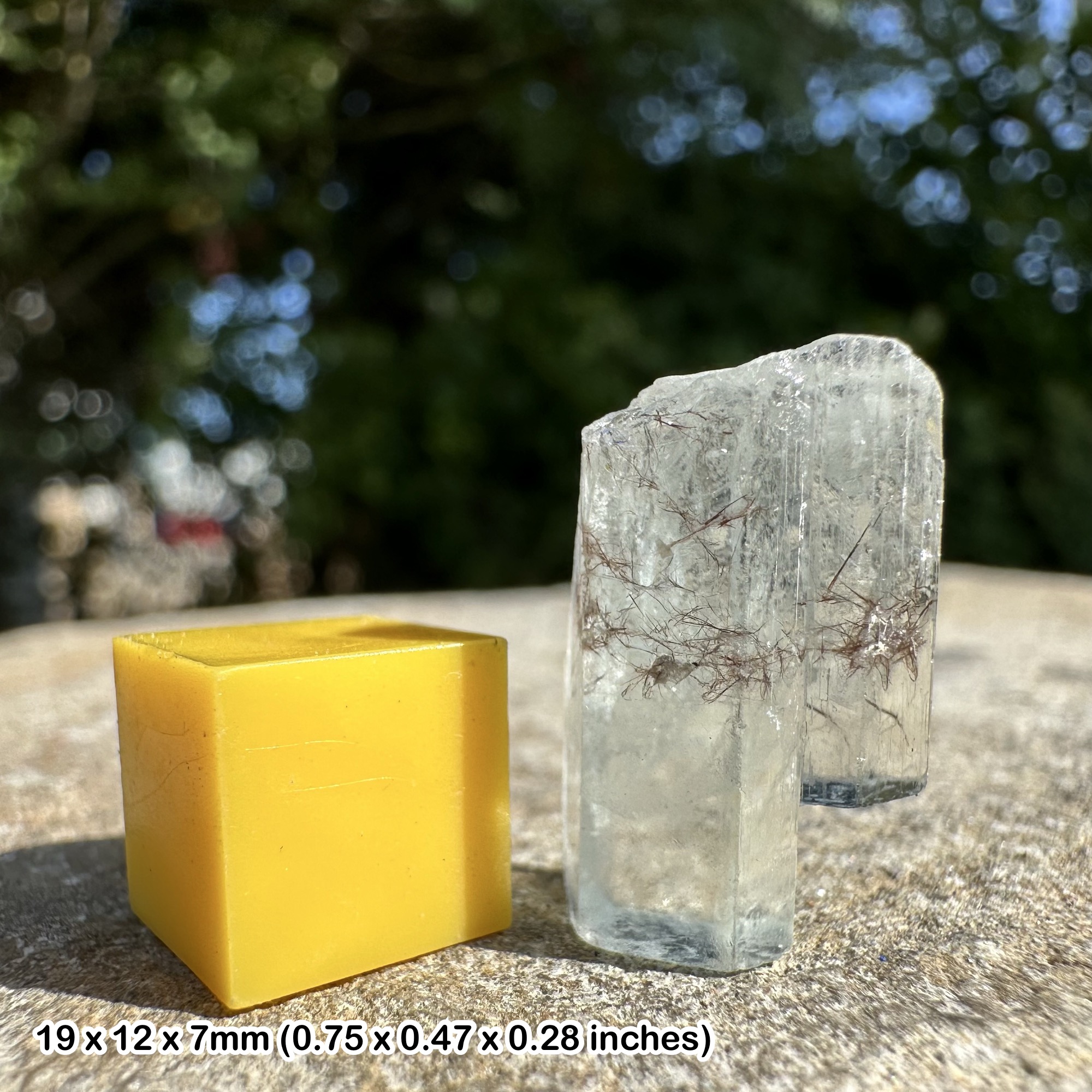
Aquamarine Crystal Sticks Natural Beryl Mineral Afghanistan Collector Specimen
£ 14.40
AQUAMARINE CRYSTAL STICKS – NATURAL BERYL MINERAL FROM AFGHANISTANThis genuine Aquamarine crystal stick specimen from Afghanistan is a natural
formation of the mineral beryl, recognised for its pale blue to blue-green colour and elongated prismatic crystal structure. Aquamarine is one of the most well-known varieties of beryl and is admired by mineral collectors for its clarity, distinctive crystal habit, and association with rare-element pegmatite deposits.These slender crystal sticks display the typical growth form of aquamarine, with elongated prismatic crystals that reflect the mineral’s natural crystallographic structure. The photographs in the listing show the exact specimen you will receive, allowing collectors to clearly observe the colour, crystal structure, and natural features before purchase. For accurate measurements and scale, please refer to the sizing shown in the listing photographs.Each specimen includes a Certificate of Authenticity lifetime guarantee generic card, confirming that the crystal is a genuine natural mineral specimen. MINERAL SPECIES AND GEOLOGICAL CLASSIFICATIONAquamarine is the blue variety of the mineral beryl, a beryllium aluminium cyclosilicate with the chemical formula Be₃Al₂Si₆O₁₈. Beryl belongs to the cyclosilicate mineral group, characterised by ring-shaped silicate structures within its crystal lattice.Beryl crystallises in the hexagonal crystal system, typically forming long prismatic crystals with well-defined vertical striations along the crystal faces. These elongated forms are common in pegmatite environments where minerals have space to grow freely.Aquamarine is closely related to other varieties of beryl such as emerald, heliodor, and morganite, with colour variations depending on trace elements present during crystal formation. COLOUR, CLARITY AND CRYSTAL STRUCTUREAquamarine crystals are recognised for their pale blue to blue-green colour, which is typically caused by trace amounts of iron within the crystal structure. The colour intensity may vary depending on the concentration of these trace elements and the conditions present during formation.Many aquamarine crystals display transparent to translucent clarity, with a bright vitreous lustre on crystal surfaces. Natural internal features such as growth patterns, inclusions, or fine fractures may be present and are typical of natural mineral specimens.The elongated “stick” formation of these crystals reflects the natural growth habit of beryl, which often develops as long hexagonal prisms with flat terminations or slightly irregular ends depending on the growth conditions. GEOLOGICAL FORMATION IN PEGMATITE DEPOSITSAquamarine forms primarily in granitic pegmatite deposits, which are coarse-grained igneous rocks created during the final stages of magma crystallisation. Pegmatites are well known for producing large and well-formed crystals due to their slow cooling rates and high concentrations of rare elements.In these geological environments, mineral-rich fluids allow crystals to grow in open spaces within the rock, forming elongated prismatic crystals such as aquamarine.Afghanistan is internationally recognised for producing high-quality pegmatite minerals, including aquamarine, tourmaline, spodumene, and other rare mineral species. The mountainous regions of the country contain extensive pegmatite systems that have produced exceptional mineral specimens for collectors.Aquamarine crystals are often found alongside minerals such as quartz, feldspar, mica, tourmaline, and other beryl varieties within these pegmatite formations. COLLECTING AND DISPLAY APPEALAquamarine crystal sticks are highly valued by mineral collectors, geology enthusiasts, and crystal display collectors because of their elegant crystal habit and attractive colour. The natural prismatic structure of the crystals creates visually striking specimens that highlight the mineral’s natural growth patterns.The elongated crystal form makes aquamarine particularly appealing when displayed in mineral cabinets or geological collections, as the structure clearly demonstrates the hexagonal crystal habit typical of beryl.In some cultural traditions and spiritual practices, aquamarine has been traditionally associated with symbolism related to clarity, calmness, and maritime themes, though these interpretations are cultural perspectives rather than scientifically established properties.Because each crystal forms naturally, every specimen displays unique variations in colour intensity, internal features, and crystal shape. AUTHENTICITY AND SPECIMEN DETAILS• Mineral Species: Aquamarine (Variety of Beryl)• Chemical Composition: Beryllium Aluminium Cyclosilicate (Be₃Al₂Si₆O₁₈)• Mineral Group: Cyclosilicate• Crystal System: Hexagonal• Locality: Afghanistan• Colour: Pale blue to blue-green• Crystal Habit: Elongated prismatic crystal sticks with vertical striations• Transparency: Transparent to translucent• Surface Lustre: Vitreous• Formation Environment: Granitic pegmatite deposits• Associated Minerals: Quartz, feldspar, mica, tourmaline• Authenticity: Genuine natural mineral specimen• Included: Certificate of Authenticity lifetime guarantee generic card• Exact Item: The crystal shown in the photographs is the specimen you will receiveThis Aquamarine crystal stick specimen from Afghanistan represents a classic example of pegmatite-grown beryl, making it an attractive addition to mineral collections, geological displays, or natural crystal showcases.
formation of the mineral beryl, recognised for its pale blue to blue-green colour and elongated prismatic crystal structure. Aquamarine is one of the most well-known varieties of beryl and is admired by mineral collectors for its clarity, distinctive crystal habit, and association with rare-element pegmatite deposits.These slender crystal sticks display the typical growth form of aquamarine, with elongated prismatic crystals that reflect the mineral’s natural crystallographic structure. The photographs in the listing show the exact specimen you will receive, allowing collectors to clearly observe the colour, crystal structure, and natural features before purchase. For accurate measurements and scale, please refer to the sizing shown in the listing photographs.Each specimen includes a Certificate of Authenticity lifetime guarantee generic card, confirming that the crystal is a genuine natural mineral specimen. MINERAL SPECIES AND GEOLOGICAL CLASSIFICATIONAquamarine is the blue variety of the mineral beryl, a beryllium aluminium cyclosilicate with the chemical formula Be₃Al₂Si₆O₁₈. Beryl belongs to the cyclosilicate mineral group, characterised by ring-shaped silicate structures within its crystal lattice.Beryl crystallises in the hexagonal crystal system, typically forming long prismatic crystals with well-defined vertical striations along the crystal faces. These elongated forms are common in pegmatite environments where minerals have space to grow freely.Aquamarine is closely related to other varieties of beryl such as emerald, heliodor, and morganite, with colour variations depending on trace elements present during crystal formation. COLOUR, CLARITY AND CRYSTAL STRUCTUREAquamarine crystals are recognised for their pale blue to blue-green colour, which is typically caused by trace amounts of iron within the crystal structure. The colour intensity may vary depending on the concentration of these trace elements and the conditions present during formation.Many aquamarine crystals display transparent to translucent clarity, with a bright vitreous lustre on crystal surfaces. Natural internal features such as growth patterns, inclusions, or fine fractures may be present and are typical of natural mineral specimens.The elongated “stick” formation of these crystals reflects the natural growth habit of beryl, which often develops as long hexagonal prisms with flat terminations or slightly irregular ends depending on the growth conditions. GEOLOGICAL FORMATION IN PEGMATITE DEPOSITSAquamarine forms primarily in granitic pegmatite deposits, which are coarse-grained igneous rocks created during the final stages of magma crystallisation. Pegmatites are well known for producing large and well-formed crystals due to their slow cooling rates and high concentrations of rare elements.In these geological environments, mineral-rich fluids allow crystals to grow in open spaces within the rock, forming elongated prismatic crystals such as aquamarine.Afghanistan is internationally recognised for producing high-quality pegmatite minerals, including aquamarine, tourmaline, spodumene, and other rare mineral species. The mountainous regions of the country contain extensive pegmatite systems that have produced exceptional mineral specimens for collectors.Aquamarine crystals are often found alongside minerals such as quartz, feldspar, mica, tourmaline, and other beryl varieties within these pegmatite formations. COLLECTING AND DISPLAY APPEALAquamarine crystal sticks are highly valued by mineral collectors, geology enthusiasts, and crystal display collectors because of their elegant crystal habit and attractive colour. The natural prismatic structure of the crystals creates visually striking specimens that highlight the mineral’s natural growth patterns.The elongated crystal form makes aquamarine particularly appealing when displayed in mineral cabinets or geological collections, as the structure clearly demonstrates the hexagonal crystal habit typical of beryl.In some cultural traditions and spiritual practices, aquamarine has been traditionally associated with symbolism related to clarity, calmness, and maritime themes, though these interpretations are cultural perspectives rather than scientifically established properties.Because each crystal forms naturally, every specimen displays unique variations in colour intensity, internal features, and crystal shape. AUTHENTICITY AND SPECIMEN DETAILS• Mineral Species: Aquamarine (Variety of Beryl)• Chemical Composition: Beryllium Aluminium Cyclosilicate (Be₃Al₂Si₆O₁₈)• Mineral Group: Cyclosilicate• Crystal System: Hexagonal• Locality: Afghanistan• Colour: Pale blue to blue-green• Crystal Habit: Elongated prismatic crystal sticks with vertical striations• Transparency: Transparent to translucent• Surface Lustre: Vitreous• Formation Environment: Granitic pegmatite deposits• Associated Minerals: Quartz, feldspar, mica, tourmaline• Authenticity: Genuine natural mineral specimen• Included: Certificate of Authenticity lifetime guarantee generic card• Exact Item: The crystal shown in the photographs is the specimen you will receiveThis Aquamarine crystal stick specimen from Afghanistan represents a classic example of pegmatite-grown beryl, making it an attractive addition to mineral collections, geological displays, or natural crystal showcases.
Other Products