Garnet in Black Tourmaline Tower Madagascar Natural Tourmaline Crystal Point Specimen
£ 18.00
GARNET IN BLACK TOURMALINE TOWER FROM MADAGASCAR
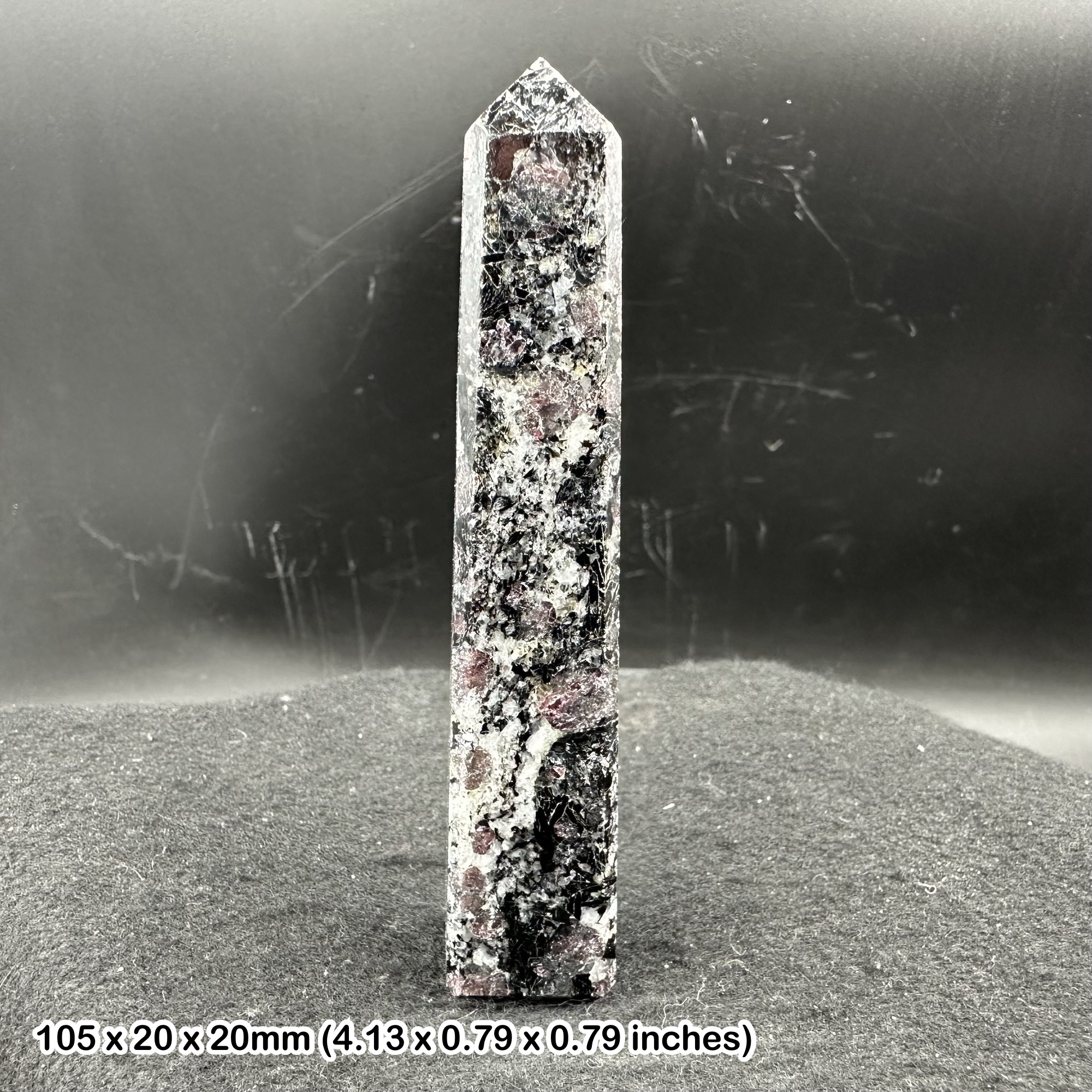
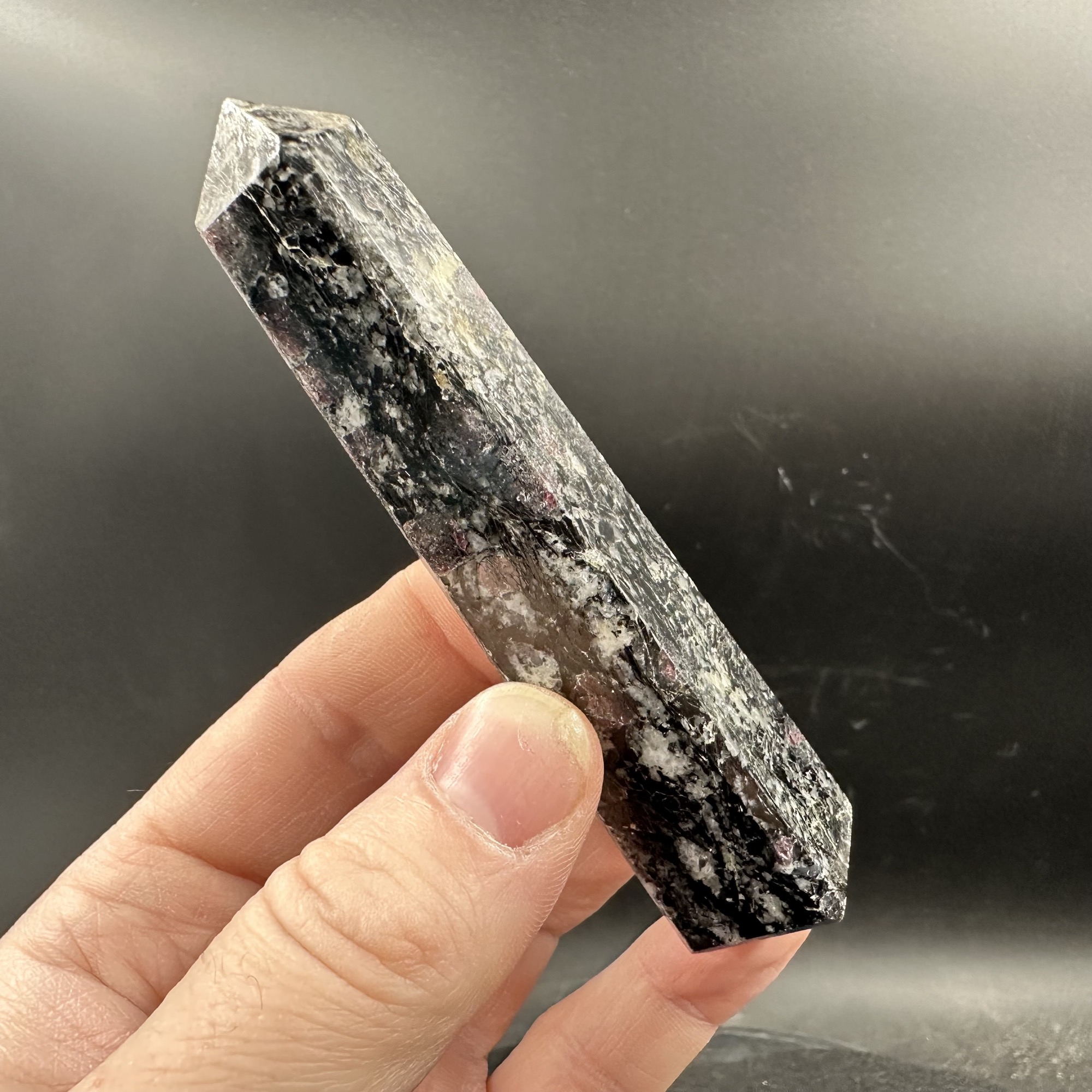
This listing features a natural Garnet in Black Tourmaline tower sourced from Madagascar, carefully shaped into a polished crystal point that highlights the striking contrast between deep black tourmaline and embedded garnet crystals. The specimen has been selected for its natural mineral features and polished to form a symmetrical tower shape suitable for display or collecting. The exact crystal shown in the photographs is the piece you will receive, ensuring complete transparency regarding colour, inclusions, and surface characteristics. Each specimen is supplied with a Certificate of Authenticity lifetime guarantee card, confirming that the stone is a genuine natural mineral specimen. Please refer to the photographs for accurate sizing and proportions, as they provide the best representation of the specimen. MINERAL SPECIES AND GEOLOGICAL COMPOSITION This specimen consists primarily of Black Tourmaline, also known as Schorl, with naturally embedded Garnet crystals. Tourmaline belongs to a complex group of boron silicate minerals, and black tourmaline (schorl) has the chemical formula NaFe₃Al₆(BO₃)₃Si₆O₁₈(OH)₄. Tourmaline crystallises in the trigonal crystal system and commonly forms elongated prismatic crystals with strong vertical striations along the crystal faces. In this specimen, the tourmaline matrix provides a dark backdrop that highlights the presence of garnet inclusions. The garnets present in these specimens are most commonly Almandine garnet, an iron-rich member of the garnet group with the chemical formula Fe₃Al₂(SiO₄)₃. Garnet belongs to the isometric crystal system, meaning its crystals typically form dodecahedral or trapezohedral shapes. COLOUR, TEXTURE AND VISUAL CHARACTERISTICS Black Tourmaline is recognised for its deep black colour and vitreous to sub-metallic lustre. When polished into tower form, the mineral reveals subtle natural textures and internal mineral contrasts within the stone. The embedded garnet crystals often appear as deep red to reddish-brown inclusions, sometimes displaying rounded or geometric crystal shapes depending on how they formed within the host mineral. These contrasting colours create a visually distinctive mineral specimen. Natural mineral textures, inclusions, and colour variations are normal and are evidence of authentic geological formation rather than manufactured material. GEOLOGICAL FORMATION AND MADAGASCAR DEPOSITS Garnet in black tourmaline commonly forms in metamorphic and pegmatitic geological environments, where mineral-rich fluids circulate through rocks under high pressure and temperature conditions. Madagascar is one of the world’s most important sources of diverse mineral specimens due to its complex geological history and rich pegmatite deposits. These geological formations contain a wide range of minerals, including tourmaline, garnet, quartz, feldspar, and beryl. In pegmatitic environments, tourmaline crystals often develop in cavities or mineral veins where boron-rich fluids interact with surrounding rock. Garnet crystals can form within the same geological environment, becoming embedded within the growing tourmaline matrix over long geological timescales. The result is a natural mineral combination where deep red garnet crystals appear suspended within black tourmaline, creating a visually striking specimen. TOWER CUT AND LAPIDARY CRAFTSMANSHIP The tower shape, also known as a crystal point or obelisk, is created through careful lapidary work that polishes the stone into a symmetrical vertical form. This shaping highlights the internal mineral contrasts while preserving the natural features of the specimen. The polished surfaces allow the natural structure of the tourmaline and garnet inclusions to be viewed clearly from multiple angles. Towers are popular display shapes because their vertical geometry allows the stone to stand upright in mineral displays, shelves, or cabinets. The craftsmanship involved in shaping a mineral tower requires careful cutting and polishing to maintain balance and symmetry while preserving the integrity of the stone. TRADITIONAL AND CULTURAL ASSOCIATIONS Tourmaline and garnet have both appeared in historical decorative objects, jewellery, and ornamental stones across many cultures. In modern spiritual traditions, black tourmaline and garnet are sometimes traditionally associated with grounding symbolism and vitality imagery. These associations vary between cultures and belief systems and are shared as historical or spiritual traditions rather than scientific interpretations. MINERAL COLLECTING AND DISPLAY APPEAL Specimens combining garnet crystals within black tourmaline are highly appreciated among mineral collectors, crystal enthusiasts, geology students, and gemstone collectors due to the natural contrast between the minerals. The polished tower format makes the specimen suitable for display in mineral cabinets, decorative interiors, educational geology collections, or gemstone displays. Madagascar specimens are particularly sought after due to the island’s reputation for producing visually distinctive mineral combinations. Because each crystal forms naturally over long geological periods, every specimen displays unique patterns, inclusions, and colour contrasts. AUTHENTIC SPECIMEN AND CERTIFICATE This Garnet in Black Tourmaline tower is a genuine natural mineral specimen and includes a Certificate of Authenticity lifetime guarantee card confirming its authenticity. The photographs show the exact crystal you will receive, allowing you to see the natural garnet inclusions, polished surfaces, and mineral textures before purchase. Sourced from Madagascar and shaped into a display tower, this specimen presents a striking example of two naturally occurring minerals formed together within the Earth’s crust.
This listing features a natural Garnet in Black Tourmaline tower sourced from Madagascar, carefully shaped into a polished crystal point that highlights the striking contrast between deep black tourmaline and embedded garnet crystals. The specimen has been selected for its natural mineral features and polished to form a symmetrical tower shape suitable for display or collecting. The exact crystal shown in the photographs is the piece you will receive, ensuring complete transparency regarding colour, inclusions, and surface characteristics. Each specimen is supplied with a Certificate of Authenticity lifetime guarantee card, confirming that the stone is a genuine natural mineral specimen. Please refer to the photographs for accurate sizing and proportions, as they provide the best representation of the specimen. MINERAL SPECIES AND GEOLOGICAL COMPOSITION This specimen consists primarily of Black Tourmaline, also known as Schorl, with naturally embedded Garnet crystals. Tourmaline belongs to a complex group of boron silicate minerals, and black tourmaline (schorl) has the chemical formula NaFe₃Al₆(BO₃)₃Si₆O₁₈(OH)₄. Tourmaline crystallises in the trigonal crystal system and commonly forms elongated prismatic crystals with strong vertical striations along the crystal faces. In this specimen, the tourmaline matrix provides a dark backdrop that highlights the presence of garnet inclusions. The garnets present in these specimens are most commonly Almandine garnet, an iron-rich member of the garnet group with the chemical formula Fe₃Al₂(SiO₄)₃. Garnet belongs to the isometric crystal system, meaning its crystals typically form dodecahedral or trapezohedral shapes. COLOUR, TEXTURE AND VISUAL CHARACTERISTICS Black Tourmaline is recognised for its deep black colour and vitreous to sub-metallic lustre. When polished into tower form, the mineral reveals subtle natural textures and internal mineral contrasts within the stone. The embedded garnet crystals often appear as deep red to reddish-brown inclusions, sometimes displaying rounded or geometric crystal shapes depending on how they formed within the host mineral. These contrasting colours create a visually distinctive mineral specimen. Natural mineral textures, inclusions, and colour variations are normal and are evidence of authentic geological formation rather than manufactured material. GEOLOGICAL FORMATION AND MADAGASCAR DEPOSITS Garnet in black tourmaline commonly forms in metamorphic and pegmatitic geological environments, where mineral-rich fluids circulate through rocks under high pressure and temperature conditions. Madagascar is one of the world’s most important sources of diverse mineral specimens due to its complex geological history and rich pegmatite deposits. These geological formations contain a wide range of minerals, including tourmaline, garnet, quartz, feldspar, and beryl. In pegmatitic environments, tourmaline crystals often develop in cavities or mineral veins where boron-rich fluids interact with surrounding rock. Garnet crystals can form within the same geological environment, becoming embedded within the growing tourmaline matrix over long geological timescales. The result is a natural mineral combination where deep red garnet crystals appear suspended within black tourmaline, creating a visually striking specimen. TOWER CUT AND LAPIDARY CRAFTSMANSHIP The tower shape, also known as a crystal point or obelisk, is created through careful lapidary work that polishes the stone into a symmetrical vertical form. This shaping highlights the internal mineral contrasts while preserving the natural features of the specimen. The polished surfaces allow the natural structure of the tourmaline and garnet inclusions to be viewed clearly from multiple angles. Towers are popular display shapes because their vertical geometry allows the stone to stand upright in mineral displays, shelves, or cabinets. The craftsmanship involved in shaping a mineral tower requires careful cutting and polishing to maintain balance and symmetry while preserving the integrity of the stone. TRADITIONAL AND CULTURAL ASSOCIATIONS Tourmaline and garnet have both appeared in historical decorative objects, jewellery, and ornamental stones across many cultures. In modern spiritual traditions, black tourmaline and garnet are sometimes traditionally associated with grounding symbolism and vitality imagery. These associations vary between cultures and belief systems and are shared as historical or spiritual traditions rather than scientific interpretations. MINERAL COLLECTING AND DISPLAY APPEAL Specimens combining garnet crystals within black tourmaline are highly appreciated among mineral collectors, crystal enthusiasts, geology students, and gemstone collectors due to the natural contrast between the minerals. The polished tower format makes the specimen suitable for display in mineral cabinets, decorative interiors, educational geology collections, or gemstone displays. Madagascar specimens are particularly sought after due to the island’s reputation for producing visually distinctive mineral combinations. Because each crystal forms naturally over long geological periods, every specimen displays unique patterns, inclusions, and colour contrasts. AUTHENTIC SPECIMEN AND CERTIFICATE This Garnet in Black Tourmaline tower is a genuine natural mineral specimen and includes a Certificate of Authenticity lifetime guarantee card confirming its authenticity. The photographs show the exact crystal you will receive, allowing you to see the natural garnet inclusions, polished surfaces, and mineral textures before purchase. Sourced from Madagascar and shaped into a display tower, this specimen presents a striking example of two naturally occurring minerals formed together within the Earth’s crust.