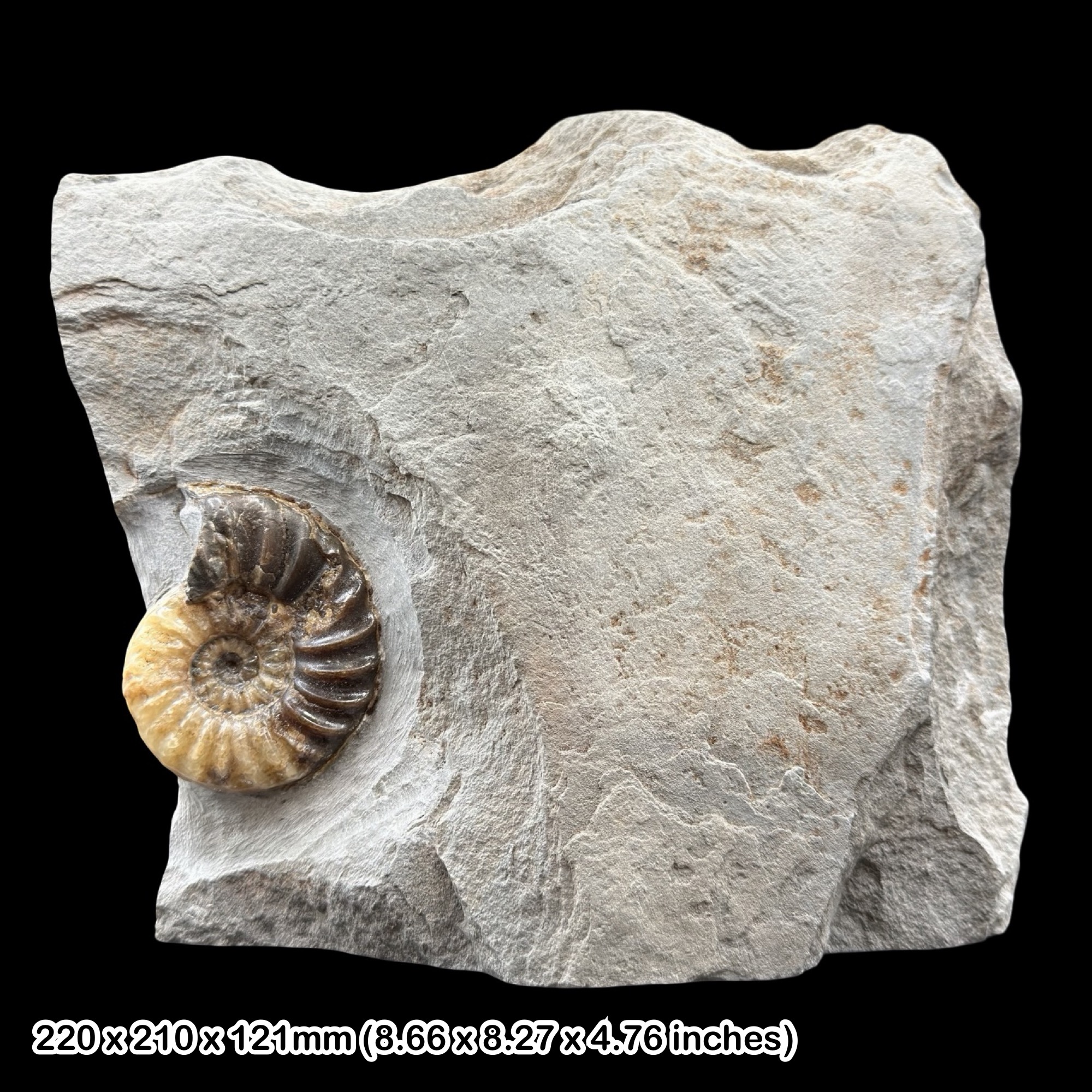
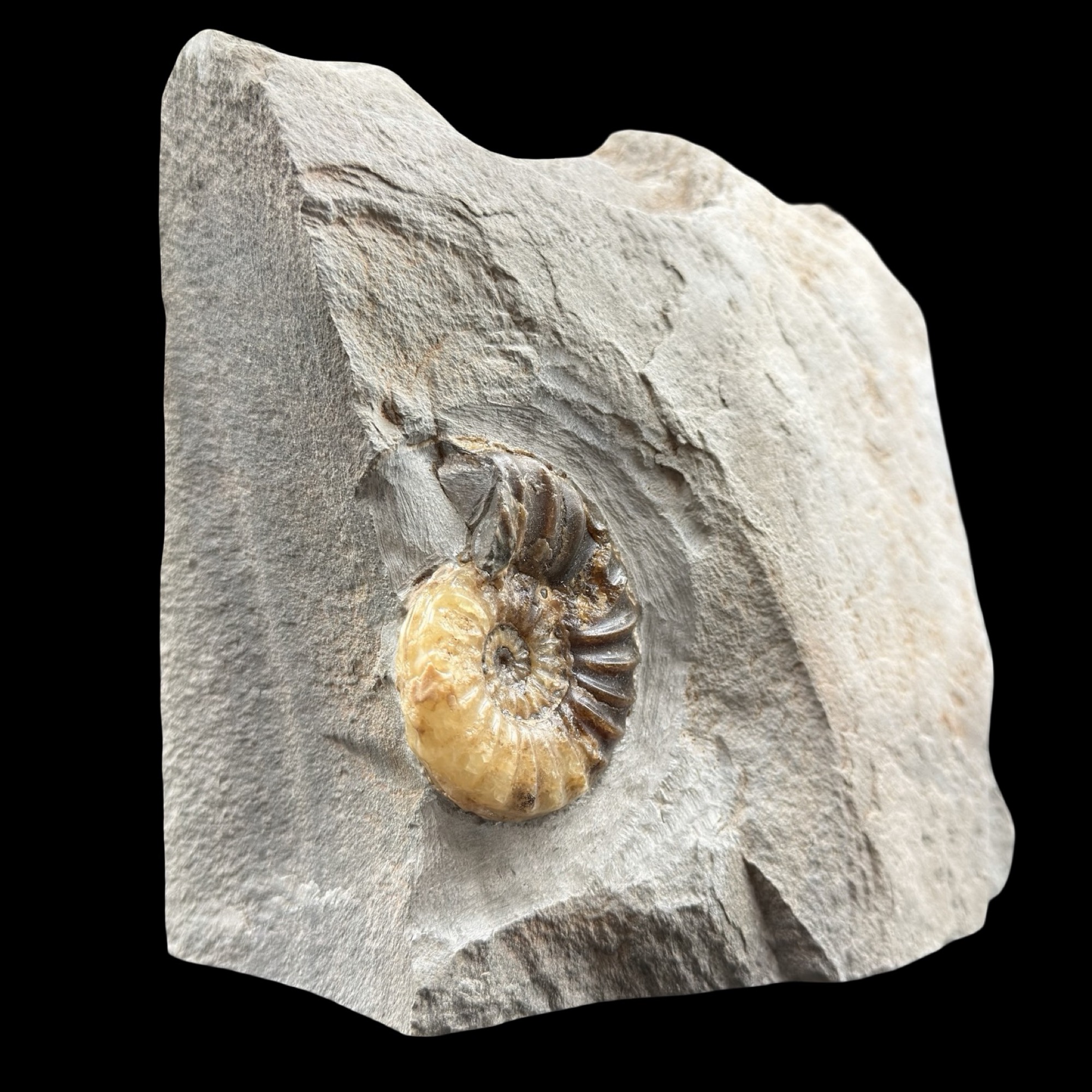
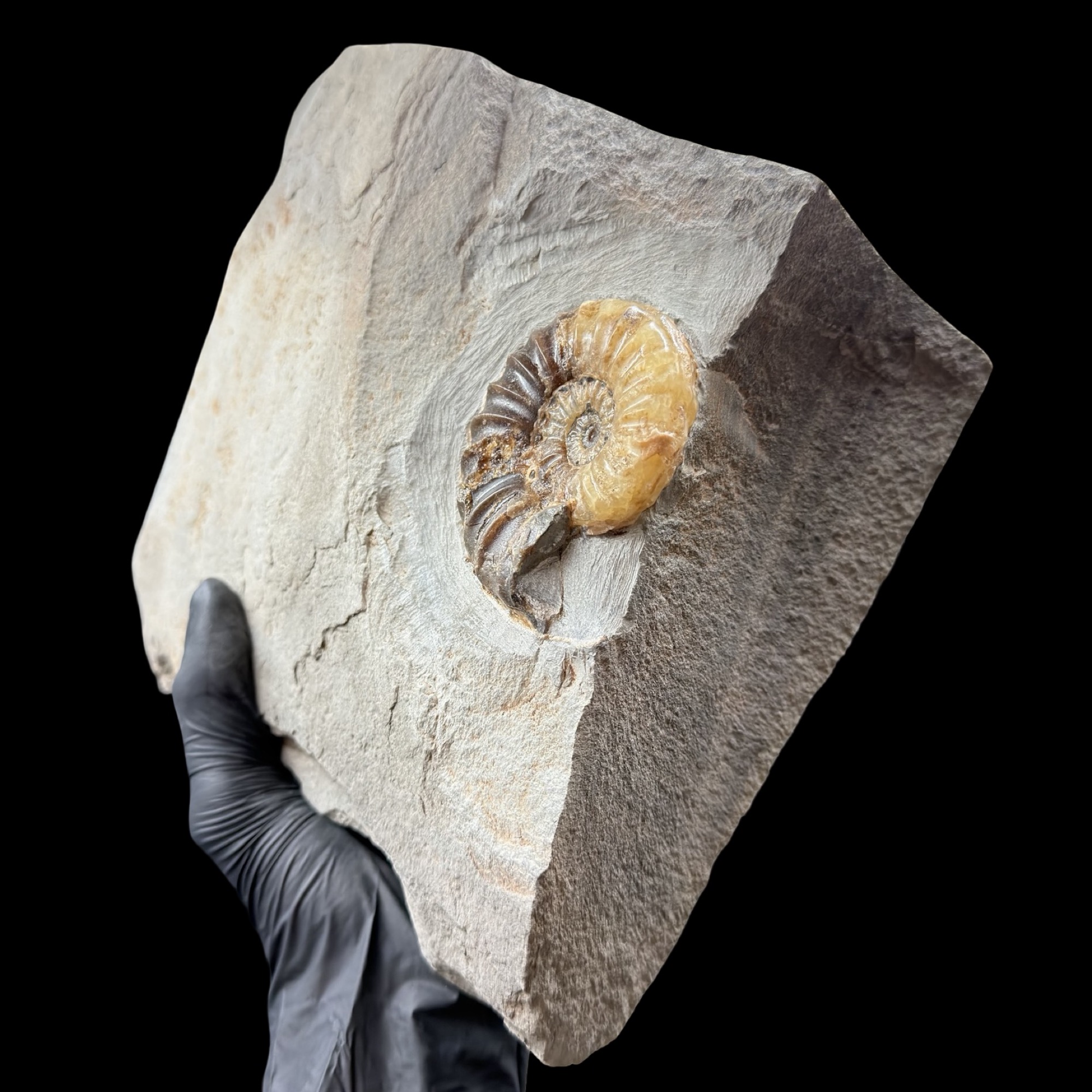
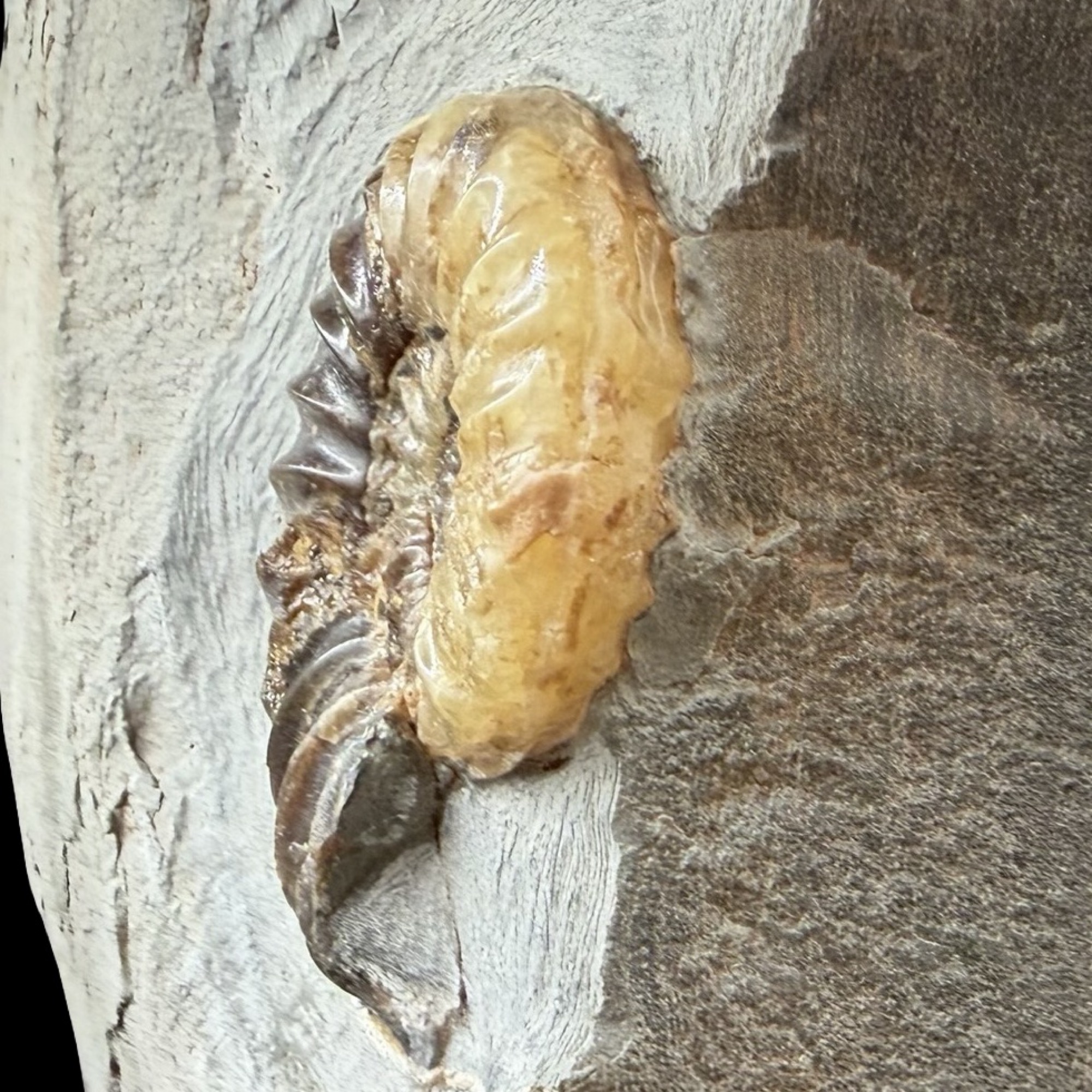
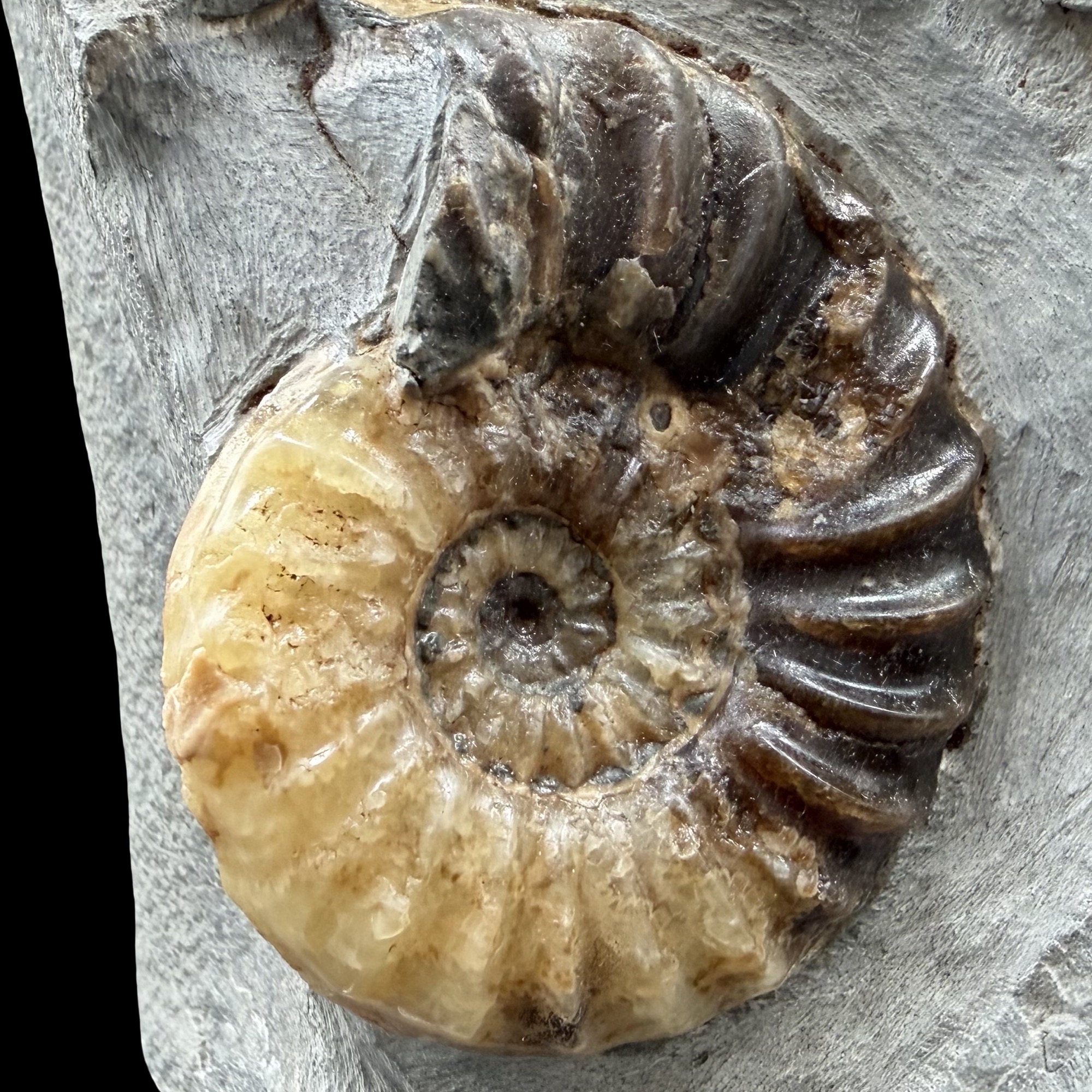
Asteroceras obtusum Ammonite Fossil Lower Lias Charmouth Dorset UK COA Specimen Black Ven Marls Jurassic Coast Genuine
£ 150.00
Genuine Asteroceras obtusum Ammonite Fossil from Charmouth, DorsetThis Asteroceras obtusum ammonite fossil is a genuine Jurassic Coast specimen
from the Black Ven Marls of the Lower Lias at Stonebarrow Cliff, Charmouth, Dorset, UK. It is a carefully chosen fossil with strong scientific, educational and display appeal, representing one of the classic Lower Jurassic ammonites associated with the Charmouth and Lyme Regis coastline.The photograph shows the actual specimen you will receive, making this a unique individual fossil rather than a stock image. For full sizing and visible condition, please see the listing photo.Species and Scientific InterestAsteroceras obtusum is an important Lower Jurassic ammonite species and is especially well known from the Sinemurian Stage of the Early Jurassic. Ammonites were extinct marine cephalopods related to modern squid, cuttlefish and nautilus, but they lived inside coiled shells divided into internal chambers. These chambers helped regulate buoyancy, allowing the animal to move through the water column in ancient seas.Asteroceras is recognised for its robust, coiled shell form, typically with rounded whorls and ribbing that can vary from strong and distinct to more subdued depending on preservation. The species name obtusum refers to the relatively blunt or rounded character of the shell form. Fossils of this genus are highly collectible because they are associated with one of the most famous ammonite-bearing intervals in Britain.Asteroceras obtusum is closely linked with the Obtusum Zone, a well-known ammonite biozone within the Lower Jurassic. Ammonite zones are especially valuable in palaeontology because ammonites evolved quickly and were widely distributed in ancient seas, making them excellent index fossils for dating rock layers and comparing geological sequences.Geology, Age and LocalityThis fossil comes from the Black Ven Marls, part of the Lower Lias sequence exposed along the Jurassic Coast of Dorset. The Lower Lias was deposited during the Early Jurassic, when the area that is now southern England lay beneath warm, shallow to moderately deep marine waters. Fine muds, silts and calcareous sediments accumulated on the sea floor, preserving ammonites, belemnites, bivalves, marine reptile remains and other fossils.Stonebarrow Cliff, near Charmouth, is one of the most famous fossil collecting areas on the Jurassic Coast. The cliffs and foreshore are internationally recognised for their Lower Jurassic fossils, particularly ammonites from the Blue Lias and Charmouth Mudstone successions. Fossils from this coastline are valued by collectors, educators and natural history enthusiasts for their link to one of Britain’s most important geological landscapes.Preparation and AuthenticityYour specimen was discovered by our own team members, Alister and Alison, and has been cleaned, prepped and treated by Alison. This preparation helps present the fossil clearly while preserving its genuine natural character.This fossil is a genuine specimen and includes a Certificate of Authenticity lifetime guarantee generic card. It has been selected as an authentic fossil from the Jurassic Coast and is supplied exactly as shown in the listing photograph.Display, Collecting and Educational ValueThis Asteroceras obtusum ammonite is ideal for fossil collectors, natural history displays, educational collections, geology enthusiasts and anyone interested in British Jurassic fossils. Its combination of scientific interest, classic locality and genuine Lower Lias origin makes it a desirable specimen from one of the UK’s most famous fossil coastlines.As a fossil from Stonebarrow Cliff, Charmouth, Dorset, this piece offers a direct connection to the ancient Jurassic seas that once covered the region. It would make an excellent display fossil, teaching specimen, collector’s item or natural history gift, especially for those interested in ammonites, cephalopods, biostratigraphy, the Lower Jurassic and the world-renowned Jurassic Coast.
from the Black Ven Marls of the Lower Lias at Stonebarrow Cliff, Charmouth, Dorset, UK. It is a carefully chosen fossil with strong scientific, educational and display appeal, representing one of the classic Lower Jurassic ammonites associated with the Charmouth and Lyme Regis coastline.The photograph shows the actual specimen you will receive, making this a unique individual fossil rather than a stock image. For full sizing and visible condition, please see the listing photo.Species and Scientific InterestAsteroceras obtusum is an important Lower Jurassic ammonite species and is especially well known from the Sinemurian Stage of the Early Jurassic. Ammonites were extinct marine cephalopods related to modern squid, cuttlefish and nautilus, but they lived inside coiled shells divided into internal chambers. These chambers helped regulate buoyancy, allowing the animal to move through the water column in ancient seas.Asteroceras is recognised for its robust, coiled shell form, typically with rounded whorls and ribbing that can vary from strong and distinct to more subdued depending on preservation. The species name obtusum refers to the relatively blunt or rounded character of the shell form. Fossils of this genus are highly collectible because they are associated with one of the most famous ammonite-bearing intervals in Britain.Asteroceras obtusum is closely linked with the Obtusum Zone, a well-known ammonite biozone within the Lower Jurassic. Ammonite zones are especially valuable in palaeontology because ammonites evolved quickly and were widely distributed in ancient seas, making them excellent index fossils for dating rock layers and comparing geological sequences.Geology, Age and LocalityThis fossil comes from the Black Ven Marls, part of the Lower Lias sequence exposed along the Jurassic Coast of Dorset. The Lower Lias was deposited during the Early Jurassic, when the area that is now southern England lay beneath warm, shallow to moderately deep marine waters. Fine muds, silts and calcareous sediments accumulated on the sea floor, preserving ammonites, belemnites, bivalves, marine reptile remains and other fossils.Stonebarrow Cliff, near Charmouth, is one of the most famous fossil collecting areas on the Jurassic Coast. The cliffs and foreshore are internationally recognised for their Lower Jurassic fossils, particularly ammonites from the Blue Lias and Charmouth Mudstone successions. Fossils from this coastline are valued by collectors, educators and natural history enthusiasts for their link to one of Britain’s most important geological landscapes.Preparation and AuthenticityYour specimen was discovered by our own team members, Alister and Alison, and has been cleaned, prepped and treated by Alison. This preparation helps present the fossil clearly while preserving its genuine natural character.This fossil is a genuine specimen and includes a Certificate of Authenticity lifetime guarantee generic card. It has been selected as an authentic fossil from the Jurassic Coast and is supplied exactly as shown in the listing photograph.Display, Collecting and Educational ValueThis Asteroceras obtusum ammonite is ideal for fossil collectors, natural history displays, educational collections, geology enthusiasts and anyone interested in British Jurassic fossils. Its combination of scientific interest, classic locality and genuine Lower Lias origin makes it a desirable specimen from one of the UK’s most famous fossil coastlines.As a fossil from Stonebarrow Cliff, Charmouth, Dorset, this piece offers a direct connection to the ancient Jurassic seas that once covered the region. It would make an excellent display fossil, teaching specimen, collector’s item or natural history gift, especially for those interested in ammonites, cephalopods, biostratigraphy, the Lower Jurassic and the world-renowned Jurassic Coast.
Other Products