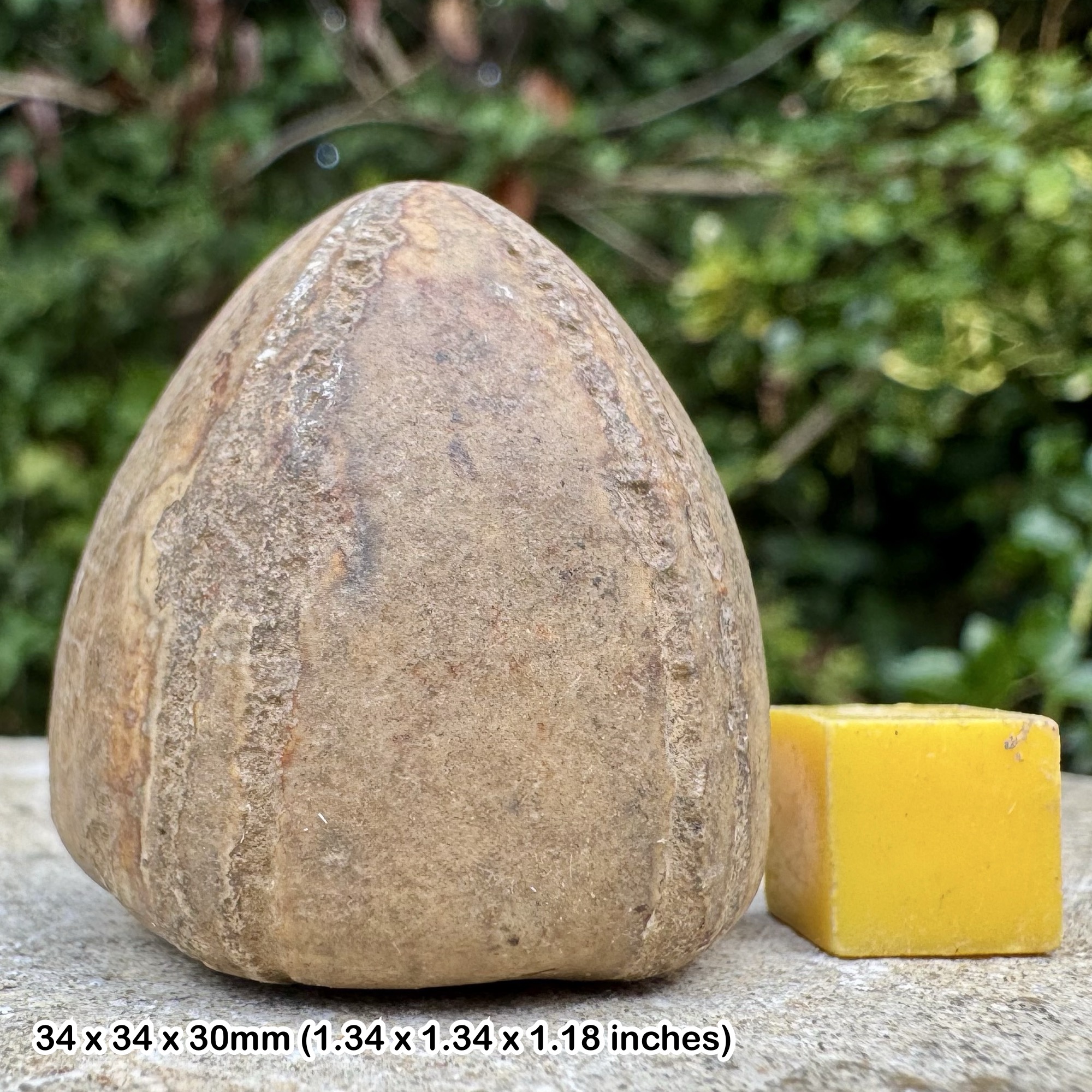
RARE Conulus subrotundus Fossil Sea Urchin in Flint - Cretaceous Chalk - Glyde Quarry, Sussex, England | COA
£ 36.00
This listing features a RARE Fossil Chalk Echinoid – Conulus subrotundus
preserved in flint, collected from the famous Cretaceous chalk deposits of Glyde Quarry, Sussex, England. A highly sought-after fossil, this specimen showcases the exceptional preservation and geological story of the English chalk seas.This is a 100% genuine fossil, professionally curated and backed by a Certificate of Authenticity. The actual fossil shown is the one you will receive. Please refer to the photo with the 1cm scale cube for full sizing.FOSSIL OVERVIEW:
• Species: Conulus subrotundus (Lamarck, 1816)
• Common Name: Chalk Sea Urchin / Fossil Echinoid
• Geological Period: Late Cretaceous
• Stage: Likely Middle to Upper Cenomanian (~100–94 million years ago)
• Formation: Upper Chalk (likely part of the Seaford or New Pit Chalk Formation)
• Location: Glyde Quarry, Sussex, England, UK
• Preservation Type: Silicified fossil in flint noduleGEOLOGICAL & DEPOSITIONAL ENVIRONMENT:Glyde Quarry is part of the famous South Downs chalk landscape, formed in the Late Cretaceous within a warm, shallow epicontinental sea that once covered much of Europe. The chalk is composed mainly of microscopic calcareous algae (coccoliths), forming a fine, pure limestone ideal for fossil preservation.Over millions of years, silica-rich fluids percolated through these chalk beds, replacing calcium carbonate in fossils like echinoids and forming flint nodules. As a result, this specimen is beautifully preserved in durable flint, often revealing sharper external features than those in chalk matrix.TAXONOMY & CLASSIFICATION:
• Phylum: Echinodermata
• Class: Echinoidea
• Order: Echinoneoida
• Superfamily: Conulidea
• Family: Conulidae
• Genus: Conulus
• Species: Conulus subrotundus (formally described by Jean-Baptiste Lamarck in 1816)MORPHOLOGICAL FEATURES:Conulus subrotundus is identified by:
• A symmetrical, sub-rounded, slightly heart-shaped test
• Smooth surface with minimal ornamentation
• Broad, domed upper side and a gently concave base
• Shallow, faintly petaloid ambulacra
• Anteriorly positioned mouth (peristome) and posterior anal opening (periproct)Its body shape suggests a semi-infaunal lifestyle, partially buried in soft seabed sediments while feeding on organic particles.NOTABLE FEATURES:
• Rare flint preservation from a key locality in the English chalk
• Fossil originally described by renowned naturalist Jean-Baptiste Lamarck in 1816
• Excellent condition and clarity due to silicification
• Ideal for collectors, educational display, or scientific reference Why Buy From Us?
• All fossils are 100% genuine, ethically sourced
• Includes a Certificate of Authenticity
• The exact fossil shown is what you’ll receive
• Secure packaging and fast, tracked dispatchThis Conulus subrotundus fossil in flint from Glyde Quarry is a beautiful and scientifically important piece from the Cretaceous chalk seas of Sussex. A rare opportunity to own a genuine sea urchin fossil with exceptional preservation and provenance.
preserved in flint, collected from the famous Cretaceous chalk deposits of Glyde Quarry, Sussex, England. A highly sought-after fossil, this specimen showcases the exceptional preservation and geological story of the English chalk seas.This is a 100% genuine fossil, professionally curated and backed by a Certificate of Authenticity. The actual fossil shown is the one you will receive. Please refer to the photo with the 1cm scale cube for full sizing.FOSSIL OVERVIEW:
• Species: Conulus subrotundus (Lamarck, 1816)
• Common Name: Chalk Sea Urchin / Fossil Echinoid
• Geological Period: Late Cretaceous
• Stage: Likely Middle to Upper Cenomanian (~100–94 million years ago)
• Formation: Upper Chalk (likely part of the Seaford or New Pit Chalk Formation)
• Location: Glyde Quarry, Sussex, England, UK
• Preservation Type: Silicified fossil in flint noduleGEOLOGICAL & DEPOSITIONAL ENVIRONMENT:Glyde Quarry is part of the famous South Downs chalk landscape, formed in the Late Cretaceous within a warm, shallow epicontinental sea that once covered much of Europe. The chalk is composed mainly of microscopic calcareous algae (coccoliths), forming a fine, pure limestone ideal for fossil preservation.Over millions of years, silica-rich fluids percolated through these chalk beds, replacing calcium carbonate in fossils like echinoids and forming flint nodules. As a result, this specimen is beautifully preserved in durable flint, often revealing sharper external features than those in chalk matrix.TAXONOMY & CLASSIFICATION:
• Phylum: Echinodermata
• Class: Echinoidea
• Order: Echinoneoida
• Superfamily: Conulidea
• Family: Conulidae
• Genus: Conulus
• Species: Conulus subrotundus (formally described by Jean-Baptiste Lamarck in 1816)MORPHOLOGICAL FEATURES:Conulus subrotundus is identified by:
• A symmetrical, sub-rounded, slightly heart-shaped test
• Smooth surface with minimal ornamentation
• Broad, domed upper side and a gently concave base
• Shallow, faintly petaloid ambulacra
• Anteriorly positioned mouth (peristome) and posterior anal opening (periproct)Its body shape suggests a semi-infaunal lifestyle, partially buried in soft seabed sediments while feeding on organic particles.NOTABLE FEATURES:
• Rare flint preservation from a key locality in the English chalk
• Fossil originally described by renowned naturalist Jean-Baptiste Lamarck in 1816
• Excellent condition and clarity due to silicification
• Ideal for collectors, educational display, or scientific reference Why Buy From Us?
• All fossils are 100% genuine, ethically sourced
• Includes a Certificate of Authenticity
• The exact fossil shown is what you’ll receive
• Secure packaging and fast, tracked dispatchThis Conulus subrotundus fossil in flint from Glyde Quarry is a beautiful and scientifically important piece from the Cretaceous chalk seas of Sussex. A rare opportunity to own a genuine sea urchin fossil with exceptional preservation and provenance.
Other Products