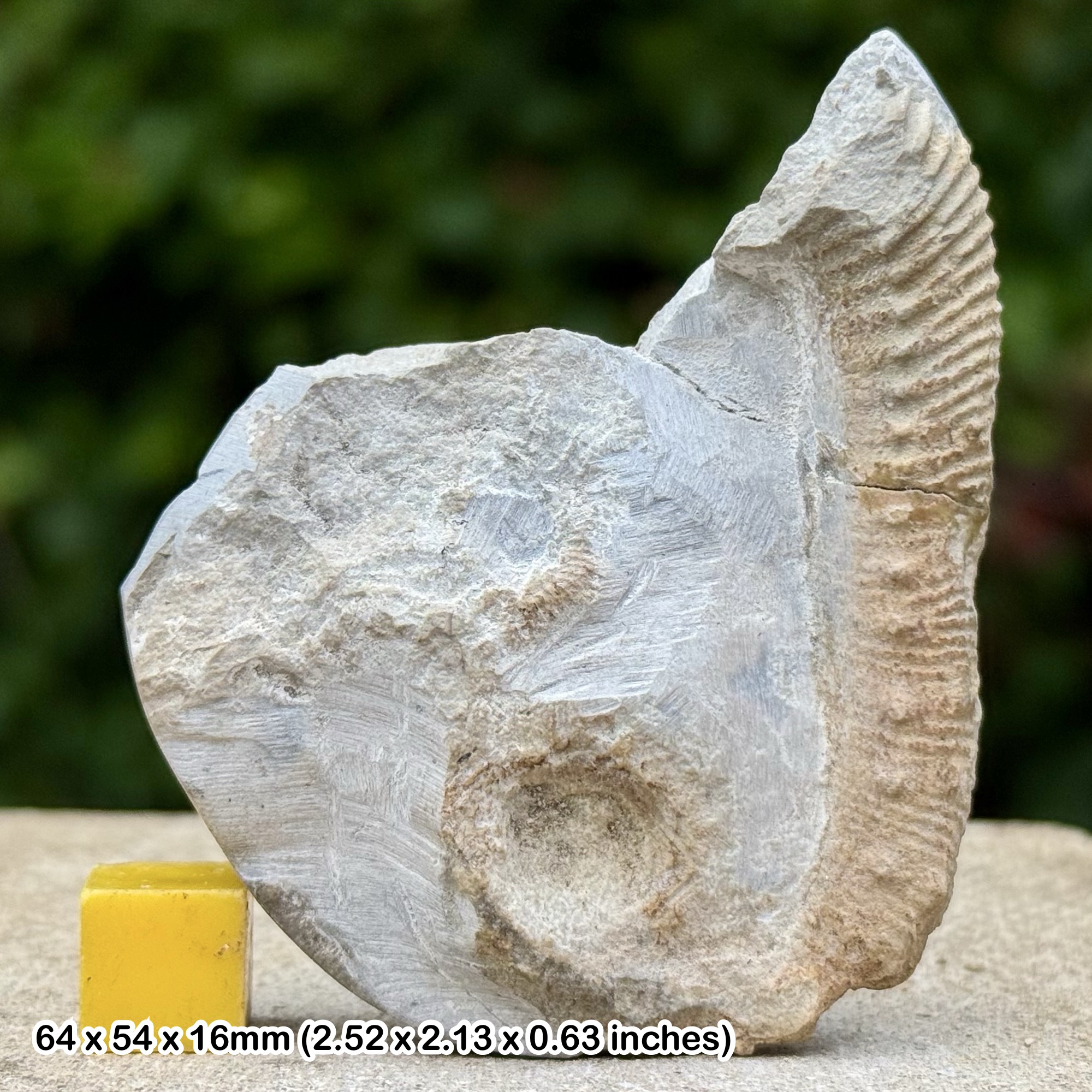
Rare Ancycloceras lineatum Heteromorph Ammonite Fossil Upper Barremian Cretaceous Thorene Alps Maritime France
£ 36.00
GEOLOGICAL CONTEXT AND PROVENANCEThis exceptional specimen is a genuine Ancycloceras lineatum heteromorph
ammonite fossil from the Upper Barremian Stage of the Early Cretaceous Period, dating to approximately 125 million years ago. It originates from Thorene, Alpes-Maritimes, France, a locality celebrated for its fossil-rich deposits from the Early Cretaceous. These marine strata formed along the margins of the Tethys Ocean, preserving ammonites and other marine fauna in remarkable detail.The Barremian Stage is a pivotal part of the Early Cretaceous, known for the diversification of ammonites and the emergence of unusual heteromorph forms. Fossils from Thorene are highly sought after for their preservation and their contribution to biostratigraphic frameworks. FOSSIL TYPE AND SPECIES INFORMATIONAncycloceras lineatum is part of the Order Ammonitida, Superfamily Ancyloceratoidea, and Family Ancyloceratidae. Unlike the classic planispiral ammonites, heteromorphs like Ancycloceras developed uncoiled or irregular shell morphologies, which make them distinctive and visually striking.The genus Ancycloceras is especially significant for its unusual growth pattern. Rather than maintaining a coiled shell, it developed a partially straightened or hooked form, giving rise to its name (“curved horn”). The species lineatum is well recognised within this group, characterised by its ornamented ribbing and linear shell segments. MORPHOLOGICAL FEATURES AND IDENTIFICATIONThis fossil displays the characteristic heteromorph features of Ancycloceras lineatum. The shell departs from the traditional coiled form, instead presenting a partly straightened and irregularly curved structure. Prominent ribs run along the shell, with strong ornamentation that provides both strength and aesthetic appeal.The ribs often bifurcate and are spaced in a rhythmic pattern, enhancing the visual detail of the specimen. Such morphology not only aids in identification but also reflects evolutionary experimentation within ammonites during the Barremian.The unusual uncoiled form is thought to have influenced the lifestyle of heteromorph ammonites. While planispiral ammonites were streamlined swimmers, heteromorphs like Ancycloceras may have drifted more passively within the water column, feeding opportunistically on plankton and small invertebrates. DEPOSITIONAL ENVIRONMENTDuring the Upper Barremian, the Thorene region of the Alpes-Maritimes was part of a shallow tropical sea connected to the Tethys Ocean. Sedimentation here produced limestones and marls that preserved marine fauna with exceptional fidelity.The ecosystem supported a wide array of organisms, including ammonites, belemnites, gastropods, bivalves, echinoids, and large marine reptiles. Heteromorph ammonites such as Ancycloceras lineatum added to the ecological diversity, their unique morphology reflecting an evolutionary strategy distinct from their tightly coiled relatives. COLLECTOR APPEAL AND AUTHENTICITYThis Ancycloceras lineatum heteromorph ammonite fossil is both scientifically important and visually captivating. Its unusual shell shape, strong ribbing, and provenance from the Thorene locality make it a rare and highly desirable specimen.
• 100% Genuine Specimen – Supplied with a Certificate of Authenticity.
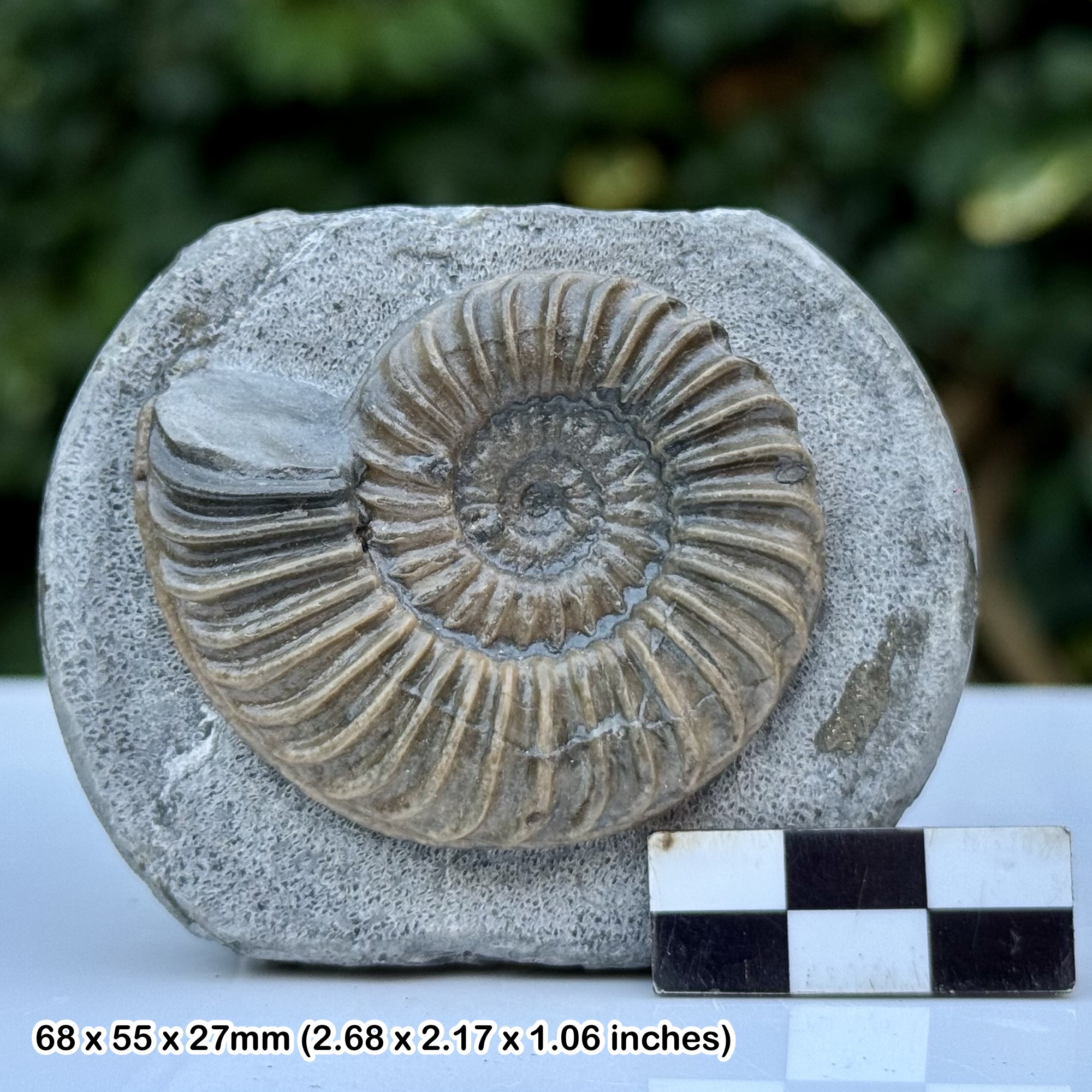
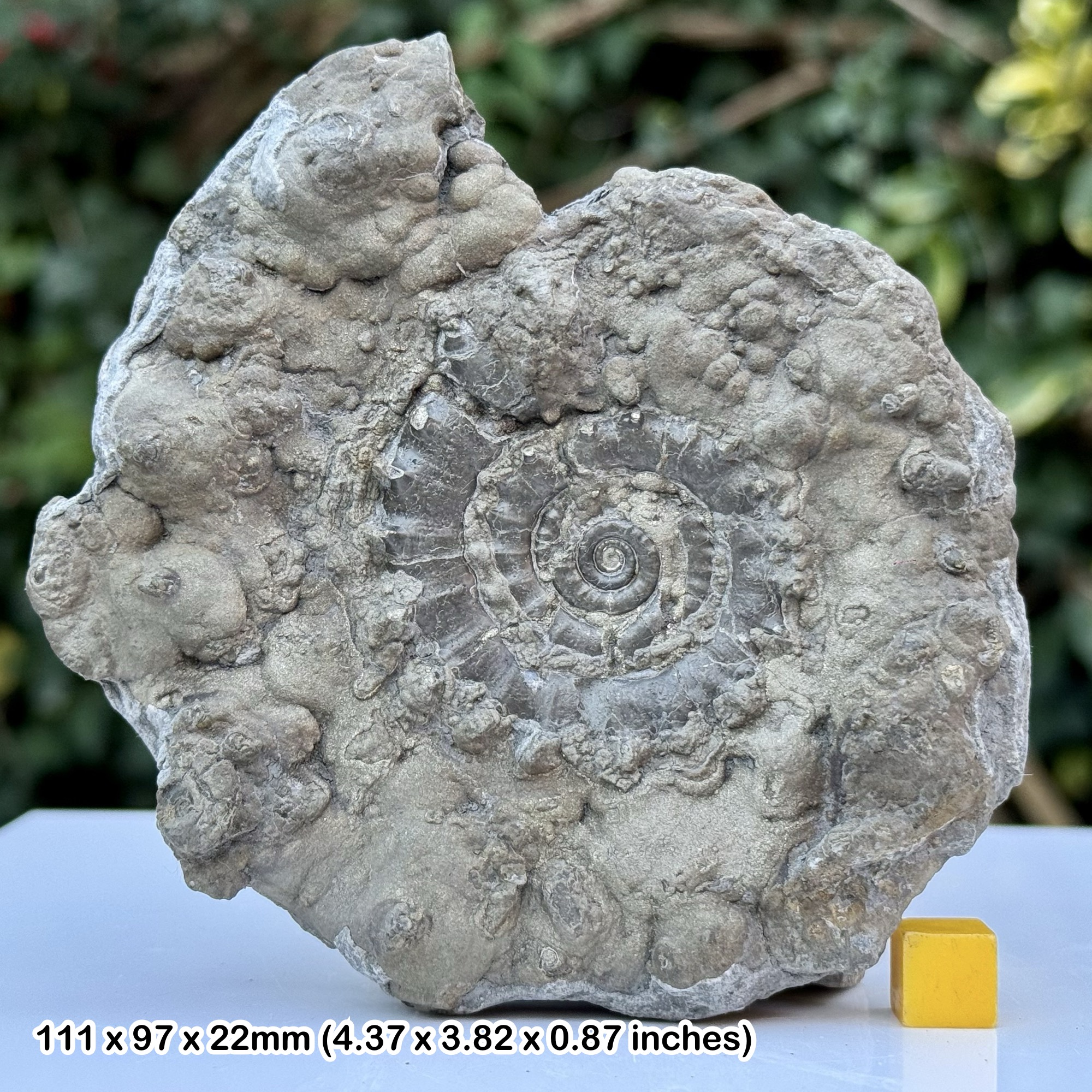
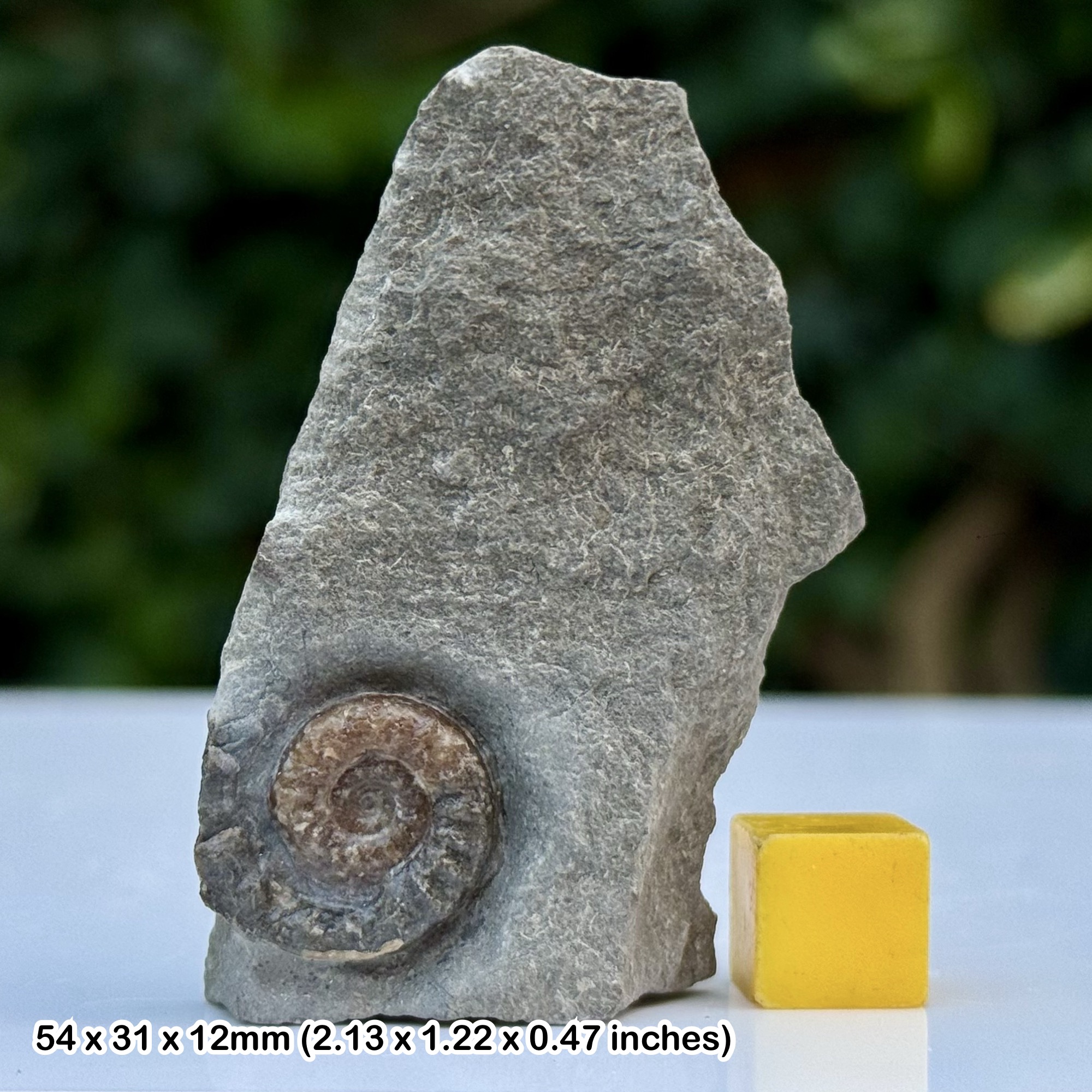
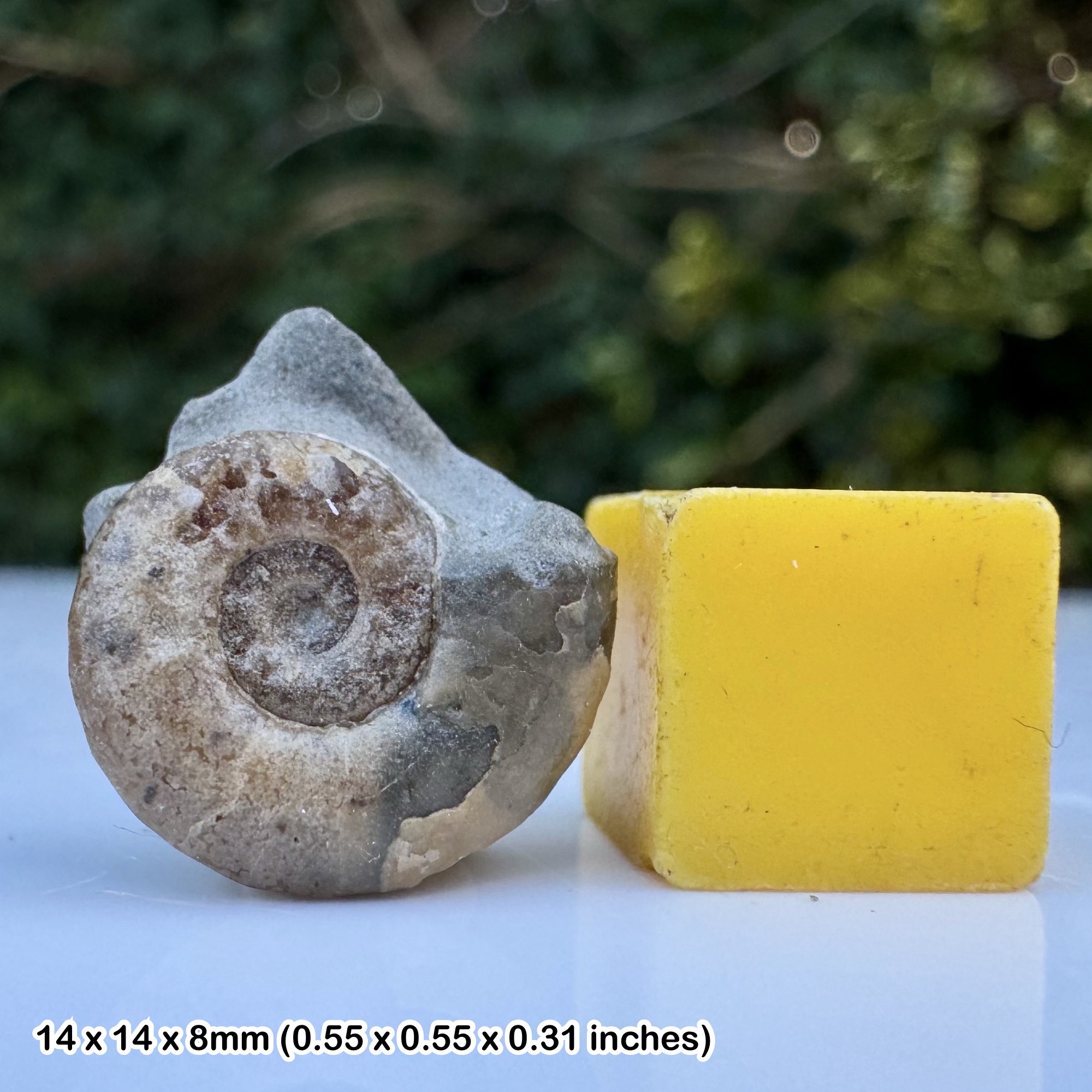
• Exact Fossil Shown – The photographs represent the actual ammonite you will receive.
• Scale Reference – Scale rule squares / cube = 1 cm. Please consult images for full sizing.This carefully chosen Ancycloceras lineatum ammonite fossil represents a fascinating evolutionary branch of the ammonites. With its rarity, distinctive heteromorph form, and scientific significance, it makes an exceptional addition to any fossil collection or natural history display.
ammonite fossil from the Upper Barremian Stage of the Early Cretaceous Period, dating to approximately 125 million years ago. It originates from Thorene, Alpes-Maritimes, France, a locality celebrated for its fossil-rich deposits from the Early Cretaceous. These marine strata formed along the margins of the Tethys Ocean, preserving ammonites and other marine fauna in remarkable detail.The Barremian Stage is a pivotal part of the Early Cretaceous, known for the diversification of ammonites and the emergence of unusual heteromorph forms. Fossils from Thorene are highly sought after for their preservation and their contribution to biostratigraphic frameworks. FOSSIL TYPE AND SPECIES INFORMATIONAncycloceras lineatum is part of the Order Ammonitida, Superfamily Ancyloceratoidea, and Family Ancyloceratidae. Unlike the classic planispiral ammonites, heteromorphs like Ancycloceras developed uncoiled or irregular shell morphologies, which make them distinctive and visually striking.The genus Ancycloceras is especially significant for its unusual growth pattern. Rather than maintaining a coiled shell, it developed a partially straightened or hooked form, giving rise to its name (“curved horn”). The species lineatum is well recognised within this group, characterised by its ornamented ribbing and linear shell segments. MORPHOLOGICAL FEATURES AND IDENTIFICATIONThis fossil displays the characteristic heteromorph features of Ancycloceras lineatum. The shell departs from the traditional coiled form, instead presenting a partly straightened and irregularly curved structure. Prominent ribs run along the shell, with strong ornamentation that provides both strength and aesthetic appeal.The ribs often bifurcate and are spaced in a rhythmic pattern, enhancing the visual detail of the specimen. Such morphology not only aids in identification but also reflects evolutionary experimentation within ammonites during the Barremian.The unusual uncoiled form is thought to have influenced the lifestyle of heteromorph ammonites. While planispiral ammonites were streamlined swimmers, heteromorphs like Ancycloceras may have drifted more passively within the water column, feeding opportunistically on plankton and small invertebrates. DEPOSITIONAL ENVIRONMENTDuring the Upper Barremian, the Thorene region of the Alpes-Maritimes was part of a shallow tropical sea connected to the Tethys Ocean. Sedimentation here produced limestones and marls that preserved marine fauna with exceptional fidelity.The ecosystem supported a wide array of organisms, including ammonites, belemnites, gastropods, bivalves, echinoids, and large marine reptiles. Heteromorph ammonites such as Ancycloceras lineatum added to the ecological diversity, their unique morphology reflecting an evolutionary strategy distinct from their tightly coiled relatives. COLLECTOR APPEAL AND AUTHENTICITYThis Ancycloceras lineatum heteromorph ammonite fossil is both scientifically important and visually captivating. Its unusual shell shape, strong ribbing, and provenance from the Thorene locality make it a rare and highly desirable specimen.
• 100% Genuine Specimen – Supplied with a Certificate of Authenticity.
• Exact Fossil Shown – The photographs represent the actual ammonite you will receive.
• Scale Reference – Scale rule squares / cube = 1 cm. Please consult images for full sizing.This carefully chosen Ancycloceras lineatum ammonite fossil represents a fascinating evolutionary branch of the ammonites. With its rarity, distinctive heteromorph form, and scientific significance, it makes an exceptional addition to any fossil collection or natural history display.
Other Products