Sodalite Crystal Point Natural Blue Sodalite Tower Polished Mineral Specimen
£ 36.00
Natural Sodalite Crystal Point – Polished Blue Sodalite Tower Mineral SpecimenThis attractive Sodalite crystal point is a polished mineral specimen showcasing
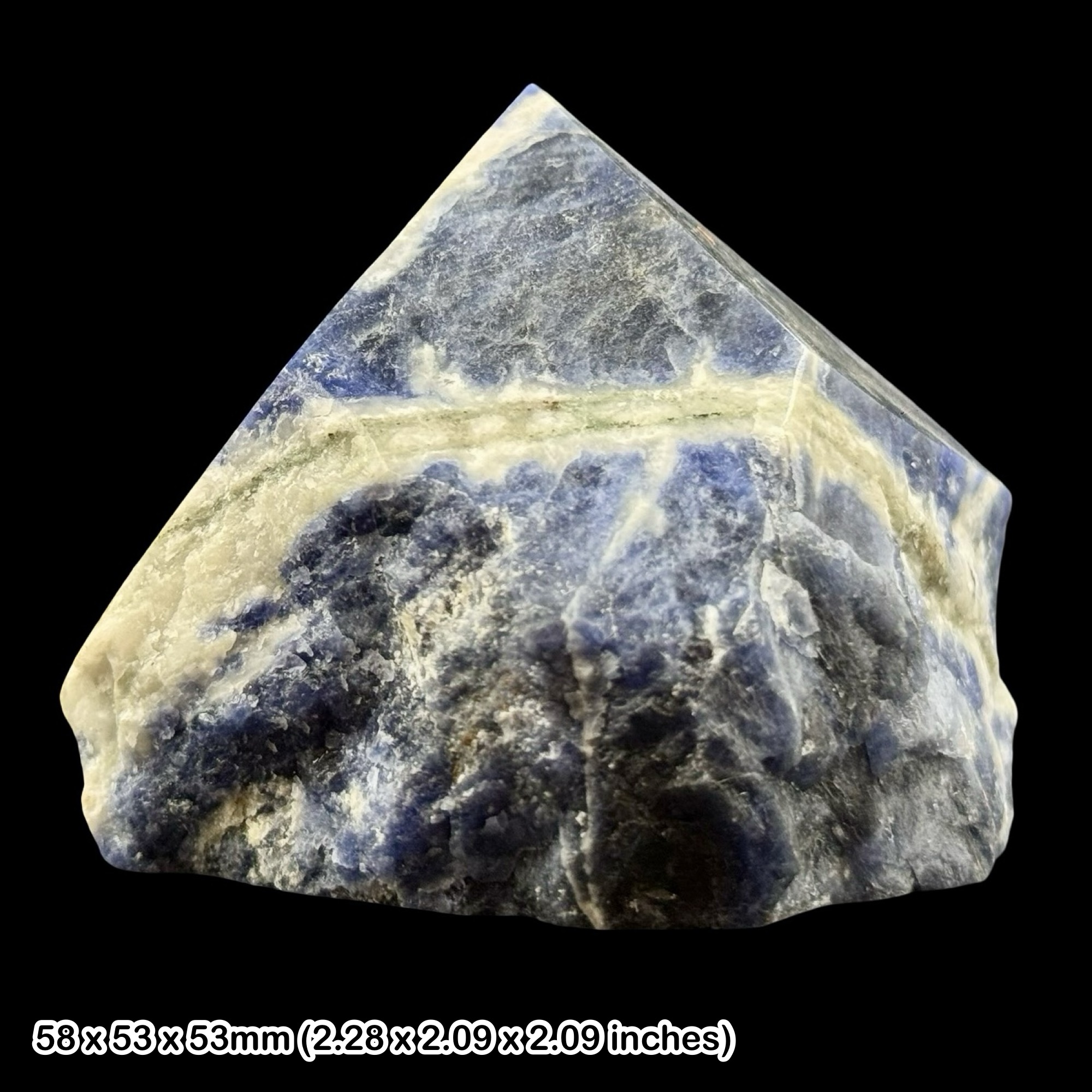
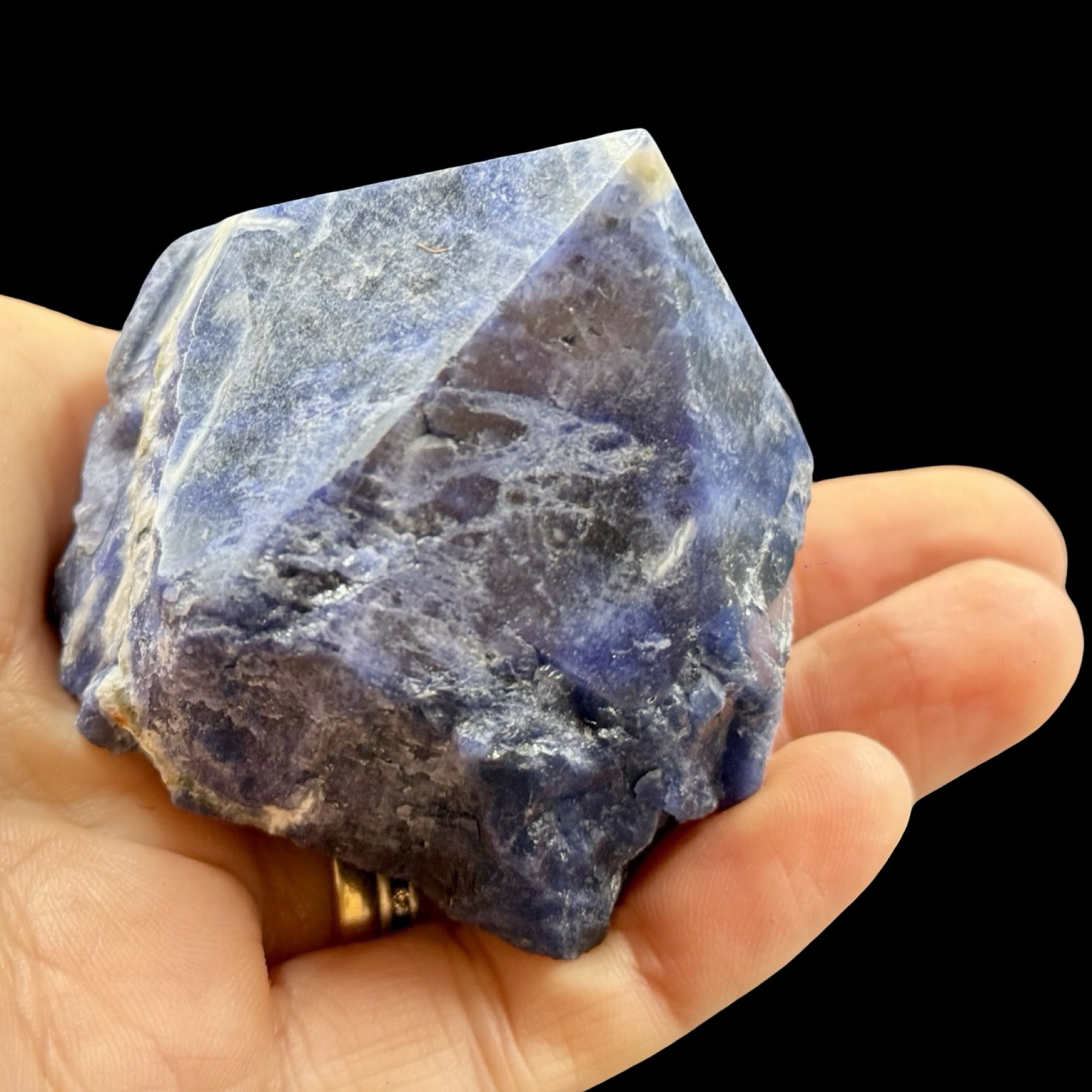
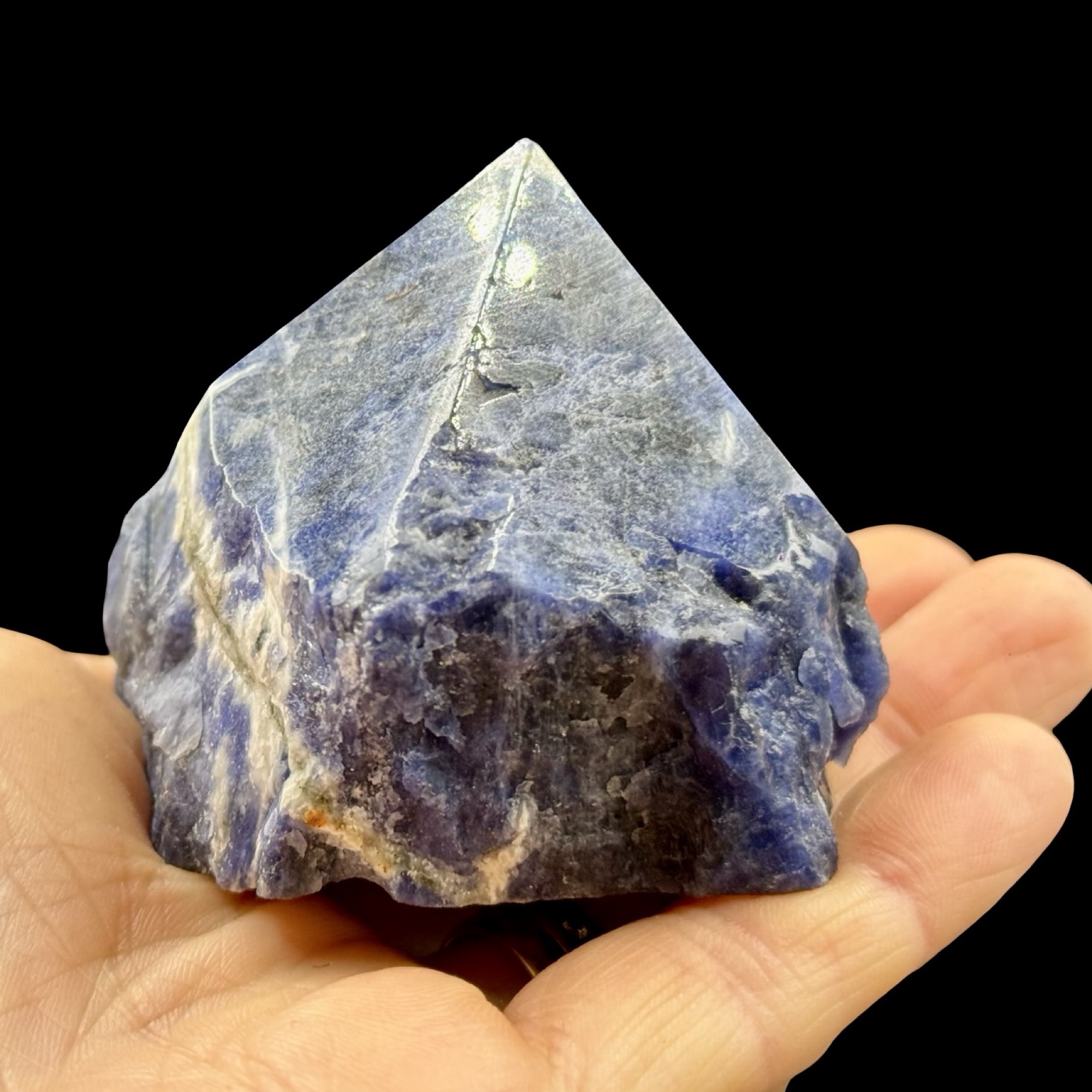
the deep blue tones and contrasting white mineral patterns that make sodalite one of the most recognisable decorative stones in the mineral world. Shaped into a tower-style point, this piece displays the natural colour variations and geological structure of sodalite in a form that highlights the stone from multiple angles.The photographs included in this listing show the exact specimen you will receive, allowing collectors and enthusiasts to clearly see the unique mineral patterns and colour distribution present in this individual crystal. This piece is a genuine mineral specimen and includes a Certificate of Authenticity lifetime guarantee generic card, confirming its authenticity.Sodalite points are popular display pieces for mineral collectors, geology enthusiasts, decorative stone displays, and gift ideas for those interested in natural minerals.Mineralogy and Crystal Classification of SodaliteSodalite is a tectosilicate mineral belonging to the feldspathoid mineral group, with the chemical composition Na₈(Al₆Si₆O₂₄)Cl₂. It forms within sodium-rich igneous environments and is characterised by its distinctive deep blue colour and mottled white veining.The mineral crystallises in the isometric crystal system, although it most commonly occurs in massive form rather than well-defined crystal shapes. Because of this massive structure, sodalite is often cut and polished into decorative shapes such as spheres, towers, carvings, and cabochons.Within its crystal lattice, sodalite contains a framework of interconnected aluminium and silicon tetrahedra that create cavities capable of hosting chloride ions. This unique structure contributes to the mineral’s physical properties and stability.Colour Variations and Visual CharacteristicsSodalite is well known for its bold blue colouring, often combined with contrasting mineral veins. Natural characteristics commonly observed in sodalite include:
• Deep royal blue to indigo colouration
• White calcite veining or patching
• Grey or pale blue mineral zones
• Opaque to slightly translucent structure
• Natural marbled or cloud-like patternsThe rich blue colour is produced by trace mineral elements and the specific crystal chemistry of sodalite. White areas within the stone are often caused by calcite inclusions, which formed during the rock’s geological development.Because sodalite forms naturally within igneous rock environments, each specimen displays its own unique pattern, making every crystal point visually distinctive.Geological Formation of SodaliteSodalite forms in silica-poor alkaline igneous rocks, particularly within rock types such as nepheline syenite and other sodium-rich magmatic formations. These geological conditions favour the formation of feldspathoid minerals rather than quartz.During the cooling of magma, sodium, aluminium, silicon, and chlorine combine to form sodalite crystals within the host rock. The mineral often occurs alongside other minerals associated with alkaline igneous environments, including:
• Nepheline
• Feldspar
• Cancrinite
• Calcite
• HackmaniteHackmanite, a closely related sodalite-group mineral, is known for exhibiting tenebrescence, where colour can change temporarily under ultraviolet light.Important sodalite deposits are located in several parts of the world, including:
• Canada
• Brazil
• Namibia
• Greenland
• RussiaThese regions produce sodalite specimens widely used in decorative mineral carvings and polished stone objects.Crystal Point Shape and Lapidary CraftsmanshipThis specimen has been shaped into a polished crystal point tower, a style commonly used for decorative mineral displays. The tower form features multiple polished faces that converge at a pointed tip, allowing the natural mineral patterns to be visible across the entire surface.The lapidary polishing process enhances the contrast between the deep blue sodalite and the white calcite inclusions, producing a smooth, reflective finish that highlights the stone’s natural patterns.The tower form also makes the specimen stable for display on desks, shelves, cabinets, or mineral collections.Traditional and Cultural AssociationsIn various cultural traditions and modern crystal practices, sodalite is sometimes traditionally associated with themes of insight, symbolism, and spiritual reflection. These interpretations are belief-based perspectives rather than scientifically established properties. Many collectors appreciate sodalite primarily for its geological structure and vibrant natural colour.Authenticity and Display Details
• Mineral Type: Sodalite
• Mineral Group: Feldspathoid tectosilicate
• Chemical Formula: Na₈(Al₆Si₆O₂₄)Cl₂
• Crystal System: Isometric
• Shape: Polished crystal point tower
• Colour: Deep blue with white calcite veining
• Authenticity: Genuine natural mineral specimen
• Includes: Certificate of Authenticity lifetime guarantee generic cardFull sizing can be seen in the listing photographs. The images show the exact sodalite crystal point you will receive, ensuring that collectors receive the precise specimen displayed.The combination of deep blue colouration, natural calcite veining, and polished tower form creates a visually striking mineral specimen that reflects both the geological origins of sodalite and the craftsmanship involved in shaping decorative crystal displays.
the deep blue tones and contrasting white mineral patterns that make sodalite one of the most recognisable decorative stones in the mineral world. Shaped into a tower-style point, this piece displays the natural colour variations and geological structure of sodalite in a form that highlights the stone from multiple angles.The photographs included in this listing show the exact specimen you will receive, allowing collectors and enthusiasts to clearly see the unique mineral patterns and colour distribution present in this individual crystal. This piece is a genuine mineral specimen and includes a Certificate of Authenticity lifetime guarantee generic card, confirming its authenticity.Sodalite points are popular display pieces for mineral collectors, geology enthusiasts, decorative stone displays, and gift ideas for those interested in natural minerals.Mineralogy and Crystal Classification of SodaliteSodalite is a tectosilicate mineral belonging to the feldspathoid mineral group, with the chemical composition Na₈(Al₆Si₆O₂₄)Cl₂. It forms within sodium-rich igneous environments and is characterised by its distinctive deep blue colour and mottled white veining.The mineral crystallises in the isometric crystal system, although it most commonly occurs in massive form rather than well-defined crystal shapes. Because of this massive structure, sodalite is often cut and polished into decorative shapes such as spheres, towers, carvings, and cabochons.Within its crystal lattice, sodalite contains a framework of interconnected aluminium and silicon tetrahedra that create cavities capable of hosting chloride ions. This unique structure contributes to the mineral’s physical properties and stability.Colour Variations and Visual CharacteristicsSodalite is well known for its bold blue colouring, often combined with contrasting mineral veins. Natural characteristics commonly observed in sodalite include:
• Deep royal blue to indigo colouration
• White calcite veining or patching
• Grey or pale blue mineral zones
• Opaque to slightly translucent structure
• Natural marbled or cloud-like patternsThe rich blue colour is produced by trace mineral elements and the specific crystal chemistry of sodalite. White areas within the stone are often caused by calcite inclusions, which formed during the rock’s geological development.Because sodalite forms naturally within igneous rock environments, each specimen displays its own unique pattern, making every crystal point visually distinctive.Geological Formation of SodaliteSodalite forms in silica-poor alkaline igneous rocks, particularly within rock types such as nepheline syenite and other sodium-rich magmatic formations. These geological conditions favour the formation of feldspathoid minerals rather than quartz.During the cooling of magma, sodium, aluminium, silicon, and chlorine combine to form sodalite crystals within the host rock. The mineral often occurs alongside other minerals associated with alkaline igneous environments, including:
• Nepheline
• Feldspar
• Cancrinite
• Calcite
• HackmaniteHackmanite, a closely related sodalite-group mineral, is known for exhibiting tenebrescence, where colour can change temporarily under ultraviolet light.Important sodalite deposits are located in several parts of the world, including:
• Canada
• Brazil
• Namibia
• Greenland
• RussiaThese regions produce sodalite specimens widely used in decorative mineral carvings and polished stone objects.Crystal Point Shape and Lapidary CraftsmanshipThis specimen has been shaped into a polished crystal point tower, a style commonly used for decorative mineral displays. The tower form features multiple polished faces that converge at a pointed tip, allowing the natural mineral patterns to be visible across the entire surface.The lapidary polishing process enhances the contrast between the deep blue sodalite and the white calcite inclusions, producing a smooth, reflective finish that highlights the stone’s natural patterns.The tower form also makes the specimen stable for display on desks, shelves, cabinets, or mineral collections.Traditional and Cultural AssociationsIn various cultural traditions and modern crystal practices, sodalite is sometimes traditionally associated with themes of insight, symbolism, and spiritual reflection. These interpretations are belief-based perspectives rather than scientifically established properties. Many collectors appreciate sodalite primarily for its geological structure and vibrant natural colour.Authenticity and Display Details
• Mineral Type: Sodalite
• Mineral Group: Feldspathoid tectosilicate
• Chemical Formula: Na₈(Al₆Si₆O₂₄)Cl₂
• Crystal System: Isometric
• Shape: Polished crystal point tower
• Colour: Deep blue with white calcite veining
• Authenticity: Genuine natural mineral specimen
• Includes: Certificate of Authenticity lifetime guarantee generic cardFull sizing can be seen in the listing photographs. The images show the exact sodalite crystal point you will receive, ensuring that collectors receive the precise specimen displayed.The combination of deep blue colouration, natural calcite veining, and polished tower form creates a visually striking mineral specimen that reflects both the geological origins of sodalite and the craftsmanship involved in shaping decorative crystal displays.
Other Products