Roman Dolphin Fibula Brooch 1st Century AD UK Ancient Bronze Clothing Fastener Artifact
£ 60.00
GENUINE ROMAN DOLPHIN FIBULA – 1ST CENTURY AD, UNITED KINGDOM
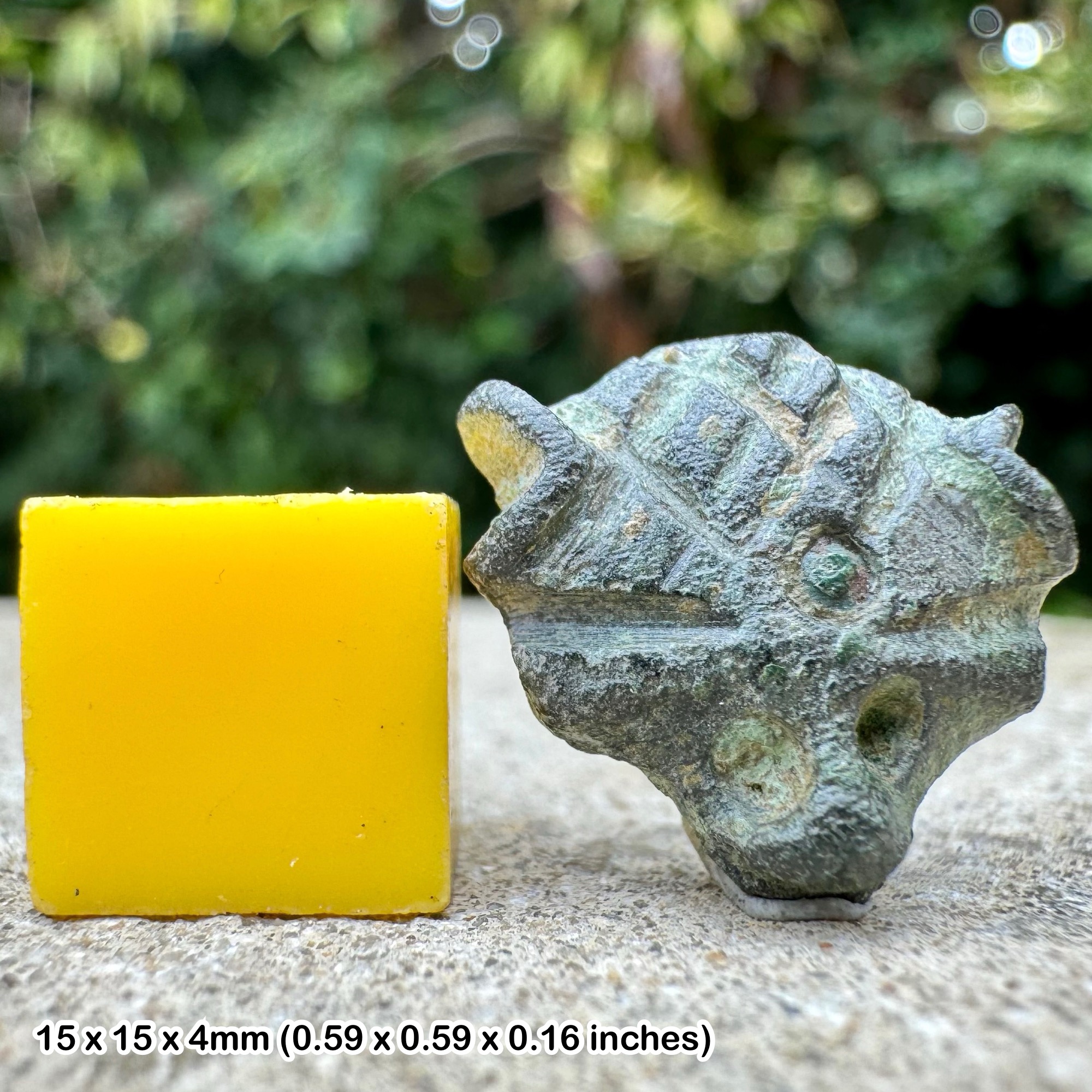
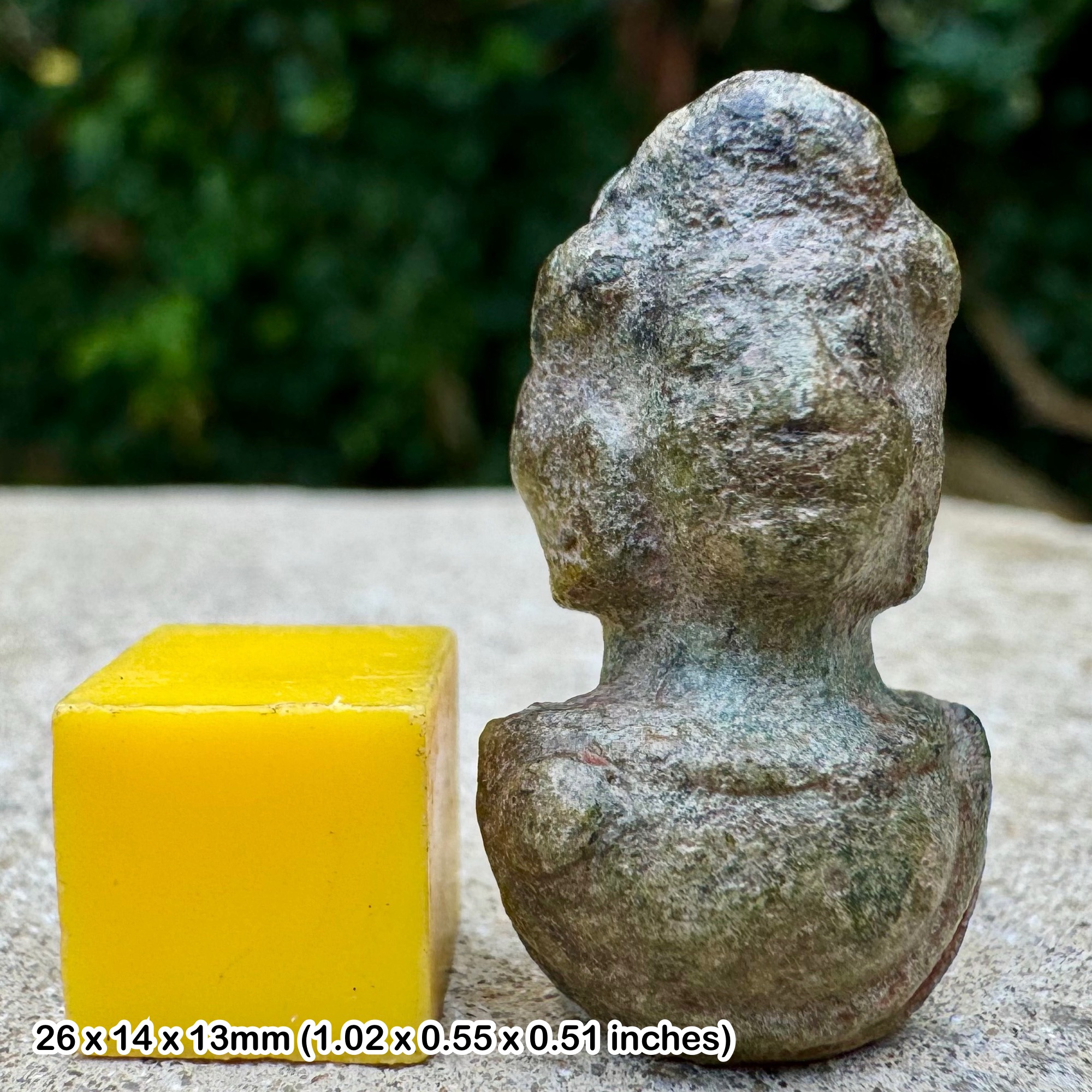
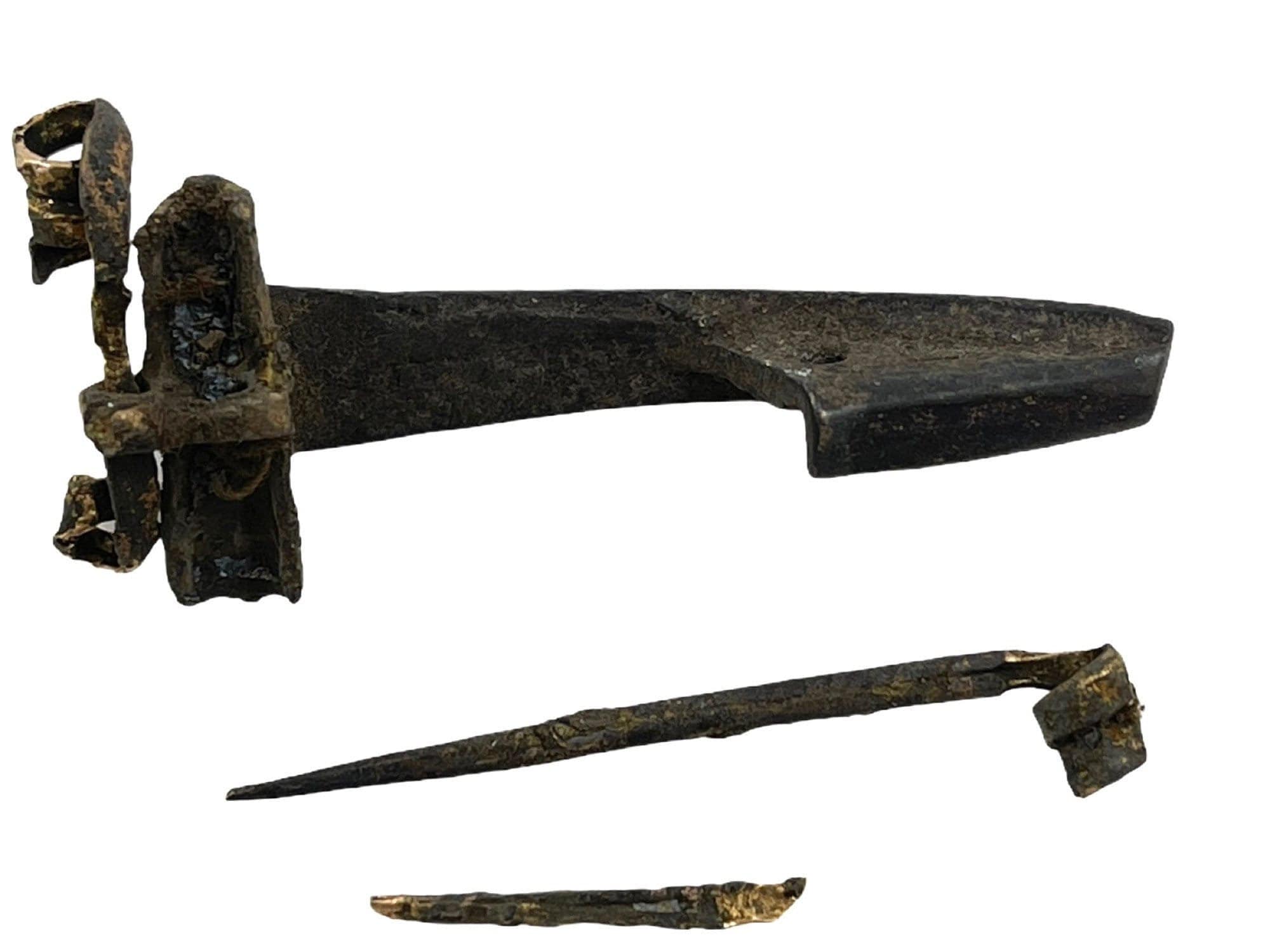
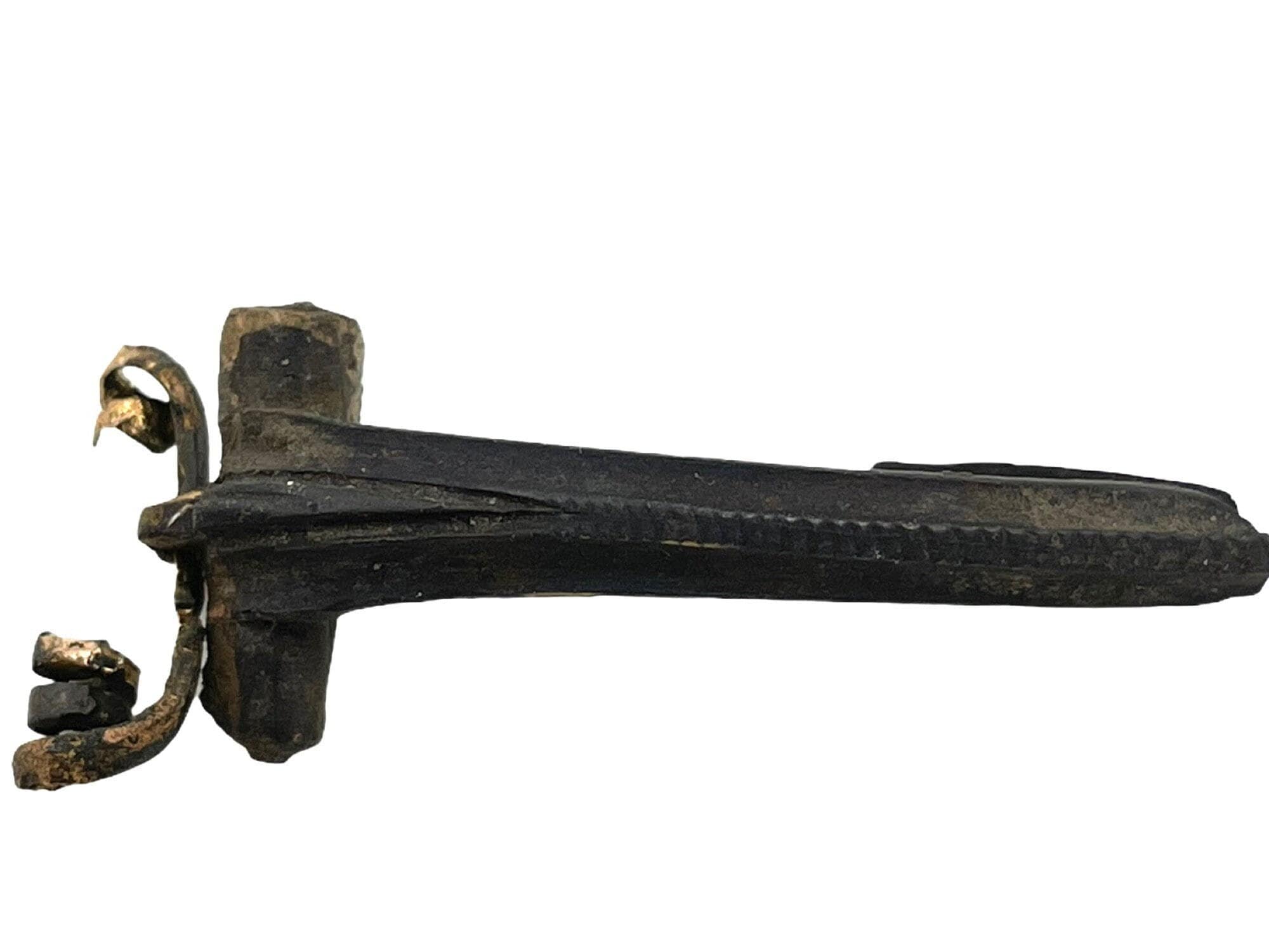
This authentic Roman dolphin fibula, dating to the 1st century AD, is a fine example of the brooch type widely used across the Roman Empire. Originating from the United Kingdom, it would have served as a practical clothing fastener while also acting as a decorative accessory, reflecting both the functionality and artistry of Roman metalwork. The “dolphin” designation refers to its distinctive curved profile, reminiscent of the graceful arc of a dolphin leaping through the water. Although the original pin is now broken, the remaining structure clearly displays the skilled craftsmanship of its maker. HISTORICAL AND CULTURAL SIGNIFICANCE Fibulae were essential items in Roman dress, functioning much like modern safety pins to secure cloaks, tunics, and other garments. The dolphin type, common during the early Roman occupation of Britain, was particularly popular in the 1st century AD. These brooches were often cast in bronze and could be plain or elaborately decorated, worn by both military personnel and civilians. This example would have been contemporary with the early stages of Romanisation in Britain, a period marked by the integration of Roman customs, architecture, and craftsmanship with local traditions. MATERIAL COMPOSITION AND METALLURGY The brooch is crafted from bronze, an alloy primarily composed of copper and tin, sometimes with trace amounts of lead to improve castability. Roman bronze artifacts often develop a natural patina over centuries of burial, caused by oxidation and interaction with surrounding soils. This patina can vary from deep green to brown, sometimes with subtle iridescence, and is prized by collectors for its aesthetic appeal and as evidence of long-term preservation. In this fibula, the surface exhibits stable patination that enhances its historical character while preserving details of its form and construction. MORPHOLOGY AND DESIGN FEATURES The dolphin fibula design features a semi-circular bow, tapering towards the foot, with a prominent curve that echoes the body of a dolphin in motion. The head would have housed the spring mechanism, from which the now-missing pin extended to clasp garments securely. The foot of the brooch is typically rounded or slightly knobbed, and in this example, retains its original shape despite the loss of the functional pin. This design was both strong and stylish, allowing it to serve as a practical tool and a subtle indicator of status. PROVENANCE, AUTHENTICATION, AND DIMENSIONS Recovered in the United Kingdom, this fibula represents the type of personal ornamentation used throughout Roman Britain. The accompanying Certificate of Authenticity guarantees that this is a 100% genuine ancient artifact. A scale cube of 1 cm is shown in the photographs for size reference, and complete measurements are provided in the product images. Each fibula in our collection is carefully selected for its historical significance, condition, and display appeal, ensuring that you receive a piece worthy of both scholarly interest and private collection. Owning a Roman dolphin fibula is a rare opportunity to connect directly with the daily life of the past—an object that once fastened the garments of someone living nearly two thousand years ago, now preserved for future generations to study and admire.
This authentic Roman dolphin fibula, dating to the 1st century AD, is a fine example of the brooch type widely used across the Roman Empire. Originating from the United Kingdom, it would have served as a practical clothing fastener while also acting as a decorative accessory, reflecting both the functionality and artistry of Roman metalwork. The “dolphin” designation refers to its distinctive curved profile, reminiscent of the graceful arc of a dolphin leaping through the water. Although the original pin is now broken, the remaining structure clearly displays the skilled craftsmanship of its maker. HISTORICAL AND CULTURAL SIGNIFICANCE Fibulae were essential items in Roman dress, functioning much like modern safety pins to secure cloaks, tunics, and other garments. The dolphin type, common during the early Roman occupation of Britain, was particularly popular in the 1st century AD. These brooches were often cast in bronze and could be plain or elaborately decorated, worn by both military personnel and civilians. This example would have been contemporary with the early stages of Romanisation in Britain, a period marked by the integration of Roman customs, architecture, and craftsmanship with local traditions. MATERIAL COMPOSITION AND METALLURGY The brooch is crafted from bronze, an alloy primarily composed of copper and tin, sometimes with trace amounts of lead to improve castability. Roman bronze artifacts often develop a natural patina over centuries of burial, caused by oxidation and interaction with surrounding soils. This patina can vary from deep green to brown, sometimes with subtle iridescence, and is prized by collectors for its aesthetic appeal and as evidence of long-term preservation. In this fibula, the surface exhibits stable patination that enhances its historical character while preserving details of its form and construction. MORPHOLOGY AND DESIGN FEATURES The dolphin fibula design features a semi-circular bow, tapering towards the foot, with a prominent curve that echoes the body of a dolphin in motion. The head would have housed the spring mechanism, from which the now-missing pin extended to clasp garments securely. The foot of the brooch is typically rounded or slightly knobbed, and in this example, retains its original shape despite the loss of the functional pin. This design was both strong and stylish, allowing it to serve as a practical tool and a subtle indicator of status. PROVENANCE, AUTHENTICATION, AND DIMENSIONS Recovered in the United Kingdom, this fibula represents the type of personal ornamentation used throughout Roman Britain. The accompanying Certificate of Authenticity guarantees that this is a 100% genuine ancient artifact. A scale cube of 1 cm is shown in the photographs for size reference, and complete measurements are provided in the product images. Each fibula in our collection is carefully selected for its historical significance, condition, and display appeal, ensuring that you receive a piece worthy of both scholarly interest and private collection. Owning a Roman dolphin fibula is a rare opportunity to connect directly with the daily life of the past—an object that once fastened the garments of someone living nearly two thousand years ago, now preserved for future generations to study and admire.
Other Products