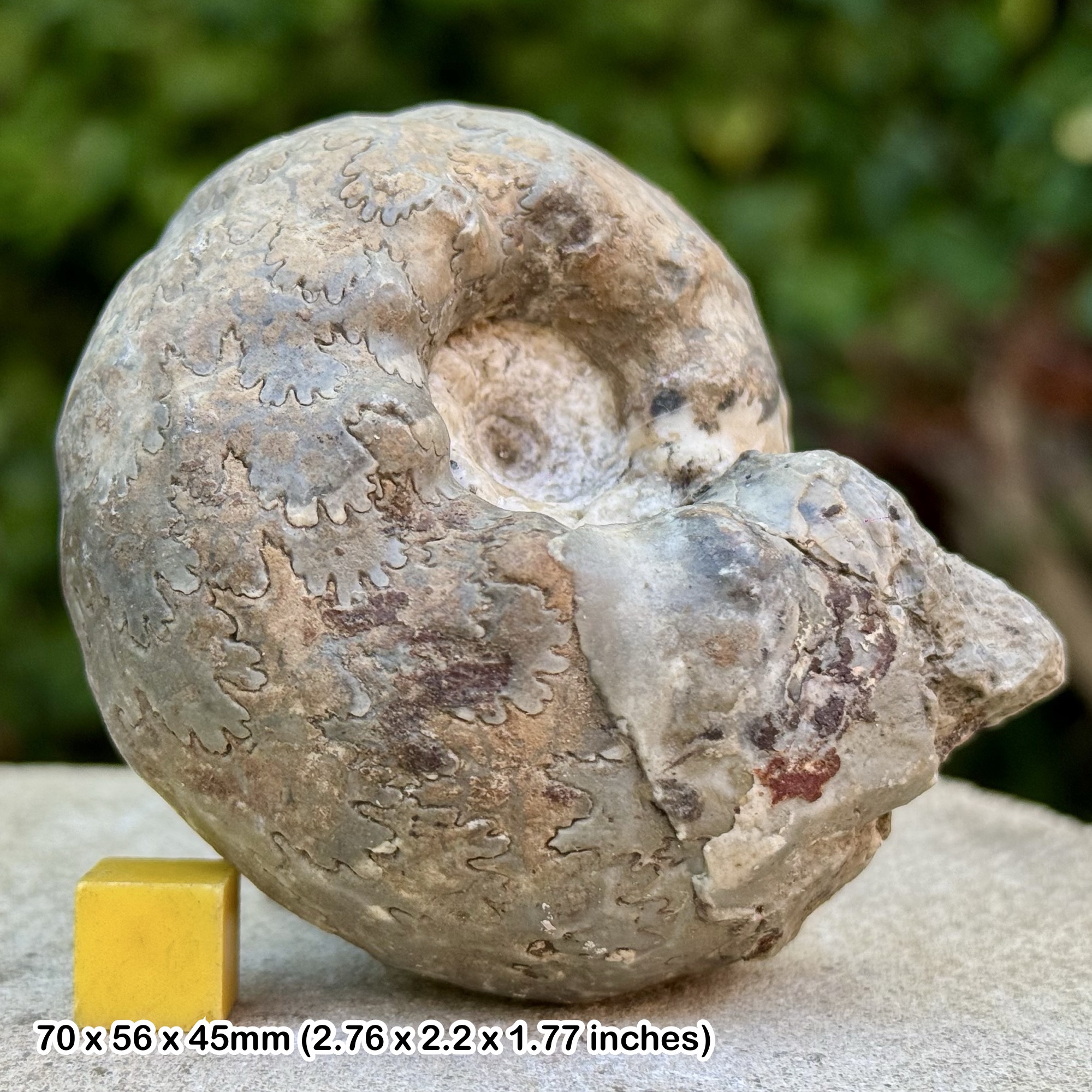
RARE Vascoceras chevalieri Ammonite Fossil Lower Turonian Cretaceous Gombe Nigeria Genuine Specimen with Certificate of Authenticity
£ 24.00
This listing offers a rare and scientifically significant Vascoceras chevalieri
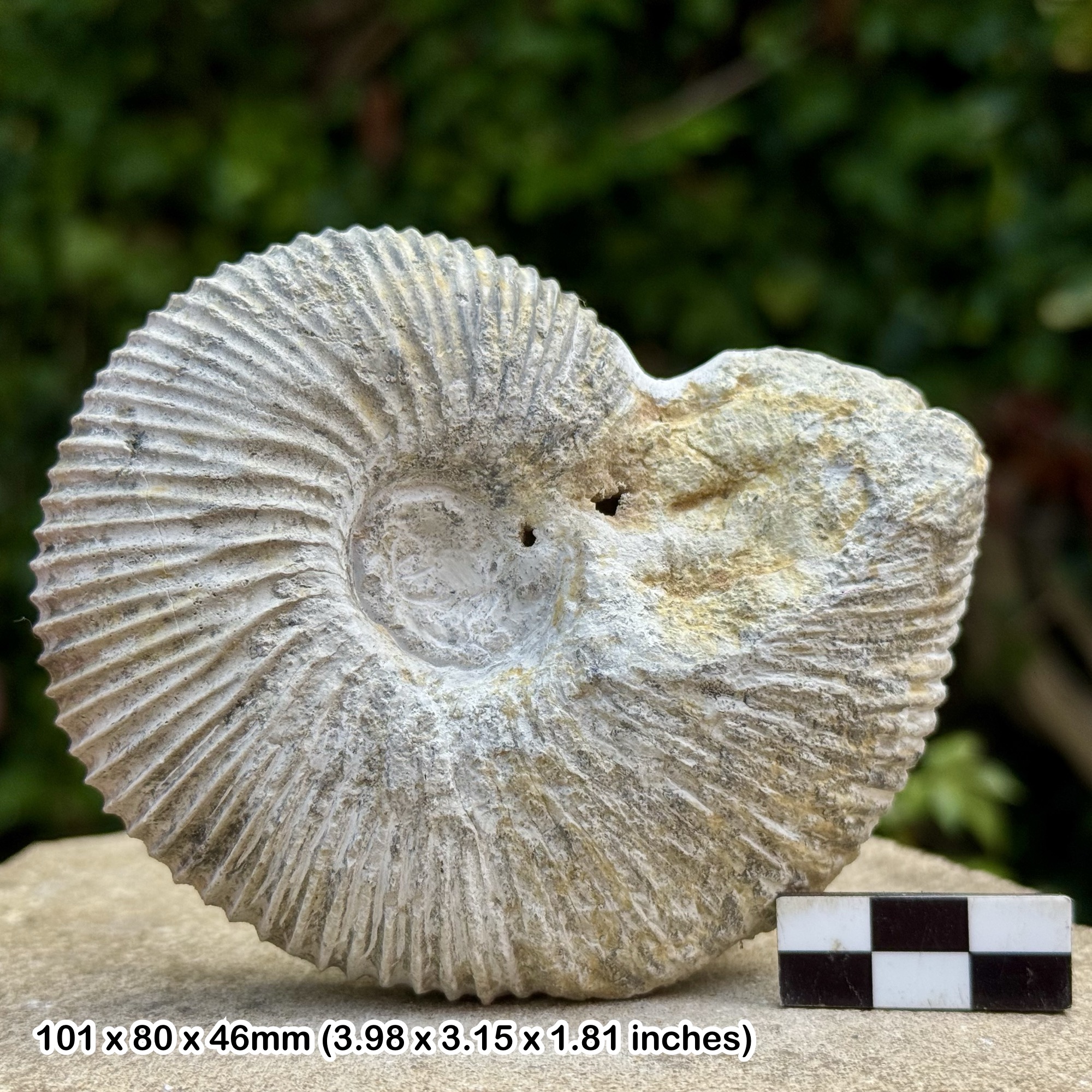
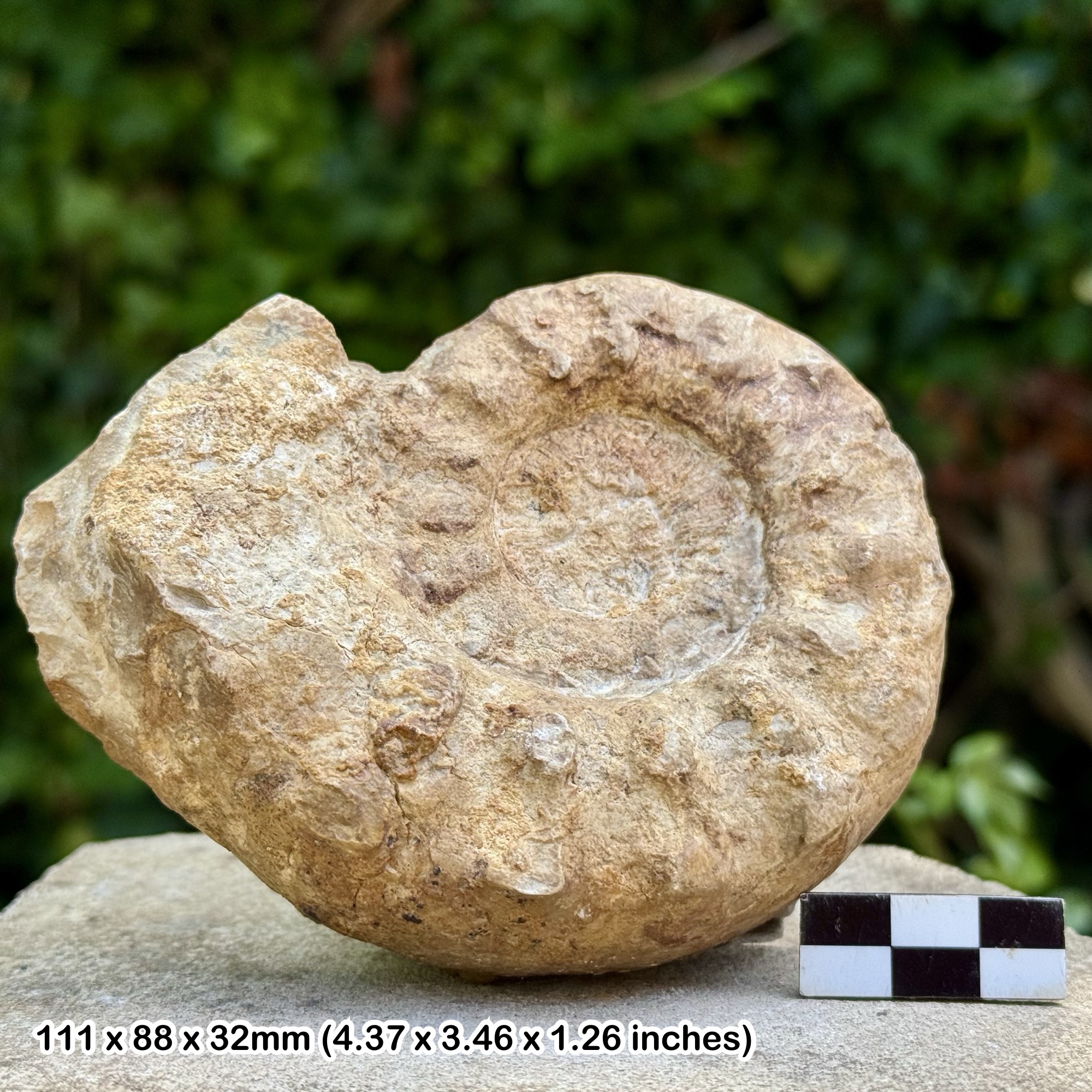
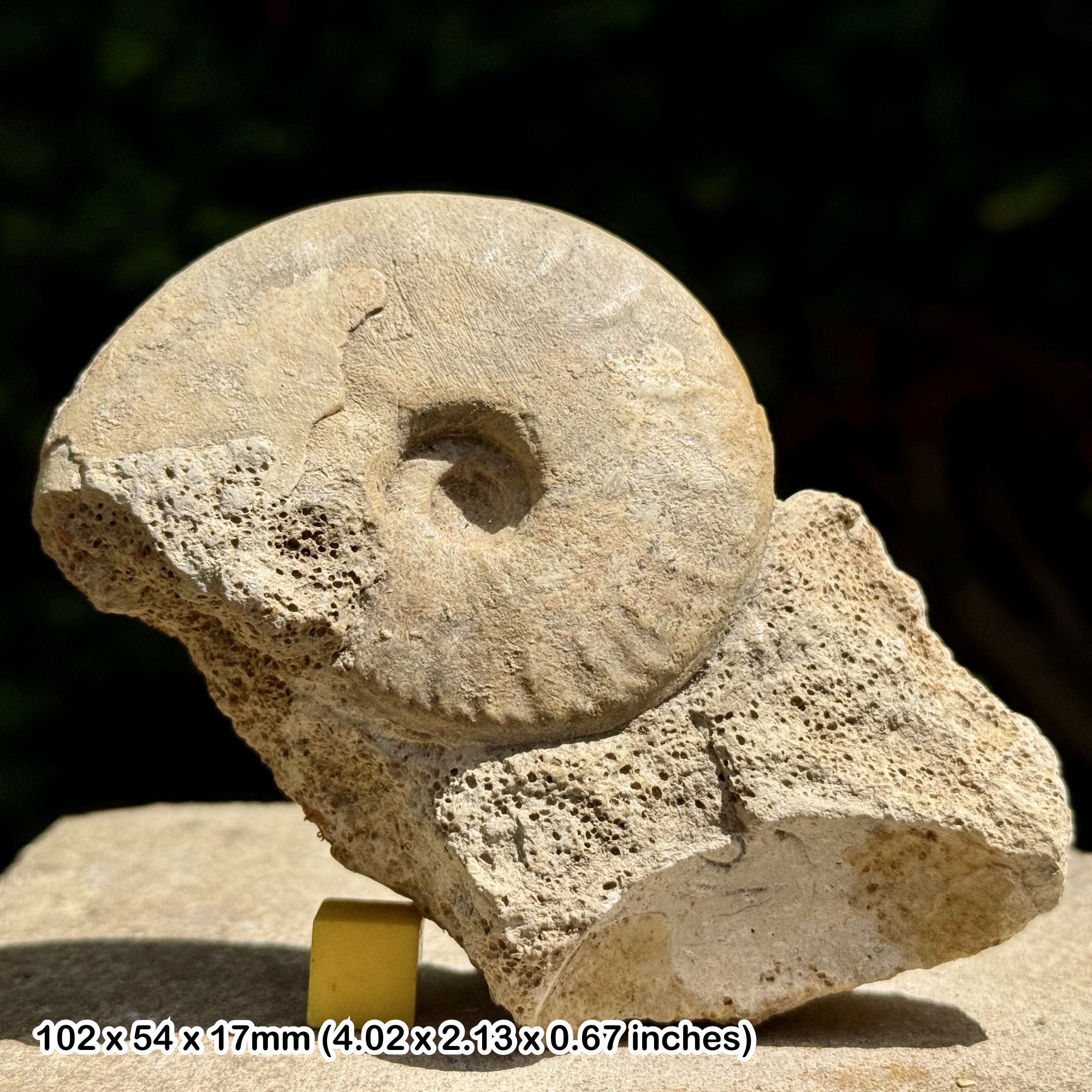
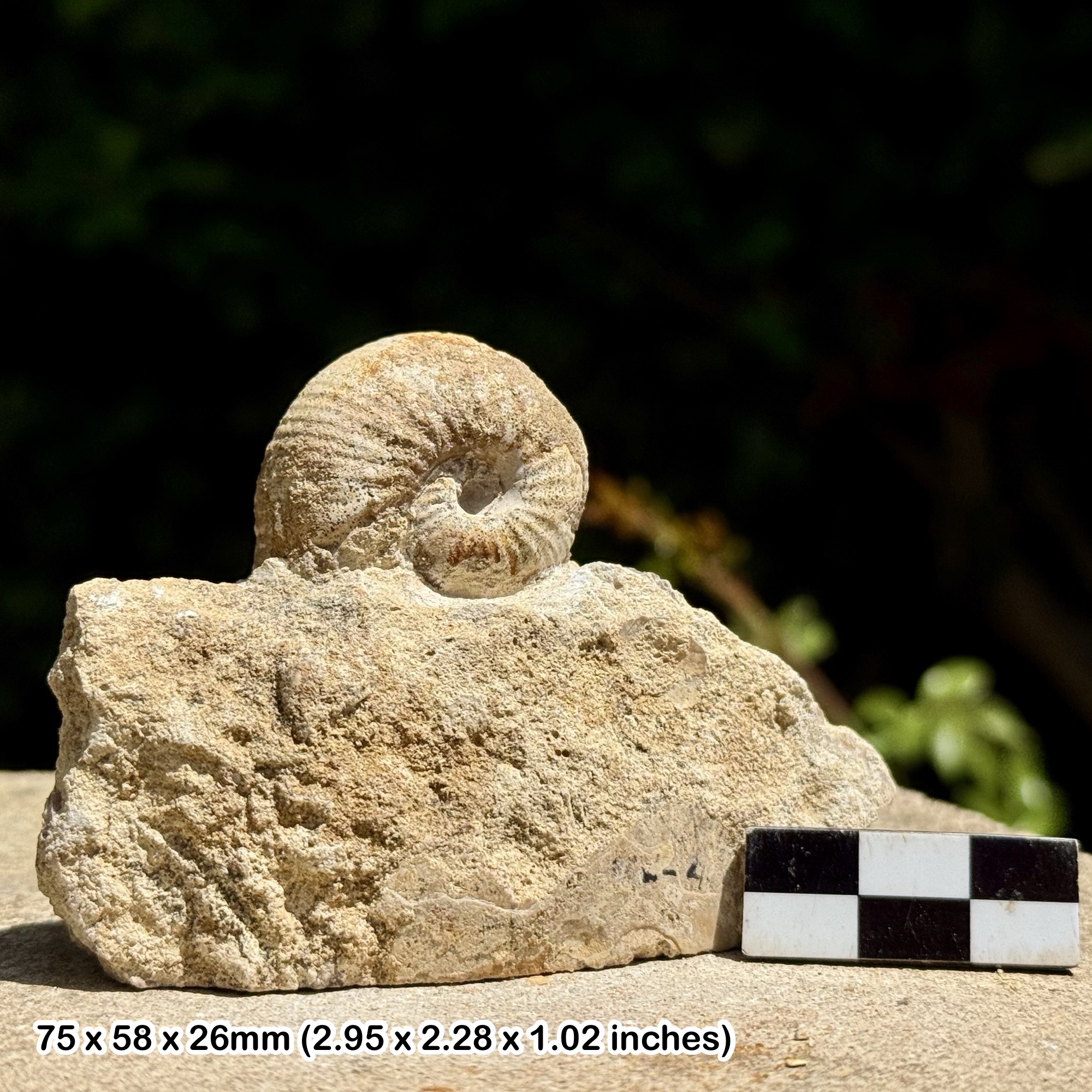
ammonite fossil from the Lower Turonian stage of the Late Cretaceous, discovered in Gombe, Nigeria. Ammonites of the genus Vascoceras are known for their robust shells and striking ribbed ornamentation, making them valuable both as biostratigraphic markers and as collector’s specimens. This fossil provides a direct connection to the rich marine ecosystems that thrived approximately 93–90 million years ago.The specimen shown in the photos is the exact piece you will receive. The 1 cm scale cube indicates its full dimensions, allowing you to accurately judge size before purchase. As with all our specimens, this fossil is 100% genuine and comes with a Certificate of Authenticity for complete peace of mind. GEOLOGICAL SETTING AND AGEThe fossil comes from the Lower Turonian stage of the Cretaceous, a period that followed the Cenomanian–Turonian boundary event, often associated with global oceanic anoxic episodes. During this time, sea levels were at a maximum high, covering vast continental shelves across Africa, including the region that is now Nigeria.The Gombe locality is part of the Upper Benue Trough, a sedimentary basin that preserves an extensive record of mid-Cretaceous marine life. Fine-grained limestones and marls from these deposits provided excellent conditions for the preservation of ammonites and other marine organisms. TAXONOMY AND CLASSIFICATION
• Phylum: Mollusca
• Class: Cephalopoda
• Order: Ammonitida
• Superfamily: Acanthoceratoidea
• Family: Vascoceratidae
• Genus: Vascoceras
• Species: Vascoceras chevalieriThis species is a key marker for the Lower Turonian biozone and has been used in stratigraphic correlation across West Africa and beyond. MORPHOLOGICAL FEATURESThe Vascoceras chevalieri ammonite is characterised by:
• A thick, robust shell with moderately involute coiling.
• Strong ribbing running across the whorls, often accentuated by prominent growth lines.
• A subglobular form with compressed flanks, enhancing both strength and hydrodynamic efficiency.
• Intricate suture patterns, typical of Acanthoceratoidea, visible on well-preserved specimens.These features combined made Vascoceras a resilient predator in the Cretaceous seas, preying on smaller marine organisms. PALEOENVIRONMENT AND DEPOSITIONAL CONTEXTDuring the Turonian, the area now known as Gombe, Nigeria, was submerged under a warm shallow epicontinental sea. This environment supported a diverse community of ammonites, bivalves, gastropods, and marine reptiles. The abundance of plankton and smaller invertebrates in these waters provided a rich food source for ammonites like Vascoceras chevalieri.Sedimentation in this region was dominated by marine clays, shales, and limestones, which allowed for detailed preservation of shell ornamentation. Fossils from Gombe are particularly prized due to their rarity and the scientific insights they provide into Turonian marine biodiversity. COLLECTOR AND DISPLAY SIGNIFICANCEThis fossil is not only a rare and beautiful specimen but also a piece of global geological history. Its provenance from Nigeria, where ammonites are comparatively scarce on the international fossil market, adds to its uniqueness and desirability.
• Locality: Gombe, Nigeria
• Age: Lower Turonian, Cretaceous (~93–90 million years old)
• Fossil Type: Ammonite (Vascoceras chevalieri)Whether you are a seasoned collector, an academic enthusiast, or someone seeking a unique display piece, this ammonite represents both natural beauty and scientific importance. With its Certificate of Authenticity, you can purchase confidently, knowing you are acquiring a genuine relic of Earth’s ancient oceans.
ammonite fossil from the Lower Turonian stage of the Late Cretaceous, discovered in Gombe, Nigeria. Ammonites of the genus Vascoceras are known for their robust shells and striking ribbed ornamentation, making them valuable both as biostratigraphic markers and as collector’s specimens. This fossil provides a direct connection to the rich marine ecosystems that thrived approximately 93–90 million years ago.The specimen shown in the photos is the exact piece you will receive. The 1 cm scale cube indicates its full dimensions, allowing you to accurately judge size before purchase. As with all our specimens, this fossil is 100% genuine and comes with a Certificate of Authenticity for complete peace of mind. GEOLOGICAL SETTING AND AGEThe fossil comes from the Lower Turonian stage of the Cretaceous, a period that followed the Cenomanian–Turonian boundary event, often associated with global oceanic anoxic episodes. During this time, sea levels were at a maximum high, covering vast continental shelves across Africa, including the region that is now Nigeria.The Gombe locality is part of the Upper Benue Trough, a sedimentary basin that preserves an extensive record of mid-Cretaceous marine life. Fine-grained limestones and marls from these deposits provided excellent conditions for the preservation of ammonites and other marine organisms. TAXONOMY AND CLASSIFICATION
• Phylum: Mollusca
• Class: Cephalopoda
• Order: Ammonitida
• Superfamily: Acanthoceratoidea
• Family: Vascoceratidae
• Genus: Vascoceras
• Species: Vascoceras chevalieriThis species is a key marker for the Lower Turonian biozone and has been used in stratigraphic correlation across West Africa and beyond. MORPHOLOGICAL FEATURESThe Vascoceras chevalieri ammonite is characterised by:
• A thick, robust shell with moderately involute coiling.
• Strong ribbing running across the whorls, often accentuated by prominent growth lines.
• A subglobular form with compressed flanks, enhancing both strength and hydrodynamic efficiency.
• Intricate suture patterns, typical of Acanthoceratoidea, visible on well-preserved specimens.These features combined made Vascoceras a resilient predator in the Cretaceous seas, preying on smaller marine organisms. PALEOENVIRONMENT AND DEPOSITIONAL CONTEXTDuring the Turonian, the area now known as Gombe, Nigeria, was submerged under a warm shallow epicontinental sea. This environment supported a diverse community of ammonites, bivalves, gastropods, and marine reptiles. The abundance of plankton and smaller invertebrates in these waters provided a rich food source for ammonites like Vascoceras chevalieri.Sedimentation in this region was dominated by marine clays, shales, and limestones, which allowed for detailed preservation of shell ornamentation. Fossils from Gombe are particularly prized due to their rarity and the scientific insights they provide into Turonian marine biodiversity. COLLECTOR AND DISPLAY SIGNIFICANCEThis fossil is not only a rare and beautiful specimen but also a piece of global geological history. Its provenance from Nigeria, where ammonites are comparatively scarce on the international fossil market, adds to its uniqueness and desirability.
• Locality: Gombe, Nigeria
• Age: Lower Turonian, Cretaceous (~93–90 million years old)
• Fossil Type: Ammonite (Vascoceras chevalieri)Whether you are a seasoned collector, an academic enthusiast, or someone seeking a unique display piece, this ammonite represents both natural beauty and scientific importance. With its Certificate of Authenticity, you can purchase confidently, knowing you are acquiring a genuine relic of Earth’s ancient oceans.
Other Products