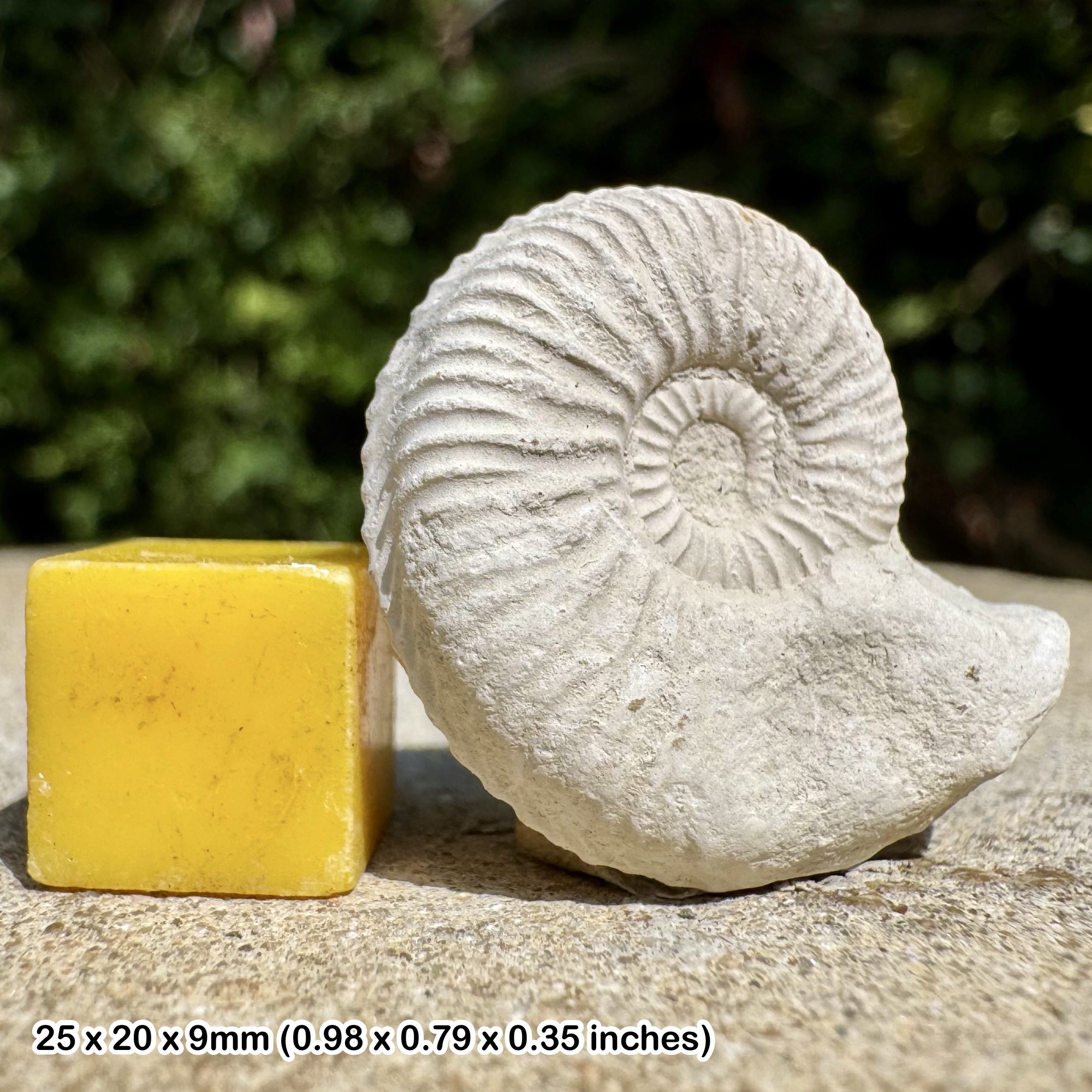
Rare Cardioceras persecans Fossil Ammonite Oxfordian Jurassic Authentic Zalas Poland Specimen
£ 24.00
RARE CARDIOCERAS PERSECANS FOSSIL AMMONITE FROM ZALAS, POLANDPresented here is a rare and authentic Cardioceras persecans ammonite fossil
from the Oxfordian Stage of the Jurassic Period, dating back approximately 163–157 million years ago. This exceptional specimen was discovered at Zalas, Poland, a locality known for producing beautifully preserved Jurassic ammonites. This fossil is a carefully selected piece, with the exact ammonite pictured being the specimen you will receive. It comes with a Certificate of Authenticity, providing full assurance of its genuine nature and geological provenance. GEOLOGICAL AGE AND SIGNIFICANCEThe Oxfordian Stage, part of the Late Jurassic, was a time when vast shallow seas dominated much of Europe. These marine environments supported a wide range of life, with ammonites flourishing as some of the most abundant and diverse cephalopods. Cardioceras persecans is a particularly notable ammonite within the Cardioceratidae family, an important group used in stratigraphy for defining precise biozones within the Oxfordian. The presence of Cardioceras species allows paleontologists to accurately date marine sediments across Europe and beyond, making this specimen scientifically significant as well as highly collectible. SCIENTIFIC CLASSIFICATION
• Species: Cardioceras persecans
• Genus: Cardioceras
• Family: Cardioceratidae
• Superfamily: Stephanoceratoidea
• Order: Ammonitida
• Class: Cephalopoda
• Geological Stage: Oxfordian, Jurassic (~163–157 million years ago)
• Locality: Zalas, Poland MORPHOLOGICAL FEATURESCardioceras persecans exhibits the distinctive ribbed shell morphology typical of the genus, with strong, radial ribs curving across the whorls and extending to the venter. The whorl section is compressed, and the ribs often display branching, giving the fossil a strikingly ornate appearance. This ribbing provided strength to the shell and is one of the most recognisable features of the species. The name "Cardioceras" itself derives from the heart-shaped outline of certain whorl cross-sections, a trait visible in many specimens from this genus. BIOZONE AND STRATIGRAPHIC IMPORTANCEAmmonites such as Cardioceras persecans are crucial for biostratigraphy, with species of the Cardioceratidae family frequently used to define biozones in the Lower Oxfordian interval. This makes them vital tools for correlating rock sequences across Europe, including regions as far apart as Poland, France, and the UK. The rarity and precision of these index fossils underline their importance in understanding the Jurassic marine record. DEPOSITIONAL ENVIRONMENTThe Zalas locality in Poland is part of a well-known Oxfordian marine succession, with sediments typically consisting of marls, limestones, and calcareous clays. These calm, shallow seas were ideal environments for ammonites, offering abundant food resources such as small crustaceans and other molluscs. Upon death, the shells settled into the soft seabed sediments where they were preserved for millions of years, resulting in the striking fossil specimen available today. COLLECTOR’S VALUE AND EDUCATIONAL USEThis rare Cardioceras persecans fossil ammonite is of great value to collectors seeking Oxfordian ammonites, given its combination of aesthetic detail and scientific importance. It also serves as an excellent teaching specimen, highlighting both ammonite morphology and their role in stratigraphy. For display, study, or teaching, this fossil embodies the beauty and geological history of the Late Jurassic seas. ITEM DETAILS
• Type: Fossil Ammonite – Cardioceras persecans
• Age: Oxfordian, Jurassic (~163–157 million years ago)
• Location: Zalas, Poland
• Notable Features: Distinctive ribbed shell, stratigraphically important ammonite
• Scale: Rule squares/cube = 1 cm (see photos for accurate size)
• Authenticity: 100% genuine fossil, Certificate of Authenticity included
• Specimen: Exact fossil shown in the photographs is the one suppliedThis rare Cardioceras persecans ammonite from the Oxfordian of Poland is a true collector’s treasure, combining beauty, scientific value, and authenticity in one exceptional specimen.
from the Oxfordian Stage of the Jurassic Period, dating back approximately 163–157 million years ago. This exceptional specimen was discovered at Zalas, Poland, a locality known for producing beautifully preserved Jurassic ammonites. This fossil is a carefully selected piece, with the exact ammonite pictured being the specimen you will receive. It comes with a Certificate of Authenticity, providing full assurance of its genuine nature and geological provenance. GEOLOGICAL AGE AND SIGNIFICANCEThe Oxfordian Stage, part of the Late Jurassic, was a time when vast shallow seas dominated much of Europe. These marine environments supported a wide range of life, with ammonites flourishing as some of the most abundant and diverse cephalopods. Cardioceras persecans is a particularly notable ammonite within the Cardioceratidae family, an important group used in stratigraphy for defining precise biozones within the Oxfordian. The presence of Cardioceras species allows paleontologists to accurately date marine sediments across Europe and beyond, making this specimen scientifically significant as well as highly collectible. SCIENTIFIC CLASSIFICATION
• Species: Cardioceras persecans
• Genus: Cardioceras
• Family: Cardioceratidae
• Superfamily: Stephanoceratoidea
• Order: Ammonitida
• Class: Cephalopoda
• Geological Stage: Oxfordian, Jurassic (~163–157 million years ago)
• Locality: Zalas, Poland MORPHOLOGICAL FEATURESCardioceras persecans exhibits the distinctive ribbed shell morphology typical of the genus, with strong, radial ribs curving across the whorls and extending to the venter. The whorl section is compressed, and the ribs often display branching, giving the fossil a strikingly ornate appearance. This ribbing provided strength to the shell and is one of the most recognisable features of the species. The name "Cardioceras" itself derives from the heart-shaped outline of certain whorl cross-sections, a trait visible in many specimens from this genus. BIOZONE AND STRATIGRAPHIC IMPORTANCEAmmonites such as Cardioceras persecans are crucial for biostratigraphy, with species of the Cardioceratidae family frequently used to define biozones in the Lower Oxfordian interval. This makes them vital tools for correlating rock sequences across Europe, including regions as far apart as Poland, France, and the UK. The rarity and precision of these index fossils underline their importance in understanding the Jurassic marine record. DEPOSITIONAL ENVIRONMENTThe Zalas locality in Poland is part of a well-known Oxfordian marine succession, with sediments typically consisting of marls, limestones, and calcareous clays. These calm, shallow seas were ideal environments for ammonites, offering abundant food resources such as small crustaceans and other molluscs. Upon death, the shells settled into the soft seabed sediments where they were preserved for millions of years, resulting in the striking fossil specimen available today. COLLECTOR’S VALUE AND EDUCATIONAL USEThis rare Cardioceras persecans fossil ammonite is of great value to collectors seeking Oxfordian ammonites, given its combination of aesthetic detail and scientific importance. It also serves as an excellent teaching specimen, highlighting both ammonite morphology and their role in stratigraphy. For display, study, or teaching, this fossil embodies the beauty and geological history of the Late Jurassic seas. ITEM DETAILS
• Type: Fossil Ammonite – Cardioceras persecans
• Age: Oxfordian, Jurassic (~163–157 million years ago)
• Location: Zalas, Poland
• Notable Features: Distinctive ribbed shell, stratigraphically important ammonite
• Scale: Rule squares/cube = 1 cm (see photos for accurate size)
• Authenticity: 100% genuine fossil, Certificate of Authenticity included
• Specimen: Exact fossil shown in the photographs is the one suppliedThis rare Cardioceras persecans ammonite from the Oxfordian of Poland is a true collector’s treasure, combining beauty, scientific value, and authenticity in one exceptional specimen.