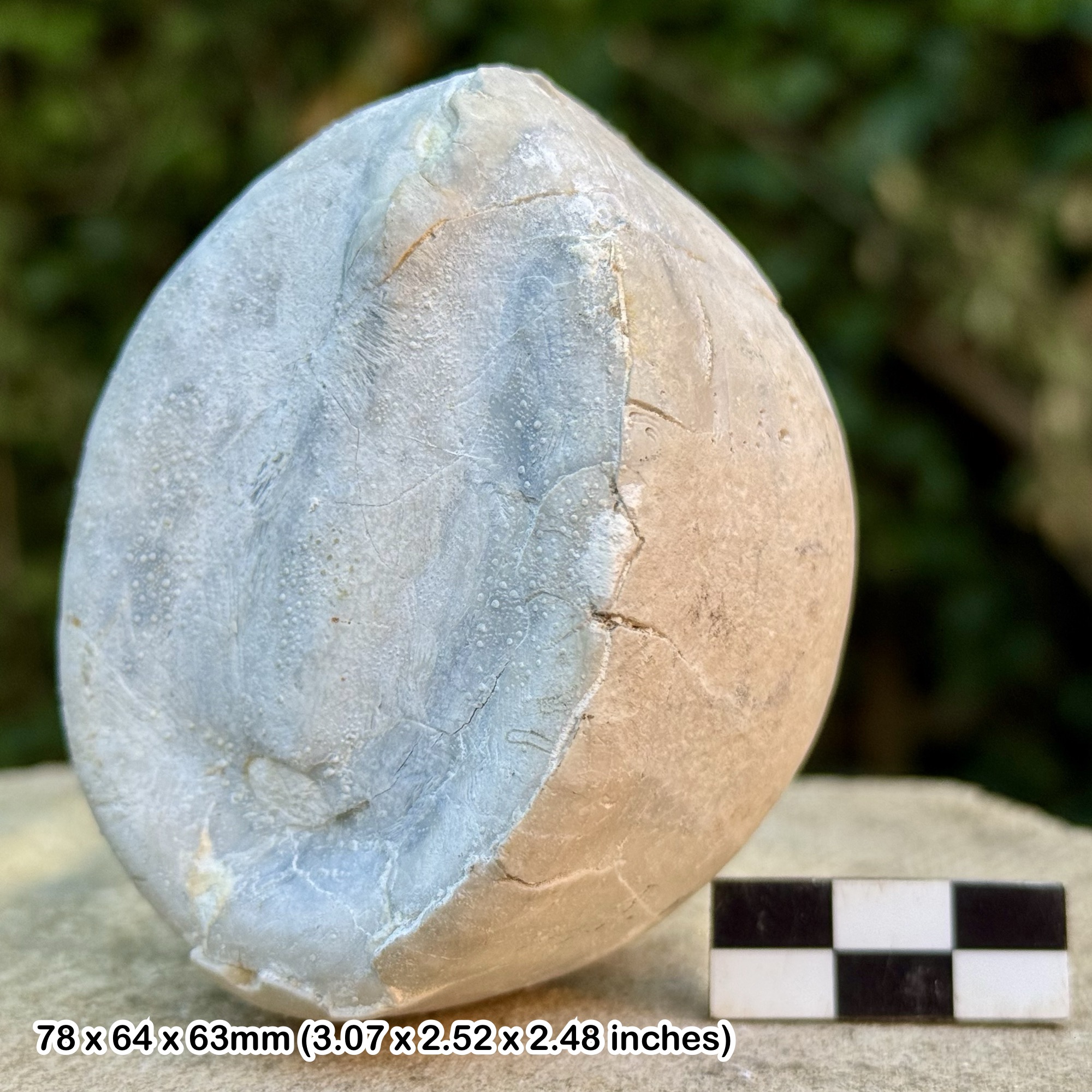
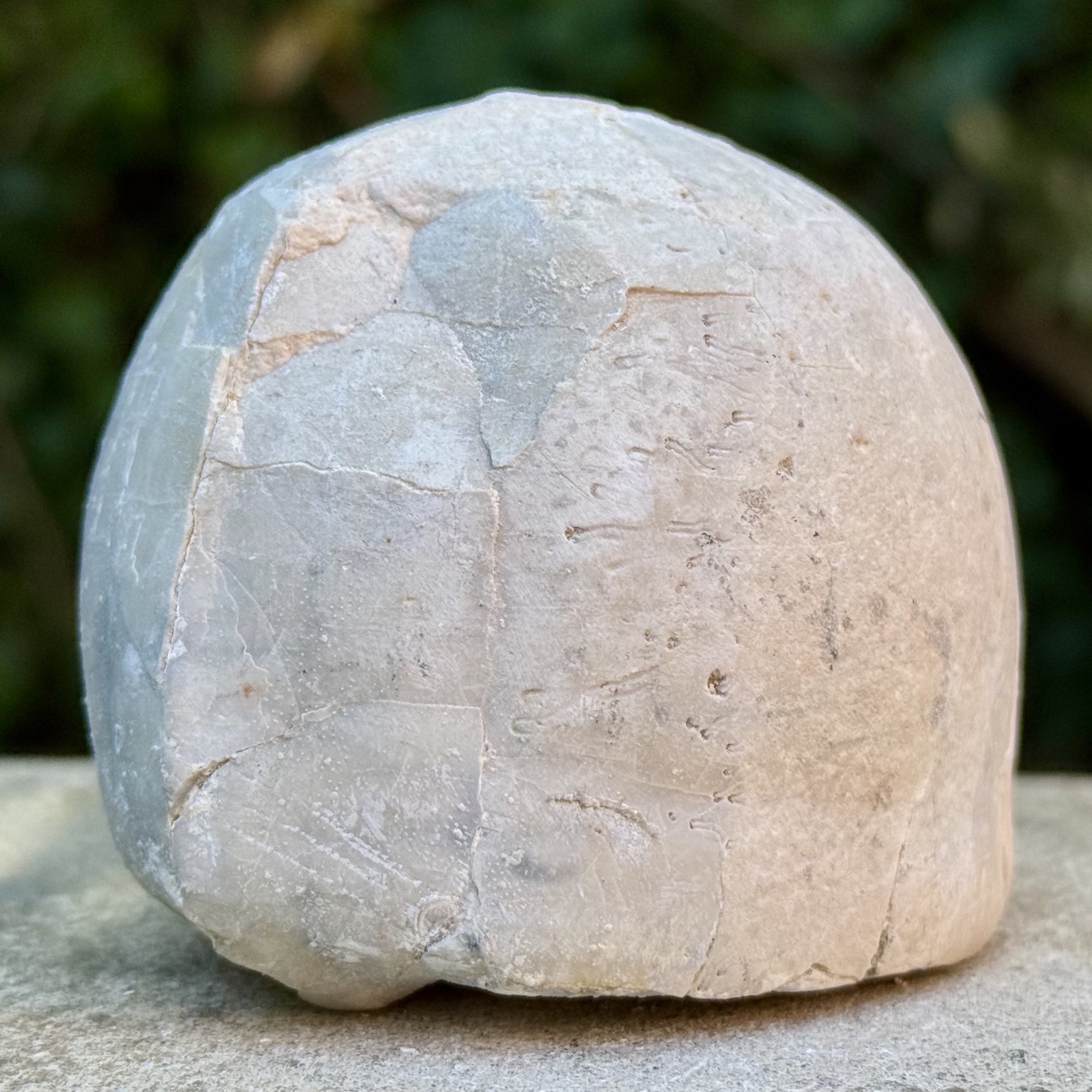
A-Grade British Chalk Fossil Echinoid – Echinocorys scutata turrira | Santonian Upper Chalk Dumpton Gap Kent UK | Genuine Specimen with COA
£ 60.00
Presenting an A-grade, finely preserved specimen of Echinocorys scutata turrira,
a distinctive fossil echinoid (sea urchin) from the Upper Chalk Formation, dated to the Santonian stage of the Late Cretaceous period, collected at Dumpton Gap, Kent, UK. Known for its turreted shape and rarity, this subspecies is an exceptional find for collectors of British chalk invertebrates.Fossil Type: Echinoid (Sea Urchin)Species/Subspecies: Echinocorys scutata turriraGeological Period: Late Cretaceous (~86.3 to 83.6 million years ago)Geological Stage: SantonianFormation: Upper Chalk (Chalk Group)Location: Dumpton Gap, Kent, United KingdomScale Rule: Squares/Cube = 1cm (See listing photo for full sizing)Specimen: You will receive the exact specimen shown in the photographsAuthenticity: All of our fossils are 100% genuine specimens and come with a Certificate of Authenticity GEOLOGICAL AND PALEONTOLOGICAL INFORMATIONEchinocorys scutata turrira is a turreted or more steeply domed variant of the well-known Echinocorys scutata. Its uniquely elevated profile makes it easily recognisable and a prized subspecies among Upper Cretaceous echinoids.
• Phylum: Echinodermata
• Class: Echinoidea
• Order: Holasteroida
• Family: Holasteridae
• Genus: Echinocorys
• Subspecies: scutata turrira
• Geological Stage: Santonian
• Depositional Environment: Shallow, quiet marine shelf environment formed from fine calcareous sediment; the chalk is composed of coccolith-rich limestone ideal for fossil preservation
• Morphological Features: Thick, turreted test (shell) with subcircular base and steeply domed upper surface; subtle ambulacral petal structure and fine surface texturing visible under good lighting
• Biozone: Typically associated with mid-Santonian to late Santonian chalk strata, often in association with inoceramid bivalve and foraminiferal zones
• Notable: Echinocorys scutata turrira is less commonly encountered than the standard scutata form and is especially valued when complete and well preserved. Its steep dome shape is key to its identification and rarity WHY THIS FOSSIL IS SPECIALThis specimen is a superb example of Echinocorys scutata turrira—not only is it well-preserved and large, but its morphology makes it an important piece for biostratigraphic and paleoecological interpretation. Specimens of this quality from Dumpton Gap are increasingly hard to obtain. WHY BUY FROM US?
• 100% genuine fossil with Certificate of Authenticity
• Exact specimen shown in the photos is what you’ll receive
• Ethically collected from renowned fossil localities in the UK
• Excellent for collectors, paleontology educators, and natural history displaysTake home a rare and elegant marine relic with this A-grade Echinocorys scutata turrira fossil echinoid from the Upper Santonian Chalk of Dumpton Gap, Kent—a beautifully domed sea urchin preserved for over 85 million years.
a distinctive fossil echinoid (sea urchin) from the Upper Chalk Formation, dated to the Santonian stage of the Late Cretaceous period, collected at Dumpton Gap, Kent, UK. Known for its turreted shape and rarity, this subspecies is an exceptional find for collectors of British chalk invertebrates.Fossil Type: Echinoid (Sea Urchin)Species/Subspecies: Echinocorys scutata turriraGeological Period: Late Cretaceous (~86.3 to 83.6 million years ago)Geological Stage: SantonianFormation: Upper Chalk (Chalk Group)Location: Dumpton Gap, Kent, United KingdomScale Rule: Squares/Cube = 1cm (See listing photo for full sizing)Specimen: You will receive the exact specimen shown in the photographsAuthenticity: All of our fossils are 100% genuine specimens and come with a Certificate of Authenticity GEOLOGICAL AND PALEONTOLOGICAL INFORMATIONEchinocorys scutata turrira is a turreted or more steeply domed variant of the well-known Echinocorys scutata. Its uniquely elevated profile makes it easily recognisable and a prized subspecies among Upper Cretaceous echinoids.
• Phylum: Echinodermata
• Class: Echinoidea
• Order: Holasteroida
• Family: Holasteridae
• Genus: Echinocorys
• Subspecies: scutata turrira
• Geological Stage: Santonian
• Depositional Environment: Shallow, quiet marine shelf environment formed from fine calcareous sediment; the chalk is composed of coccolith-rich limestone ideal for fossil preservation
• Morphological Features: Thick, turreted test (shell) with subcircular base and steeply domed upper surface; subtle ambulacral petal structure and fine surface texturing visible under good lighting
• Biozone: Typically associated with mid-Santonian to late Santonian chalk strata, often in association with inoceramid bivalve and foraminiferal zones
• Notable: Echinocorys scutata turrira is less commonly encountered than the standard scutata form and is especially valued when complete and well preserved. Its steep dome shape is key to its identification and rarity WHY THIS FOSSIL IS SPECIALThis specimen is a superb example of Echinocorys scutata turrira—not only is it well-preserved and large, but its morphology makes it an important piece for biostratigraphic and paleoecological interpretation. Specimens of this quality from Dumpton Gap are increasingly hard to obtain. WHY BUY FROM US?
• 100% genuine fossil with Certificate of Authenticity
• Exact specimen shown in the photos is what you’ll receive
• Ethically collected from renowned fossil localities in the UK
• Excellent for collectors, paleontology educators, and natural history displaysTake home a rare and elegant marine relic with this A-grade Echinocorys scutata turrira fossil echinoid from the Upper Santonian Chalk of Dumpton Gap, Kent—a beautifully domed sea urchin preserved for over 85 million years.
Other Products