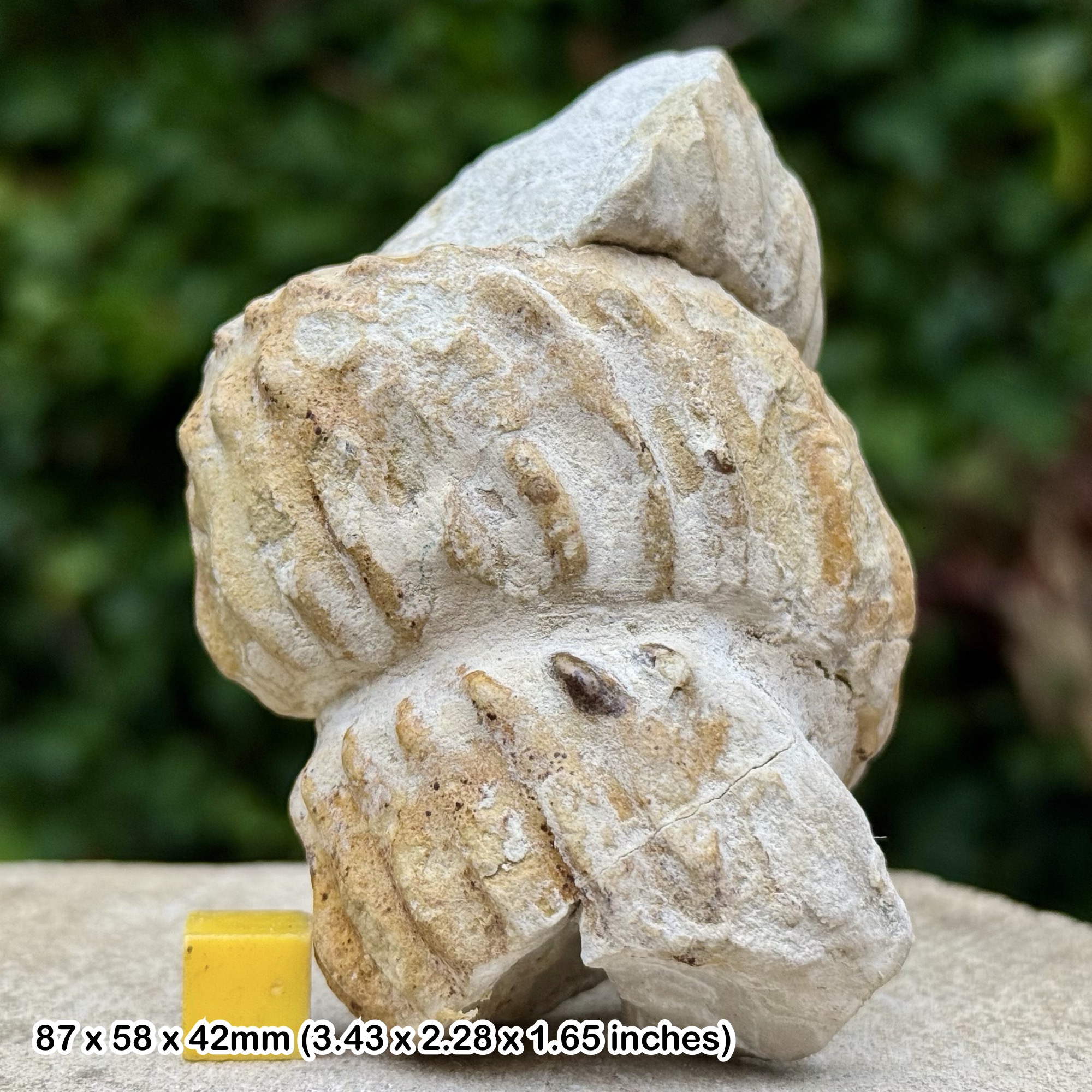
Turrilites Heteromorph Fossil Ammonite Cenomanian Cretaceous Sussex United Kingdom with COA
£ 18.00
TURRILITES HETEROMORPH AMMONITE FROM SUSSEXThis specimen is a Turrilites heteromorph fossil ammonite, collected from the
Cenomanian Stage of the Late Cretaceous Period in Sussex, United Kingdom. Dating back around 100–94 million years, this ammonite showcases the distinctive helically coiled form that sets heteromorph ammonites apart from the more familiar planispiral types. Fossils like this not only hold scientific importance but also serve as unique display pieces due to their unusual appearance.Every fossil we provide is a 100% genuine specimen and is accompanied by a Certificate of Authenticity. The photographs show the actual piece you will receive, with a 1cm scale cube and rule squares included for accurate size reference. GEOLOGICAL AGE AND LOCALITYThe specimen comes from the Cenomanian Stage, the first stage of the Late Cretaceous, when sea levels were exceptionally high. Much of Europe, including southern England, was submerged beneath warm shallow seas. These conditions supported thriving marine ecosystems where ammonites such as Turrilites evolved into a variety of remarkable forms.The fossil-bearing chalk of Sussex is part of the iconic White Chalk deposits of southern England, which stretch from the South Downs to the coastal cliffs. These exposures are internationally renowned for their fossil record and have provided palaeontologists with key insights into marine life and biostratigraphy of the Cretaceous. FOSSIL TYPE AND SCIENTIFIC CLASSIFICATION
• Genus: Turrilites
• Order: Ammonitida
• Superfamily: Turrilitoidea
• Family: TurrilitidaeTurrilites ammonites are heteromorphs, meaning they developed irregular coiling patterns rather than the flat spiral shells typically associated with ammonites. They are important as index fossils, widely used in Cenomanian stratigraphy, and are among the most recognisable heteromorph ammonites due to their vertical, tower-like form. MORPHOLOGICAL FEATURESThe genus Turrilites is defined by its unusual coiling and strong ornamentation. Key traits include:
• Helicoidal Coiling: The shell grows in a tall, turret-like spiral rather than a flat disc.
• Strong Ribbing: Prominent ribs run across the flanks, creating a sculptural and heavily ornamented surface.
• Tuberculation: Small nodes or tubercles often appear along rib crests, adding to the diagnostic features.
• Keel Development: A keel may run along the venter, contributing to hydrodynamic structure.These morphological features not only make Turrilites visually striking but also provide palaeontologists with essential details for classification and biozonation. SCIENTIFIC AND COLLECTOR IMPORTANCETurrilites ammonites are crucial for defining zones within the Cenomanian Stage. Their wide distribution and distinctive morphology make them excellent biostratigraphic markers, helping geologists correlate chalk deposits across Europe.For collectors, fossils from Sussex chalk deposits are highly desirable due to their provenance and increasing scarcity. With limited exposures and strict collecting restrictions in some areas, well-preserved Turrilites specimens are becoming harder to obtain, adding to their value and appeal. DISPLAY AND EDUCATIONAL VALUEThis fossil has been carefully chosen for its preservation and diagnostic traits, making it suitable for display in private collections, educational environments, or museum exhibits. Its vertical coiling and sculptural ribbing provide a dramatic visual impact, while its scientific significance connects it directly to the evolutionary story of Cretaceous ammonites.Owning a Turrilites heteromorph ammonite from Sussex offers not only a beautiful fossil for display but also a scientifically important specimen that reflects the unique diversity and adaptation of ammonites during the Late Cretaceous seas of England.
Cenomanian Stage of the Late Cretaceous Period in Sussex, United Kingdom. Dating back around 100–94 million years, this ammonite showcases the distinctive helically coiled form that sets heteromorph ammonites apart from the more familiar planispiral types. Fossils like this not only hold scientific importance but also serve as unique display pieces due to their unusual appearance.Every fossil we provide is a 100% genuine specimen and is accompanied by a Certificate of Authenticity. The photographs show the actual piece you will receive, with a 1cm scale cube and rule squares included for accurate size reference. GEOLOGICAL AGE AND LOCALITYThe specimen comes from the Cenomanian Stage, the first stage of the Late Cretaceous, when sea levels were exceptionally high. Much of Europe, including southern England, was submerged beneath warm shallow seas. These conditions supported thriving marine ecosystems where ammonites such as Turrilites evolved into a variety of remarkable forms.The fossil-bearing chalk of Sussex is part of the iconic White Chalk deposits of southern England, which stretch from the South Downs to the coastal cliffs. These exposures are internationally renowned for their fossil record and have provided palaeontologists with key insights into marine life and biostratigraphy of the Cretaceous. FOSSIL TYPE AND SCIENTIFIC CLASSIFICATION
• Genus: Turrilites
• Order: Ammonitida
• Superfamily: Turrilitoidea
• Family: TurrilitidaeTurrilites ammonites are heteromorphs, meaning they developed irregular coiling patterns rather than the flat spiral shells typically associated with ammonites. They are important as index fossils, widely used in Cenomanian stratigraphy, and are among the most recognisable heteromorph ammonites due to their vertical, tower-like form. MORPHOLOGICAL FEATURESThe genus Turrilites is defined by its unusual coiling and strong ornamentation. Key traits include:
• Helicoidal Coiling: The shell grows in a tall, turret-like spiral rather than a flat disc.
• Strong Ribbing: Prominent ribs run across the flanks, creating a sculptural and heavily ornamented surface.
• Tuberculation: Small nodes or tubercles often appear along rib crests, adding to the diagnostic features.
• Keel Development: A keel may run along the venter, contributing to hydrodynamic structure.These morphological features not only make Turrilites visually striking but also provide palaeontologists with essential details for classification and biozonation. SCIENTIFIC AND COLLECTOR IMPORTANCETurrilites ammonites are crucial for defining zones within the Cenomanian Stage. Their wide distribution and distinctive morphology make them excellent biostratigraphic markers, helping geologists correlate chalk deposits across Europe.For collectors, fossils from Sussex chalk deposits are highly desirable due to their provenance and increasing scarcity. With limited exposures and strict collecting restrictions in some areas, well-preserved Turrilites specimens are becoming harder to obtain, adding to their value and appeal. DISPLAY AND EDUCATIONAL VALUEThis fossil has been carefully chosen for its preservation and diagnostic traits, making it suitable for display in private collections, educational environments, or museum exhibits. Its vertical coiling and sculptural ribbing provide a dramatic visual impact, while its scientific significance connects it directly to the evolutionary story of Cretaceous ammonites.Owning a Turrilites heteromorph ammonite from Sussex offers not only a beautiful fossil for display but also a scientifically important specimen that reflects the unique diversity and adaptation of ammonites during the Late Cretaceous seas of England.