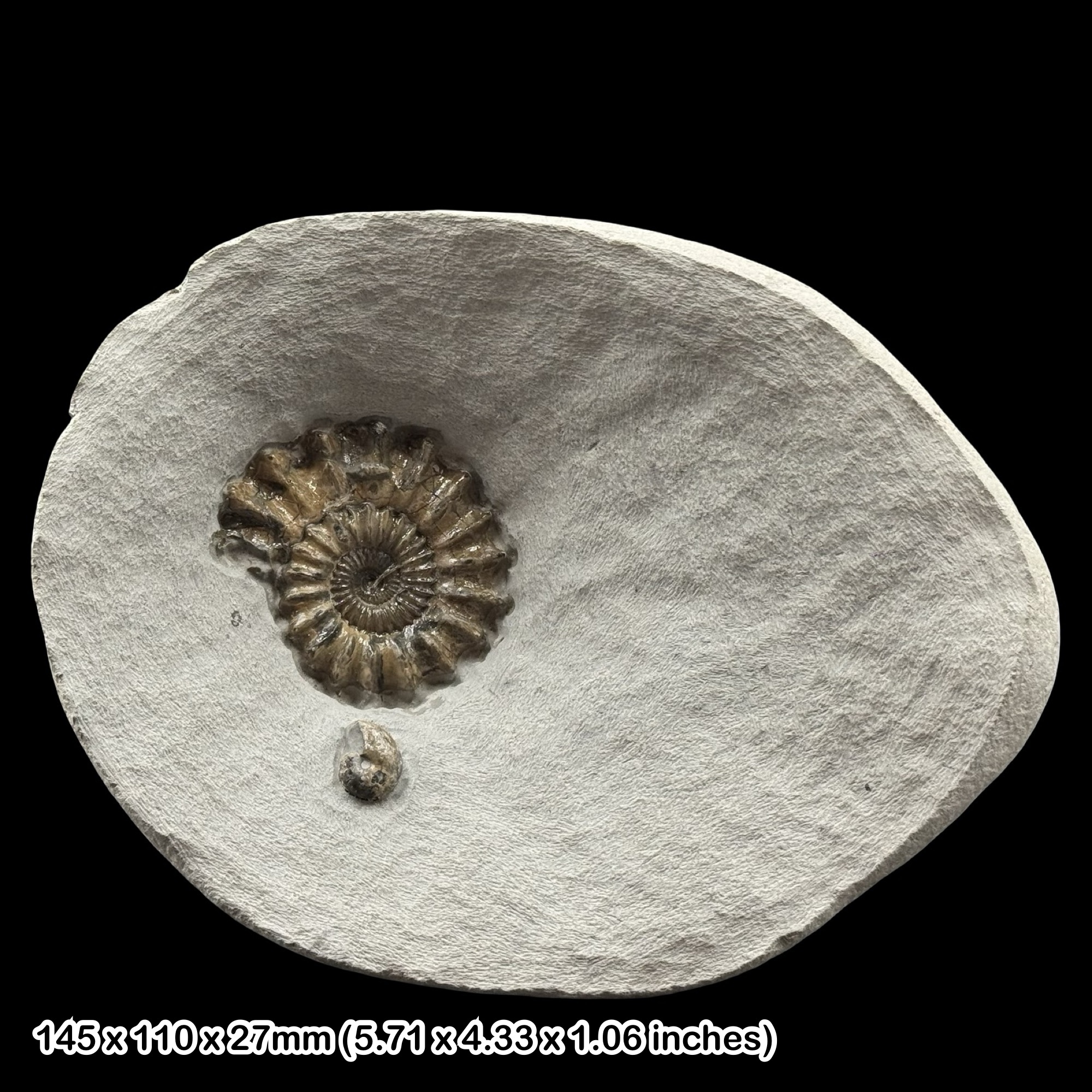
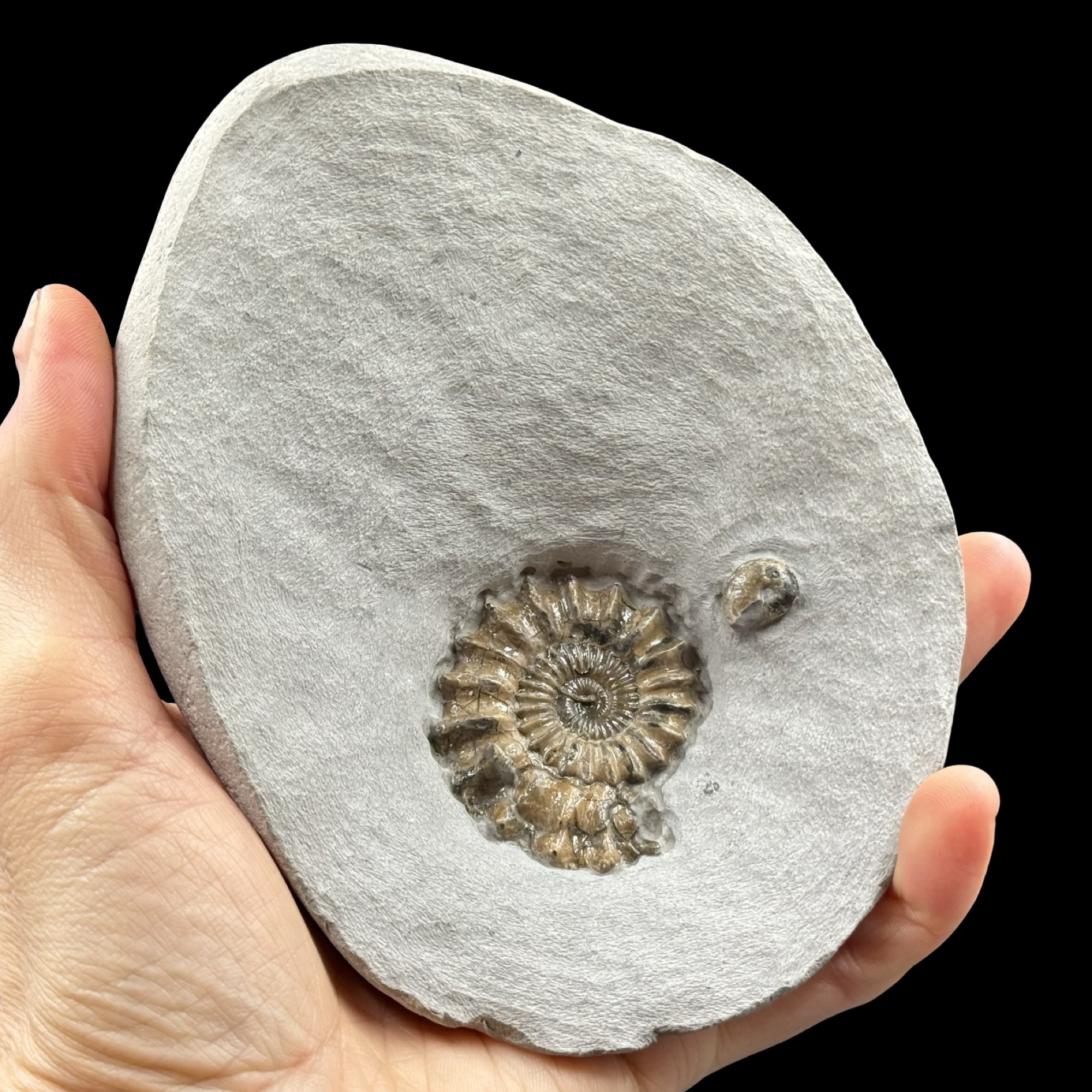
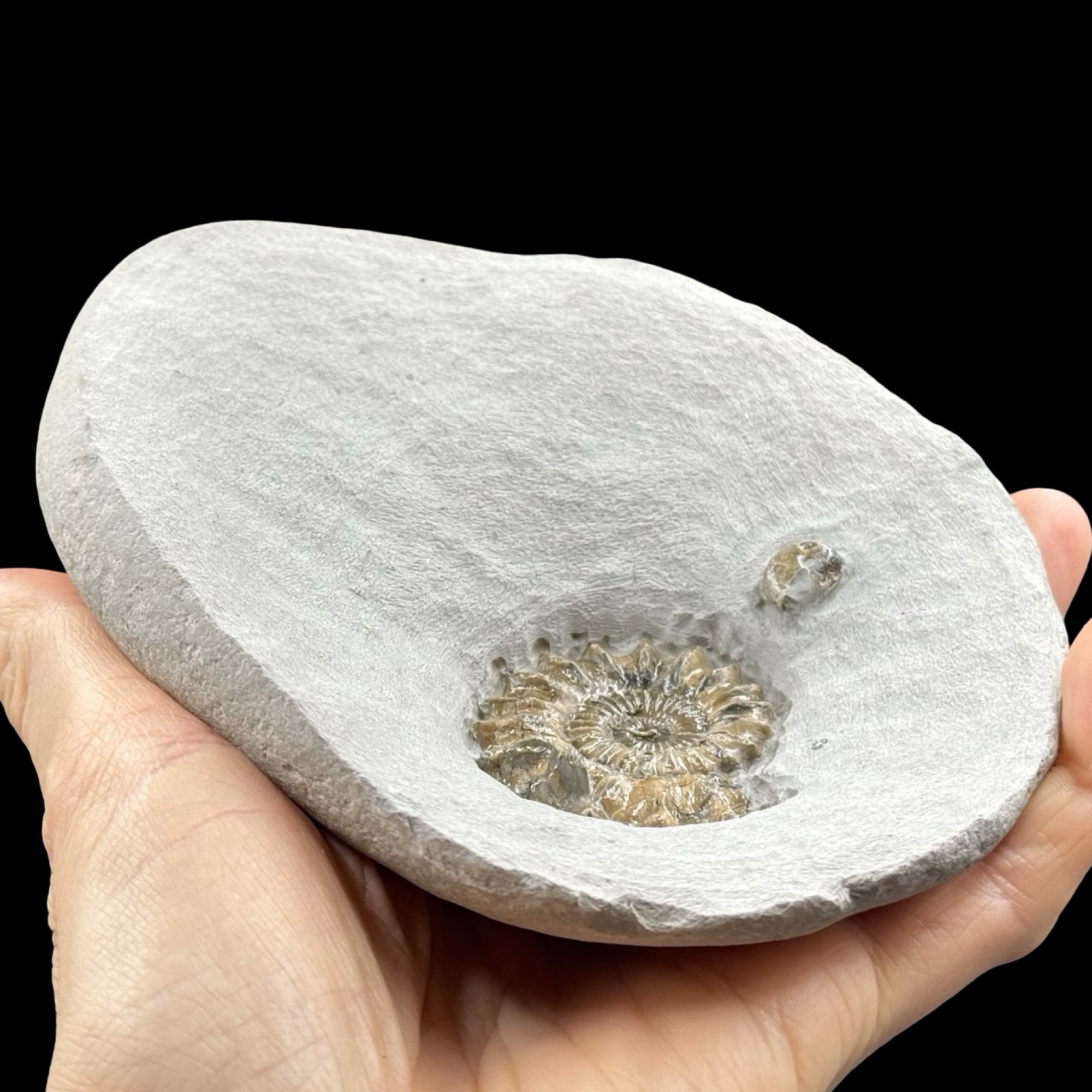
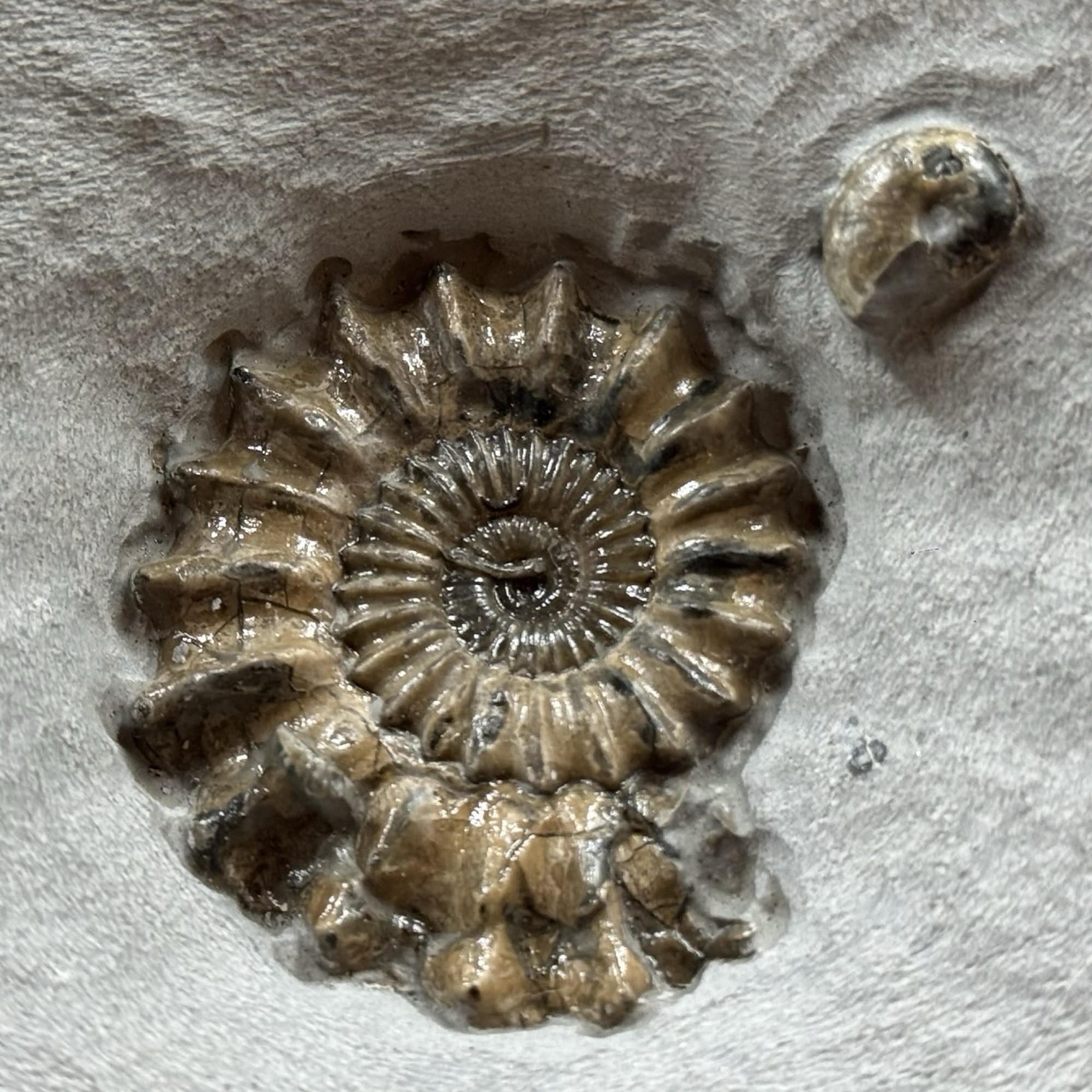
Oistoceras Calcite Ammonite Fossil Lower Lias Jurassic Coast Dorset UK from Lyme Regis Green Ammonite Beds
£ 156.00
AUTHENTIC JURASSIC AMMONITE FROM THE DORSET COASTThis specimen is a genuine Oistoceras calcite ammonite fossil collected from the
renowned Green Ammonite Beds of the Lower Lias on the Jurassic Coast at Stonebarrow, near Charmouth and Lyme Regis, Dorset, UK. This stretch of coastline is internationally celebrated for producing some of the finest Lower Jurassic marine fossils in the world and is designated a UNESCO World Heritage Site due to its outstanding geological importance.The fossil offered is the exact specimen shown in the photographs and has been carefully selected for its natural preservation, aesthetic appeal, and scientific integrity. All of our fossils are 100% genuine specimens and are supplied with a Certificate of Authenticity. Full sizing details are provided in the images for complete transparency. FOSSIL TYPE AND TAXONOMYThis fossil belongs to the extinct cephalopod group Ammonitida, an order of fast-swimming marine molluscs that thrived during the Mesozoic Era.
• Genus: Oistoceras
• Family: Oistoceratidae
• Superfamily: Eoderoceratoidea
• Geological Period: Jurassic
• Epoch: Early Jurassic
• Stage: Lower LiasThe genus Oistoceras was formally described by S. S. Buckman, a pioneering British palaeontologist whose work remains foundational to ammonite biostratigraphy. Fossils of this genus are highly valued for their distinctive shell morphology and their usefulness in correlating Lower Jurassic strata. MORPHOLOGY AND PRESERVATIONThis ammonite displays the classic planispiral coiling typical of the group, with strong, well-defined ribbing across the whorls. The ribs often bifurcate, giving the shell a bold, textured appearance that is both scientifically informative and visually striking. The presence of calcite mineralisation enhances the fossil further, highlighting internal shell structures and adding a natural crystalline contrast against the darker matrix of the Green Ammonite Beds.Calcite replacement occurs during diagenesis when original shell material is gradually substituted by calcite, preserving fine details while improving durability and display quality. This process is common in the Charmouth–Lyme Regis area and contributes significantly to the desirability of fossils from this locality. GEOLOGICAL AND DEPOSITIONAL CONTEXTThe Green Ammonite Beds were deposited in a shallow marine environment approximately 190 million years ago, when much of southern Britain lay beneath a warm Jurassic sea. Fine muds accumulated on the seabed, rapidly burying shells and protecting them from physical damage and scavengers. Over time, these sediments lithified into limestone and marl, creating ideal conditions for fossil preservation.Oistoceras ammonites are important biostratigraphic markers, helping geologists identify and correlate specific horizons within the Lower Lias. Their presence provides valuable insight into Early Jurassic marine ecosystems, biodiversity, and evolutionary patterns following the end-Triassic extinction. COLLECTABILITY AND DISPLAYThis fossil is suitable for serious collectors, educational use, or as a striking natural history display piece. Its provenance from one of the world’s most famous fossil localities, combined with its clear identification and mineral-enhanced preservation, makes it a desirable and timeless addition to any collection.You will receive the exact specimen shown, professionally prepared and responsibly sourced, accompanied by a Certificate of Authenticity confirming its origin and legitimacy.
renowned Green Ammonite Beds of the Lower Lias on the Jurassic Coast at Stonebarrow, near Charmouth and Lyme Regis, Dorset, UK. This stretch of coastline is internationally celebrated for producing some of the finest Lower Jurassic marine fossils in the world and is designated a UNESCO World Heritage Site due to its outstanding geological importance.The fossil offered is the exact specimen shown in the photographs and has been carefully selected for its natural preservation, aesthetic appeal, and scientific integrity. All of our fossils are 100% genuine specimens and are supplied with a Certificate of Authenticity. Full sizing details are provided in the images for complete transparency. FOSSIL TYPE AND TAXONOMYThis fossil belongs to the extinct cephalopod group Ammonitida, an order of fast-swimming marine molluscs that thrived during the Mesozoic Era.
• Genus: Oistoceras
• Family: Oistoceratidae
• Superfamily: Eoderoceratoidea
• Geological Period: Jurassic
• Epoch: Early Jurassic
• Stage: Lower LiasThe genus Oistoceras was formally described by S. S. Buckman, a pioneering British palaeontologist whose work remains foundational to ammonite biostratigraphy. Fossils of this genus are highly valued for their distinctive shell morphology and their usefulness in correlating Lower Jurassic strata. MORPHOLOGY AND PRESERVATIONThis ammonite displays the classic planispiral coiling typical of the group, with strong, well-defined ribbing across the whorls. The ribs often bifurcate, giving the shell a bold, textured appearance that is both scientifically informative and visually striking. The presence of calcite mineralisation enhances the fossil further, highlighting internal shell structures and adding a natural crystalline contrast against the darker matrix of the Green Ammonite Beds.Calcite replacement occurs during diagenesis when original shell material is gradually substituted by calcite, preserving fine details while improving durability and display quality. This process is common in the Charmouth–Lyme Regis area and contributes significantly to the desirability of fossils from this locality. GEOLOGICAL AND DEPOSITIONAL CONTEXTThe Green Ammonite Beds were deposited in a shallow marine environment approximately 190 million years ago, when much of southern Britain lay beneath a warm Jurassic sea. Fine muds accumulated on the seabed, rapidly burying shells and protecting them from physical damage and scavengers. Over time, these sediments lithified into limestone and marl, creating ideal conditions for fossil preservation.Oistoceras ammonites are important biostratigraphic markers, helping geologists identify and correlate specific horizons within the Lower Lias. Their presence provides valuable insight into Early Jurassic marine ecosystems, biodiversity, and evolutionary patterns following the end-Triassic extinction. COLLECTABILITY AND DISPLAYThis fossil is suitable for serious collectors, educational use, or as a striking natural history display piece. Its provenance from one of the world’s most famous fossil localities, combined with its clear identification and mineral-enhanced preservation, makes it a desirable and timeless addition to any collection.You will receive the exact specimen shown, professionally prepared and responsibly sourced, accompanied by a Certificate of Authenticity confirming its origin and legitimacy.