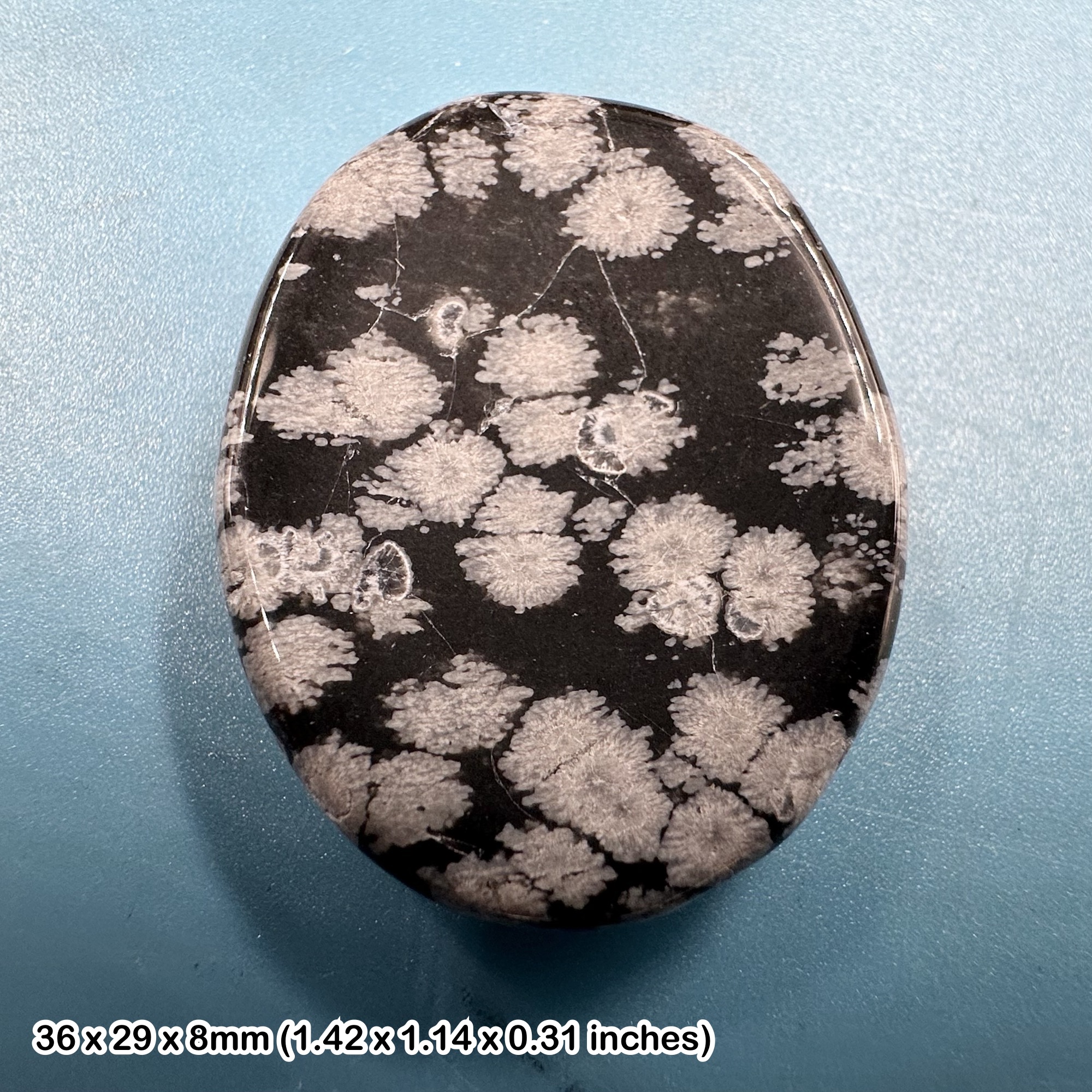
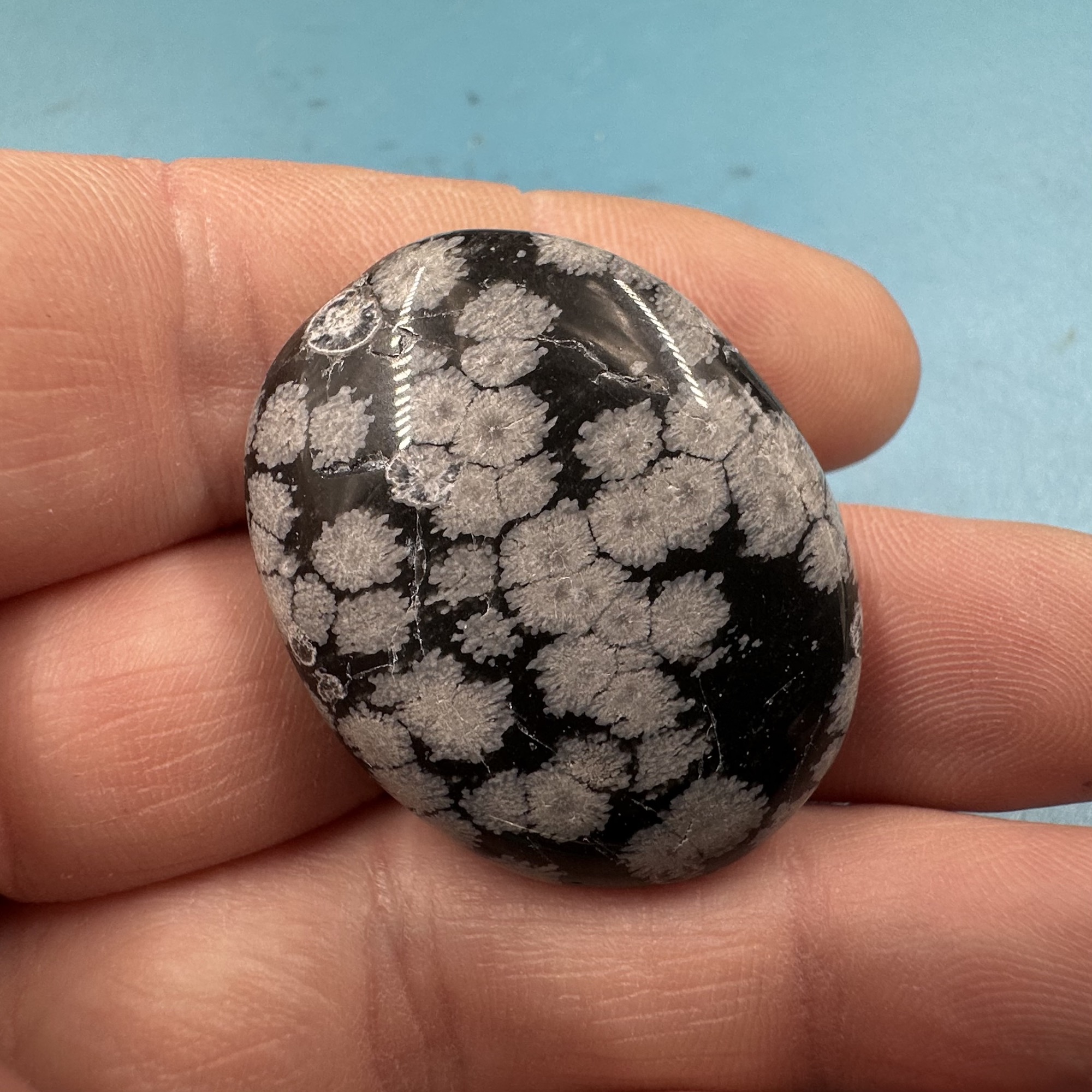
Snowflake Obsidian Worry Stone Palm Stone Natural Volcanic Glass Mineral Polished Crystal Specimen Gift with Certificate of Authenticity
£ 7.50
Snowflake Obsidian Worry Stone Palm Stone Natural Volcanic GlassThis Snowflake Obsidian worry stone, also known as a palm stone, is a polished
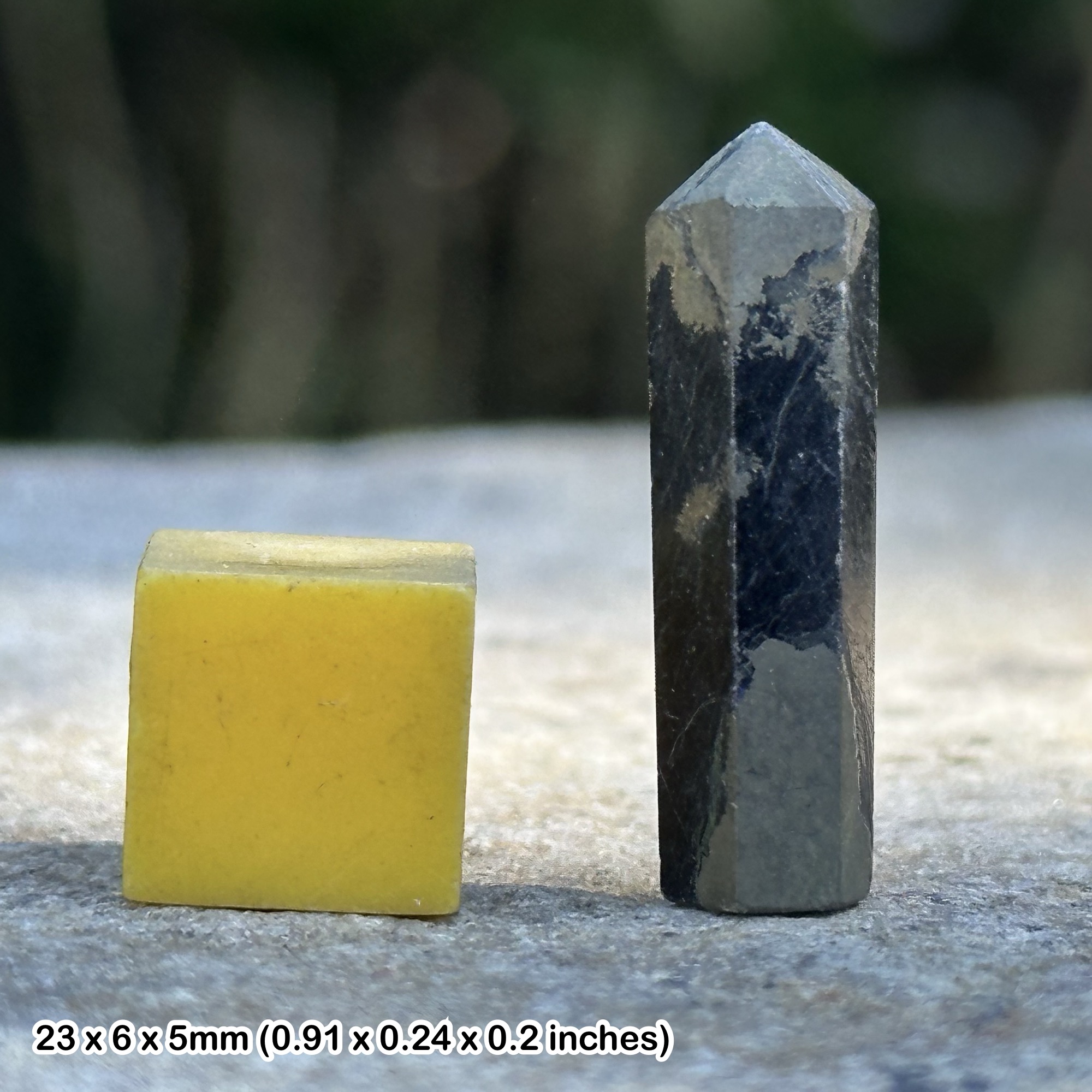
specimen of natural volcanic glass distinguished by its striking black surface patterned with pale grey or white snowflake-like formations. The smooth, tactile shape makes it a popular mineral display piece and collector’s stone, while the distinctive patterning gives every specimen its own natural appearance.The photographs in this listing show the exact specimen you will receive. Each stone has been carefully selected for its visual contrast, polished finish, and clear snowflake patterning. Your purchase also includes a Certificate of Authenticity lifetime guarantee generic card confirming the stone as a genuine natural specimen.Full sizing and scale can be viewed in the listing photos.Mineral Type and Geological ClassificationSnowflake Obsidian is a naturally occurring form of obsidian, a volcanic glass produced when silica-rich lava cools extremely rapidly. Because the cooling process happens so quickly, the material solidifies before mineral crystals have time to form, resulting in an amorphous glass structure rather than a crystalline mineral lattice.Key geological characteristics include:Mineral Type: Natural volcanic glassRock Classification: Igneous extrusive rockPrimary Composition: Silicon dioxide (SiO₂) with trace elementsStructure: Amorphous (non-crystalline)Mohs Hardness: Approximately 5 to 5.5Lustre: Vitreous to glassyTransparency: Opaque to slightly translucent at thin edgesSnowflake Obsidian forms when small radial clusters of cristobalite, a form of silica, crystallise within the glass during slow cooling after the initial lava solidification. These inclusions create the distinctive pale grey “snowflake” patterns that give the stone its name.Formation and Volcanic OriginsObsidian forms in volcanic environments where high-silica lava erupts and cools rapidly on or near the Earth’s surface. The rapid cooling prevents the formation of traditional crystal structures, producing a natural volcanic glass.In Snowflake Obsidian, the snowflake patterns are created by spherulites, which are radial crystal growths of cristobalite that develop as the volcanic glass slowly devitrifies over time. These structures appear as soft grey or white bursts across the black background of the stone.This geological process produces the contrasting pattern that makes Snowflake Obsidian one of the most visually distinctive varieties of obsidian.Colour, Texture and Natural PatterningSnowflake Obsidian is easily recognised by its deep black background and scattered pale grey to white crystal clusters. Each specimen displays unique natural markings due to the random distribution of cristobalite inclusions within the volcanic glass.Common visual characteristics include:Black glossy volcanic glass baseGrey or white snowflake-like radial inclusionsHigh polish reflecting the glassy lustreSmooth curved surfaces created during shaping and polishingBecause the stone is natural volcanic glass, patterns vary from piece to piece, making each specimen distinctive.Polished Worry Stone and Palm Stone ShapeThis Snowflake Obsidian specimen has been shaped into a worry stone or palm stone. These stones are polished into smooth oval or rounded forms designed to sit comfortably in the hand.The shape highlights the natural patterns within the stone while creating a clean, display-ready surface. The smooth finish also enhances the glassy lustre typical of obsidian.Palm stones and worry stones are widely appreciated as:Natural mineral display piecesPocket-sized collector specimensDecorative stones for desks or cabinetsUnique natural gifts for mineral enthusiastsThe polished surface allows the natural snowflake inclusions to stand out clearly against the dark obsidian background.Mineral Collecting and Geological InterestObsidian is valued by collectors due to its volcanic origin and glass-like appearance, while Snowflake Obsidian is particularly sought after because of the distinctive cristobalite inclusions that create the snowflake pattern.Specimens like this are often included in:Volcanic rock collectionsIgneous rock displaysNatural volcanic glass collectionsEducational geological displaysBecause obsidian forms directly from volcanic activity, it represents a fascinating example of rapid geological processes preserved in natural glass.Cultural and Traditional AssociationsHistorically, obsidian has been used by many cultures for tools, carvings, and ornamental objects due to its sharp fracture and glossy appearance. Stones displaying natural patterns such as Snowflake Obsidian have also been traditionally associated with symbolic interpretations in various cultural traditions, particularly those relating to balance or reflection. These interpretations are part of cultural folklore rather than scientific mineral properties.Authenticity and Exact SpecimenThis Snowflake Obsidian worry stone is a genuine natural volcanic glass specimen. The photographs provided in the listing show the exact stone you will receive, allowing collectors and buyers to view the natural patterns and polished finish before purchase.Each piece includes a Certificate of Authenticity lifetime guarantee generic card confirming the stone’s authenticity.Please refer to the photos for full sizing and scale. The specimen shown is the exact polished Snowflake Obsidian palm stone that will be shipped.
specimen of natural volcanic glass distinguished by its striking black surface patterned with pale grey or white snowflake-like formations. The smooth, tactile shape makes it a popular mineral display piece and collector’s stone, while the distinctive patterning gives every specimen its own natural appearance.The photographs in this listing show the exact specimen you will receive. Each stone has been carefully selected for its visual contrast, polished finish, and clear snowflake patterning. Your purchase also includes a Certificate of Authenticity lifetime guarantee generic card confirming the stone as a genuine natural specimen.Full sizing and scale can be viewed in the listing photos.Mineral Type and Geological ClassificationSnowflake Obsidian is a naturally occurring form of obsidian, a volcanic glass produced when silica-rich lava cools extremely rapidly. Because the cooling process happens so quickly, the material solidifies before mineral crystals have time to form, resulting in an amorphous glass structure rather than a crystalline mineral lattice.Key geological characteristics include:Mineral Type: Natural volcanic glassRock Classification: Igneous extrusive rockPrimary Composition: Silicon dioxide (SiO₂) with trace elementsStructure: Amorphous (non-crystalline)Mohs Hardness: Approximately 5 to 5.5Lustre: Vitreous to glassyTransparency: Opaque to slightly translucent at thin edgesSnowflake Obsidian forms when small radial clusters of cristobalite, a form of silica, crystallise within the glass during slow cooling after the initial lava solidification. These inclusions create the distinctive pale grey “snowflake” patterns that give the stone its name.Formation and Volcanic OriginsObsidian forms in volcanic environments where high-silica lava erupts and cools rapidly on or near the Earth’s surface. The rapid cooling prevents the formation of traditional crystal structures, producing a natural volcanic glass.In Snowflake Obsidian, the snowflake patterns are created by spherulites, which are radial crystal growths of cristobalite that develop as the volcanic glass slowly devitrifies over time. These structures appear as soft grey or white bursts across the black background of the stone.This geological process produces the contrasting pattern that makes Snowflake Obsidian one of the most visually distinctive varieties of obsidian.Colour, Texture and Natural PatterningSnowflake Obsidian is easily recognised by its deep black background and scattered pale grey to white crystal clusters. Each specimen displays unique natural markings due to the random distribution of cristobalite inclusions within the volcanic glass.Common visual characteristics include:Black glossy volcanic glass baseGrey or white snowflake-like radial inclusionsHigh polish reflecting the glassy lustreSmooth curved surfaces created during shaping and polishingBecause the stone is natural volcanic glass, patterns vary from piece to piece, making each specimen distinctive.Polished Worry Stone and Palm Stone ShapeThis Snowflake Obsidian specimen has been shaped into a worry stone or palm stone. These stones are polished into smooth oval or rounded forms designed to sit comfortably in the hand.The shape highlights the natural patterns within the stone while creating a clean, display-ready surface. The smooth finish also enhances the glassy lustre typical of obsidian.Palm stones and worry stones are widely appreciated as:Natural mineral display piecesPocket-sized collector specimensDecorative stones for desks or cabinetsUnique natural gifts for mineral enthusiastsThe polished surface allows the natural snowflake inclusions to stand out clearly against the dark obsidian background.Mineral Collecting and Geological InterestObsidian is valued by collectors due to its volcanic origin and glass-like appearance, while Snowflake Obsidian is particularly sought after because of the distinctive cristobalite inclusions that create the snowflake pattern.Specimens like this are often included in:Volcanic rock collectionsIgneous rock displaysNatural volcanic glass collectionsEducational geological displaysBecause obsidian forms directly from volcanic activity, it represents a fascinating example of rapid geological processes preserved in natural glass.Cultural and Traditional AssociationsHistorically, obsidian has been used by many cultures for tools, carvings, and ornamental objects due to its sharp fracture and glossy appearance. Stones displaying natural patterns such as Snowflake Obsidian have also been traditionally associated with symbolic interpretations in various cultural traditions, particularly those relating to balance or reflection. These interpretations are part of cultural folklore rather than scientific mineral properties.Authenticity and Exact SpecimenThis Snowflake Obsidian worry stone is a genuine natural volcanic glass specimen. The photographs provided in the listing show the exact stone you will receive, allowing collectors and buyers to view the natural patterns and polished finish before purchase.Each piece includes a Certificate of Authenticity lifetime guarantee generic card confirming the stone’s authenticity.Please refer to the photos for full sizing and scale. The specimen shown is the exact polished Snowflake Obsidian palm stone that will be shipped.
Other Products