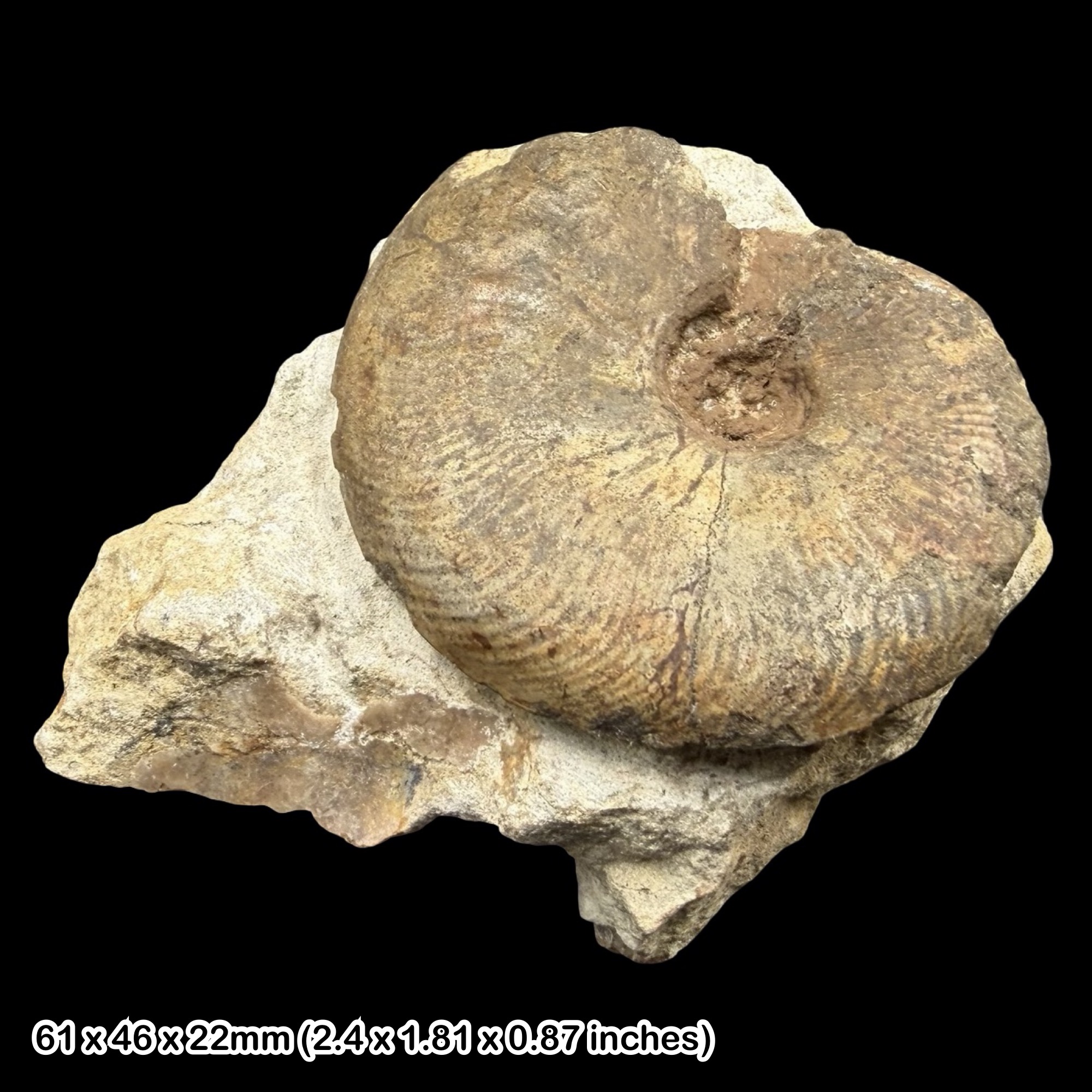
Pleydellia comata Ammonite Fossil Jurassic Bridport Dorset UK Genuine COA Fossil Aalenian British Collectable Natural History
£ 12.60
GENUINE PLEYDELLIA COMATA AMMONITE FOSSILThis listing is for a genuine Pleydellia comata ammonite fossil from Bridport,
Dorset, UK. Dating to the Jurassic Aalenian, this carefully chosen specimen represents an authentic fossil marine cephalopod from one of Britain’s classic fossil-rich regions. The photograph shows the actual specimen you will receive, allowing you to view the fossil’s natural preservation, form, colour, matrix, surface detail and overall character before purchase.This fossil is supplied with a Certificate of Authenticity lifetime guarantee generic card, confirming that it is a genuine specimen. Full sizing details can be seen in the photo. FOSSIL TYPE AND SPECIESPleydellia comata is an ammonite, part of an extinct group of shelled marine cephalopods related to modern squid, octopus and cuttlefish. Ammonites are among the most iconic fossils from the Jurassic period, instantly recognisable for their coiled shells and highly valued by collectors for their beauty, variety and scientific importance.The ammonite shell was divided internally into chambers. The living animal occupied the outer body chamber, while earlier chambers helped with buoyancy control as the ammonite moved through the ancient sea. As the animal grew, it produced new chambers, creating the spiral shell structure that makes ammonites so attractive and distinctive as fossils.Pleydellia is a well-known ammonite genus used in Jurassic biostratigraphy, and fossils of this type are especially interesting because ammonites evolved rapidly and are useful for dating and comparing rock layers. A named ammonite such as Pleydellia comata has strong appeal for collectors seeking an identified British Jurassic fossil with good geological context. GEOLOGICAL AGE AND JURASSIC SETTINGThis specimen is from the Aalenian, an important interval of Jurassic time associated with changing ammonite faunas and shallow marine environments across Europe. During this period, the area now forming Dorset lay close to warm Jurassic seas that supported a diverse ecosystem of ammonites, belemnites, bivalves, brachiopods, gastropods, crinoids and other marine life.The sediments that preserved fossils from this region were laid down in marine conditions, with fine muds, sands, silts and calcareous material accumulating on ancient sea floors. Over millions of years, these deposits hardened into fossil-bearing rock, capturing evidence of the organisms that lived in the Jurassic seas. Ammonites such as Pleydellia comata are especially useful in understanding these environments because their forms changed through time and can help identify specific intervals in the geological record. BRIDPORT, DORSET FOSSIL LOCALITYBridport, Dorset is part of one of the most famous fossil regions in the United Kingdom. Dorset is internationally known for its Jurassic coastline and inland fossil-bearing strata, which have produced ammonites, belemnites, marine reptiles, bivalves and many other fossils. A specimen from Bridport carries strong British locality appeal and is ideal for collectors who value labelled fossils from classic UK geological areas.The Bridport area is associated with Jurassic marine sediments and has long been of interest to fossil collectors, geologists and natural history enthusiasts. Fossils from Dorset are highly sought after because they connect directly to Britain’s rich palaeontological heritage and the world-famous Jurassic fossil record of southwest England. AMMONITE MORPHOLOGY AND NATURAL FEATURESAmmonites such as Pleydellia comata typically show a coiled planispiral shell form, with whorls arranged around a central spiral. Depending on the preservation of the individual fossil, visible features may include fine ribbing, whorl curvature, shell outline, chamber traces, natural matrix, mineralisation and surface texture. These details reflect both the original shell structure and the geological processes that preserved the fossil over millions of years.As a natural fossil specimen, each piece is unique. Variations in colour, matrix, surface preservation, edge detail, mineral staining, compression and texture are part of the fossil’s individual character. This makes the specimen a distinctive example of ancient marine life rather than a manufactured display item. COLLECTING AND DISPLAY APPEALThis Pleydellia comata ammonite fossil is ideal for collectors of Jurassic ammonites, Dorset fossils, Bridport fossils, British fossils, Aalenian ammonites and natural history display specimens. It would make an excellent addition to a fossil cabinet, geology collection, educational display, school teaching set or natural history gift.The specimen has been carefully chosen and photographed so that the buyer can see the exact fossil being supplied. Its appeal comes from the combination of genuine authenticity, named species, classic British locality, Jurassic age and attractive ammonite form. AUTHENTICITY AND PRESENTATIONThis is a 100% genuine fossil specimen and includes a Certificate of Authenticity lifetime guarantee generic card. The listing photograph shows the actual specimen you will receive, and full sizing can be checked from the photo. The fossil is suitable for display, study, collecting or gifting.
Dorset, UK. Dating to the Jurassic Aalenian, this carefully chosen specimen represents an authentic fossil marine cephalopod from one of Britain’s classic fossil-rich regions. The photograph shows the actual specimen you will receive, allowing you to view the fossil’s natural preservation, form, colour, matrix, surface detail and overall character before purchase.This fossil is supplied with a Certificate of Authenticity lifetime guarantee generic card, confirming that it is a genuine specimen. Full sizing details can be seen in the photo. FOSSIL TYPE AND SPECIESPleydellia comata is an ammonite, part of an extinct group of shelled marine cephalopods related to modern squid, octopus and cuttlefish. Ammonites are among the most iconic fossils from the Jurassic period, instantly recognisable for their coiled shells and highly valued by collectors for their beauty, variety and scientific importance.The ammonite shell was divided internally into chambers. The living animal occupied the outer body chamber, while earlier chambers helped with buoyancy control as the ammonite moved through the ancient sea. As the animal grew, it produced new chambers, creating the spiral shell structure that makes ammonites so attractive and distinctive as fossils.Pleydellia is a well-known ammonite genus used in Jurassic biostratigraphy, and fossils of this type are especially interesting because ammonites evolved rapidly and are useful for dating and comparing rock layers. A named ammonite such as Pleydellia comata has strong appeal for collectors seeking an identified British Jurassic fossil with good geological context. GEOLOGICAL AGE AND JURASSIC SETTINGThis specimen is from the Aalenian, an important interval of Jurassic time associated with changing ammonite faunas and shallow marine environments across Europe. During this period, the area now forming Dorset lay close to warm Jurassic seas that supported a diverse ecosystem of ammonites, belemnites, bivalves, brachiopods, gastropods, crinoids and other marine life.The sediments that preserved fossils from this region were laid down in marine conditions, with fine muds, sands, silts and calcareous material accumulating on ancient sea floors. Over millions of years, these deposits hardened into fossil-bearing rock, capturing evidence of the organisms that lived in the Jurassic seas. Ammonites such as Pleydellia comata are especially useful in understanding these environments because their forms changed through time and can help identify specific intervals in the geological record. BRIDPORT, DORSET FOSSIL LOCALITYBridport, Dorset is part of one of the most famous fossil regions in the United Kingdom. Dorset is internationally known for its Jurassic coastline and inland fossil-bearing strata, which have produced ammonites, belemnites, marine reptiles, bivalves and many other fossils. A specimen from Bridport carries strong British locality appeal and is ideal for collectors who value labelled fossils from classic UK geological areas.The Bridport area is associated with Jurassic marine sediments and has long been of interest to fossil collectors, geologists and natural history enthusiasts. Fossils from Dorset are highly sought after because they connect directly to Britain’s rich palaeontological heritage and the world-famous Jurassic fossil record of southwest England. AMMONITE MORPHOLOGY AND NATURAL FEATURESAmmonites such as Pleydellia comata typically show a coiled planispiral shell form, with whorls arranged around a central spiral. Depending on the preservation of the individual fossil, visible features may include fine ribbing, whorl curvature, shell outline, chamber traces, natural matrix, mineralisation and surface texture. These details reflect both the original shell structure and the geological processes that preserved the fossil over millions of years.As a natural fossil specimen, each piece is unique. Variations in colour, matrix, surface preservation, edge detail, mineral staining, compression and texture are part of the fossil’s individual character. This makes the specimen a distinctive example of ancient marine life rather than a manufactured display item. COLLECTING AND DISPLAY APPEALThis Pleydellia comata ammonite fossil is ideal for collectors of Jurassic ammonites, Dorset fossils, Bridport fossils, British fossils, Aalenian ammonites and natural history display specimens. It would make an excellent addition to a fossil cabinet, geology collection, educational display, school teaching set or natural history gift.The specimen has been carefully chosen and photographed so that the buyer can see the exact fossil being supplied. Its appeal comes from the combination of genuine authenticity, named species, classic British locality, Jurassic age and attractive ammonite form. AUTHENTICITY AND PRESENTATIONThis is a 100% genuine fossil specimen and includes a Certificate of Authenticity lifetime guarantee generic card. The listing photograph shows the actual specimen you will receive, and full sizing can be checked from the photo. The fossil is suitable for display, study, collecting or gifting.