Hildoceras tethysi Ammonite Fossil Lower Toarcian Jurassic Lozere France Genuine Specimen
£ 14.40
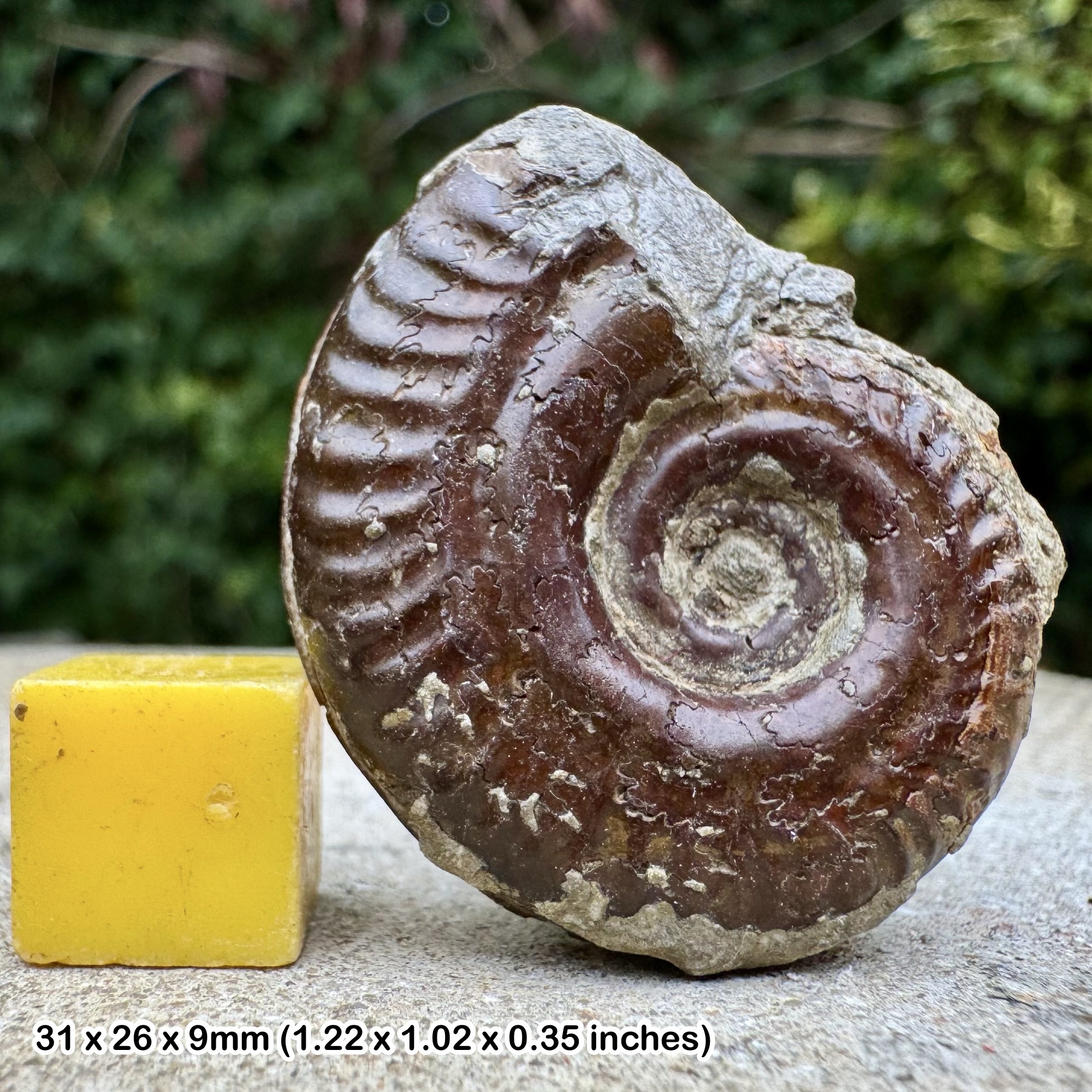
AUTHENTIC HILDOCERAS TETHYSI AMMONITE FOSSIL FROM LOZERE, FRANCEThis listing offers a remarkable Hildoceras tethysi ammonite fossil from the
Lower Toarcian stage of the Jurassic Period, approximately 182 million years old. Sourced from Lozere, France, an area famous for its fossil-rich limestone deposits, this specimen is a genuine piece of natural history. The photographs provided show the actual fossil you will receive, and as with all of our specimens, it is accompanied by a Certificate of Authenticity to guarantee its origin and scientific integrity. GEOLOGICAL AND STRATIGRAPHIC CONTEXTThe Lower Toarcian is a key subdivision of the Early Jurassic, marked by significant climatic and environmental changes, most notably the Toarcian Oceanic Anoxic Event. This global phenomenon dramatically altered marine ecosystems and contributed to the widespread preservation of ammonites such as Hildoceras tethysi.The Lozere region contains finely bedded limestone and marl layers that were deposited in shallow marine environments connected to the ancient Tethys Ocean. These conditions were ideal for fossil preservation, enabling delicate ammonite shells to fossilize with remarkable detail. Fossils from this locality are highly sought after by collectors and researchers due to their stratigraphic precision and exceptional preservation quality. SCIENTIFIC CLASSIFICATION
• Class: Cephalopoda
• Subclass: Ammonoidea
• Order: Ammonitida
• Superfamily: Hildoceratoidea
• Family: Hildoceratidae
• Genus: Hildoceras
• Species: Hildoceras tethysiThis species is an important index fossil for the Lower Toarcian stage, meaning it helps geologists and paleontologists correlate rock layers across Europe and beyond. Its distinctive morphology makes it instantly recognizable and valuable for both scientific study and private collections. MORPHOLOGICAL CHARACTERISTICSHildoceras tethysi exhibits a strongly involute shell, where earlier whorls are largely concealed by later growth. The shell displays pronounced ribbing across the flanks and a sharp keel along the venter, features that are diagnostic of the genus. The ribbing gives the fossil a striking aesthetic appearance, while also reflecting the hydrodynamic adaptations of this ancient cephalopod.These structural details would have enhanced the ammonite’s mobility in open water, allowing it to maintain stability and efficiency as a predator within Jurassic seas. The combination of ribbed ornamentation, compressed whorls, and keel development make Hildoceras tethysi a distinctive and highly desirable ammonite species. PALEOECOLOGY AND EVOLUTIONARY SIGNIFICANCEAs a nektonic cephalopod, Hildoceras tethysi was an active swimmer in the warm epicontinental seas of the Early Jurassic. It likely fed on small fish, crustaceans, and planktonic organisms, playing an important role in the marine food web. Its abundance and rapid evolutionary changes make it an essential taxon for understanding the evolutionary history of ammonites during a dynamic geological interval.The Lower Toarcian deposits where this specimen was found are also central to understanding Jurassic biodiversity, as they provide evidence of how marine life adapted to widespread environmental stress during the Oceanic Anoxic Event. Fossils such as this help reconstruct ancient ecosystems and provide a window into evolutionary processes that shaped marine life. A COLLECTOR’S FOSSIL OF EXCEPTIONAL VALUEThis Hildoceras tethysi ammonite fossil from Lozere is not just a geological specimen but a piece of natural history with scientific, aesthetic, and cultural importance. Its distinctive features, precise geological context, and guaranteed authenticity make it an excellent addition to any fossil collection, whether for educational display, research, or private appreciation.Owning this specimen is an opportunity to preserve and display a tangible connection to the Jurassic seas, where ammonites thrived over 180 million years ago, leaving behind their timeless legacy in stone.
Lower Toarcian stage of the Jurassic Period, approximately 182 million years old. Sourced from Lozere, France, an area famous for its fossil-rich limestone deposits, this specimen is a genuine piece of natural history. The photographs provided show the actual fossil you will receive, and as with all of our specimens, it is accompanied by a Certificate of Authenticity to guarantee its origin and scientific integrity. GEOLOGICAL AND STRATIGRAPHIC CONTEXTThe Lower Toarcian is a key subdivision of the Early Jurassic, marked by significant climatic and environmental changes, most notably the Toarcian Oceanic Anoxic Event. This global phenomenon dramatically altered marine ecosystems and contributed to the widespread preservation of ammonites such as Hildoceras tethysi.The Lozere region contains finely bedded limestone and marl layers that were deposited in shallow marine environments connected to the ancient Tethys Ocean. These conditions were ideal for fossil preservation, enabling delicate ammonite shells to fossilize with remarkable detail. Fossils from this locality are highly sought after by collectors and researchers due to their stratigraphic precision and exceptional preservation quality. SCIENTIFIC CLASSIFICATION
• Class: Cephalopoda
• Subclass: Ammonoidea
• Order: Ammonitida
• Superfamily: Hildoceratoidea
• Family: Hildoceratidae
• Genus: Hildoceras
• Species: Hildoceras tethysiThis species is an important index fossil for the Lower Toarcian stage, meaning it helps geologists and paleontologists correlate rock layers across Europe and beyond. Its distinctive morphology makes it instantly recognizable and valuable for both scientific study and private collections. MORPHOLOGICAL CHARACTERISTICSHildoceras tethysi exhibits a strongly involute shell, where earlier whorls are largely concealed by later growth. The shell displays pronounced ribbing across the flanks and a sharp keel along the venter, features that are diagnostic of the genus. The ribbing gives the fossil a striking aesthetic appearance, while also reflecting the hydrodynamic adaptations of this ancient cephalopod.These structural details would have enhanced the ammonite’s mobility in open water, allowing it to maintain stability and efficiency as a predator within Jurassic seas. The combination of ribbed ornamentation, compressed whorls, and keel development make Hildoceras tethysi a distinctive and highly desirable ammonite species. PALEOECOLOGY AND EVOLUTIONARY SIGNIFICANCEAs a nektonic cephalopod, Hildoceras tethysi was an active swimmer in the warm epicontinental seas of the Early Jurassic. It likely fed on small fish, crustaceans, and planktonic organisms, playing an important role in the marine food web. Its abundance and rapid evolutionary changes make it an essential taxon for understanding the evolutionary history of ammonites during a dynamic geological interval.The Lower Toarcian deposits where this specimen was found are also central to understanding Jurassic biodiversity, as they provide evidence of how marine life adapted to widespread environmental stress during the Oceanic Anoxic Event. Fossils such as this help reconstruct ancient ecosystems and provide a window into evolutionary processes that shaped marine life. A COLLECTOR’S FOSSIL OF EXCEPTIONAL VALUEThis Hildoceras tethysi ammonite fossil from Lozere is not just a geological specimen but a piece of natural history with scientific, aesthetic, and cultural importance. Its distinctive features, precise geological context, and guaranteed authenticity make it an excellent addition to any fossil collection, whether for educational display, research, or private appreciation.Owning this specimen is an opportunity to preserve and display a tangible connection to the Jurassic seas, where ammonites thrived over 180 million years ago, leaving behind their timeless legacy in stone.