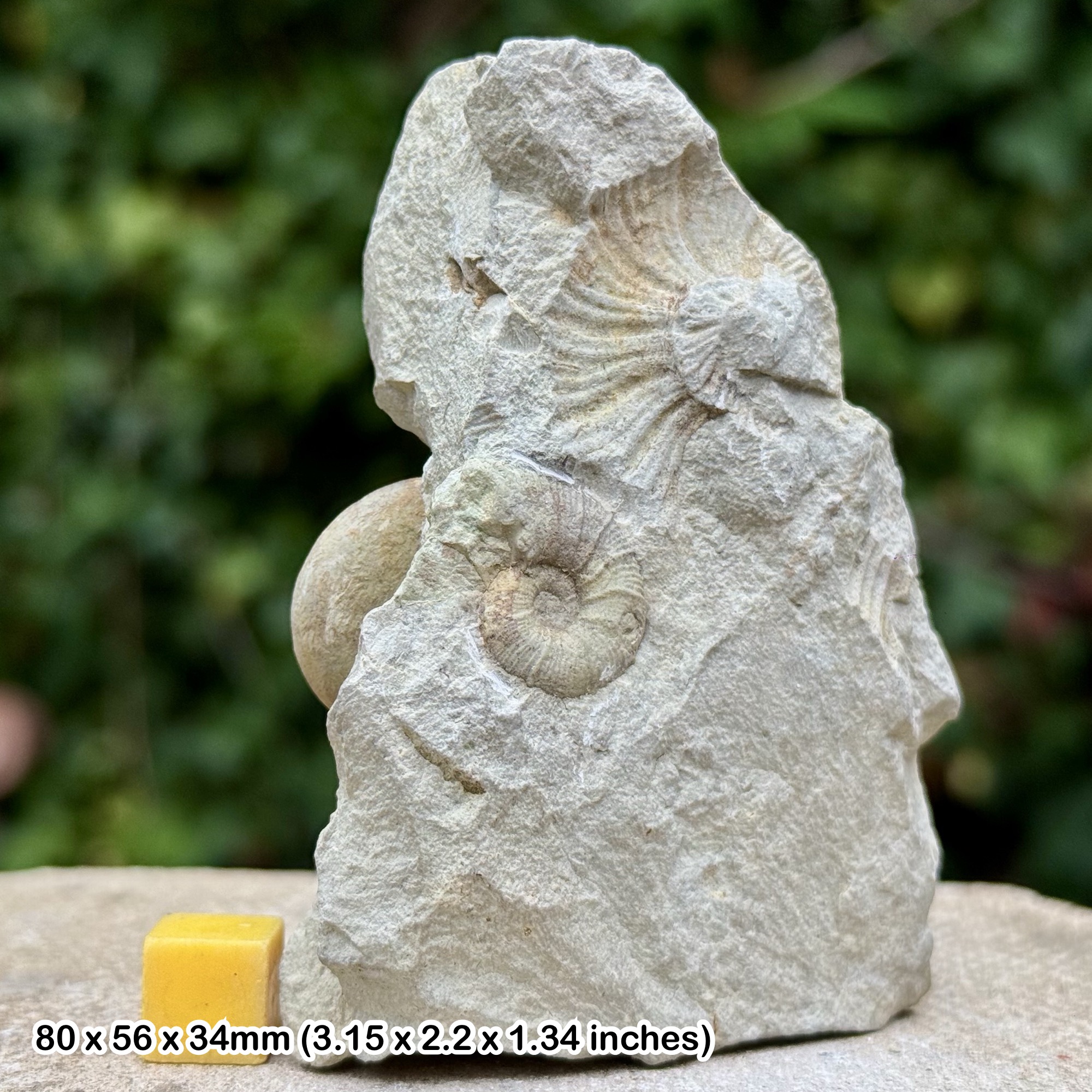
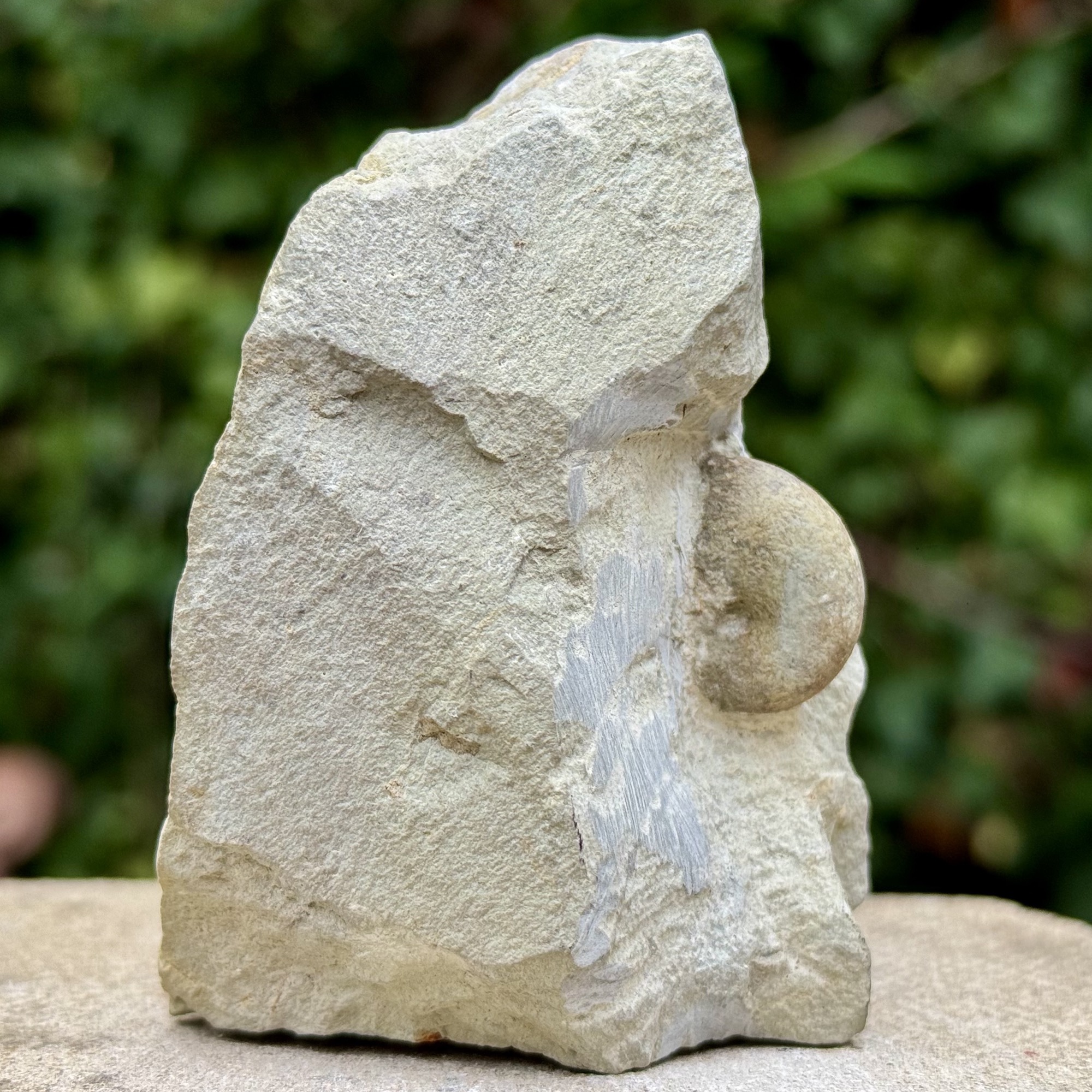
Rare Spitidiscus Ammonite Fossil from Aptian Cretaceous Alps Haute Provence France Authentic Specimen
£ 18.00
GEOLOGICAL CONTEXT AND PROVENANCEThis specimen is a genuine Spitidiscus ammonite fossil from the Aptian Stage of
the Early Cretaceous Period, approximately 125 – 113 million years ago. It originates from the Alps region of Haute Provence, France, an area celebrated worldwide for its Lower Cretaceous fossil localities. The Aptian is a key interval in Earth’s history, known for dynamic climatic changes, sea-level fluctuations, and evolutionary diversification among marine organisms, particularly ammonites.The deposits of Haute Provence formed within shallow marine environments along the northern margin of the Tethys Ocean. These conditions, dominated by fine limestones and marls, created an ideal setting for the fossilisation of ammonites. Fossils from this region are of major importance to palaeontologists because they provide precise biostratigraphic markers for Early Cretaceous sediments. FOSSIL TYPE AND SPECIES INFORMATIONSpitidiscus belongs to the Order Ammonitida, Superfamily Desmoceratoidea, and Family Desmoceratidae. Ammonites of this genus are noted for their ribbed and often ornate shell morphology, making them both scientifically significant and visually striking. Spitidiscus is an important genus for defining biozones within the Lower Cretaceous and plays a crucial role in correlating Aptian strata across Europe and the Mediterranean.Ammonites such as Spitidiscus were nektonic cephalopods, related to modern squid and cuttlefish. Their chambered shells allowed them to regulate buoyancy, enabling them to move actively in the open marine water column as predators of small crustaceans and other invertebrates. MORPHOLOGICAL FEATURES AND IDENTIFICATIONThis fossil displays the diagnostic characteristics of Spitidiscus. The shell is moderately involute with strong ribbing that extends across the flanks and continues onto the venter. The ribs may bifurcate or branch, adding to the ornamented appearance. The whorls are tightly coiled, producing a robust and compact form.These morphological traits not only provide taxonomic distinction but also reveal functional adaptations. The ribbing reinforced the shell, offering structural strength, while also possibly improving hydrodynamic efficiency in swimming. The intricate coiling and ornamentation make Spitidiscus ammonites highly attractive to collectors, reflecting both evolutionary adaptation and natural beauty. DEPOSITIONAL ENVIRONMENTDuring the Aptian, Haute Provence was submerged beneath warm, shallow seas. The region was part of the extensive Tethyan seaway, a marine corridor that connected vast ecosystems across Europe, Africa, and Asia. Sediments here were composed primarily of marls and limestones that accumulated slowly, encapsulating ammonite shells and preserving them in detail for millions of years.Marine ecosystems in these Aptian seas were highly diverse, with ammonites, belemnites, bivalves, gastropods, and marine reptiles all playing important ecological roles. Ammonites such as Spitidiscus were vital components of these food webs, serving both as predators and as prey for larger marine animals. COLLECTOR APPEAL AND AUTHENTICITYThis Spitidiscus ammonite fossil is a rare and scientifically important specimen from one of France’s most iconic Cretaceous localities. Its bold ribbing and compact shell form make it visually impressive, while its provenance from the Haute Provence Alps enhances its academic and collector value.
• 100% Genuine Specimen – Every fossil we offer is authentic and comes with a Certificate of Authenticity.
• Exact Fossil Shown – The photographs provided depict the actual specimen you will receive.
• Scale Reference – Scale rule squares / cube = 1 cm. Please see images for precise measurements.This carefully chosen Spitidiscus ammonite represents both a scientifically valuable reference fossil and a striking natural display piece. Its rarity, beauty, and historical significance make it a superb addition to any fossil collection or natural history display.
the Early Cretaceous Period, approximately 125 – 113 million years ago. It originates from the Alps region of Haute Provence, France, an area celebrated worldwide for its Lower Cretaceous fossil localities. The Aptian is a key interval in Earth’s history, known for dynamic climatic changes, sea-level fluctuations, and evolutionary diversification among marine organisms, particularly ammonites.The deposits of Haute Provence formed within shallow marine environments along the northern margin of the Tethys Ocean. These conditions, dominated by fine limestones and marls, created an ideal setting for the fossilisation of ammonites. Fossils from this region are of major importance to palaeontologists because they provide precise biostratigraphic markers for Early Cretaceous sediments. FOSSIL TYPE AND SPECIES INFORMATIONSpitidiscus belongs to the Order Ammonitida, Superfamily Desmoceratoidea, and Family Desmoceratidae. Ammonites of this genus are noted for their ribbed and often ornate shell morphology, making them both scientifically significant and visually striking. Spitidiscus is an important genus for defining biozones within the Lower Cretaceous and plays a crucial role in correlating Aptian strata across Europe and the Mediterranean.Ammonites such as Spitidiscus were nektonic cephalopods, related to modern squid and cuttlefish. Their chambered shells allowed them to regulate buoyancy, enabling them to move actively in the open marine water column as predators of small crustaceans and other invertebrates. MORPHOLOGICAL FEATURES AND IDENTIFICATIONThis fossil displays the diagnostic characteristics of Spitidiscus. The shell is moderately involute with strong ribbing that extends across the flanks and continues onto the venter. The ribs may bifurcate or branch, adding to the ornamented appearance. The whorls are tightly coiled, producing a robust and compact form.These morphological traits not only provide taxonomic distinction but also reveal functional adaptations. The ribbing reinforced the shell, offering structural strength, while also possibly improving hydrodynamic efficiency in swimming. The intricate coiling and ornamentation make Spitidiscus ammonites highly attractive to collectors, reflecting both evolutionary adaptation and natural beauty. DEPOSITIONAL ENVIRONMENTDuring the Aptian, Haute Provence was submerged beneath warm, shallow seas. The region was part of the extensive Tethyan seaway, a marine corridor that connected vast ecosystems across Europe, Africa, and Asia. Sediments here were composed primarily of marls and limestones that accumulated slowly, encapsulating ammonite shells and preserving them in detail for millions of years.Marine ecosystems in these Aptian seas were highly diverse, with ammonites, belemnites, bivalves, gastropods, and marine reptiles all playing important ecological roles. Ammonites such as Spitidiscus were vital components of these food webs, serving both as predators and as prey for larger marine animals. COLLECTOR APPEAL AND AUTHENTICITYThis Spitidiscus ammonite fossil is a rare and scientifically important specimen from one of France’s most iconic Cretaceous localities. Its bold ribbing and compact shell form make it visually impressive, while its provenance from the Haute Provence Alps enhances its academic and collector value.
• 100% Genuine Specimen – Every fossil we offer is authentic and comes with a Certificate of Authenticity.
• Exact Fossil Shown – The photographs provided depict the actual specimen you will receive.
• Scale Reference – Scale rule squares / cube = 1 cm. Please see images for precise measurements.This carefully chosen Spitidiscus ammonite represents both a scientifically valuable reference fossil and a striking natural display piece. Its rarity, beauty, and historical significance make it a superb addition to any fossil collection or natural history display.
Other Products