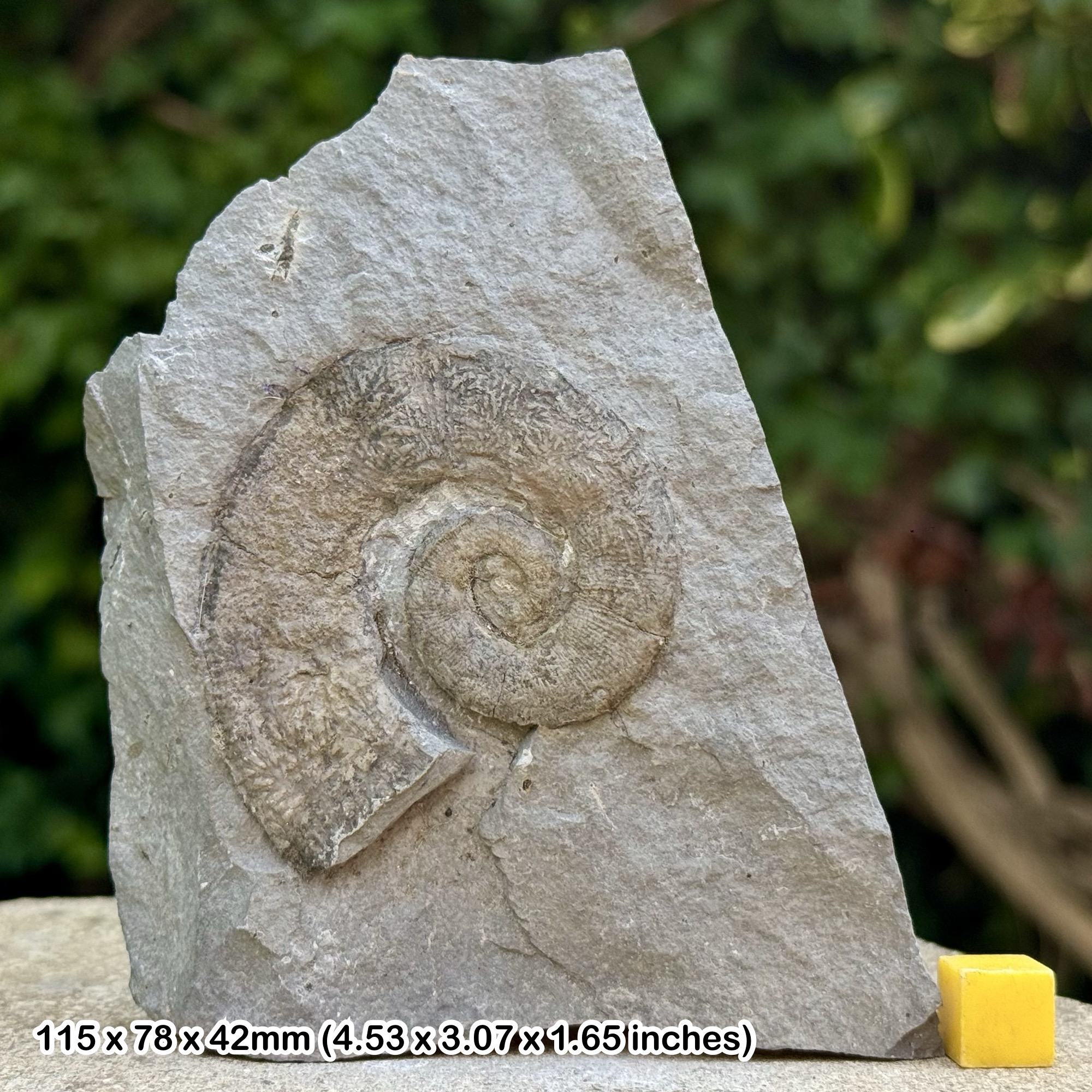
Rare Crioceratites majoricensis Heteromorph Fossil Ammonite Lower Callovian Jurassic Deux Sevres France with Certificate of Authenticity
£ 84.00
This listing is for a rare fossil ammonite, Crioceratites majoricensis, a
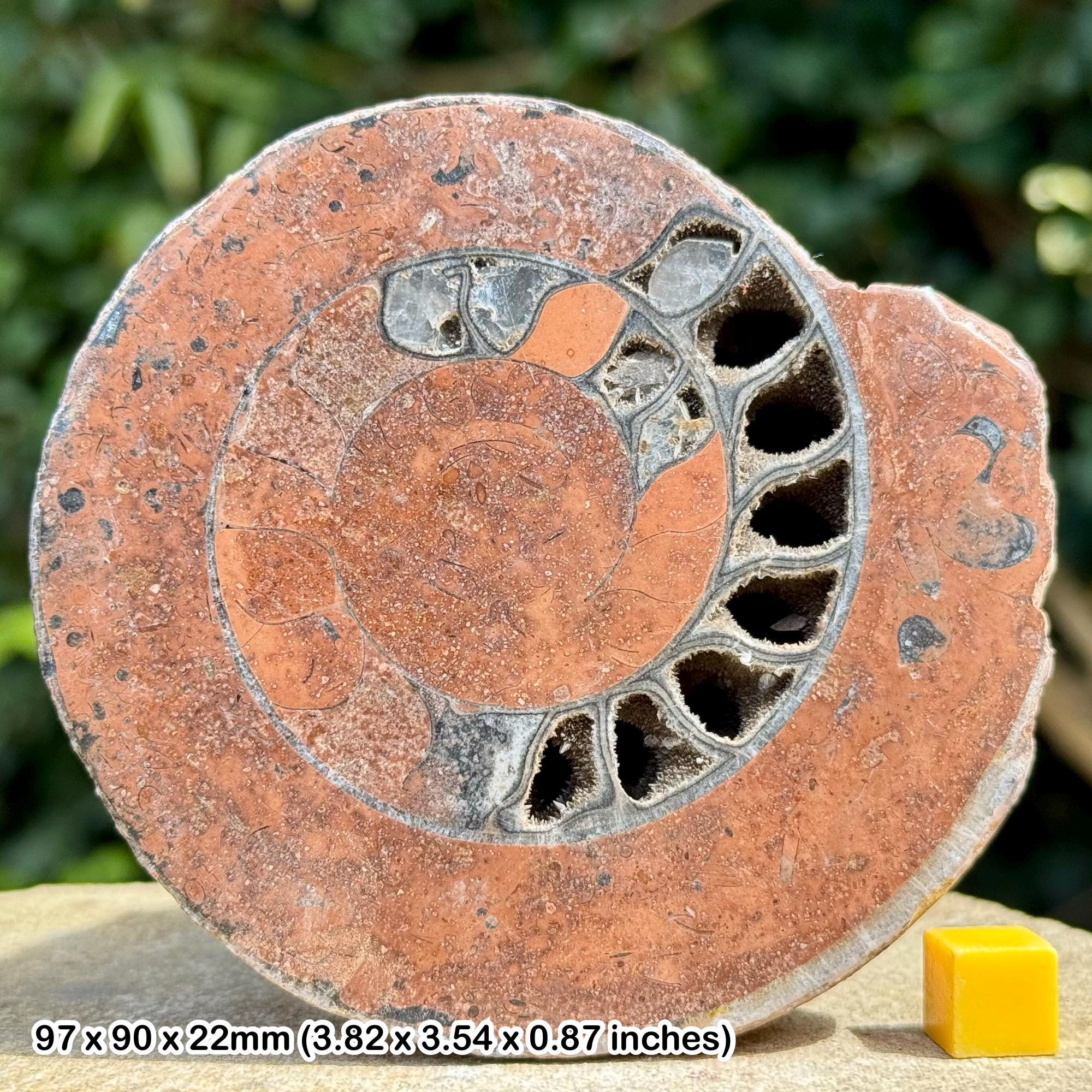
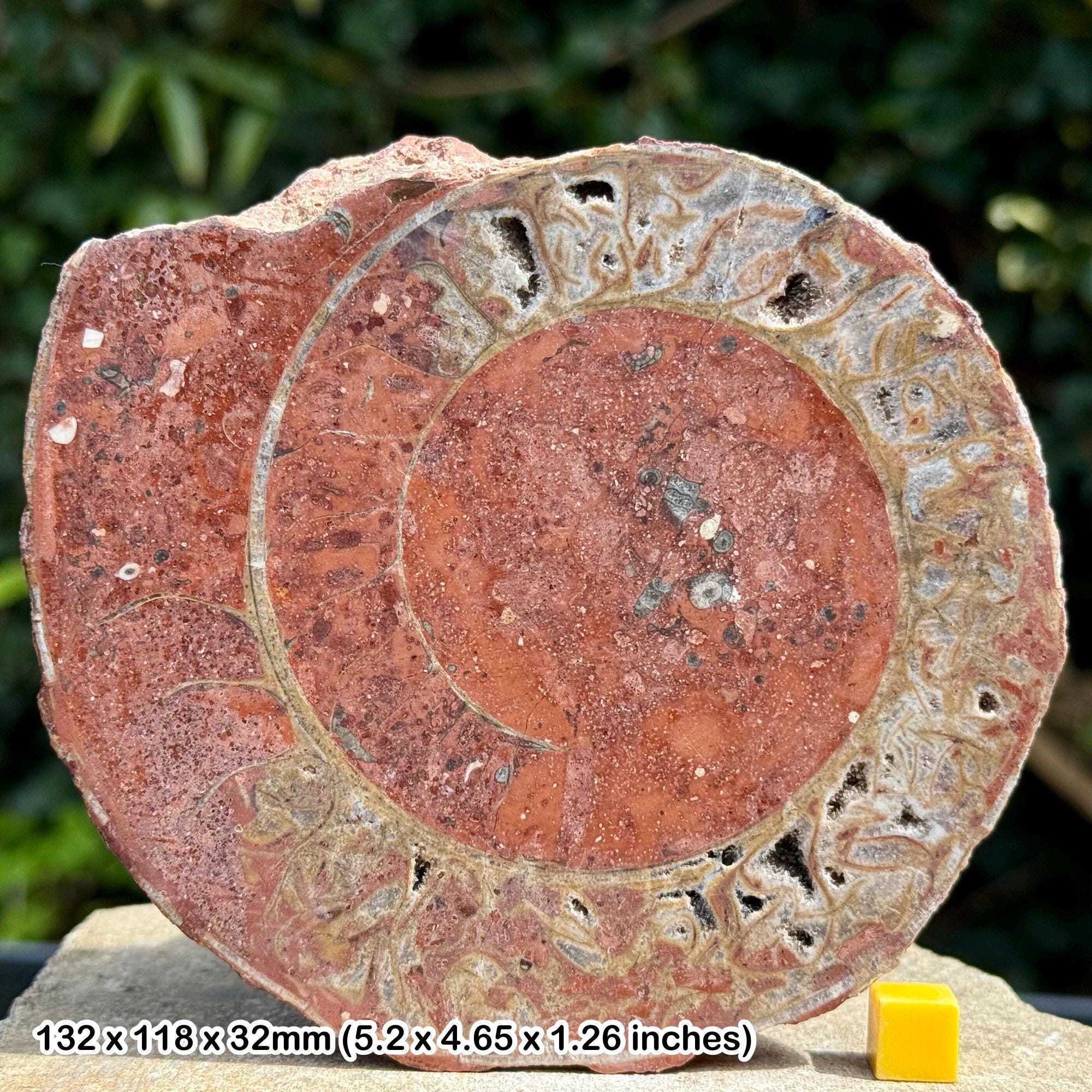
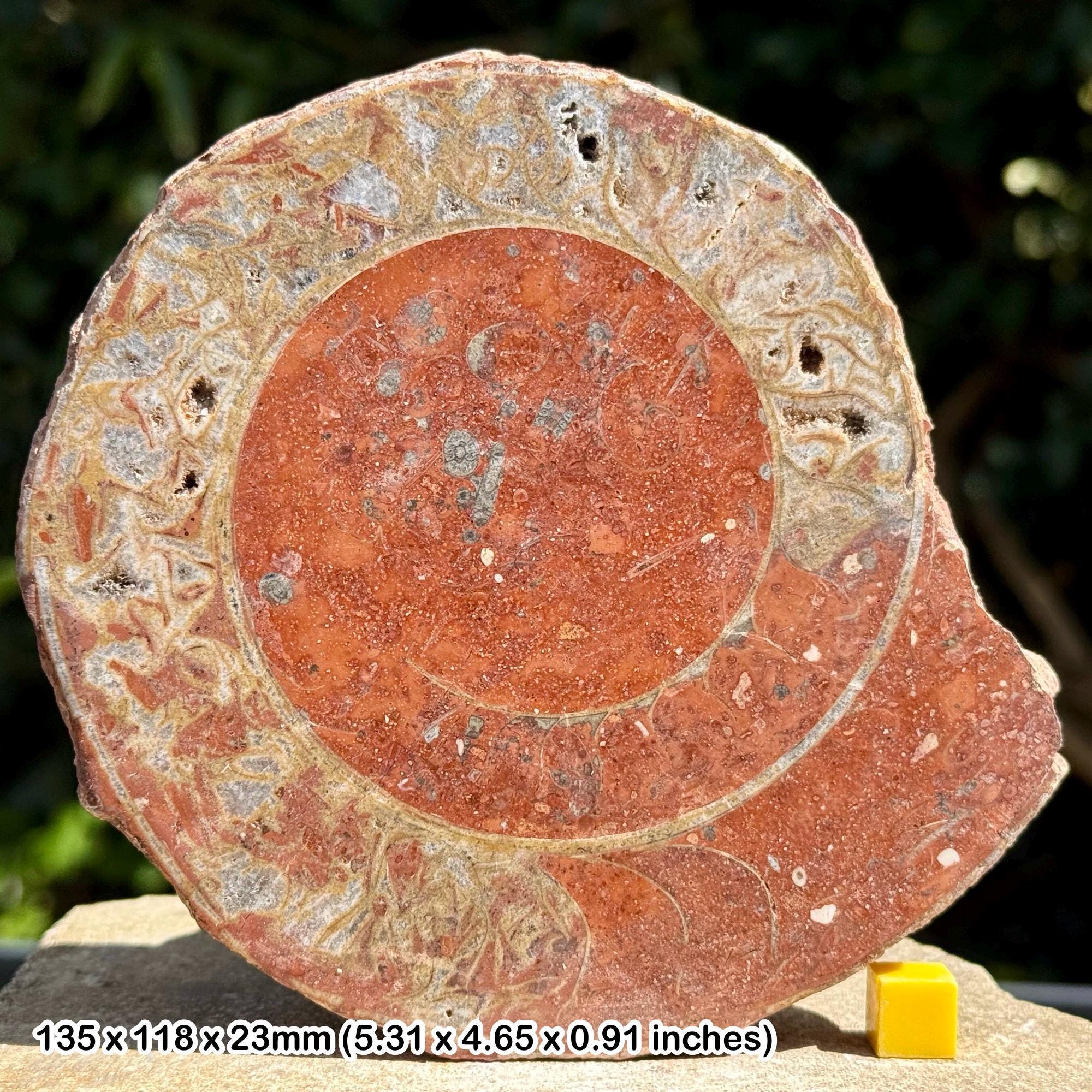
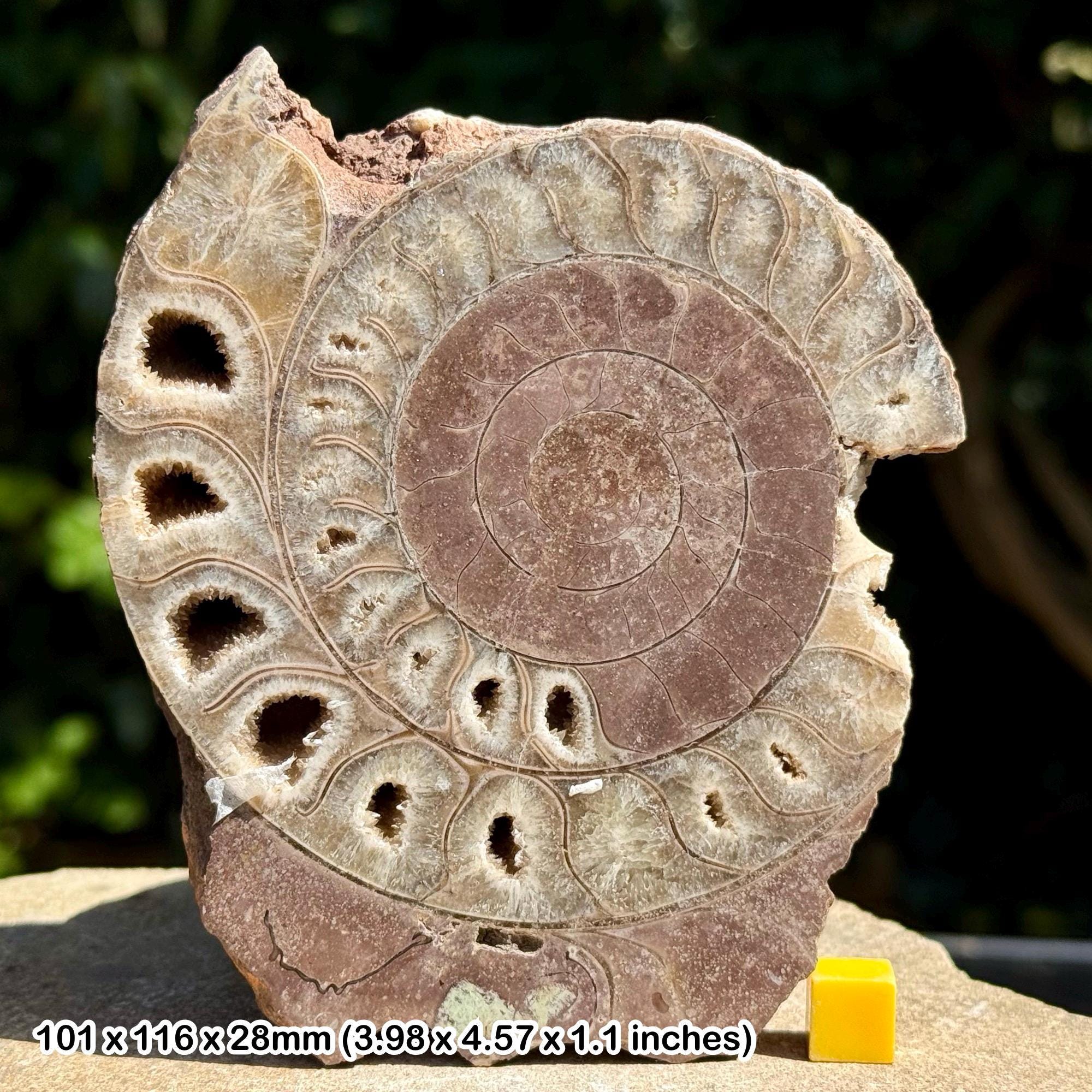
striking heteromorph species from the Lower Callovian stage of the Middle Jurassic (approximately 166–164 million years ago). Collected in Deux Sèvres, France, this specimen represents one of the more unusual and scientifically significant ammonites due to its distinctive uncoiled shell form. The photographs show the exact specimen you will receive. Scale rule squares / cube = 1 cm – please refer to the images for accurate sizing. All of our fossils are 100% genuine specimens and come with a Certificate of Authenticity. GEOLOGICAL CONTEXT: LOWER CALLOVIAN JURASSICThe Callovian stage is part of the Middle Jurassic, a time when shallow seas extended across much of Western Europe, including modern-day France. In Deux Sèvres, rich marine sediments of marls, clays, and limestones were deposited, preserving a diverse range of ammonites and other marine life.The Lower Callovian is particularly significant for paleontologists because it records the evolution of many ammonite groups. Ammonites from this interval, including Crioceratites majoricensis, are widely used as index fossils, enabling geologists to date and correlate rock sequences across Europe. THE SPECIES: CRIOCERATITES MAJORICENSISCrioceratites majoricensis belongs to the order Ammonitida, superfamily Ancylocerataceae, and family Ancyloceratidae. Unlike the typical tightly coiled planispiral ammonites, heteromorph ammonites such as Crioceratites evolved partially uncoiled shells, giving them a unique and unusual appearance.The shell of C. majoricensis displays an openly coiled, crioconic form, with strong ribbing that extends across the whorls. This ribbing provided structural reinforcement and makes the fossil especially attractive as a display specimen. The unusual morphology of heteromorph ammonites is thought to have been an adaptation for a different mode of life, perhaps drifting or hovering in the water column rather than fast swimming.As a member of the heteromorph ammonite lineage, Crioceratites majoricensis is particularly important in studies of ammonite evolution, as it reflects diversification away from the classic planispiral design that dominated most of the group’s history. MORPHOLOGICAL AND SCIENTIFIC FEATURES
• Order: Ammonitida
• Superfamily: Ancylocerataceae
• Family: Ancyloceratidae
• Genus and Species: Crioceratites majoricensis
• Geological Stage: Lower Callovian, Middle Jurassic (c. 166–164 Ma)
• Locality: Deux Sèvres, France
• Shell Traits: Heteromorph crioconic form, strong ribbing, open coil structure
• Scientific Importance: Rare heteromorph ammonite, significant for evolutionary and stratigraphic studiesThe distinctive uncoiled shape and bold ribbing make this fossil both a visually appealing collector’s piece and a valuable specimen for scientific reference. COLLECTOR AND DISPLAY VALUEThis rare Crioceratites majoricensis heteromorph ammonite is a highly desirable fossil for collectors due to its unusual morphology and scientific importance. Unlike more common planispiral ammonites, heteromorphs are far less frequently encountered, making them prized specimens in both private and museum collections.The fossil’s provenance from the Deux Sèvres deposits of France further enhances its value, as this region is known for yielding scientifically important Callovian ammonites. Its distinctive form makes it a natural display piece, while its role as an index fossil underscores its paleontological significance.Every fossil we offer is carefully selected and supplied with a Certificate of Authenticity. This Crioceratites majoricensis ammonite is a rare opportunity to add a genuine heteromorph ammonite to your collection – a fascinating piece of Jurassic natural history.
striking heteromorph species from the Lower Callovian stage of the Middle Jurassic (approximately 166–164 million years ago). Collected in Deux Sèvres, France, this specimen represents one of the more unusual and scientifically significant ammonites due to its distinctive uncoiled shell form. The photographs show the exact specimen you will receive. Scale rule squares / cube = 1 cm – please refer to the images for accurate sizing. All of our fossils are 100% genuine specimens and come with a Certificate of Authenticity. GEOLOGICAL CONTEXT: LOWER CALLOVIAN JURASSICThe Callovian stage is part of the Middle Jurassic, a time when shallow seas extended across much of Western Europe, including modern-day France. In Deux Sèvres, rich marine sediments of marls, clays, and limestones were deposited, preserving a diverse range of ammonites and other marine life.The Lower Callovian is particularly significant for paleontologists because it records the evolution of many ammonite groups. Ammonites from this interval, including Crioceratites majoricensis, are widely used as index fossils, enabling geologists to date and correlate rock sequences across Europe. THE SPECIES: CRIOCERATITES MAJORICENSISCrioceratites majoricensis belongs to the order Ammonitida, superfamily Ancylocerataceae, and family Ancyloceratidae. Unlike the typical tightly coiled planispiral ammonites, heteromorph ammonites such as Crioceratites evolved partially uncoiled shells, giving them a unique and unusual appearance.The shell of C. majoricensis displays an openly coiled, crioconic form, with strong ribbing that extends across the whorls. This ribbing provided structural reinforcement and makes the fossil especially attractive as a display specimen. The unusual morphology of heteromorph ammonites is thought to have been an adaptation for a different mode of life, perhaps drifting or hovering in the water column rather than fast swimming.As a member of the heteromorph ammonite lineage, Crioceratites majoricensis is particularly important in studies of ammonite evolution, as it reflects diversification away from the classic planispiral design that dominated most of the group’s history. MORPHOLOGICAL AND SCIENTIFIC FEATURES
• Order: Ammonitida
• Superfamily: Ancylocerataceae
• Family: Ancyloceratidae
• Genus and Species: Crioceratites majoricensis
• Geological Stage: Lower Callovian, Middle Jurassic (c. 166–164 Ma)
• Locality: Deux Sèvres, France
• Shell Traits: Heteromorph crioconic form, strong ribbing, open coil structure
• Scientific Importance: Rare heteromorph ammonite, significant for evolutionary and stratigraphic studiesThe distinctive uncoiled shape and bold ribbing make this fossil both a visually appealing collector’s piece and a valuable specimen for scientific reference. COLLECTOR AND DISPLAY VALUEThis rare Crioceratites majoricensis heteromorph ammonite is a highly desirable fossil for collectors due to its unusual morphology and scientific importance. Unlike more common planispiral ammonites, heteromorphs are far less frequently encountered, making them prized specimens in both private and museum collections.The fossil’s provenance from the Deux Sèvres deposits of France further enhances its value, as this region is known for yielding scientifically important Callovian ammonites. Its distinctive form makes it a natural display piece, while its role as an index fossil underscores its paleontological significance.Every fossil we offer is carefully selected and supplied with a Certificate of Authenticity. This Crioceratites majoricensis ammonite is a rare opportunity to add a genuine heteromorph ammonite to your collection – a fascinating piece of Jurassic natural history.
Other Products