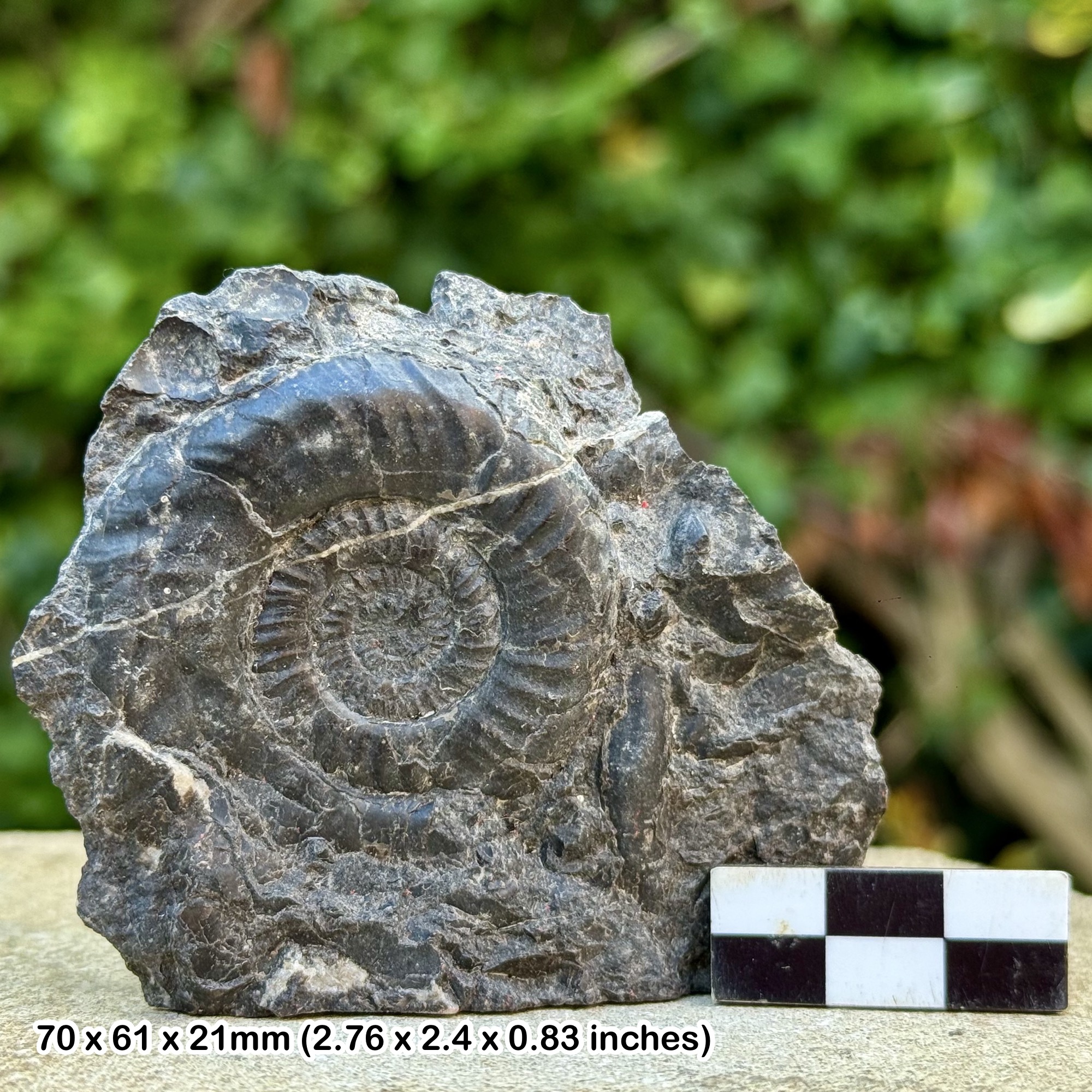
RARE Xenoceltites Fossil Ammonite, Smithian Stage, Triassic: Crittenden Springs, Nevada, USA – 100% Genuine with Certificate of Authenticity
£ 36.00
This Xenoceltites fossil ammonite is a rare and highly sought-after specimen
from the Smithian Stage of the Triassic Period, discovered in Crittenden Springs, Nevada, USA. The Xenoceltites species is recognized for its distinctive coiling and unique ribbing. This fossil offers a fascinating glimpse into the marine life of the Triassic period, making it a valuable piece for collectors and enthusiasts of prehistoric marine life. GEOLOGICAL INFORMATION:
• Geological Stage: Smithian Stage, Triassic (Approximately 252 to 247 million years ago)
• Depositional Environment: The Smithian Stage of the Triassic Period was characterized by a warm, shallow marine environment. The seas during this time were rich in marine life, supporting species like Xenoceltites. These ammonites thrived in nutrient-rich waters, contributing to a diverse ecosystem that also included bivalves, brachiopods, and other marine organisms. The fossil was preserved in sedimentary deposits, including limestone and shale, created by the accumulation of marine life over millions of years. The Triassic seas were the perfect habitat for ammonites like Xenoceltites, whose fossils are now preserved in regions like Crittenden Springs.
• Biozone: Fossils from the Smithian Stage are significant in understanding the early stages of the Mesozoic Era. The Smithian biozone marks a time of significant marine diversification following the Permian-Triassic extinction event. Fossils from this biozone provide essential information about the recovery of marine ecosystems and the evolution of species such as ammonites. FOSSIL FEATURES:
• Family: Ammonitidae
• Super Family: Ammonoidea
• Order: Ammonitida
• Morphology: The Xenoceltites ammonite is known for its distinctive coiled shell with strong, prominent ribs. The shell is evolute, with expanding whorls as the ammonite grew. The ribs on the shell are clearly defined and add a textured quality to the surface. The suture lines are well-preserved and provide insight into the ammonite’s evolutionary lineage. The specimen displays the typical morphology of the Xenoceltites species, which helps paleontologists understand the diversity and development of ammonites during the Triassic period. NOTABLE DETAILS:
• This fossil is 100% GENUINE and comes with a Certificate of Authenticity, ensuring its authenticity and scientific value.
• The specimen has been carefully selected for its high-quality preservation. The photograph provided shows the actual specimen you will receive, ensuring full transparency in your purchase.
• Scale Rule: The scale rule squares/cube shown in the photo represents 1cm, allowing you to accurately gauge the size of the fossil. Full sizing details are available in the photograph.Condition:This Xenoceltites Fossil Ammonite is in excellent condition, showcasing its distinctive ribbing, evolute shell, and well-preserved suture lines. The fossil has been cleaned and treated for display, making it an ideal addition to any Triassic ammonite collection or for those interested in the marine life of the Smithian Stage.
from the Smithian Stage of the Triassic Period, discovered in Crittenden Springs, Nevada, USA. The Xenoceltites species is recognized for its distinctive coiling and unique ribbing. This fossil offers a fascinating glimpse into the marine life of the Triassic period, making it a valuable piece for collectors and enthusiasts of prehistoric marine life. GEOLOGICAL INFORMATION:
• Geological Stage: Smithian Stage, Triassic (Approximately 252 to 247 million years ago)
• Depositional Environment: The Smithian Stage of the Triassic Period was characterized by a warm, shallow marine environment. The seas during this time were rich in marine life, supporting species like Xenoceltites. These ammonites thrived in nutrient-rich waters, contributing to a diverse ecosystem that also included bivalves, brachiopods, and other marine organisms. The fossil was preserved in sedimentary deposits, including limestone and shale, created by the accumulation of marine life over millions of years. The Triassic seas were the perfect habitat for ammonites like Xenoceltites, whose fossils are now preserved in regions like Crittenden Springs.
• Biozone: Fossils from the Smithian Stage are significant in understanding the early stages of the Mesozoic Era. The Smithian biozone marks a time of significant marine diversification following the Permian-Triassic extinction event. Fossils from this biozone provide essential information about the recovery of marine ecosystems and the evolution of species such as ammonites. FOSSIL FEATURES:
• Family: Ammonitidae
• Super Family: Ammonoidea
• Order: Ammonitida
• Morphology: The Xenoceltites ammonite is known for its distinctive coiled shell with strong, prominent ribs. The shell is evolute, with expanding whorls as the ammonite grew. The ribs on the shell are clearly defined and add a textured quality to the surface. The suture lines are well-preserved and provide insight into the ammonite’s evolutionary lineage. The specimen displays the typical morphology of the Xenoceltites species, which helps paleontologists understand the diversity and development of ammonites during the Triassic period. NOTABLE DETAILS:
• This fossil is 100% GENUINE and comes with a Certificate of Authenticity, ensuring its authenticity and scientific value.
• The specimen has been carefully selected for its high-quality preservation. The photograph provided shows the actual specimen you will receive, ensuring full transparency in your purchase.
• Scale Rule: The scale rule squares/cube shown in the photo represents 1cm, allowing you to accurately gauge the size of the fossil. Full sizing details are available in the photograph.Condition:This Xenoceltites Fossil Ammonite is in excellent condition, showcasing its distinctive ribbing, evolute shell, and well-preserved suture lines. The fossil has been cleaned and treated for display, making it an ideal addition to any Triassic ammonite collection or for those interested in the marine life of the Smithian Stage.
Other Products