Prodactylioceras davoei Fossil Ammonite Lower Toarcian Jurassic Shoppenhausen Germany with COA
£ 18.00
PRODACTYLIOCERAS DAVOEI AMMONITE FROM SHOPPENHAUSEN, GERMANYThis specimen is a fine example of Prodactylioceras davoei, a classic ammonite
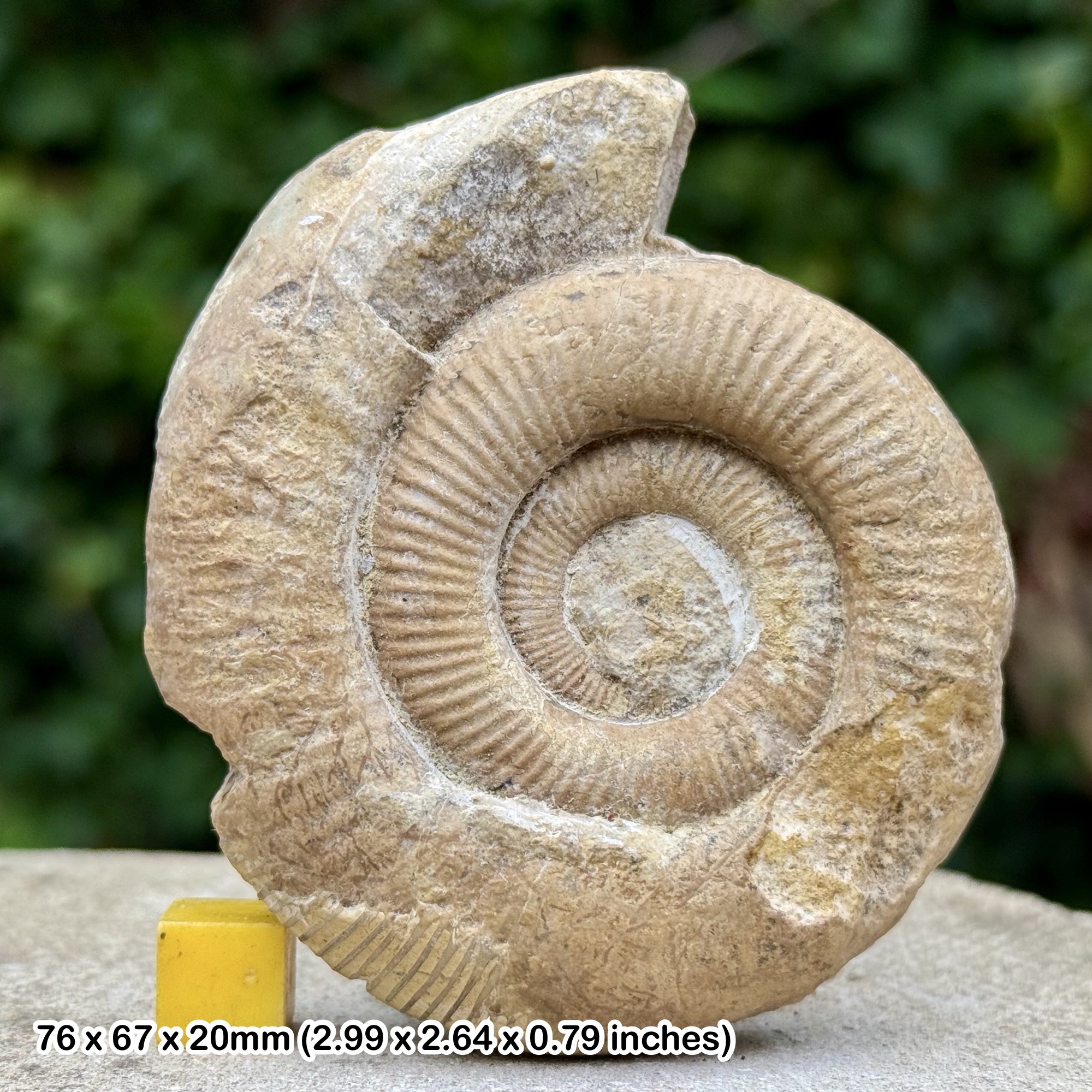
species from the Lower Toarcian Stage of the Early Jurassic, collected at Shoppenhausen, Germany. Dating to approximately 182–174 million years ago, this ammonite represents one of the key fossils used to define the Davoei Zone, making it highly significant for both collectors and scientific study.Every fossil we sell is a 100% genuine specimen and is supplied with a Certificate of Authenticity. The photographs show the exact specimen you will receive, with a 1cm scale cube and rule squares for precise measurement reference. GEOLOGICAL AGE AND LOCALITYThe Lower Toarcian Stage of the Jurassic was a time of major environmental changes, including widespread marine transgressions that created ideal conditions for ammonite diversification. The seas covering much of Europe were warm and rich in nutrients, providing an environment where ammonites flourished in abundance and diversity.The locality of Shoppenhausen in Germany is well known for producing ammonites of exceptional preservation. The finely bedded marine sediments of the region have yielded a range of ammonite species, with Prodactylioceras davoei being among the most important for defining biostratigraphic horizons within the Toarcian. FOSSIL TYPE AND SCIENTIFIC CLASSIFICATION
• Genus: Prodactylioceras
• Species: Prodactylioceras davoei
• Order: Ammonitida
• Superfamily: Eoderoceratoidea
• Family: DactylioceratidaeThis species gives its name to the Davoei Zone, a globally recognised ammonite biozone within the Toarcian Stage. Its importance in biostratigraphy cannot be overstated, as it serves as a key reference point for correlating Early Jurassic deposits across Europe and beyond. MORPHOLOGICAL FEATURESThe diagnostic features of Prodactylioceras davoei include:
• Planispiral Shell: A tightly coiled, flattened shell with a discoidal shape.
• Strong Ribbing: Bold, radial ribs cross the whorls, often branching from the umbilical edge.
• Umbilicus: Relatively wide, with whorls overlapping clearly.
• Ornamentation: Ribs extend across the venter, creating a continuous sculptured surface.These features not only aid in the identification of the species but also make the fossil aesthetically appealing as a display piece. SCIENTIFIC AND COLLECTOR IMPORTANCEProdactylioceras davoei is a defining index fossil of the Lower Toarcian. Its restricted stratigraphic range and distinctive morphology make it indispensable for dating and correlating marine Jurassic deposits. This species is central to the study of Early Jurassic ammonites and has long been used as a reference in palaeontological research.Collectors highly value P. davoei specimens for their scientific significance and striking ribbed appearance. Fossils from Shoppenhausen are particularly sought after, as the locality is renowned for yielding well-preserved examples with fine detail. DISPLAY AND EDUCATIONAL VALUEThis specimen has been carefully chosen for its preservation, showing the distinctive ribbing and coiling that define Prodactylioceras davoei. Its strong sculptural features make it both a striking display item and a scientifically important ammonite.Ideal for museum exhibits, teaching collections, or private fossil collections, this Prodactylioceras davoei ammonite from Shoppenhausen, Germany captures a key moment in Jurassic marine history. It represents both the evolutionary success of ammonites and their vital role in the biostratigraphy of the Early Jurassic seas.
species from the Lower Toarcian Stage of the Early Jurassic, collected at Shoppenhausen, Germany. Dating to approximately 182–174 million years ago, this ammonite represents one of the key fossils used to define the Davoei Zone, making it highly significant for both collectors and scientific study.Every fossil we sell is a 100% genuine specimen and is supplied with a Certificate of Authenticity. The photographs show the exact specimen you will receive, with a 1cm scale cube and rule squares for precise measurement reference. GEOLOGICAL AGE AND LOCALITYThe Lower Toarcian Stage of the Jurassic was a time of major environmental changes, including widespread marine transgressions that created ideal conditions for ammonite diversification. The seas covering much of Europe were warm and rich in nutrients, providing an environment where ammonites flourished in abundance and diversity.The locality of Shoppenhausen in Germany is well known for producing ammonites of exceptional preservation. The finely bedded marine sediments of the region have yielded a range of ammonite species, with Prodactylioceras davoei being among the most important for defining biostratigraphic horizons within the Toarcian. FOSSIL TYPE AND SCIENTIFIC CLASSIFICATION
• Genus: Prodactylioceras
• Species: Prodactylioceras davoei
• Order: Ammonitida
• Superfamily: Eoderoceratoidea
• Family: DactylioceratidaeThis species gives its name to the Davoei Zone, a globally recognised ammonite biozone within the Toarcian Stage. Its importance in biostratigraphy cannot be overstated, as it serves as a key reference point for correlating Early Jurassic deposits across Europe and beyond. MORPHOLOGICAL FEATURESThe diagnostic features of Prodactylioceras davoei include:
• Planispiral Shell: A tightly coiled, flattened shell with a discoidal shape.
• Strong Ribbing: Bold, radial ribs cross the whorls, often branching from the umbilical edge.
• Umbilicus: Relatively wide, with whorls overlapping clearly.
• Ornamentation: Ribs extend across the venter, creating a continuous sculptured surface.These features not only aid in the identification of the species but also make the fossil aesthetically appealing as a display piece. SCIENTIFIC AND COLLECTOR IMPORTANCEProdactylioceras davoei is a defining index fossil of the Lower Toarcian. Its restricted stratigraphic range and distinctive morphology make it indispensable for dating and correlating marine Jurassic deposits. This species is central to the study of Early Jurassic ammonites and has long been used as a reference in palaeontological research.Collectors highly value P. davoei specimens for their scientific significance and striking ribbed appearance. Fossils from Shoppenhausen are particularly sought after, as the locality is renowned for yielding well-preserved examples with fine detail. DISPLAY AND EDUCATIONAL VALUEThis specimen has been carefully chosen for its preservation, showing the distinctive ribbing and coiling that define Prodactylioceras davoei. Its strong sculptural features make it both a striking display item and a scientifically important ammonite.Ideal for museum exhibits, teaching collections, or private fossil collections, this Prodactylioceras davoei ammonite from Shoppenhausen, Germany captures a key moment in Jurassic marine history. It represents both the evolutionary success of ammonites and their vital role in the biostratigraphy of the Early Jurassic seas.
Other Products