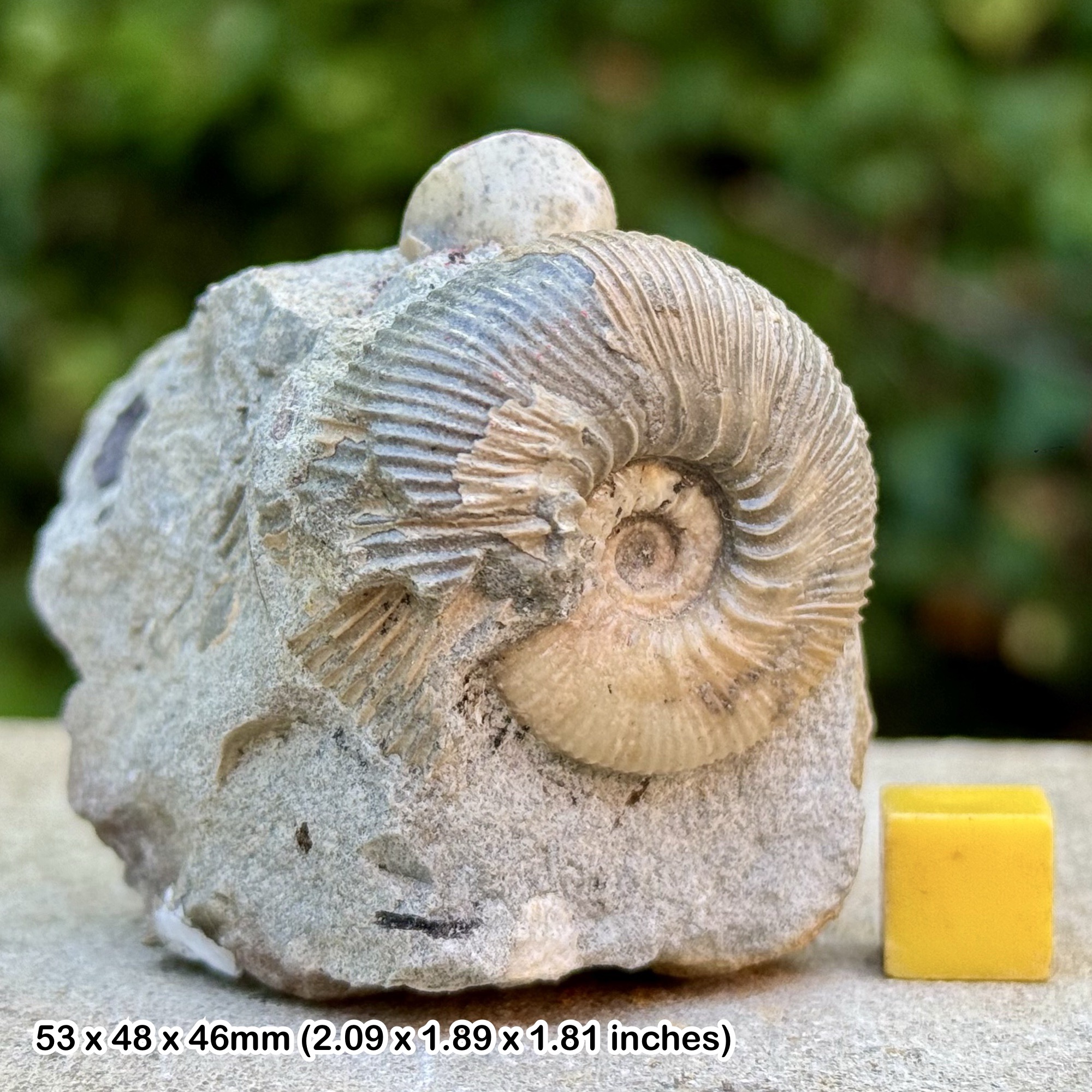
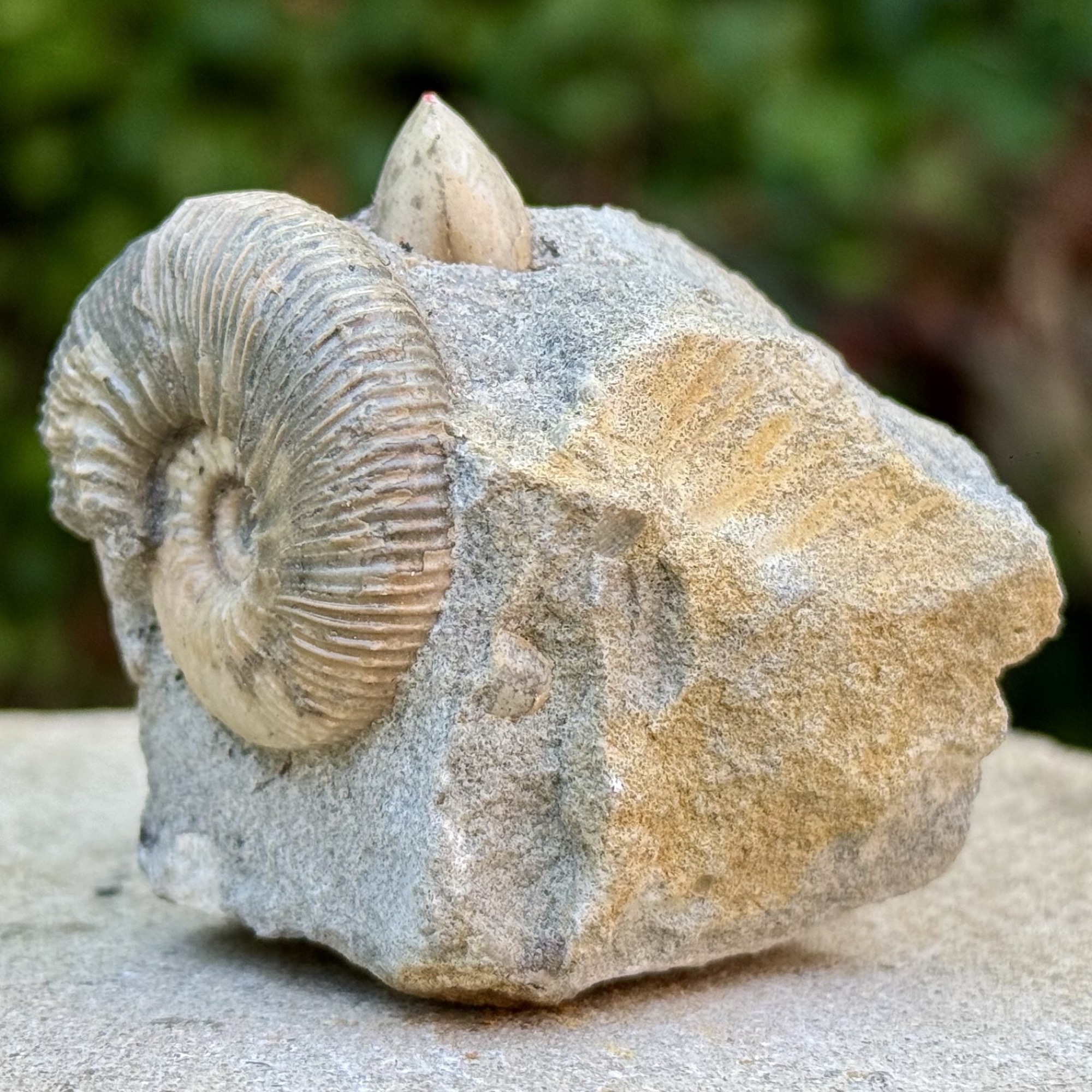
Rare Kepplerites tricophorus Ammonite Fossil Lower Callovian Jurassic Cirencester UK
£ 60.00
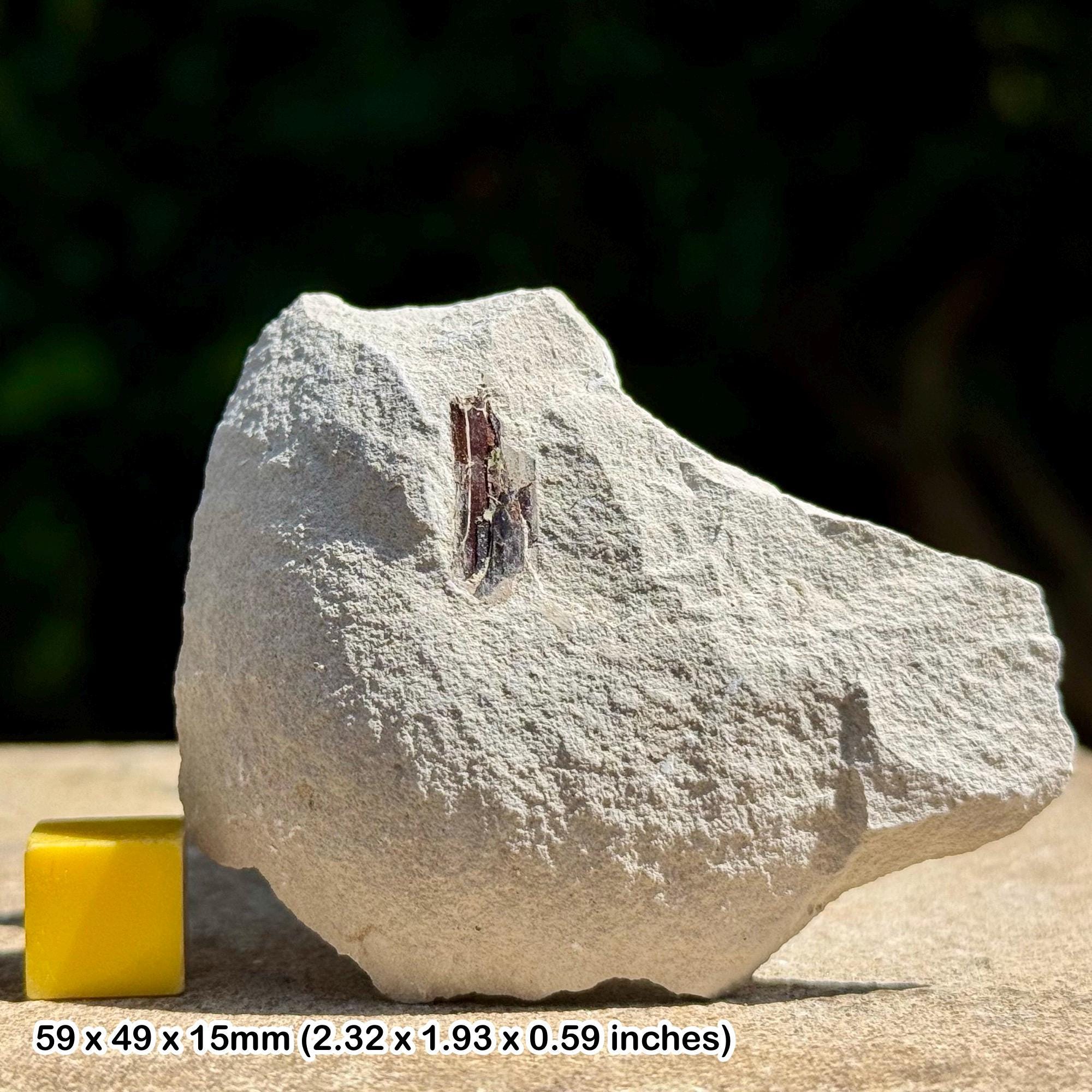
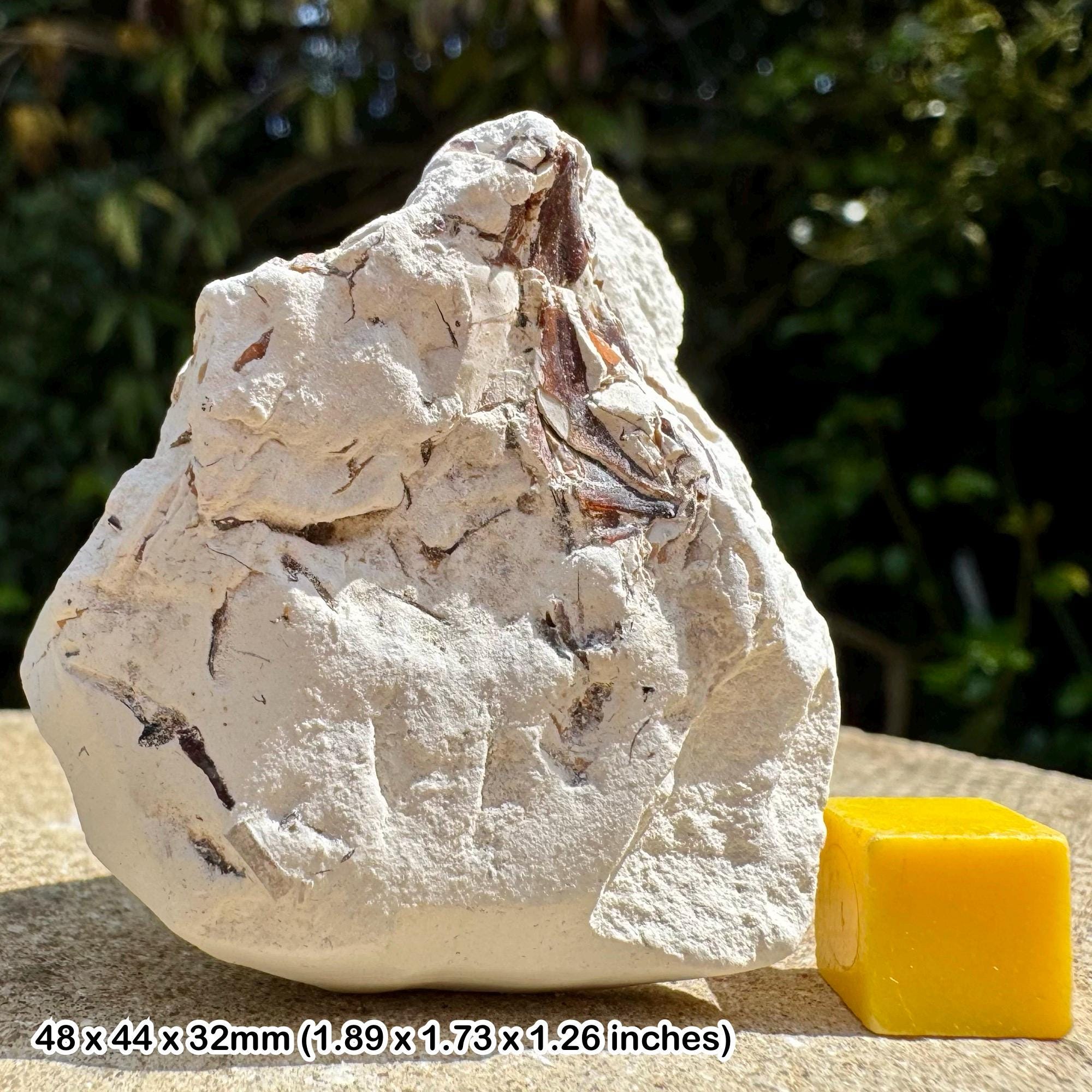
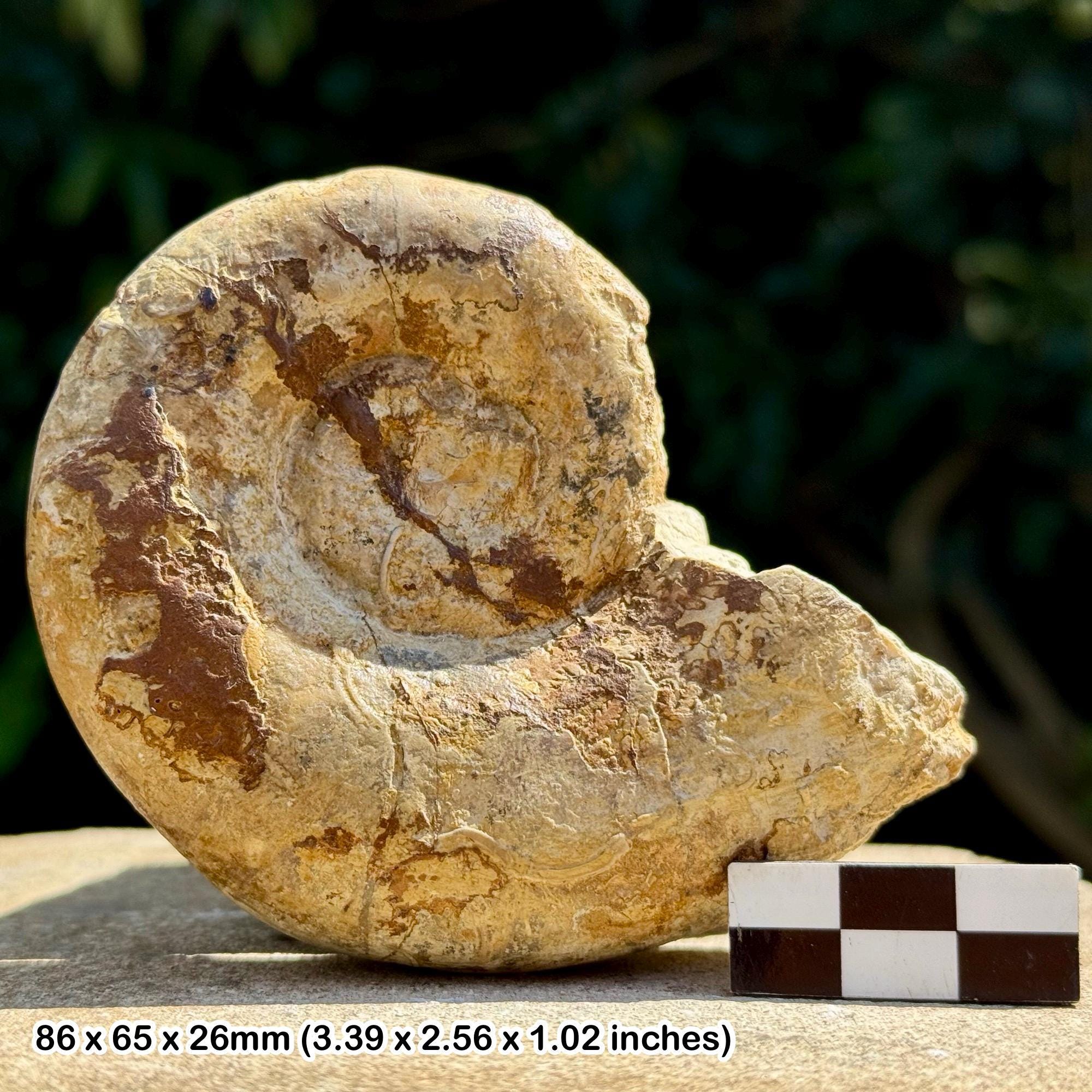
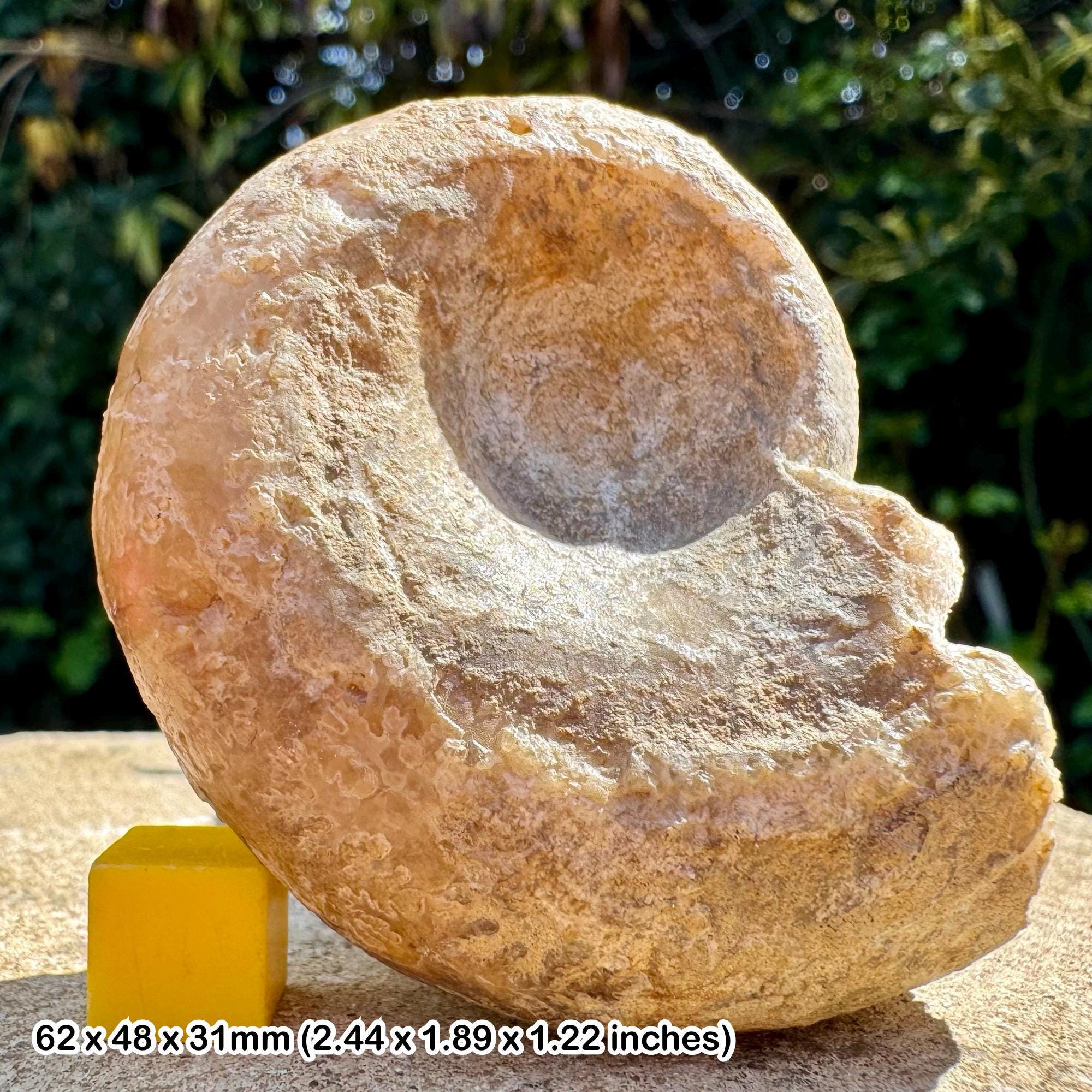
RARE KEPPLERITES TRICOPHORUS AMMONITE FOSSIL – JURASSIC OF CIRENCESTER, UKThis specimen is a rare Kepplerites tricophorus ammonite fossil from the Lower
Callovian Stage of the Middle Jurassic, discovered in the classic fossil-rich strata around Cirencester, United Kingdom. A carefully chosen piece, it displays the distinctive ribbing and coiling associated with this important ammonite species. Supplied with a Certificate of Authenticity, this ammonite offers both scientific value and collector appeal. The photographs show the actual fossil you will receive, with a 1 cm scale cube included for exact sizing. GEOLOGICAL AGE AND PROVENANCEThe Lower Callovian Stage (approximately 166–164 million years ago) marks an important part of the Jurassic period, when shallow epicontinental seas covered much of Europe. These warm seas were ideal habitats for ammonites, which thrived in great diversity. The Cirencester area in Gloucestershire is particularly renowned for its Jurassic deposits, providing exceptional ammonites that are significant both scientifically and historically. Fossils such as Kepplerites tricophorus are crucial for understanding the geology of this region and serve as reference specimens for Callovian stratigraphy. SCIENTIFIC CLASSIFICATION
• Kingdom: Animalia
• Phylum: Mollusca
• Class: Cephalopoda
• Order: Ammonitida
• Superfamily: Stephanoceratoidea
• Family: Kosmoceratidae
• Genus: Kepplerites
• Species: Kepplerites tricophorusAmmonites of the genus Kepplerites are highly valued in paleontology as index fossils, enabling precise subdivision of the Callovian into detailed biozones. K. tricophorus is especially important in defining the Tricophorus Zone, a critical biozone in the Lower Callovian stratigraphic framework. MORPHOLOGICAL FEATURES
•Kepplerites tricophorus
• is characterized by a strongly ribbed shell with ribs that bifurcate or trifurcate as they extend across the flanks toward the venter. The coiling is moderately involute, with earlier whorls partly concealed by later growth. Its venter typically shows continuous ribbing, producing a bold and striking appearance. These morphological traits not only define the species but also make it a visually impressive fossil for collectors.The intricate ribbing patterns are an adaptation to strengthen the shell structure while also playing a role in hydrodynamics, allowing ammonites to maneuver effectively in the Jurassic seas. The preservation of these fine details enhances the appeal of this specimen, allowing for close study of its evolutionary adaptations. PALEOENVIRONMENT AND IMPORTANCEDuring the Callovian, Cirencester and its surrounding region lay beneath shallow marine conditions rich in biodiversity. Ammonites such as Kepplerites tricophorus formed part of a dynamic ecosystem, feeding on plankton and small marine organisms while serving as prey for larger predators such as marine reptiles. Their abundance and rapid evolutionary turnover make them one of the most valuable fossil groups for geological dating.In stratigraphy, Kepplerites tricophorus is particularly significant, as its presence defines the Tricophorus Biozone within the Callovian Stage. This makes specimens like this one not only attractive to collectors but also vital to the science of paleontology. COLLECTOR AND DISPLAY VALUEThis rare Kepplerites tricophorus ammonite fossil combines rarity, scientific importance, and aesthetic appeal. Its strong ribbing and well-preserved morphology create an impressive natural display, while its provenance from Cirencester adds to its value as a classic British fossil. Whether for a private collection, an educational setting, or museum display, this specimen represents a unique opportunity to own a piece of Jurassic history from one of England’s most famous fossil regions. KEY FEATURES
• Rare ammonite fossil: Kepplerites tricophorus, Lower Callovian.
• Provenance: Cirencester, Gloucestershire, UK.
• Geological age: Middle Jurassic, c. 166–164 million years ago.
• Distinctive ribbing and morphology, excellent preservation.
• Scientifically important index fossil defining the Tricophorus Biozone.
• Supplied with a Certificate of Authenticity.This Kepplerites tricophorus ammonite fossil is a striking and scientifically significant specimen, offering collectors and enthusiasts a direct link to the Jurassic seas of Britain.
Callovian Stage of the Middle Jurassic, discovered in the classic fossil-rich strata around Cirencester, United Kingdom. A carefully chosen piece, it displays the distinctive ribbing and coiling associated with this important ammonite species. Supplied with a Certificate of Authenticity, this ammonite offers both scientific value and collector appeal. The photographs show the actual fossil you will receive, with a 1 cm scale cube included for exact sizing. GEOLOGICAL AGE AND PROVENANCEThe Lower Callovian Stage (approximately 166–164 million years ago) marks an important part of the Jurassic period, when shallow epicontinental seas covered much of Europe. These warm seas were ideal habitats for ammonites, which thrived in great diversity. The Cirencester area in Gloucestershire is particularly renowned for its Jurassic deposits, providing exceptional ammonites that are significant both scientifically and historically. Fossils such as Kepplerites tricophorus are crucial for understanding the geology of this region and serve as reference specimens for Callovian stratigraphy. SCIENTIFIC CLASSIFICATION
• Kingdom: Animalia
• Phylum: Mollusca
• Class: Cephalopoda
• Order: Ammonitida
• Superfamily: Stephanoceratoidea
• Family: Kosmoceratidae
• Genus: Kepplerites
• Species: Kepplerites tricophorusAmmonites of the genus Kepplerites are highly valued in paleontology as index fossils, enabling precise subdivision of the Callovian into detailed biozones. K. tricophorus is especially important in defining the Tricophorus Zone, a critical biozone in the Lower Callovian stratigraphic framework. MORPHOLOGICAL FEATURES
•Kepplerites tricophorus
• is characterized by a strongly ribbed shell with ribs that bifurcate or trifurcate as they extend across the flanks toward the venter. The coiling is moderately involute, with earlier whorls partly concealed by later growth. Its venter typically shows continuous ribbing, producing a bold and striking appearance. These morphological traits not only define the species but also make it a visually impressive fossil for collectors.The intricate ribbing patterns are an adaptation to strengthen the shell structure while also playing a role in hydrodynamics, allowing ammonites to maneuver effectively in the Jurassic seas. The preservation of these fine details enhances the appeal of this specimen, allowing for close study of its evolutionary adaptations. PALEOENVIRONMENT AND IMPORTANCEDuring the Callovian, Cirencester and its surrounding region lay beneath shallow marine conditions rich in biodiversity. Ammonites such as Kepplerites tricophorus formed part of a dynamic ecosystem, feeding on plankton and small marine organisms while serving as prey for larger predators such as marine reptiles. Their abundance and rapid evolutionary turnover make them one of the most valuable fossil groups for geological dating.In stratigraphy, Kepplerites tricophorus is particularly significant, as its presence defines the Tricophorus Biozone within the Callovian Stage. This makes specimens like this one not only attractive to collectors but also vital to the science of paleontology. COLLECTOR AND DISPLAY VALUEThis rare Kepplerites tricophorus ammonite fossil combines rarity, scientific importance, and aesthetic appeal. Its strong ribbing and well-preserved morphology create an impressive natural display, while its provenance from Cirencester adds to its value as a classic British fossil. Whether for a private collection, an educational setting, or museum display, this specimen represents a unique opportunity to own a piece of Jurassic history from one of England’s most famous fossil regions. KEY FEATURES
• Rare ammonite fossil: Kepplerites tricophorus, Lower Callovian.
• Provenance: Cirencester, Gloucestershire, UK.
• Geological age: Middle Jurassic, c. 166–164 million years ago.
• Distinctive ribbing and morphology, excellent preservation.
• Scientifically important index fossil defining the Tricophorus Biozone.
• Supplied with a Certificate of Authenticity.This Kepplerites tricophorus ammonite fossil is a striking and scientifically significant specimen, offering collectors and enthusiasts a direct link to the Jurassic seas of Britain.
Other Products