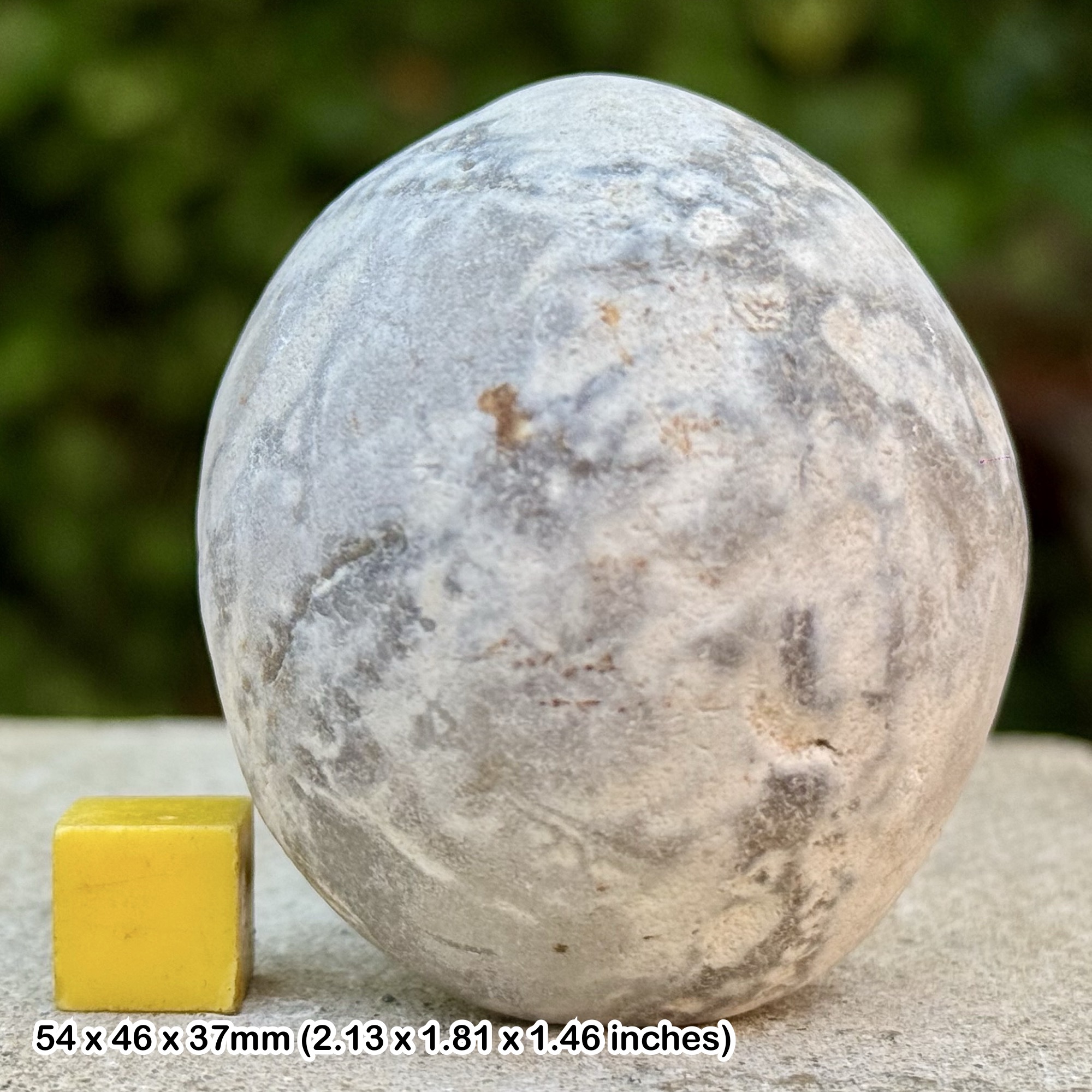
Echinocorys Flint Fossil Echinoid Chalk Cretaceous Eastbourne UK Authentic Collector Specimen with Certificate of Authenticity
£ 36.00
This listing features a genuine Echinocorys flint fossil echinoid, originating
from the Upper Cretaceous Chalk of Eastbourne, UK. The fossil represents an ancient sea urchin that lived approximately 80–70 million years ago, during a time when much of southern England was covered by warm, shallow seas. The photographs show the actual specimen you will receive, with scale rule squares / cube = 1 cm for accurate size reference. All of our fossils are carefully chosen, 100% genuine specimens, and are supplied with a Certificate of Authenticity. GEOLOGICAL CONTEXT: CHALK OF THE UPPER CRETACEOUSThe Chalk deposits of Eastbourne are part of the famous White Cliffs and Downs of southern England, laid down during the Late Cretaceous. These chalk layers are composed of the microscopic remains of coccolithophores—tiny planktonic algae that flourished in the ancient seas. Over millions of years, their calcium carbonate skeletons accumulated to form the thick chalk beds that today yield a rich array of fossils.The environment was a shallow, warm epicontinental sea with stable conditions, providing an ideal habitat for echinoids such as Echinocorys. Fossils from this chalk are of significant importance to paleontologists, serving as index fossils for biostratigraphy and helping to define the biozones of the Late Cretaceous. THE SPECIES: ECHINOCORYSEchinocorys is a well-recognised genus of irregular echinoids belonging to the order Holasteroida, family Echinocorythidae. Often referred to as the “chalk heart urchin,” Echinocorys is notable for its robust, flint-preserved test and its distinctive shape.Key identifying features include:
• A rounded to slightly elongate test, often heart-shaped in outline.
• Distinct ambulacral areas forming petaloid patterns across the test surface.
• A somewhat flattened underside adapted for burrowing into soft sediment.
• Fine pore pairs associated with tube feet, visible on well-preserved specimens.These adaptations indicate a lifestyle as a shallow burrower within chalk sea-floor sediments, feeding on organic particles within the substrate. MORPHOLOGICAL AND SCIENTIFIC FEATURES
• Phylum: Echinodermata
• Class: Echinoidea
• Order: Holasteroida
• Family: Echinocorythidae
• Genus: Echinocorys
• Geological Age: Upper Cretaceous (c. 80–70 Ma)
• Locality: Eastbourne, East Sussex, UK
• Formation: Chalk Group
• Lifestyle: Infaunal burrower, deposit feeder in marine sediments
• Preservation: Flint replacement of calcareous test, robust and detailed COLLECTOR AND DISPLAY VALUEFossils of Echinocorys are among the most recognisable and iconic of the British Chalk. Their distinctive form and preservation in flint make them highly desirable to collectors, educators, and enthusiasts of natural history. Specimens from Eastbourne carry particular prestige, as this locality is internationally renowned for its outstanding chalk exposures and fossil record.This specimen is both scientifically significant and visually appealing, making it an ideal addition to any fossil collection. Supplied with a Certificate of Authenticity, it is guaranteed to be a genuine piece of Britain’s geological past, connecting you directly to the marine ecosystems of the Cretaceous seas.
from the Upper Cretaceous Chalk of Eastbourne, UK. The fossil represents an ancient sea urchin that lived approximately 80–70 million years ago, during a time when much of southern England was covered by warm, shallow seas. The photographs show the actual specimen you will receive, with scale rule squares / cube = 1 cm for accurate size reference. All of our fossils are carefully chosen, 100% genuine specimens, and are supplied with a Certificate of Authenticity. GEOLOGICAL CONTEXT: CHALK OF THE UPPER CRETACEOUSThe Chalk deposits of Eastbourne are part of the famous White Cliffs and Downs of southern England, laid down during the Late Cretaceous. These chalk layers are composed of the microscopic remains of coccolithophores—tiny planktonic algae that flourished in the ancient seas. Over millions of years, their calcium carbonate skeletons accumulated to form the thick chalk beds that today yield a rich array of fossils.The environment was a shallow, warm epicontinental sea with stable conditions, providing an ideal habitat for echinoids such as Echinocorys. Fossils from this chalk are of significant importance to paleontologists, serving as index fossils for biostratigraphy and helping to define the biozones of the Late Cretaceous. THE SPECIES: ECHINOCORYSEchinocorys is a well-recognised genus of irregular echinoids belonging to the order Holasteroida, family Echinocorythidae. Often referred to as the “chalk heart urchin,” Echinocorys is notable for its robust, flint-preserved test and its distinctive shape.Key identifying features include:
• A rounded to slightly elongate test, often heart-shaped in outline.
• Distinct ambulacral areas forming petaloid patterns across the test surface.
• A somewhat flattened underside adapted for burrowing into soft sediment.
• Fine pore pairs associated with tube feet, visible on well-preserved specimens.These adaptations indicate a lifestyle as a shallow burrower within chalk sea-floor sediments, feeding on organic particles within the substrate. MORPHOLOGICAL AND SCIENTIFIC FEATURES
• Phylum: Echinodermata
• Class: Echinoidea
• Order: Holasteroida
• Family: Echinocorythidae
• Genus: Echinocorys
• Geological Age: Upper Cretaceous (c. 80–70 Ma)
• Locality: Eastbourne, East Sussex, UK
• Formation: Chalk Group
• Lifestyle: Infaunal burrower, deposit feeder in marine sediments
• Preservation: Flint replacement of calcareous test, robust and detailed COLLECTOR AND DISPLAY VALUEFossils of Echinocorys are among the most recognisable and iconic of the British Chalk. Their distinctive form and preservation in flint make them highly desirable to collectors, educators, and enthusiasts of natural history. Specimens from Eastbourne carry particular prestige, as this locality is internationally renowned for its outstanding chalk exposures and fossil record.This specimen is both scientifically significant and visually appealing, making it an ideal addition to any fossil collection. Supplied with a Certificate of Authenticity, it is guaranteed to be a genuine piece of Britain’s geological past, connecting you directly to the marine ecosystems of the Cretaceous seas.
Other Products