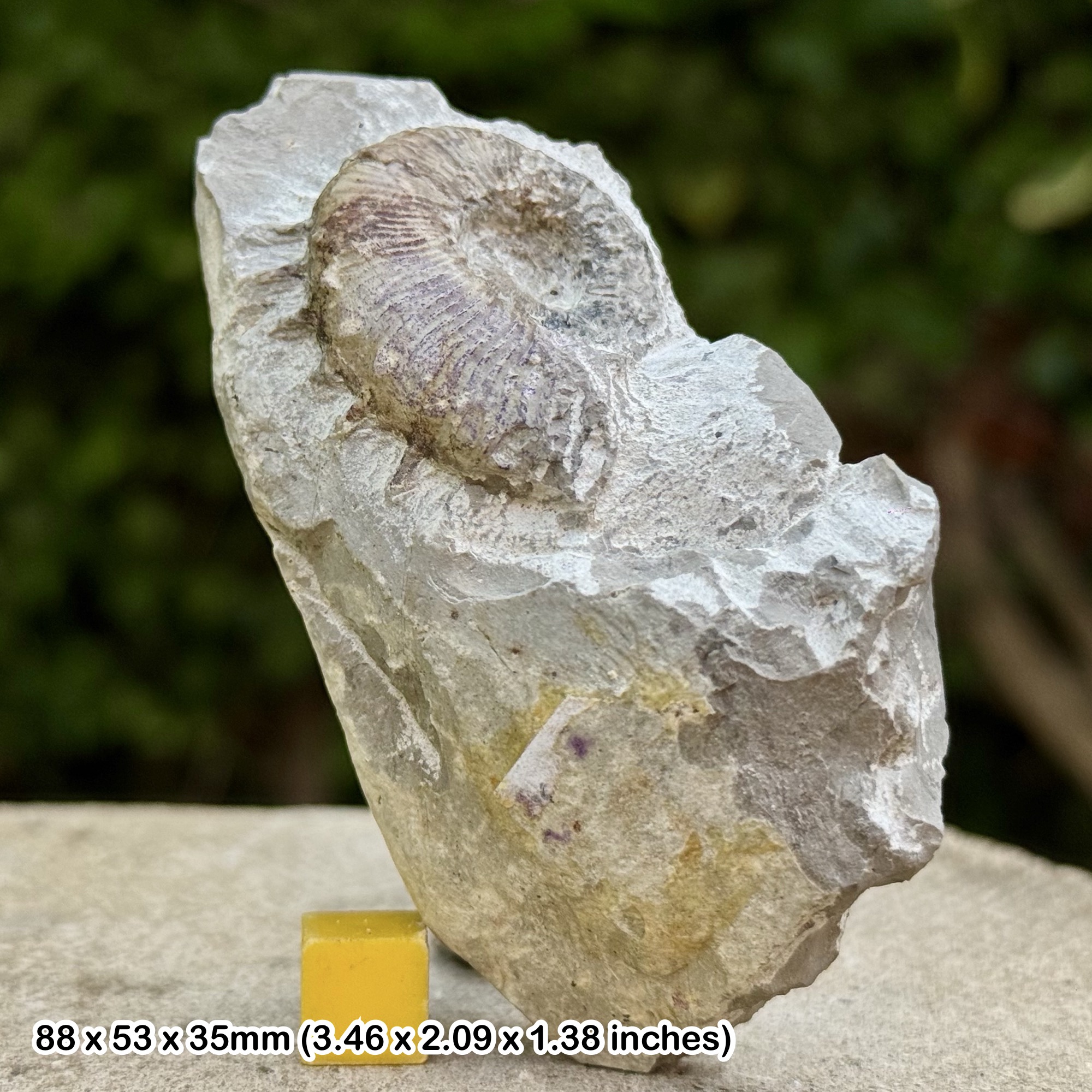
Rare Paracrioceras occulatum Heteromorph Fossil Ammonite with Spines Barremian Cretaceous Bouche du Rhone France
£ 84.00
This listing is for a rare fossil ammonite, Paracrioceras occulatum, a highly
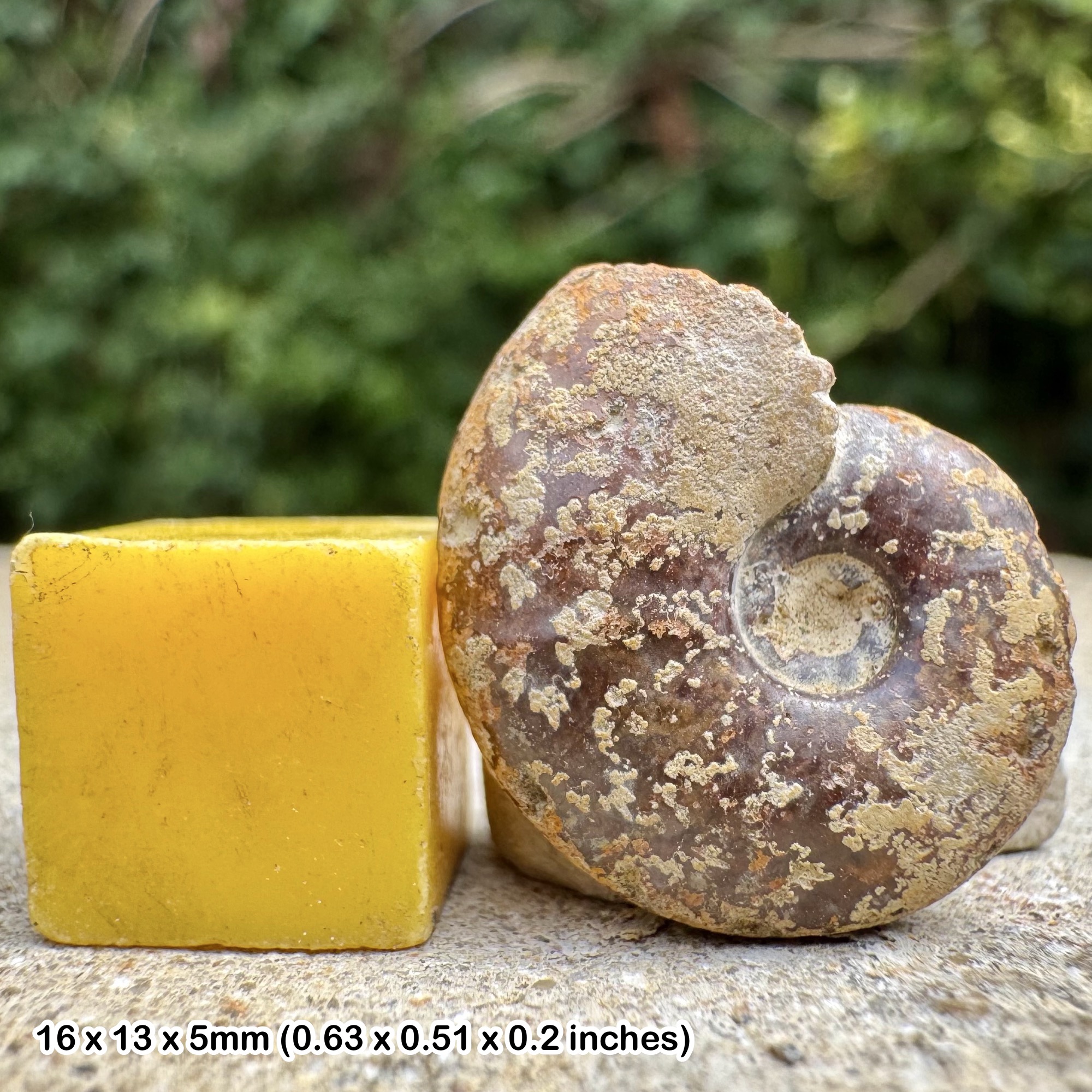
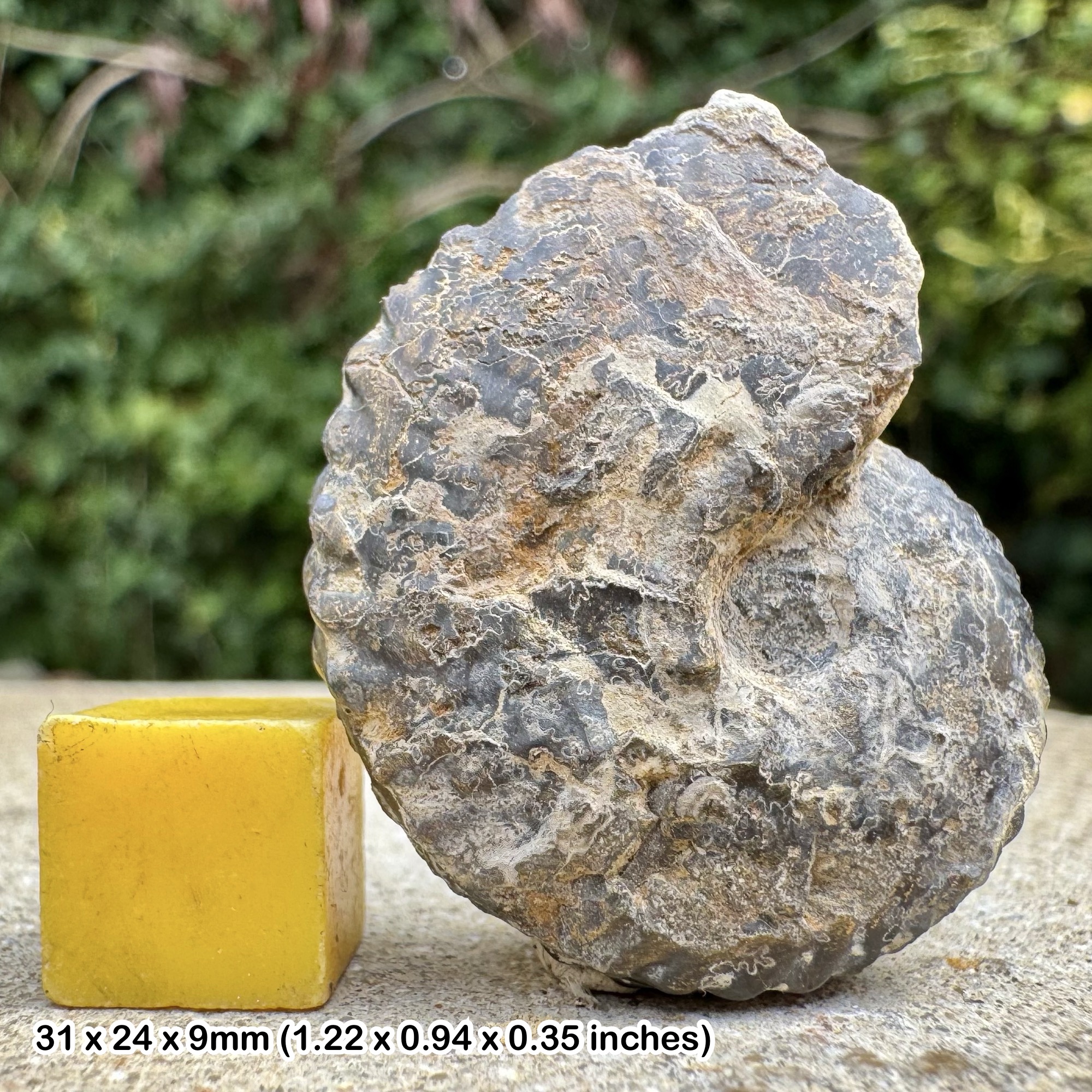
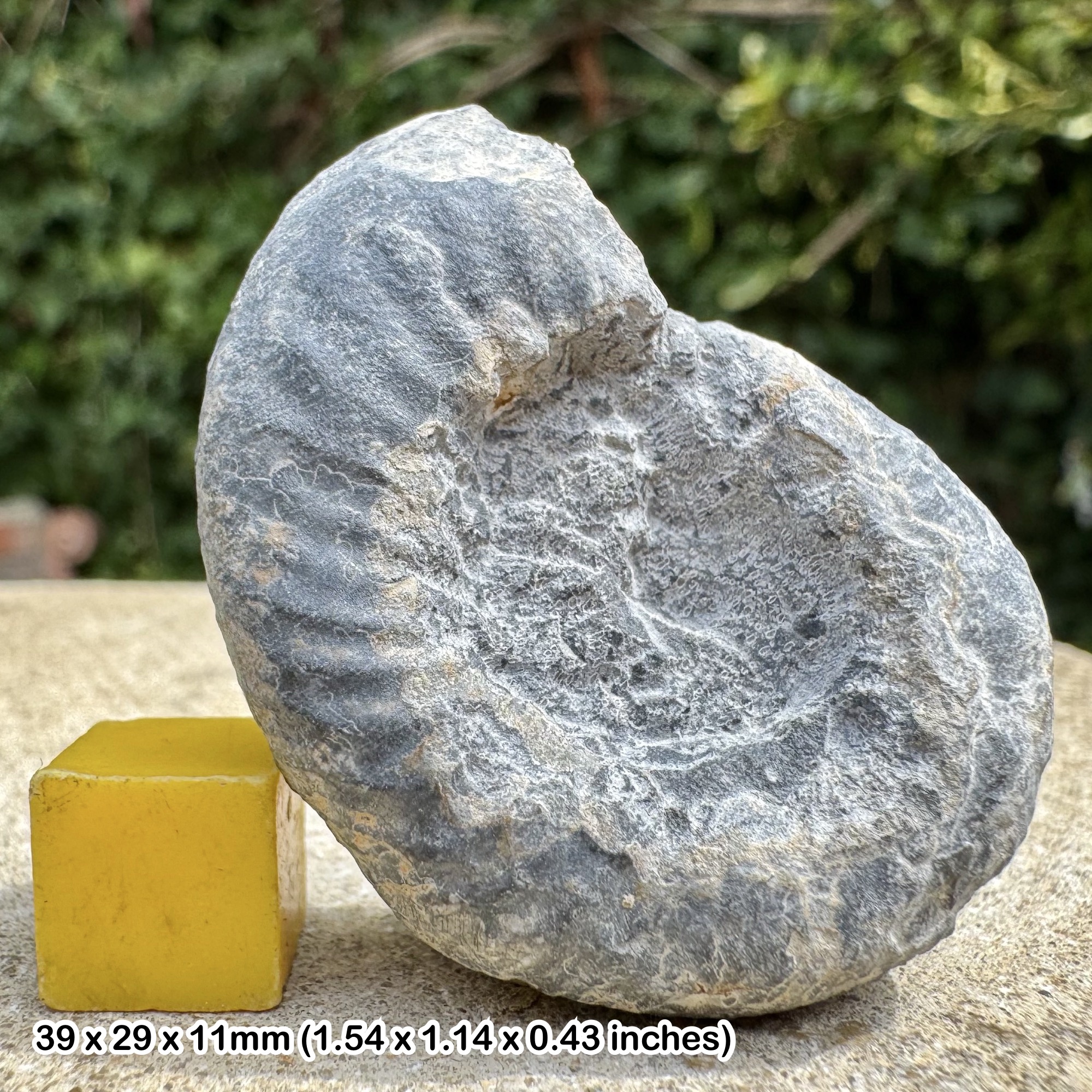
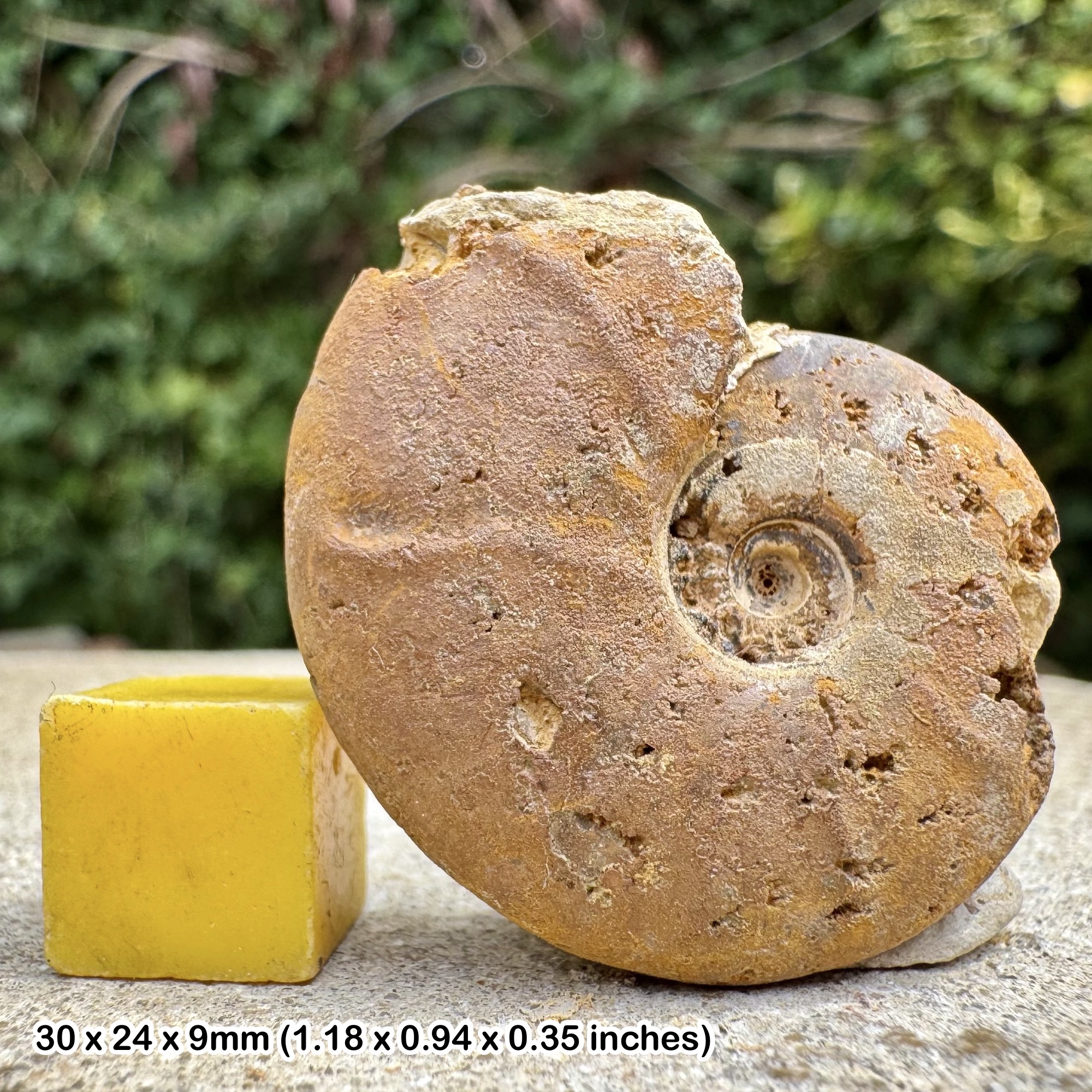
unusual heteromorph ammonite from the Barremian stage of the Early Cretaceous (approximately 129–125 million years ago). Collected in the Bouches-du-Rhône region of southern France, this specimen is notable not only for its distinctive heteromorph shape but also for the presence of spines along its shell, an exceptional feature that makes it especially desirable to collectors. The photographs show the exact specimen you will receive. Scale rule squares / cube = 1 cm – please check the photos for full sizing. All of our fossils are 100% genuine specimens and are supplied with a Certificate of Authenticity. GEOLOGICAL CONTEXT: BARREMIAN, EARLY CRETACEOUSThe Barremian stage is part of the Early Cretaceous, a time when ammonites reached remarkable diversity. The Bouches-du-Rhône region of France, situated on the northern margin of the ancient Tethys Ocean, was covered by shallow tropical seas that supported abundant marine life. Fine sediments deposited in this environment preserved ammonites in outstanding detail, including rare heteromorphs such as Paracrioceras occulatum.Ammonites from this interval are used as index fossils, meaning they allow geologists to precisely date and correlate Barremian-aged rock layers across Europe and beyond. The presence of spiny heteromorph species such as this adds further insight into evolutionary adaptations and ecological strategies of ammonites during the Early Cretaceous. THE SPECIES: PARACRIOCERAS OCCULATUMParacrioceras occulatum belongs to the order Ammonitida, superfamily Ancylocerataceae, and family Ancyloceratidae. As a heteromorph ammonite, it breaks from the familiar tightly coiled spiral design and instead exhibits an open, crioconic coil.One of the defining characteristics of P. occulatum is its series of spines along the ribs and flanks of the shell, giving the fossil a striking, almost defensive appearance. The spines likely served as protection against predators or may have influenced hydrodynamics, reducing sinking rates in the water column. The ribs and tuberculate ornamentation across the shell add to its distinctive look, making it an instantly recognisable and scientifically important species. MORPHOLOGICAL AND SCIENTIFIC FEATURES
• Order: Ammonitida
• Superfamily: Ancylocerataceae
• Family: Ancyloceratidae
• Genus and Species: Paracrioceras occulatum
• Geological Stage: Barremian, Early Cretaceous (c. 129–125 Ma)
• Locality: Bouches-du-Rhône, France
• Shell Traits: Loosely coiled heteromorph form, strong ribbing, distinctive spines, tuberculate ornamentation
• Scientific Importance: Rare heteromorph ammonite, key index fossil for Barremian biozones, insight into ammonite morphology and adaptation COLLECTOR AND DISPLAY VALUEHeteromorph ammonites are rare and fascinating, but spiny heteromorphs such as Paracrioceras occulatum are exceptionally scarce. Their unusual morphology makes them highly sought after by both private collectors and museum institutions. The spines, coupled with the bold ribbing and uncoiled structure, ensure that this ammonite stands out dramatically when displayed.The provenance from the Bouches-du-Rhône region of France adds prestige, as this area is internationally recognised for its Early Cretaceous fossil deposits. Specimens from this locality are renowned for their quality, rarity, and scientific importance.Every specimen we offer is carefully selected for authenticity and preservation. This Paracrioceras occulatum heteromorph ammonite is supplied with a Certificate of Authenticity, making it a rare opportunity to acquire a spiny ammonite from the Early Cretaceous seas of France. A true collector’s specimen, it combines natural beauty, scientific significance, and geological history in one unique fossil.
unusual heteromorph ammonite from the Barremian stage of the Early Cretaceous (approximately 129–125 million years ago). Collected in the Bouches-du-Rhône region of southern France, this specimen is notable not only for its distinctive heteromorph shape but also for the presence of spines along its shell, an exceptional feature that makes it especially desirable to collectors. The photographs show the exact specimen you will receive. Scale rule squares / cube = 1 cm – please check the photos for full sizing. All of our fossils are 100% genuine specimens and are supplied with a Certificate of Authenticity. GEOLOGICAL CONTEXT: BARREMIAN, EARLY CRETACEOUSThe Barremian stage is part of the Early Cretaceous, a time when ammonites reached remarkable diversity. The Bouches-du-Rhône region of France, situated on the northern margin of the ancient Tethys Ocean, was covered by shallow tropical seas that supported abundant marine life. Fine sediments deposited in this environment preserved ammonites in outstanding detail, including rare heteromorphs such as Paracrioceras occulatum.Ammonites from this interval are used as index fossils, meaning they allow geologists to precisely date and correlate Barremian-aged rock layers across Europe and beyond. The presence of spiny heteromorph species such as this adds further insight into evolutionary adaptations and ecological strategies of ammonites during the Early Cretaceous. THE SPECIES: PARACRIOCERAS OCCULATUMParacrioceras occulatum belongs to the order Ammonitida, superfamily Ancylocerataceae, and family Ancyloceratidae. As a heteromorph ammonite, it breaks from the familiar tightly coiled spiral design and instead exhibits an open, crioconic coil.One of the defining characteristics of P. occulatum is its series of spines along the ribs and flanks of the shell, giving the fossil a striking, almost defensive appearance. The spines likely served as protection against predators or may have influenced hydrodynamics, reducing sinking rates in the water column. The ribs and tuberculate ornamentation across the shell add to its distinctive look, making it an instantly recognisable and scientifically important species. MORPHOLOGICAL AND SCIENTIFIC FEATURES
• Order: Ammonitida
• Superfamily: Ancylocerataceae
• Family: Ancyloceratidae
• Genus and Species: Paracrioceras occulatum
• Geological Stage: Barremian, Early Cretaceous (c. 129–125 Ma)
• Locality: Bouches-du-Rhône, France
• Shell Traits: Loosely coiled heteromorph form, strong ribbing, distinctive spines, tuberculate ornamentation
• Scientific Importance: Rare heteromorph ammonite, key index fossil for Barremian biozones, insight into ammonite morphology and adaptation COLLECTOR AND DISPLAY VALUEHeteromorph ammonites are rare and fascinating, but spiny heteromorphs such as Paracrioceras occulatum are exceptionally scarce. Their unusual morphology makes them highly sought after by both private collectors and museum institutions. The spines, coupled with the bold ribbing and uncoiled structure, ensure that this ammonite stands out dramatically when displayed.The provenance from the Bouches-du-Rhône region of France adds prestige, as this area is internationally recognised for its Early Cretaceous fossil deposits. Specimens from this locality are renowned for their quality, rarity, and scientific importance.Every specimen we offer is carefully selected for authenticity and preservation. This Paracrioceras occulatum heteromorph ammonite is supplied with a Certificate of Authenticity, making it a rare opportunity to acquire a spiny ammonite from the Early Cretaceous seas of France. A true collector’s specimen, it combines natural beauty, scientific significance, and geological history in one unique fossil.
Other Products