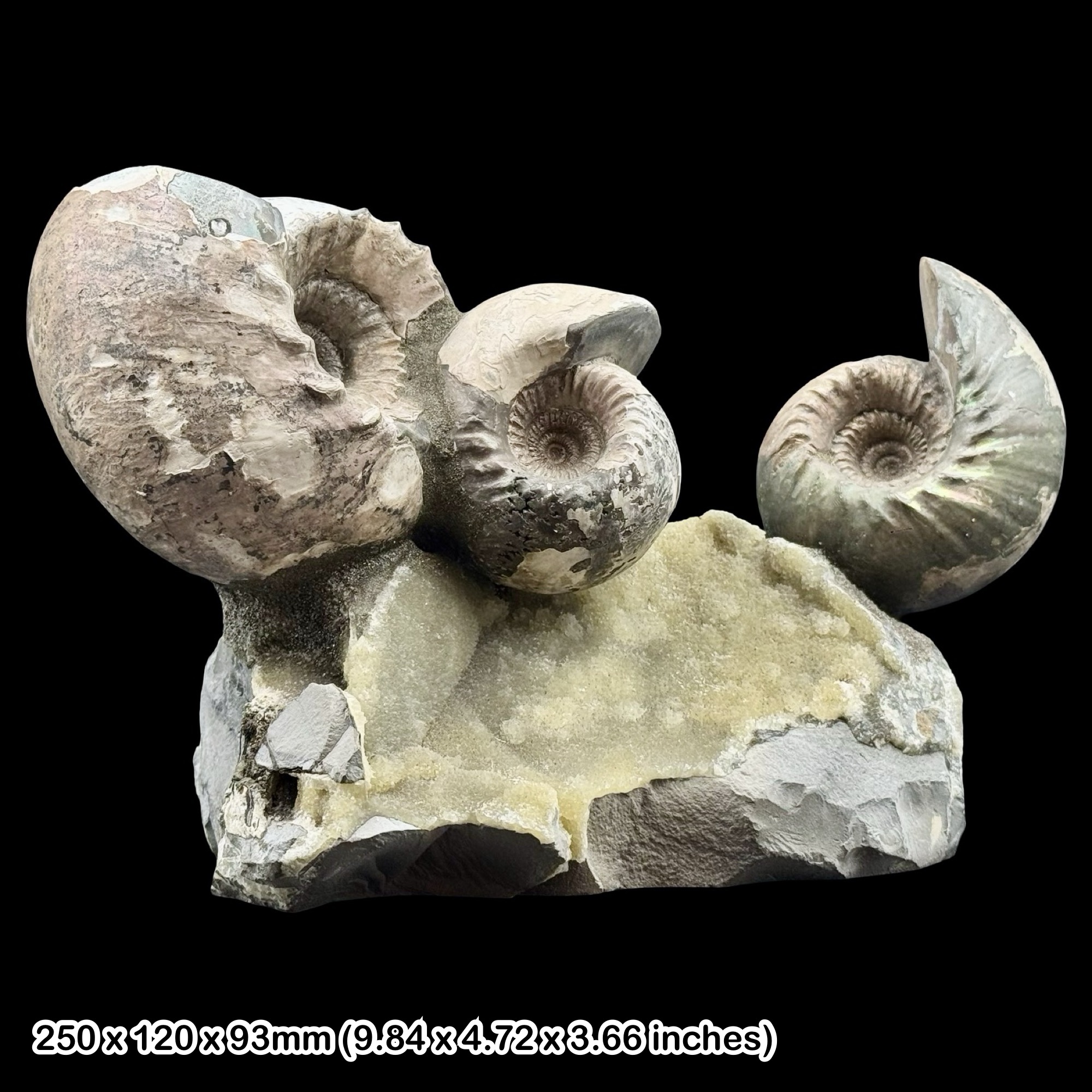
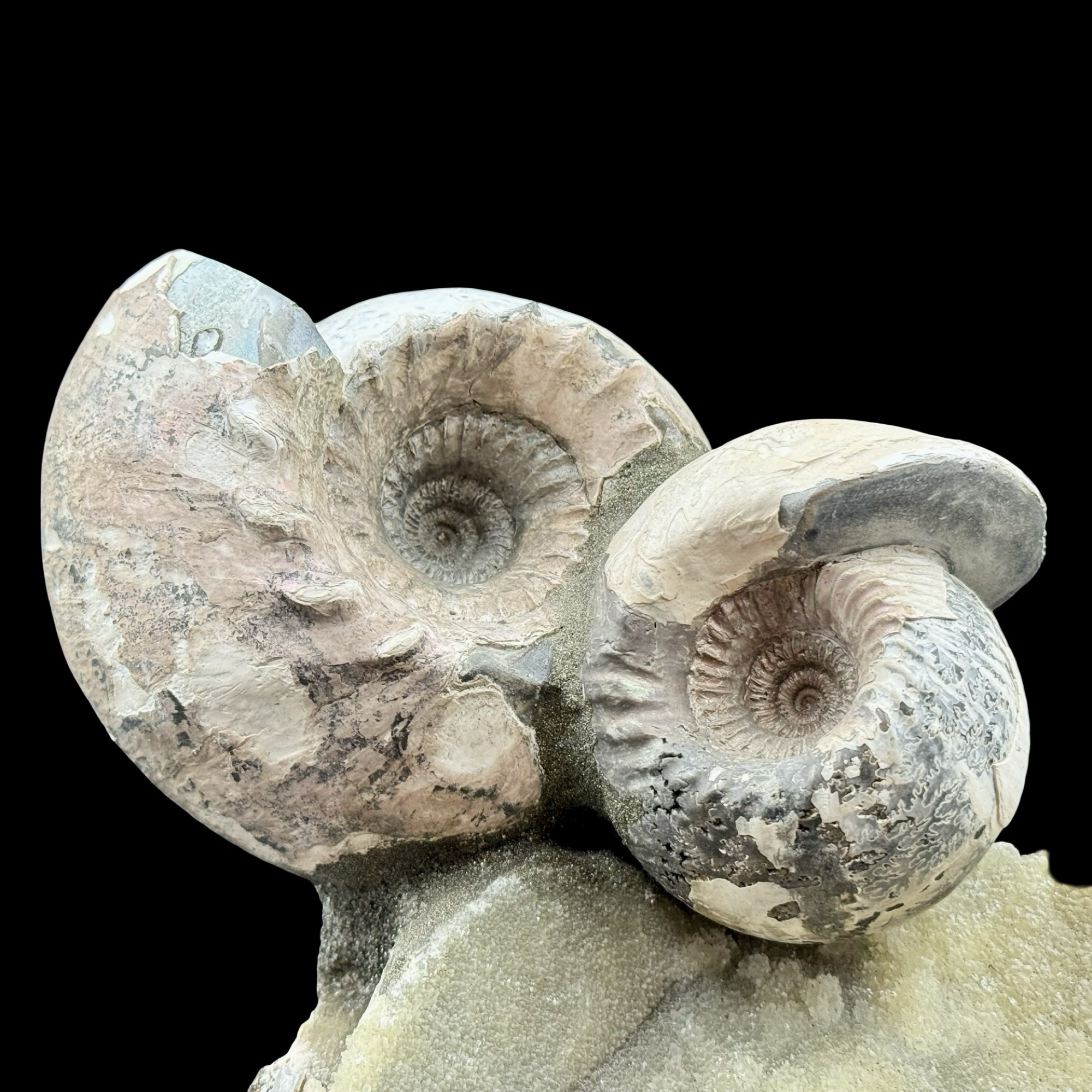
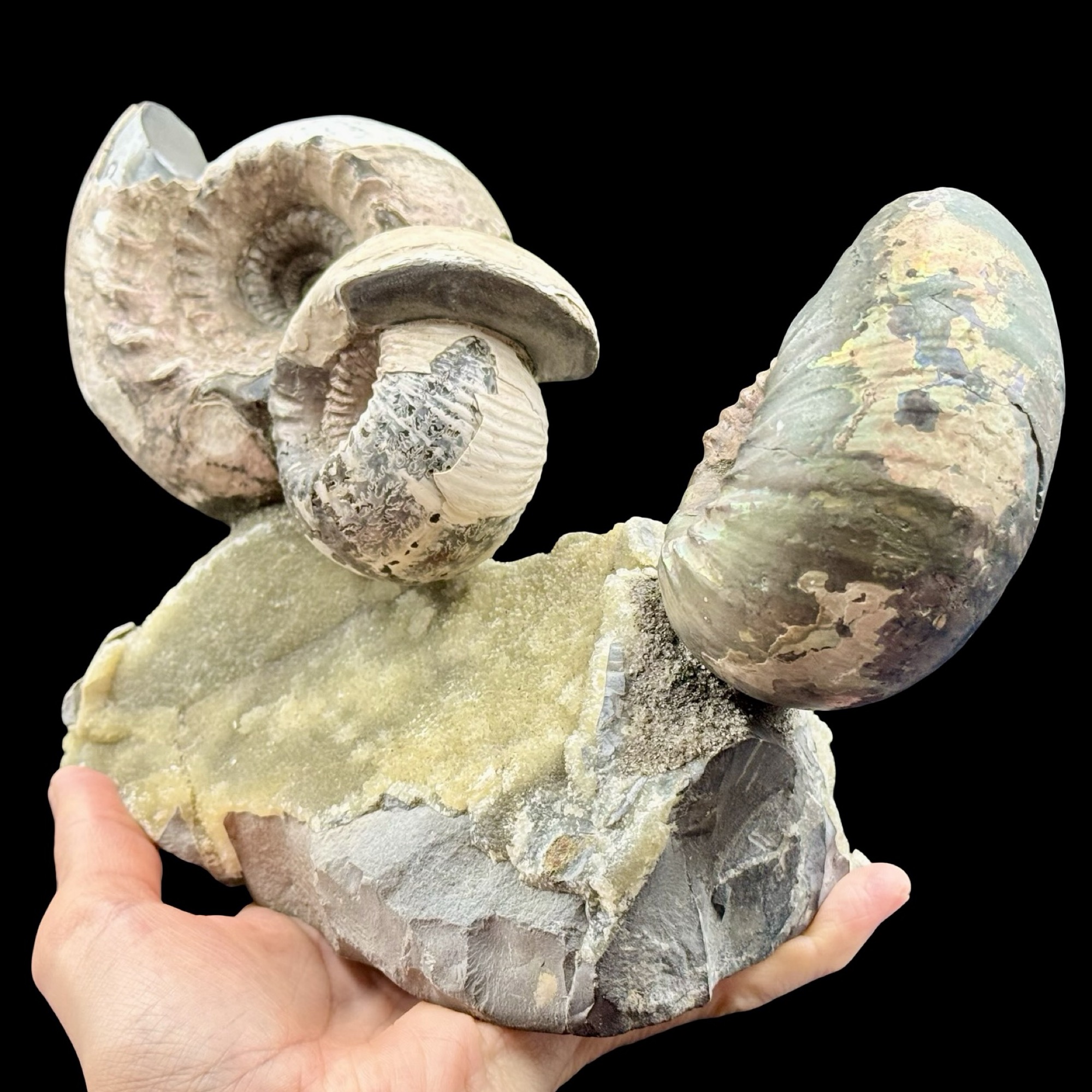
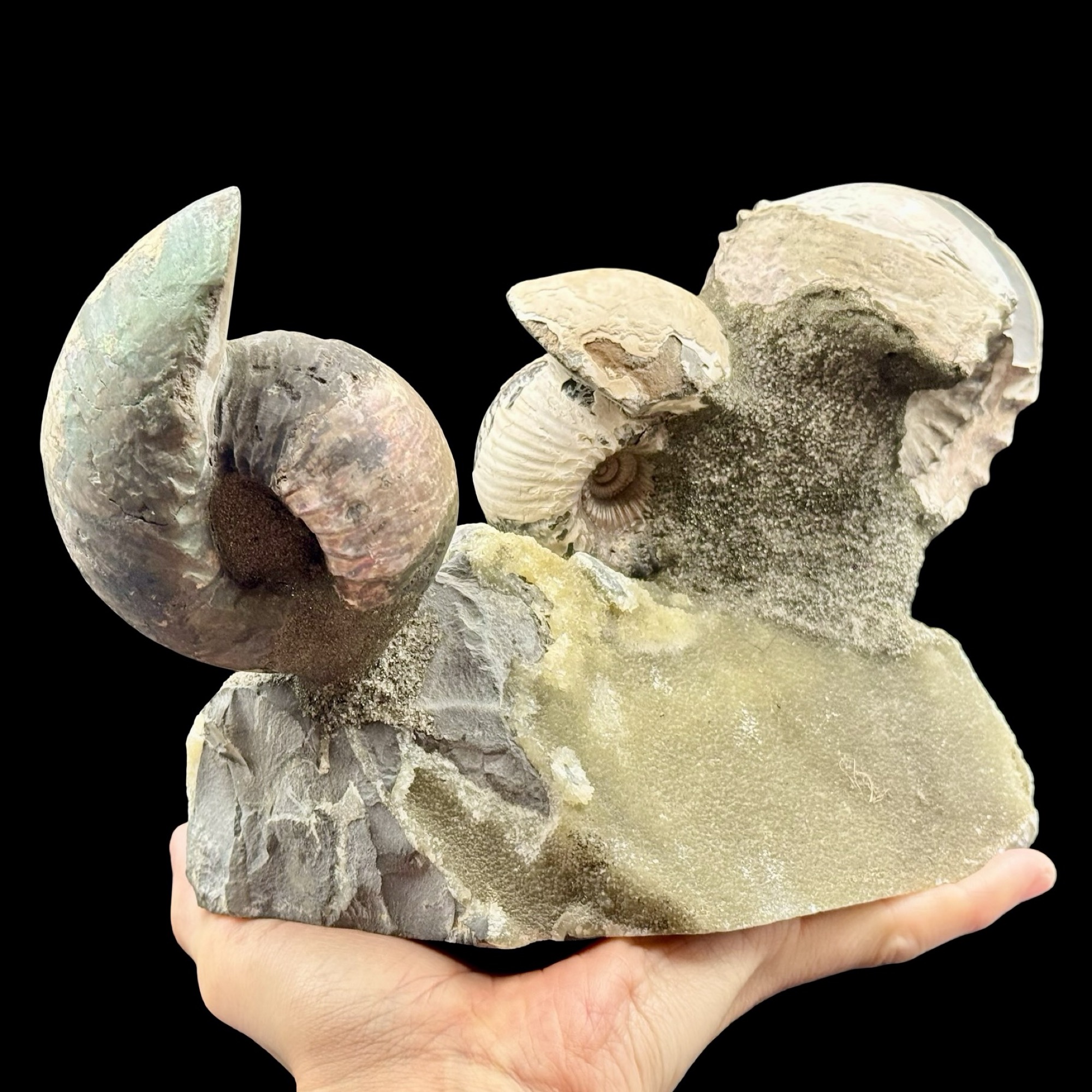
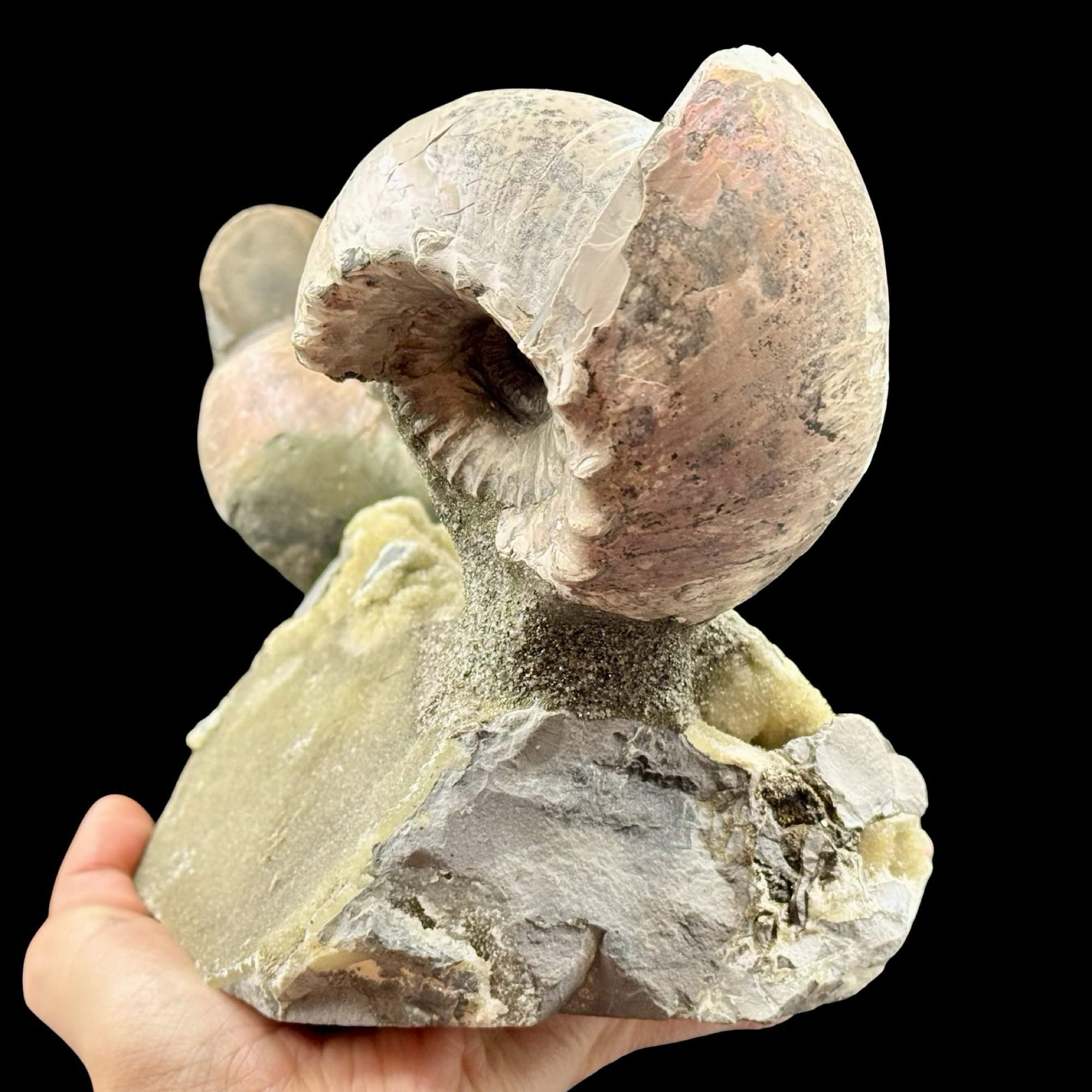
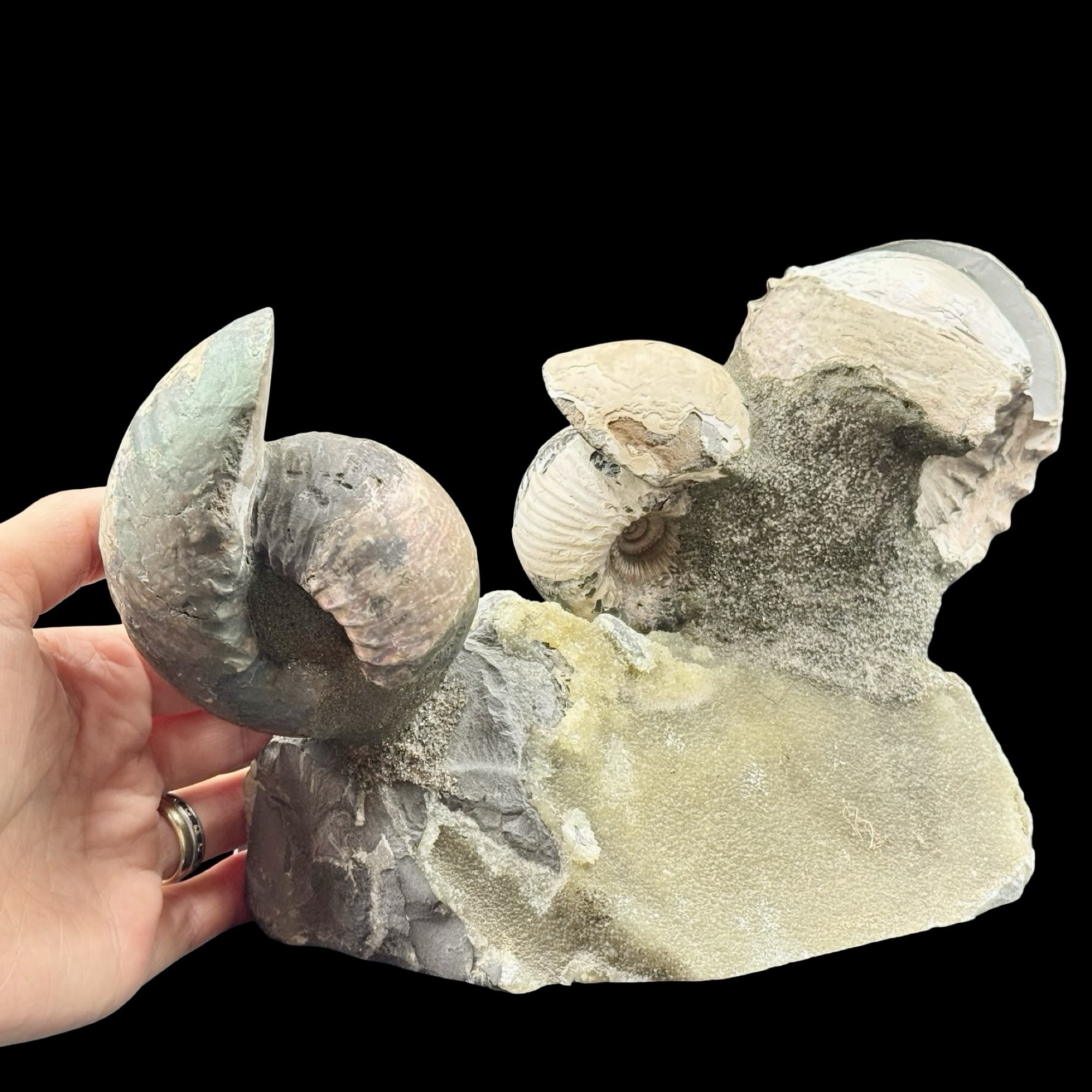
Very Rare Cadoceras elatmae Multi Block Fossil Ammonites Iridescent Shell Upper Callovian Russia With Certificate of Authenticity
£ 1440.00
OVERVIEW OF THIS VERY RARE CADOCERAS ELATMAE MULTI BLOCK AMMONITE FOSSILThis exceptional multi-block fossil features multiple specimens of the rare
ammonite Cadoceras elatmae, preserved with striking natural iridescence. Collected from the Upper Callovian deposits of the Middle Jurassic in Chuvashia, Russia, this specimen represents an extraordinary piece from one of the most scientifically important ammonite-bearing regions in Europe. The iridescent shell preservation, combined with the multi-ammonite arrangement, makes this block highly collectible and visually spectacular. The photographs show the exact fossil you will receive, with full sizing details included in the listing images.All of our fossils are 100% genuine specimens and come with a Certificate of Authenticity. GEOLOGICAL BACKGROUND AND DEPOSITIONAL ENVIRONMENTThis ammonite fossil originates from the Upper Callovian stage of the Middle Jurassic (approximately 164–161 million years ago). During this time, the region that is now Chuvashia, Russia formed part of a broad epicontinental sea connected to the ancient Arctic Ocean. Fine-grained marine sediments accumulated in calm, relatively deep-water environments, producing exceptional preservation conditions for cephalopods and other marine fauna.Upper Callovian deposits in this region are well known for yielding beautifully preserved ammonites with nacreous shell layers that have fossilised into vibrant iridescence. These layers reflect ancient biomineral structures, producing colourful optical effects reminiscent of opal or mother-of-pearl. TAXONOMY AND SCIENTIFIC CLASSIFICATIONSpecies: Cadoceras elatmaeGenus: CadocerasFamily: CardioceratidaeSuperfamily: StephanoceratoideaOrder: AmmonitidaGeological Stage: Upper Callovian (Middle Jurassic)Locality: Chuvashia, RussiaMembers of the genus Cadoceras are characterised by their robust shell morphology, intricate ribbing, and distinctive ornamentation. C. elatmae is among the more sought-after species due to its rarity and the exceptional shell preservation seen in certain Russian deposits. MORPHOLOGICAL FEATURES AND IRIDESCENT PRESERVATIONThis multi-block specimen exhibits several diagnostic features typical of Cadoceras elatmae, including:
• Thick, strongly ribbed shell whorls with well-defined growth lines
• Pronounced ventral keel, a hallmark of many Cardioceratidae ammonites
• Deep umbilicus, exposing earlier whorls
• Complex ornamentation, including tuberculate or nodular features in some individuals
• Brilliant iridescent shell, displaying natural colours such as green, gold, pink, and blueThe iridescence is a result of preserved aragonite microstructures that diffract light in layered patterns. This type of preservation is scientifically and aesthetically significant, as many ammonites lose their nacreous layers during fossilisation.The block contains multiple ammonites, making it an excellent teaching specimen or display piece that illustrates natural variation within a single species or assemblage. SCIENTIFIC AND PALEONTOLOGICAL IMPORTANCECadoceras elatmae occupies an important place in Jurassic ammonite biostratigraphy. Cardioceratidae are widely used by paleontologists to:
• Identify Callovian and Oxfordian biozones
• Correlate rock layers across Europe and Asia
• Reconstruct Jurassic sea-level fluctuations and paleoenvironmental conditions
• Study evolutionary trends within ammonoid cephalopodsThis multi-fossil block provides insight into ecological clustering, potential mass mortality events, or sedimentary processes that led to the preservation of multiple individuals together. ORIGIN AND REGIONAL SIGNIFICANCEThe Chuvashia region is internationally recognised for producing some of the most beautifully preserved Jurassic ammonites in the world. Fossils from this locality—especially those retaining iridescent shell—are increasingly rare due to limited access and diminishing exposures. This specimen represents a premium example of Russian Middle Jurassic paleontology. COLLECTABILITY AND DISPLAY APPEALThis very rare Cadoceras elatmae multi-block specimen is ideal for advanced fossil collectors, museum display, or anyone seeking a visually stunning and scientifically valuable ammonite fossil. Its combination of:
• Multi-ammonite composition
• Strong morphological detail
• Natural iridescent shell preservation
• Provenance from a globally significant Callovian depositmakes it a standout centrepiece in any collection. AUTHENTICITY AND CUSTOMER ASSURANCEYou will receive the exact Cadoceras elatmae multi-block fossil shown in the photographs. Every specimen is professionally examined and verified, and your purchase includes a Certificate of Authenticity confirming its genuine Jurassic age and origin from the Upper Callovian strata of Chuvashia, Russia.
ammonite Cadoceras elatmae, preserved with striking natural iridescence. Collected from the Upper Callovian deposits of the Middle Jurassic in Chuvashia, Russia, this specimen represents an extraordinary piece from one of the most scientifically important ammonite-bearing regions in Europe. The iridescent shell preservation, combined with the multi-ammonite arrangement, makes this block highly collectible and visually spectacular. The photographs show the exact fossil you will receive, with full sizing details included in the listing images.All of our fossils are 100% genuine specimens and come with a Certificate of Authenticity. GEOLOGICAL BACKGROUND AND DEPOSITIONAL ENVIRONMENTThis ammonite fossil originates from the Upper Callovian stage of the Middle Jurassic (approximately 164–161 million years ago). During this time, the region that is now Chuvashia, Russia formed part of a broad epicontinental sea connected to the ancient Arctic Ocean. Fine-grained marine sediments accumulated in calm, relatively deep-water environments, producing exceptional preservation conditions for cephalopods and other marine fauna.Upper Callovian deposits in this region are well known for yielding beautifully preserved ammonites with nacreous shell layers that have fossilised into vibrant iridescence. These layers reflect ancient biomineral structures, producing colourful optical effects reminiscent of opal or mother-of-pearl. TAXONOMY AND SCIENTIFIC CLASSIFICATIONSpecies: Cadoceras elatmaeGenus: CadocerasFamily: CardioceratidaeSuperfamily: StephanoceratoideaOrder: AmmonitidaGeological Stage: Upper Callovian (Middle Jurassic)Locality: Chuvashia, RussiaMembers of the genus Cadoceras are characterised by their robust shell morphology, intricate ribbing, and distinctive ornamentation. C. elatmae is among the more sought-after species due to its rarity and the exceptional shell preservation seen in certain Russian deposits. MORPHOLOGICAL FEATURES AND IRIDESCENT PRESERVATIONThis multi-block specimen exhibits several diagnostic features typical of Cadoceras elatmae, including:
• Thick, strongly ribbed shell whorls with well-defined growth lines
• Pronounced ventral keel, a hallmark of many Cardioceratidae ammonites
• Deep umbilicus, exposing earlier whorls
• Complex ornamentation, including tuberculate or nodular features in some individuals
• Brilliant iridescent shell, displaying natural colours such as green, gold, pink, and blueThe iridescence is a result of preserved aragonite microstructures that diffract light in layered patterns. This type of preservation is scientifically and aesthetically significant, as many ammonites lose their nacreous layers during fossilisation.The block contains multiple ammonites, making it an excellent teaching specimen or display piece that illustrates natural variation within a single species or assemblage. SCIENTIFIC AND PALEONTOLOGICAL IMPORTANCECadoceras elatmae occupies an important place in Jurassic ammonite biostratigraphy. Cardioceratidae are widely used by paleontologists to:
• Identify Callovian and Oxfordian biozones
• Correlate rock layers across Europe and Asia
• Reconstruct Jurassic sea-level fluctuations and paleoenvironmental conditions
• Study evolutionary trends within ammonoid cephalopodsThis multi-fossil block provides insight into ecological clustering, potential mass mortality events, or sedimentary processes that led to the preservation of multiple individuals together. ORIGIN AND REGIONAL SIGNIFICANCEThe Chuvashia region is internationally recognised for producing some of the most beautifully preserved Jurassic ammonites in the world. Fossils from this locality—especially those retaining iridescent shell—are increasingly rare due to limited access and diminishing exposures. This specimen represents a premium example of Russian Middle Jurassic paleontology. COLLECTABILITY AND DISPLAY APPEALThis very rare Cadoceras elatmae multi-block specimen is ideal for advanced fossil collectors, museum display, or anyone seeking a visually stunning and scientifically valuable ammonite fossil. Its combination of:
• Multi-ammonite composition
• Strong morphological detail
• Natural iridescent shell preservation
• Provenance from a globally significant Callovian depositmakes it a standout centrepiece in any collection. AUTHENTICITY AND CUSTOMER ASSURANCEYou will receive the exact Cadoceras elatmae multi-block fossil shown in the photographs. Every specimen is professionally examined and verified, and your purchase includes a Certificate of Authenticity confirming its genuine Jurassic age and origin from the Upper Callovian strata of Chuvashia, Russia.
Other Products